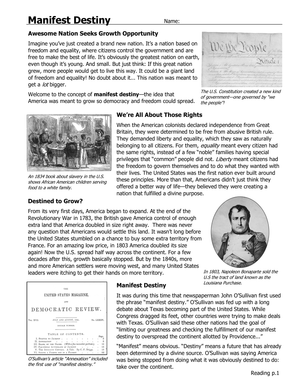
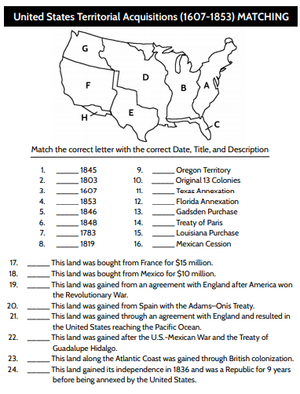
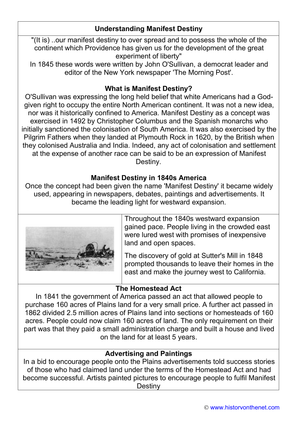
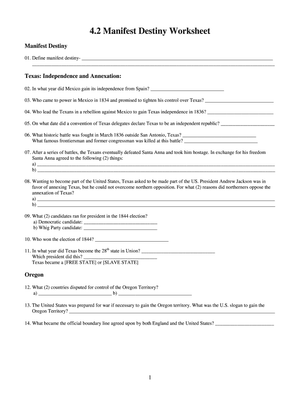
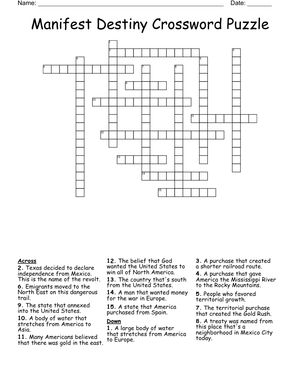
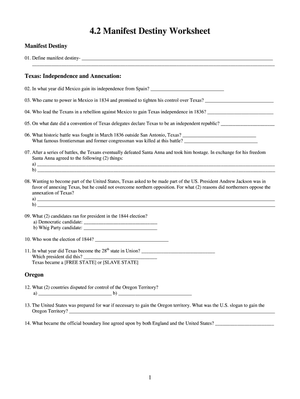
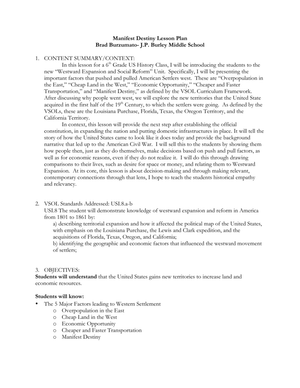
If you are planning a unit on 19th-century westward expansion, manifest destiny worksheets give students a structured way to work through a dense, idea-driven topic. Manifest destiny is not a single event with a clear start and end date. It is a belief system that shaped policy, war, and settlement for decades, which makes it a natural fit for worksheets that break the concept into manageable pieces: vocabulary, cause and effect, map work, and document analysis. For middle school and high school US history teachers, worksheets built around this topic help students connect an abstract idea to concrete territorial changes they can see on a map.
Sequencing Worksheets with Texas Annexation and the Oregon Question
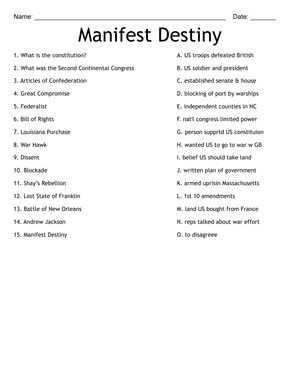
Manifest destiny worksheets work best when they are sequenced alongside the specific events that fueled the idea in the 1840s. Two debates were already underway when O'Sullivan wrote his editorial: the annexation of Texas and the Oregon boundary dispute with Britain. Build a short worksheet sequence that has students first define manifest destiny, then apply that definition to each debate, asking how expansionist thinking shaped US positions on both Texas and Oregon. This sequence helps students see manifest destiny as a lens for interpreting policy decisions rather than as an isolated vocabulary term to memorize.
A simple two-column worksheet also works well here. On one side, list the event or debate; on the other, have students explain in one or two sentences how manifest destiny beliefs influenced the outcome. This format keeps the writing load light while still requiring students to make a direct connection between ideology and policy, which is a skill they will need again when analyzing the Mexican-American War.
Using the Mexican-American War to Teach Territorial Change
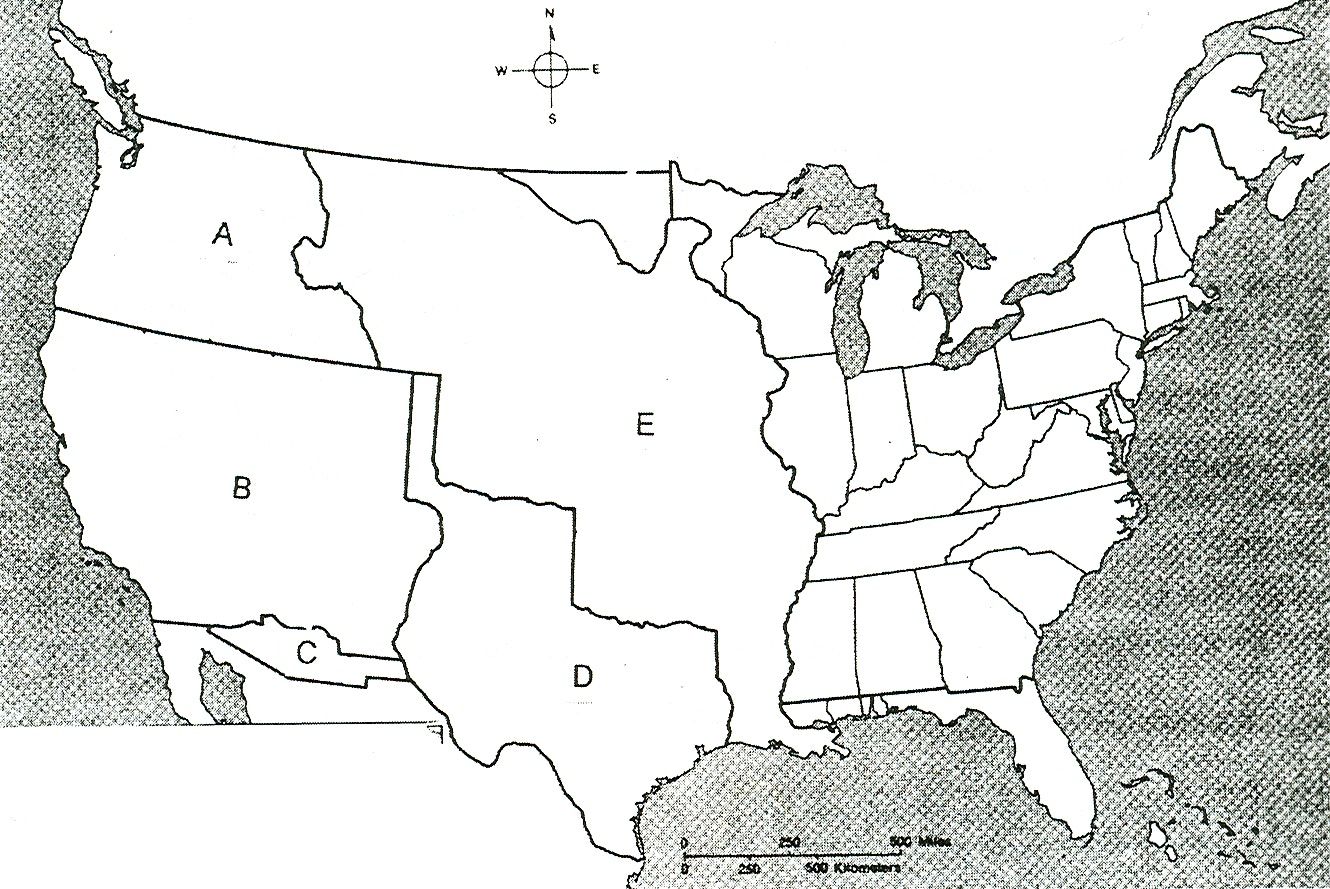
The Mexican-American War (1846-1848) is the clearest large-scale consequence of manifest destiny, and it gives you a strong data point for a worksheet built around numbers rather than narrative. The war resulted in the United States gaining more than 525,000 square miles of territory, including land that became present-day Arizona, California, Nevada, New Mexico, Utah, and parts of Colorado. A worksheet that asks students to shade or label these territories on a blank map turns an abstract land transfer into something visual and memorable, and it reinforces geography skills alongside the history content.
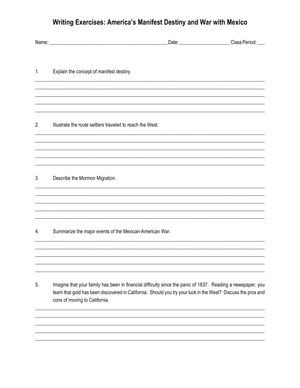
For older students, pair the map activity with a short cause-and-effect worksheet: what arguments did expansionists use to justify the war, and what were the immediate territorial results? This pairing lets you move from persuasive rhetoric to concrete outcomes in a single lesson, which is useful when you are short on time but still want students to practice document-based reasoning.
Building Document Analysis Skills with Primary-Source-Style Prompts
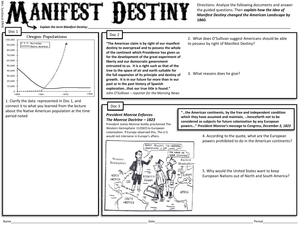
High school US history classes benefit from worksheets that mimic primary source analysis, even when full documents are not included. Design short excerpts or paraphrased passages inspired by expansionist rhetoric, such as language echoing O'Sullivan's original editorial, and pair them with guided questions: What claim is the author making? What assumptions underlie that claim? Who benefits from this argument, and who does not? These prompts build the same skills students need for DBQ-style writing later in the course, without requiring a full primary source packet for every lesson.
Political cartoons from the expansionist era are another strong worksheet anchor. A worksheet that asks students to describe the imagery, identify the intended audience, and connect the cartoon back to manifest destiny beliefs gives visual learners an entry point into the same analytical skills as text-based document work. Keep the questions specific rather than open-ended so students have a clear starting point.
Classroom Implementation
When you are ready to put manifest destiny worksheets into a lesson plan, start with a short mini-unit structure: one day for definitions and the O'Sullivan editorial, one day for Texas annexation and the Oregon dispute, one or two days for the Mexican-American War and territorial map work, and a final day for the Native American impact and wrap-up discussion. This structure keeps the unit focused while still covering the causes, key events, and consequences your students need.
Use short worksheet-based exit tickets after each lesson to check understanding before moving on. A three-question exit ticket asking students to define manifest destiny, name one territorial consequence, and identify one group affected by expansion gives you a fast formative check without adding grading burden. If students consistently miss the same question, you know exactly where to reteach before the unit test.
For small-group intervention or review, pull struggling students aside with a simplified version of the map-labeling worksheet and a shortened vocabulary list. For enrichment, offer students who finish early an additional primary-source-style passage to analyze, or ask them to write a short paragraph arguing against expansionist rhetoric using evidence from the unit.
Frequently Asked Questions
1. What grade level is manifest destiny typically taught at in US schools?
Manifest destiny is most commonly taught in middle school US history courses and again in high school US history courses, often as part of a broader unit on 19th-century westward expansion. Middle school coverage tends to focus on vocabulary and geography, while high school coverage adds cause-and-effect analysis and document-based reasoning.
2. How can teachers use worksheets to teach both the expansionist perspective and Native American impact?
Pair worksheets that cover expansionist arguments, such as the O'Sullivan editorial and territorial growth data, with a companion worksheet on displacement and the Trail of Tears. A side-by-side comparison format helps students evaluate both perspectives within the same lesson rather than treating them as separate topics.
3. What skills do manifest destiny worksheets typically reinforce?
These worksheets commonly reinforce map reading and territory labeling, vocabulary related to expansion and annexation, cause-and-effect reasoning tied to specific events like the Mexican-American War, and early document analysis skills using primary-source-style prompts or political cartoons.
4. How long should a manifest destiny worksheet-based lesson or mini-unit take?
A focused mini-unit typically runs three to five class periods: one for definitions and origins of the term, one to two for Texas annexation, the Oregon dispute, and the Mexican-American War, and one for Native American impact and review. Individual worksheet-based lessons within that sequence usually fit a single 45- to 50-minute class period.
5. What primary sources pair well with manifest destiny worksheets?
O'Sullivan's 1845 editorial in The Democratic Review is a natural anchor text, since it introduced the term itself. Expansionist-era political cartoons also pair well with worksheets, giving visual learners a way to practice the same analytical skills used with written documents.