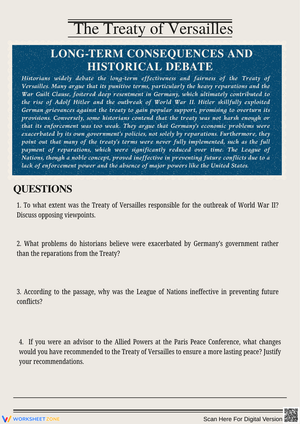
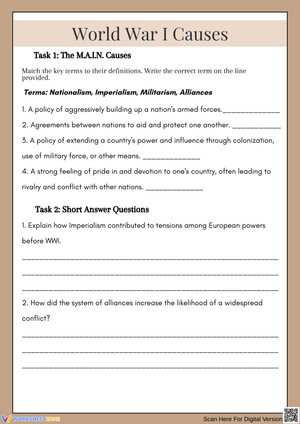
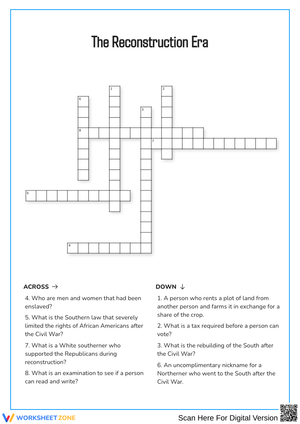
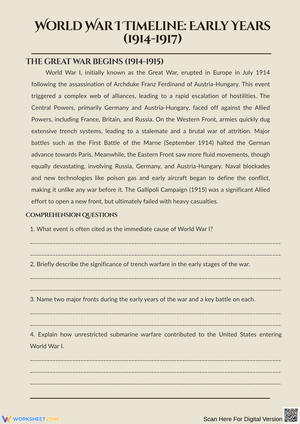
These history printable worksheets give teachers a ready set of structured activities targeting the analytical moves historical thinking actually demands — sourcing documents, constructing timelines, interpreting maps, and building evidence-based arguments from primary sources. The set spans ancient civilizations through modern U.S. history, with each worksheet addressing a single, clearly defined skill rather than loading students with multiple demands at once. Teachers report fitting individual worksheets into Monday warm-ups, station rotations, and the focused 15 minutes before a unit assessment.
What's Inside the Set
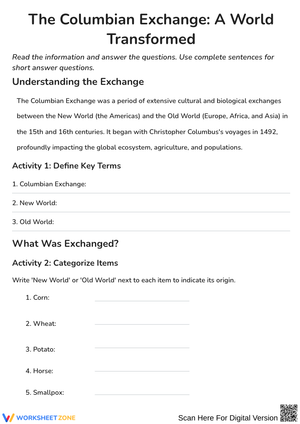
Four categories of worksheets cover the core modes of historical inquiry. Each category targets a different cognitive skill so that the set functions as a menu rather than a sequence — teachers pull what the unit actually needs.
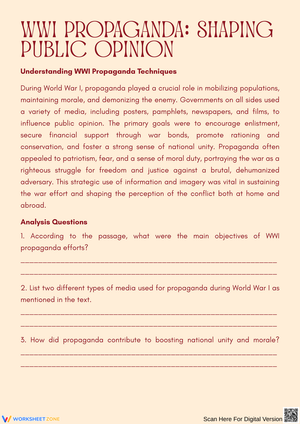
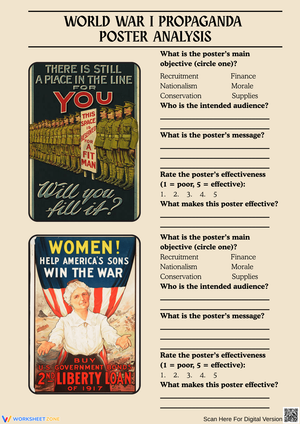
- Primary source analysis templates — built around letters, political cartoons, photographs, and government documents. Students work through observation, inference, and questioning in sequence, using the SOAPSTONE framework adapted for middle grades.
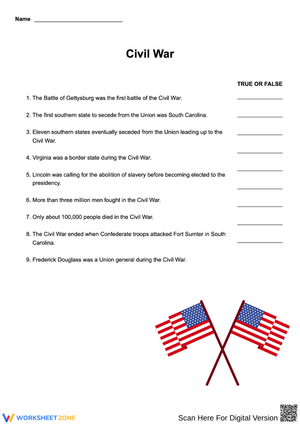
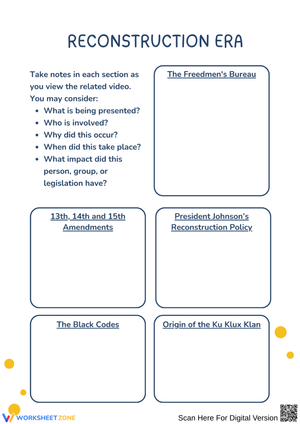
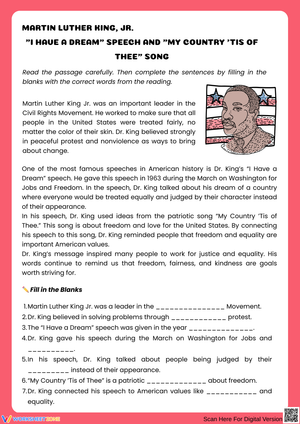
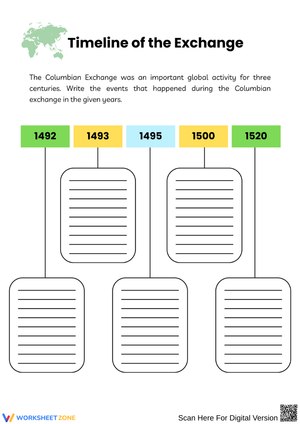
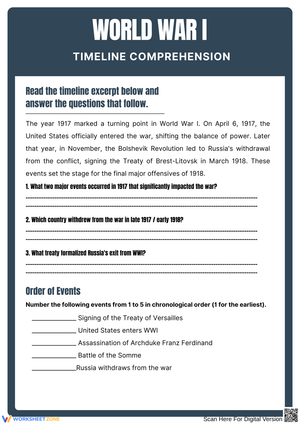
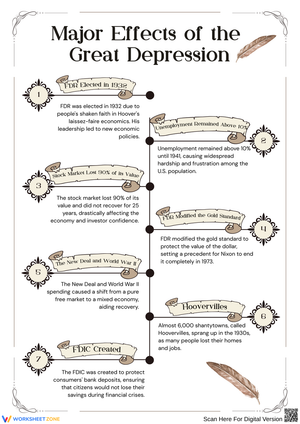
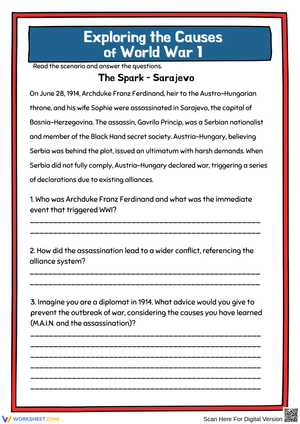
- Timeline construction activities — students sequence events and then answer targeted causality questions: not just when something happened, but why that order matters. A worksheet covering the Civil Rights Movement asks students to mark which events were direct responses to federal legislation and which preceded it.
- Historical map analysis — each worksheet focuses on territorial change, migration routes, or how physical geography shaped historical decisions. Mapping the expansion of the Roman Empire looks different from tracing the Oregon Trail, and each worksheet is built for its specific context rather than recycled from a generic template.
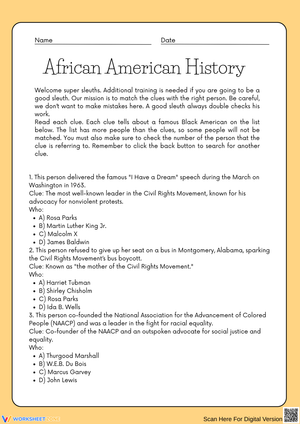
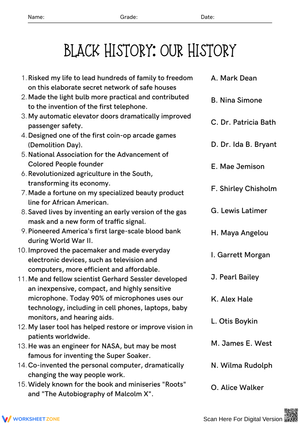
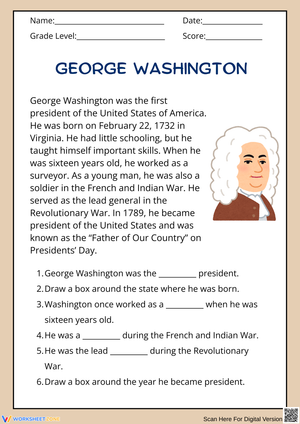
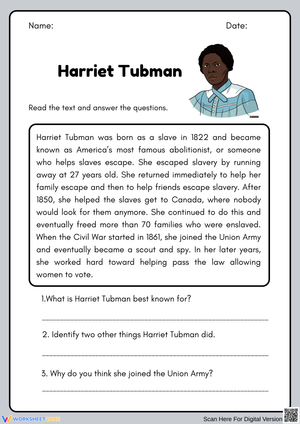
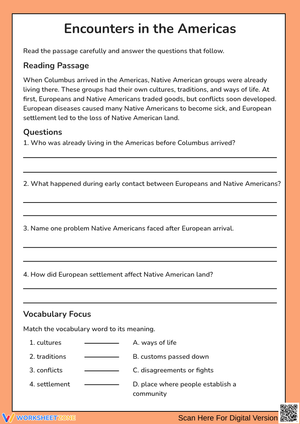
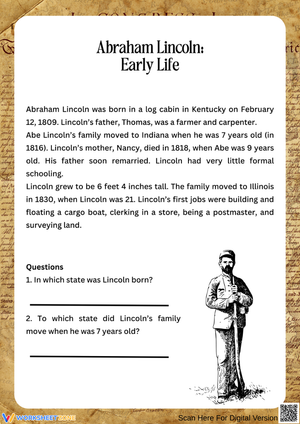
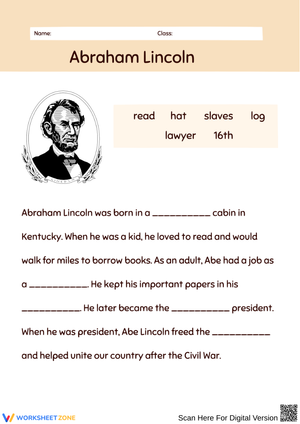
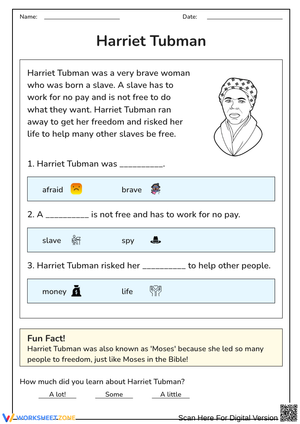
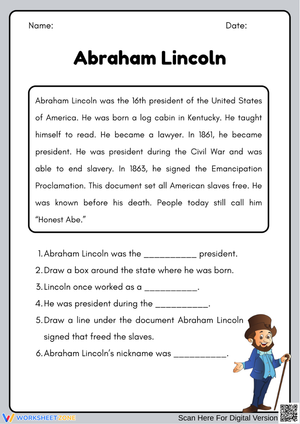
- Biographical reading comprehension — short passages paired with text-dependent questions. These deliberately cover diverse subjects across gender, region, and era so that historical agency doesn't read as belonging to one kind of person.
Errors Students Make That These Worksheets Help You Catch
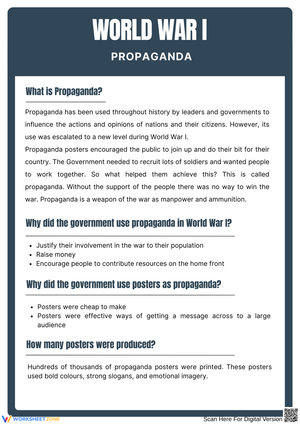
The most persistent problem in timeline work isn't sequencing — students generally get events in order after a unit of instruction. The problem is causality. A sixth grader will correctly place the Emancipation Proclamation after the Battle of Antietam on a timeline and still write in a paragraph that "the Civil War happened because of slavery," skipping over the political calculus that shaped Lincoln's actual decision-making. The causality prompts built into every timeline worksheet push back on that shortcut by requiring students to articulate what made a prior event a necessary condition for the next one.
On primary source worksheets, a different pattern shows up in student work: the "author" and "date" fields get filled in accurately, but the "audience" field reads "everyone" — or sits blank. Students haven't yet internalized that historical documents were written for specific readers with specific interests. When the audience field is empty, the inference section falls apart, because students draw conclusions as if the document were addressed to them personally rather than to an 1850s newspaper readership or a wartime government bureau. Projecting a student example under the document camera — the blank audience field and the evidence-free inference that follows — tends to correct this faster than repeated verbal instruction alone.
Getting the Most From These Worksheets in Your Lesson Planning
The primary source analysis worksheets work best through gradual release: the teacher models the full SOAPSTONE sequence on a document under the document camera, then pairs work through a second document together while the teacher circulates, and individuals complete a third document independently. Moving straight to independent work with an unfamiliar primary source typically produces surface-level observation ("I see a man holding a flag") without the inferential layer that makes the analysis meaningful. The modeling step costs about 20 minutes on day one, but by the third use of the worksheet format, students move through the sequence on their own in under 15 minutes.
Timeline worksheets fit naturally into the last 10 minutes of a unit-introduction lesson. Students have just received new content, and reinforcing chronological structure at that point — while the information is still fresh — is a direct application of spaced retrieval at the lesson level. Map analysis worksheets, by contrast, benefit from small-group use. When two students share one worksheet and have to negotiate which label belongs where, they catch each other's geographical misreadings before those errors settle into long-term memory.
History printable worksheets in this set also hold up as formative checkpoints. Dropping a primary source analysis worksheet midway through a unit — unannounced, no grade — quickly reveals which students are reading historical context into a document and which are still treating it as a reading comprehension exercise about content alone.
Standard Alignment
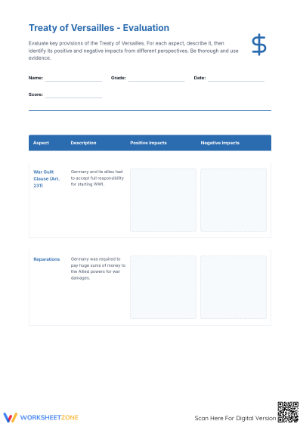
These worksheets align to the NCSS C3 Framework Dimension 2 History standards. D2.His.1 addresses students' ability to analyze change, continuity, and historical context — the skill exercised directly in the timeline construction and chronological reasoning worksheets. D2.His.5 covers causation and argumentation; the causality prompts built into every timeline worksheet ask students to identify what made a prior event a necessary condition for the next, which is the specific cognitive demand that standard targets. D2.His.11 — evaluating the credibility and relevance of primary sources — maps to the reliability evaluation prompt that closes each document analysis sequence. For teachers in states using Common Core ELA standards, the biographical reading comprehension worksheets address CCSS.ELA-LITERACY.RH.6-8.1 (cite textual evidence from informational text) and RH.6-8.6 (identify aspects of a text that reveal an author's point of view or purpose).
Adapting These Worksheets for Different Levels of Learners
The timeline and map worksheets carry a structural advantage in mixed-ability rooms: their visual format reduces the reading demand, which means students who struggle with extended text can still engage with chronological reasoning and spatial thinking at grade level. For students who need additional support with the biographical passages — written at a 6th–7th grade Lexile range — pairing each worksheet with an audio recording of the passage keeps the analytical task intact without reducing its rigor.
Advanced students can extend the primary source templates into comparison work without any new materials. Rather than analyzing one document per worksheet, they work two documents against each other using the same template, then add a written synthesis at the bottom identifying where the two sources corroborate or contradict. That extension requires only a second document and a directed prompt — nothing gets redesigned or reprinted.
Frequently Asked Questions
Do the worksheets come with answer keys?
Yes. Multiple-choice and fill-in questions include standard answer keys. For open-ended analysis prompts — which make up the most substantive parts of the primary source and causality activities — the keys include annotated sample responses showing the level of reasoning expected at grade level, not just a single acceptable answer. Those samples are most useful during post-assessment discussion, when students need to see concretely what distinguishes a surface observation from a grounded historical inference.
What grade levels are these worksheets designed for?
The core set targets grades 5–8, where most state standards introduce primary source analysis and historical thinking frameworks formally. Many of the timeline and map worksheets work equally well in grade 4 with minor vocabulary adjustments. The biographical passages, written at a 6th–7th grade Lexile range, are the section most likely to need modification at either end of the grade band.
How do these worksheets hold up in a station rotation model?
A four-station rotation using history printable worksheets from this set might pair independent biographical reading comprehension at one station with small-group map analysis at another, a teacher-led timeline discussion at a third, and a political cartoon analysis at the fourth. The key constraint: independent and paired stations should use formats students have already practiced at least once. A student who encounters an unfamiliar worksheet template during rotation spends the time decoding the instructions rather than doing the historical thinking, which defeats the purpose of both the station and the worksheet.
Are these worksheets tied to specific U.S. history topics, or do they target general analytical skills?
Both exist in the set. Some worksheets are built around specific content — westward expansion, the Constitutional Convention, the World War II home front — with documents and questions tied to those topics. Others are formatted as reusable analytical tools: a general primary source template, a blank timeline structure, a map analysis frame. The general-format history printable worksheets are the ones most teachers return to across multiple units, because the analytical structure stays constant while the documents change.












 Interactive Worksheet Maker
 Quiz Maker
 Word Search Maker
 Crossword Puzzle Maker
 Word Scramble Generator
 Sentence Scramble Generator
 Handwriting Worksheet Generator
 Name Tracing Generator
 Fill In The Blank Generator