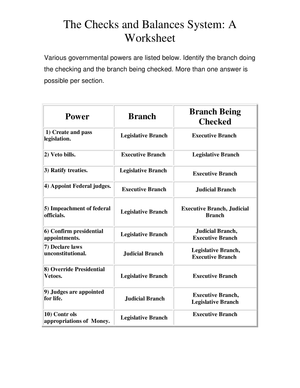
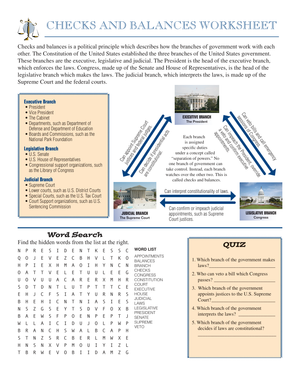
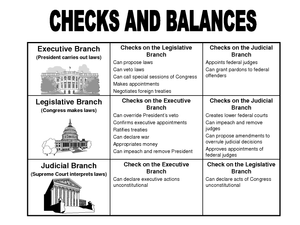
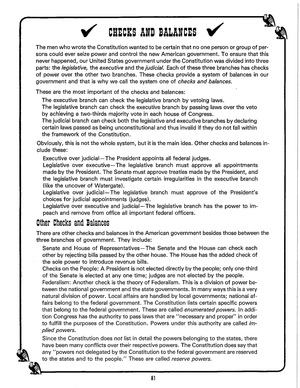
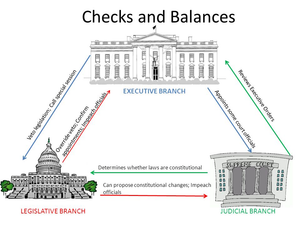
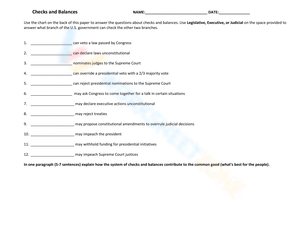
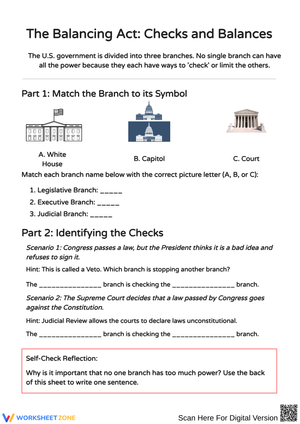
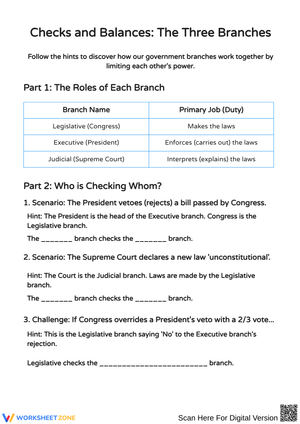
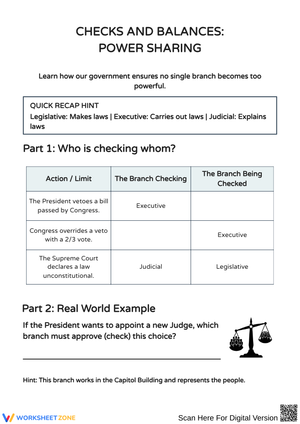
Ask a class of sixth graders to name the three branches of government and most hands go up fast. Ask the same students to explain how the Senate can block a presidential appointment, or how a court can strike down a law Congress just passed, and the room gets quiet. That gap between naming branches and explaining how they limit each other is exactly what checks and balances worksheets are built to close. Students searching for structure here are not confused about vocabulary. They need repeated, low-stakes practice applying specific checking powers to specific scenarios before a unit test asks them to do it under pressure.
Elementary Versus Middle School: Different Worksheet Demands
Civics content around the three branches and how they check each other appears across social studies frameworks from upper elementary through high school government courses, so the same worksheet will not serve a fourth grader and an eighth grader equally well. In upper elementary classrooms, worksheets should stay close to basic branch identification: what each branch does, who leads it, and one simple example of a check, like a presidential veto. Middle school worksheets can move into constitutional analysis, asking students to explain why the framers built in specific checks and to compare two branches' powers over the same issue, such as declaring war or approving a treaty. Matching worksheet complexity to grade level keeps the activity productive instead of frustrating.
iCivics, the free nonpartisan platform founded by Justice Sandra Day O'Connor, has built out standards-aligned games and lesson materials specifically targeting the three branches and how they check one another, which is worth knowing if your worksheet packet needs a companion digital activity for students who finish early or need a different entry point into the content.
Classroom Implementation
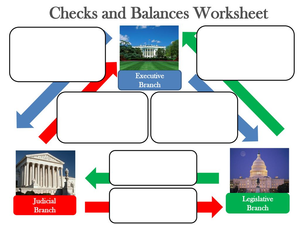
Sequence checks and balances worksheets across a unit rather than assigning them all at once. Start with a branch-identification worksheet in week one, move to a scenario-matching worksheet once vocabulary is solid, and finish with a graphic organizer or short inquiry task before the summative assessment. Pair each worksheet with a brief verbal check, asking two or three students to explain their answer out loud, so you catch surface-level guessing before it becomes a pattern. For classrooms with mixed readiness, keep one elementary-level worksheet and one middle-school-level worksheet on hand for the same lesson so you can differentiate without rewriting materials on the fly. If you use a role-play or simulation activity where students act out a veto or an override, follow it immediately with a worksheet that asks students to explain what happened in their own words. This locks the experience into language they can use on a test.
Frequently Asked Questions
1. What grade level is checks and balances typically taught at in US schools?
Checks and balances is core content in civics and government strands from upper elementary through middle school, and it reappears in more depth in high school government courses. Most state social studies frameworks introduce the concept around grades 4-8, with worksheets scaling in complexity as students move up.
2. How can teachers assess whether students understand checks and balances versus just memorizing branch names?
Use scenario-matching or application items rather than pure identification questions. If students can explain which branch checks which power and why, in a specific situation, that indicates real understanding rather than memorized vocabulary.
3. What is the difference between separation of powers and checks and balances worksheets?
Separation of powers worksheets focus on what each branch does independently, while checks and balances worksheets focus on how each branch limits the other two. Strong units use both, but checks and balances worksheets specifically require students to name the limiting action, such as veto or judicial review.
4. How can these worksheets be used for small-group intervention or review before a civics test?
Shorten the worksheet to four or five scenarios, work through the reasoning aloud with the group first, and then have students complete similar items independently. This targets the same skill as a whole-class assignment in a smaller, more supported format.
5. What free resources exist for standards-aligned checks and balances lessons?
iCivics offers free games and lesson materials built specifically around the three branches and checks and balances, and organizations like the Civics Renewal Network and Educating for American Democracy also provide related classroom resources on separation of powers and checks and balances.