Planning a physics unit means juggling limited prep time with the need to reinforce dense, quantitative content. The right physics worksheets let you drop targeted practice into a lesson as a warm-up, a homework set, or a quick check before a test. Because physics builds skill on skill, small doses of well-placed practice pay off more than an occasional heavy packet. This guide breaks down how to choose and use them across middle and high school, organized by topic, grade band, and classroom purpose.
What Physics Worksheets Cover, Strand by Strand
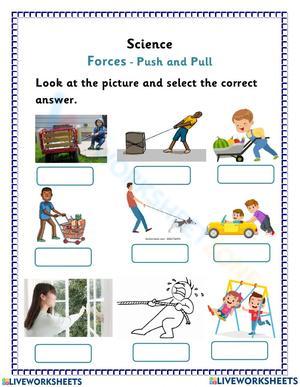
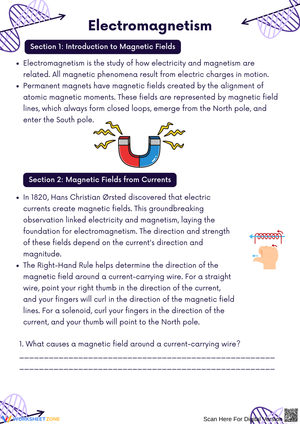
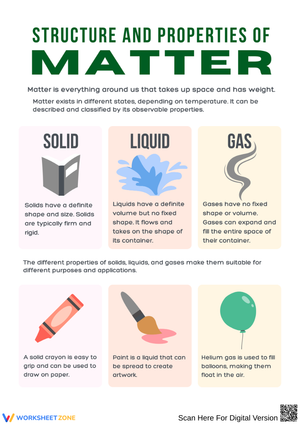
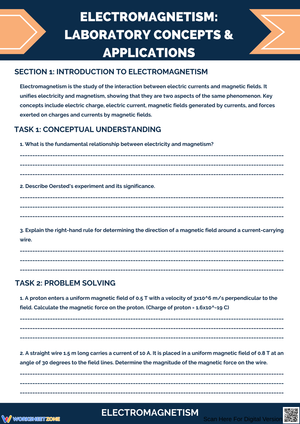
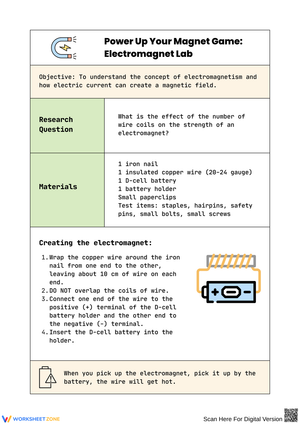
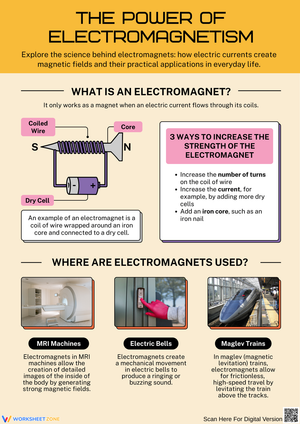
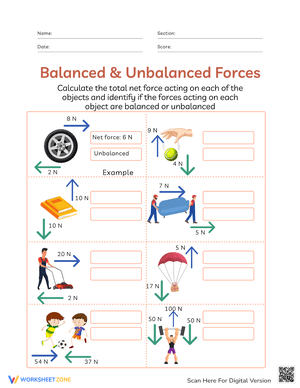
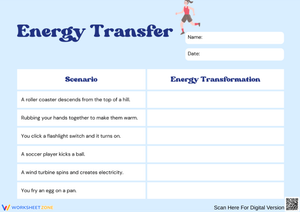
Strong worksheet collections are organized by the core strands of a physics course: motion and kinematics, forces and Newton's laws, energy, waves, electricity, and magnetism. Organizing your materials this way lets you pull exactly what a lesson needs instead of hunting through a mixed packet. It also mirrors how the Next Generation Science Standards group physics content into Disciplinary Core Ideas, so a worksheet on forces or energy maps cleanly to the standard you are already teaching.
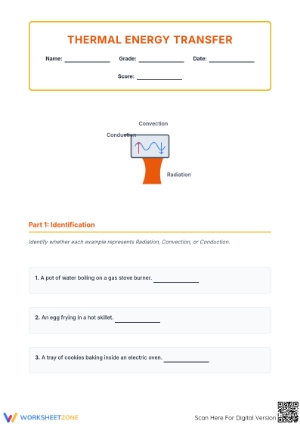
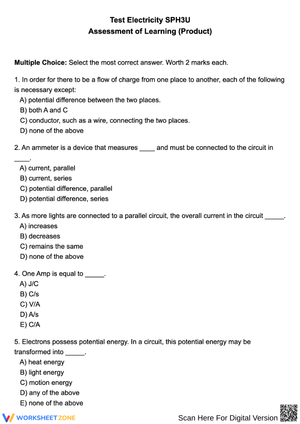
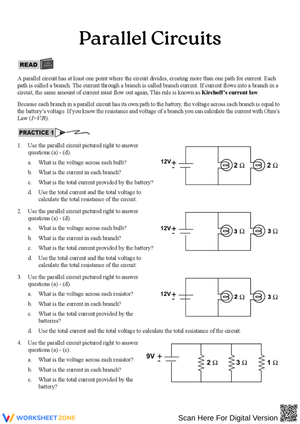
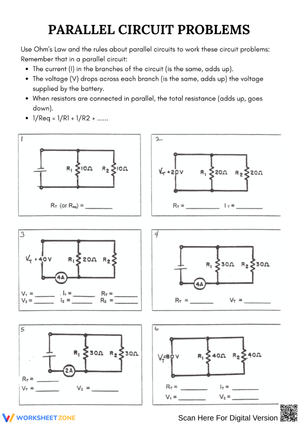
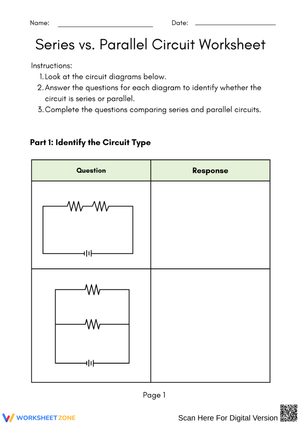
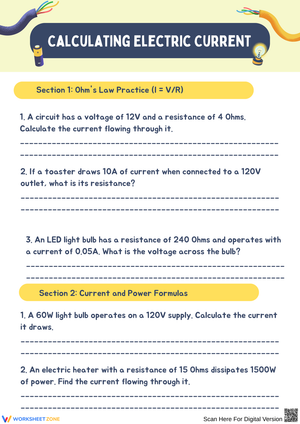
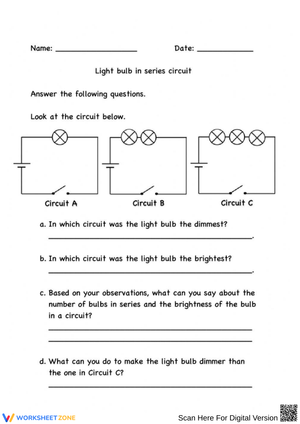
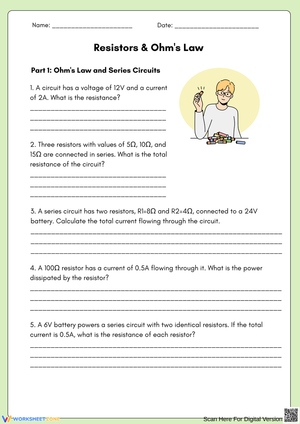
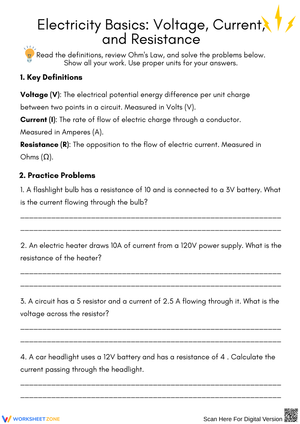
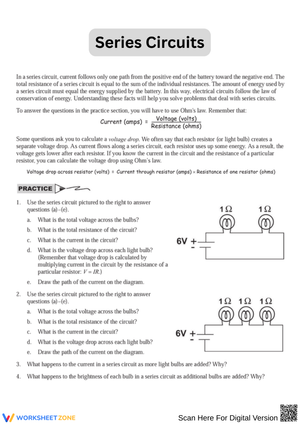
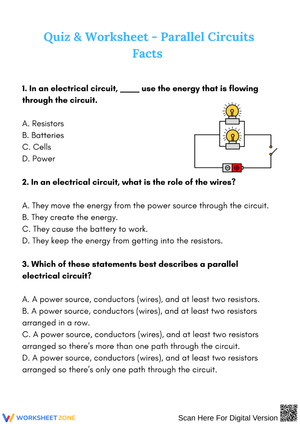
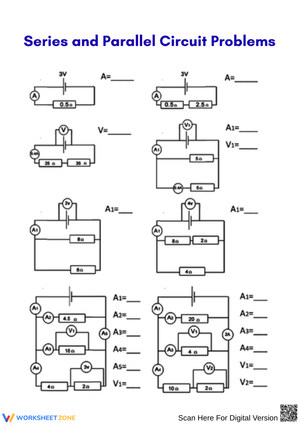
For each strand, look for a mix of item types: labeling and diagram reading, short-answer recall, and multi-step calculation. A kinematics set might move from reading a position-time graph to solving for acceleration, while a circuits set might pair a schematic-reading task with an Ohm's law problem. That range keeps a single worksheet useful for both introduction and review.
Keep an eye on how each set balances difficulty. A worksheet that opens with an approachable recall item and ramps toward a challenge problem keeps stronger students engaged without losing the rest of the class. When a set is built this way, you can assign the full page to everyone and simply expect different stopping points, which saves you from printing three versions of the same practice.
Matching Worksheets to NGSS Grade Bands
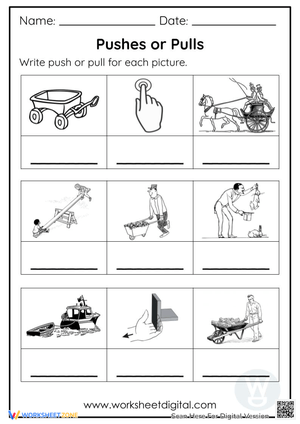
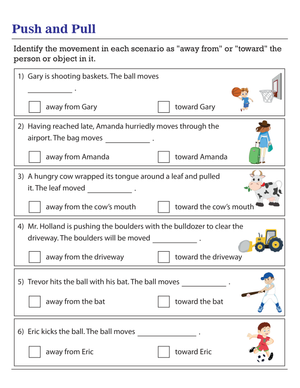
Middle and high school physics ask different things of students, and worksheets should reflect that. The NGSS Middle School (6-8) band builds foundational ideas about forces, motion, and energy transfer with an emphasis on qualitative reasoning and simple relationships. Worksheets at this level lean on prediction, observation, and explanation rather than heavy algebra.
At the high school level, NGSS sequences physics as a distinct domain course—often the second course in a three-year Modified High School Domains Model described in the standards. Here worksheets can carry more mathematical weight: vector components, conservation of energy calculations, and data analysis. Knowing which grade band you are planning for keeps a worksheet's difficulty honest and prevents the frustration of tasks that overshoot or undershoot the class.
Some schools compress the sequence using an accelerated model pathway, which shifts certain physics ideas earlier. If your school follows one of these accelerated pathways, check that a worksheet's assumed prior knowledge matches what students have actually covered, since a compressed schedule can leave gaps a standard set takes for granted.
Building Retrieval Practice Into Your Physics Unit
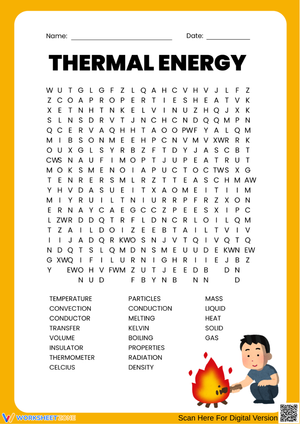
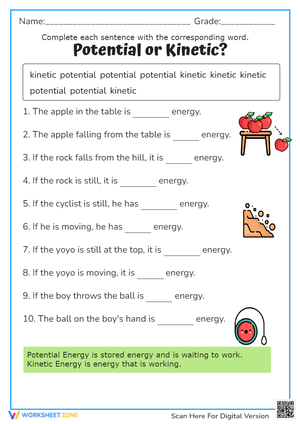
One of the highest-leverage ways to use a worksheet is as retrieval practice—asking students to recall and apply what they know rather than re-read their notes. Short warm-up quizzes and exit tickets that require recall have a strong track record in quantitative subjects.
A study published in the NIH/PMC journal on retrieval practice found that secondary STEM and computational science students using recall-based worksheets scored 5 to 30 percent higher than peers who relied on repeated study, with most of those gains reaching statistical significance across assessments.
Practically, that means opening class with three or four recall items from the previous lesson before introducing new content, then closing with an exit ticket that mixes one conceptual question and one calculation. Spacing these small retrieval moments across a unit does more for retention than a single large review packet the night before a test.
Conceptual and Calculation Problems on One Page
Physics rewards students who understand a concept and can run the math, but those are separate skills. A worksheet that asks only for numeric answers can hide shaky conceptual understanding, while a purely qualitative sheet leaves calculation fluency untested. Pairing both on the same page gives you a clearer read.
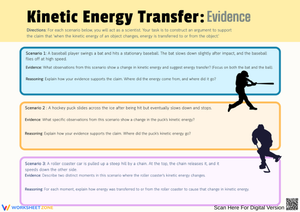
Try a two-column layout in practice: a conceptual prompt such as 'explain what happens to kinetic energy as the cart speeds up' next to a calculation such as 'find the kinetic energy at 4 m/s.' Students who nail the math but stumble on the explanation—or the reverse—tell you exactly where to focus reteaching.
This pairing also makes grading faster and more diagnostic. Instead of marking a single answer right or wrong, you can see at a glance whether an error is conceptual or arithmetic, which turns a stack of worksheets into a quick map of what the class actually needs next.
Formative Assessment That Surfaces Misconceptions
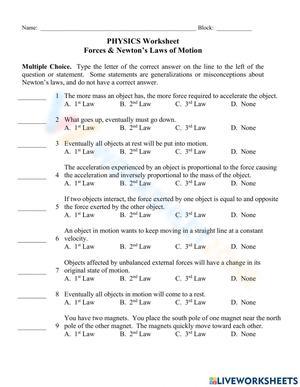
Worksheets earn their keep as formative assessment when you use them before the test, not just as graded homework. A short forces-and-motion set a few days out will expose the classic misconceptions—that a moving object needs a constant force, or that heavier objects always fall faster—while there is still time to address them.
The most useful diagnostic worksheets deliberately include a distractor tied to a known misconception in each item, so a wrong answer points to a specific misunderstanding rather than a careless slip. When you tally which distractor students chose across a class of 30, patterns emerge fast: if a third of the room treats velocity and acceleration as the same quantity, that is your next mini-lesson, not a vague sense that kinematics was hard.
Classroom Implementation
To fold worksheets into a physics unit without adding prep, anchor them to routines you already run:
- Open with a three-item recall warm-up drawn from the prior lesson's worksheet.
- Use one short set as a mid-unit formative check and adjust pacing from the results.
- Reserve calculation-heavy sheets for homework, keeping conceptual items for in-class discussion.
- Keep a reteach version of each strand's worksheet ready for small-group pull-outs.
- Close units with a mixed retrieval set rather than a single cram sheet.
Storing your worksheets by strand and grade band means each of these moves is a quick pull rather than a new build, which is what keeps the routine sustainable across a full semester.
Frequently Asked Questions
1. What physics topics should worksheets cover at each grade band?
Middle school worksheets should center forces, motion, and energy transfer with qualitative reasoning, in line with the NGSS 6-8 band. High school sets can add vectors, energy conservation math, waves, electricity, and magnetism, matching the more quantitative high school physics domain course.
2. How can teachers use physics worksheets for formative assessment?
Assign a short set a few days before a test and review the results for patterns instead of grading for points. Items built around common misconceptions tell you which reteach to plan while there is still time to act.
3. How do physics worksheets align with NGSS?
Organize sheets around the Disciplinary Core Ideas—forces, energy, motion, and waves—and weave in Science and Engineering Practices and Crosscutting Concepts. A worksheet asking students to analyze data or construct an explanation covers more than one dimension of the standards at once.
4. How often should retrieval-practice worksheets be used in a unit?
Brief recall items work best in small, frequent doses—most days as a warm-up or exit ticket rather than one large packet. Spacing recall across the unit supports the long-term retention that quantitative content demands.
5. Can worksheets support small-group intervention?
Yes. Topic-sorted worksheets let you pull a targeted set for students who missed a specific strand, such as circuits or kinematics, while others move to enrichment. Shorter, focused sheets keep reteach groups on the exact skill that needs work.












 Interactive Worksheet Maker
 Quiz Maker
 Word Search Maker
 Crossword Puzzle Maker
 Word Scramble Generator
 Sentence Scramble Generator
 Handwriting Worksheet Generator
 Name Tracing Generator
 Fill In The Blank Generator