Why Electronegativity Worksheets Earn a Spot in Your Chemistry Unit
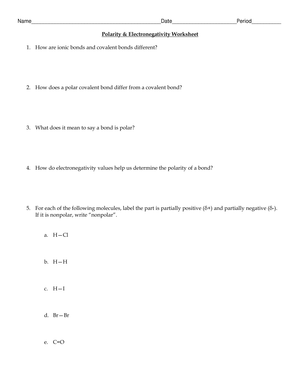
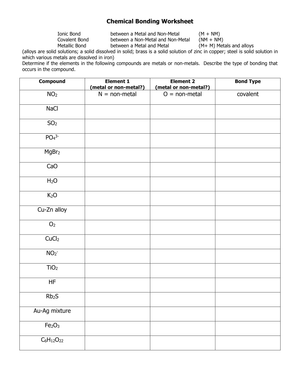
Electronegativity sits at the center of the bonding unit, yet it's one of the ideas students most often memorize without understanding. A focused set of electronegativity worksheets gives your grades 9-12 chemistry students repeated, low-stakes practice reading the periodic table, comparing values, and predicting how atoms will share or transfer electrons. Instead of front-loading a lecture and hoping it sticks, you get a paper trail of exactly where each student's reasoning breaks down.
Worksheets also solve a pacing problem. Bonding is dense, and most teachers have only a few class periods before a test or lab. Short practice sets let you check understanding on Monday, reteach on Tuesday, and move to Lewis structures by Thursday without losing the thread. The skill is small enough to drill and important enough to keep returning to all year.
There's also an assessment payoff. Because bond-type prediction produces a single, checkable answer, electronegativity worksheets give you clean formative data. You can scan a class set in a few minutes and know precisely who can read the trend, who can calculate a difference, and who is guessing. That clarity is hard to get from a discussion or a lab alone.
What Students Actually Practice on a Strong Worksheet
Not every electronegativity worksheet earns its place. The best ones move students through a clear progression rather than isolated definitions. Look for tasks that build in this order:
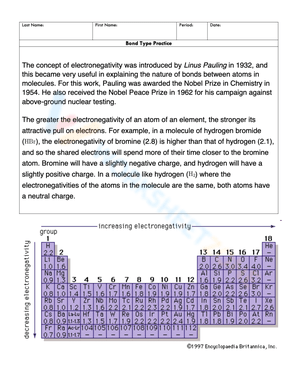
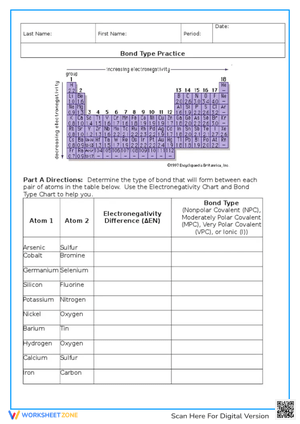
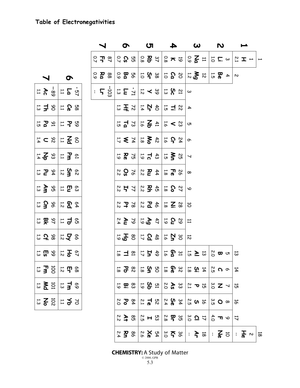
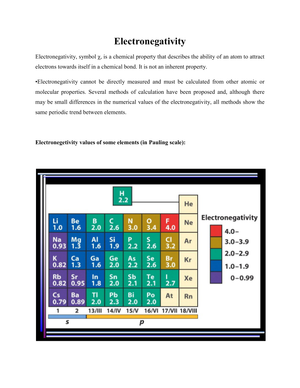
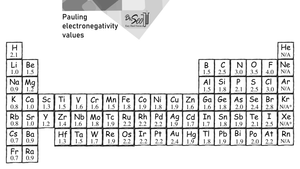
- Locate and read values. Students find electronegativity values on a labeled periodic table or reference chart.
- Compare across periods and groups. Students rank elements and explain which is more electronegative and why.
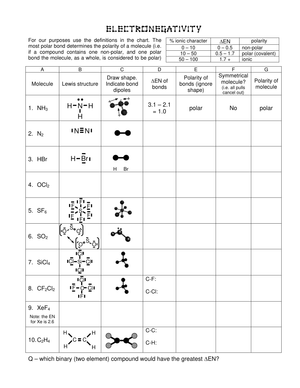
- Calculate the difference. Students subtract two values to get a single number they can act on.
- Classify the bond. Students use that difference to label a bond nonpolar covalent, polar covalent, or ionic.
- Justify the answer. Students write a sentence connecting the trend to electron behavior.
That last step matters most. A student can guess a bond type from a table, but writing the reasoning is where the real thinking shows up. A worksheet that stops at classification is fine for a warm-up, but the version that asks for a written justification is the one that prepares students for constructed-response test items and lab conclusions.
Reading Periodic Trends the Way Students Remember
Electronegativity follows two clean patterns: it increases from left to right across a period and decreases from top to bottom down a group. Once students internalize those two arrows, they can predict relative values for almost any pair of main-group elements without a chart. Worksheets that ask students to sketch the trend arrows before answering tend to produce far fewer reversed answers.
A short citation capsule you can post or read aloud helps anchor the numbers:
According to Wikipedia's overview of electronegativity, Linus Pauling introduced the first electronegativity scale in 1932, and the Pauling scale runs from roughly 0.7 to 3.98, with fluorine holding the highest value of any element at about 3.98. Those fixed endpoints give students a reliable frame for every comparison they make.
Predicting Bond Type From Electronegativity Difference
The payoff skill is turning a difference into a prediction. Most worksheets use a three-band cutoff that students can apply quickly:
- A difference less than 0.5 points to a nonpolar covalent bond.
- A difference from 0.5 to 1.9 points to a polar covalent bond.
- A difference of 2.0 or more usually points to an ionic bond.
Here's the nuance experienced teachers flag: those cutoffs are teaching heuristics, not hard physical laws. A difference of 1.9 versus 2.0 does not flip a bond from fully covalent to fully ionic; real bonds sit on a spectrum of partial charge. Hydrogen fluoride, with a difference near 1.78, behaves as a strongly polar covalent molecule even though it's close to the ionic line. Telling students the boundaries are fuzzy prevents the misconception that one decimal place changes the physics, and it sets up a richer conversation about percent ionic character in AP sections.
Building that caveat into your worksheet answer key saves you from the argument every chemistry teacher has had: a student insisting a textbook is wrong because a compound near the boundary doesn't match the tidy category. The boundary was always approximate.
Using These Worksheets In Physics Classes
Electronegativity practice fits almost any part of a lesson cycle. A few structures that hold up in real classrooms:
- Bell-ringer. Post two elements and ask which is more electronegative and why. Three minutes, whole-class share.
- Stations. Set up five compound cards per table; groups calculate the difference and classify each bond, then rotate.
- Formative exit ticket. Give three bonds to classify before the bonding test so you know who needs reteaching.
- Lab pre-work. Have students predict ionic versus covalent for compounds they'll test for conductivity the next day.
One structure worth trying is a card sort. Print pairs of bonded atoms on index cards, and have students physically sort them into three piles by predicted bond type. The movement keeps energy up, and misfiled cards become instant talking points for the whole group. Because the skill is short, you can run any of these in under ten minutes and still collect useful data on every student.
Misconceptions Worksheets Help You Catch Early
Because electronegativity is abstract, a few predictable errors show up on nearly every set. Watching for them turns grading into targeted reteaching:
- Reversing the group trend. Students often think electronegativity increases going down a group because atoms get bigger. Bigger atoms actually hold shared electrons more loosely, so the value drops.
- Confusing electronegativity with electron affinity. The two are related but not identical; worksheets that define the terms side by side head this off.
- Treating the cutoffs as exact. Students want a difference of exactly 2.0 to guarantee an ionic bond. Remind them the bands are guidelines and edge cases exist.
- Ignoring noble gases. Students sometimes assign high values to noble gases; most standard charts leave them out because they rarely bond.
When you review a completed worksheet, sorting errors into these four buckets tells you in minutes whether the class needs a trend reteach, a vocabulary fix, or just reassurance about the fuzzy boundaries.
Frequently Asked Questions
1. What grade level usually covers electronegativity?
Electronegativity typically appears in high school chemistry, most often in grades 10-11, though some grade 9 physical science courses introduce periodic trends. Advanced middle school programs sometimes preview the idea, but the bond-prediction work lives squarely in high school chemistry.
2. How do teachers use electronegativity worksheets to teach bond polarity?
Teachers have students calculate the electronegativity difference between two atoms, then classify the bond as nonpolar covalent, polar covalent, or ionic using standard cutoffs. This gives a concrete, number-based scaffold before students move on to Lewis structures and molecular polarity.
3. How can one worksheet serve both intervention and enrichment groups?
Keep the core task identical and adjust the supports. Intervention students get printed values and worked examples; enrichment students work from memory, drop the chart, and add percent ionic character or dipole reasoning. Everyone practices the same skill at a different depth.
4. How does electronegativity connect to periodic table patterns?
Electronegativity is one of several trends that stem from patterns of electrons in the outermost shell. Practicing it alongside atomic radius and ionization energy helps students see the periodic table as a predictive tool rather than a chart to memorize, which supports the standards-aligned goal of predicting properties from electron patterns.
5. How many electronegativity worksheets should a bonding unit include?
Two to four short sets usually cover it: one on reading trends, one on calculating differences, one on classifying bonds, and an optional mixed review before the test. Spacing them across the unit works better than a single long packet, since the skill rewards repetition more than volume.












 Interactive Worksheet Maker
 Quiz Maker
 Word Search Maker
 Crossword Puzzle Maker
 Word Scramble Generator
 Sentence Scramble Generator
 Handwriting Worksheet Generator
 Name Tracing Generator
 Fill In The Blank Generator