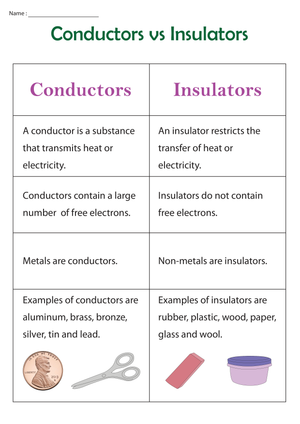
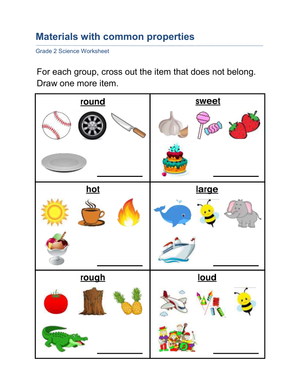
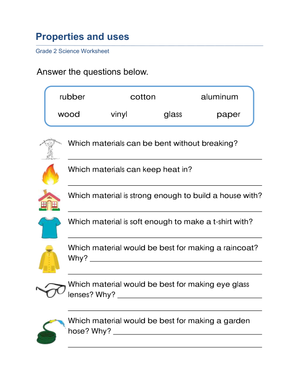
These matter and change pdf worksheets give middle school science teachers structured practice for what is consistently the hardest conceptual split in the unit: deciding whether a given event is physical or chemical, and explaining why using evidence rather than intuition. The set covers state changes, intensive and extensive properties, conservation of mass, and phase transition vocabulary — the full arc of a typical matter unit. No single worksheet assumes the others have been completed, so teachers pull from the set in any order.
What Each Worksheet Targets
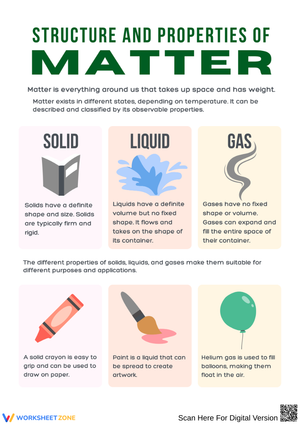
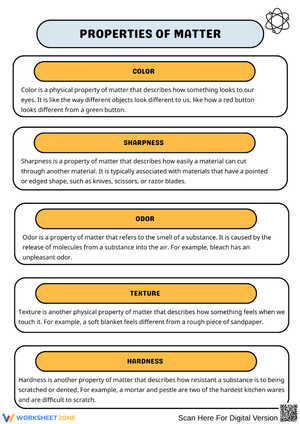
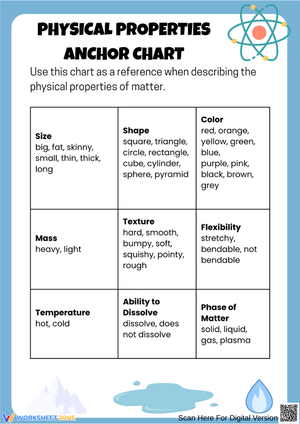
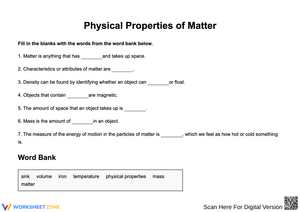
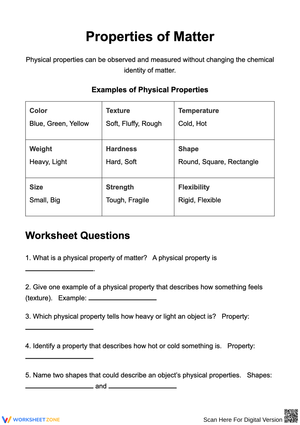
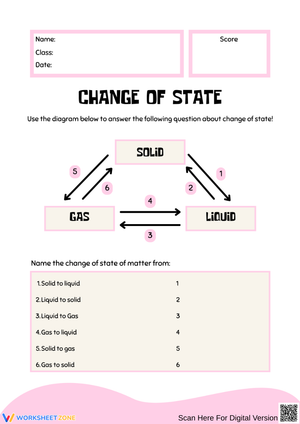
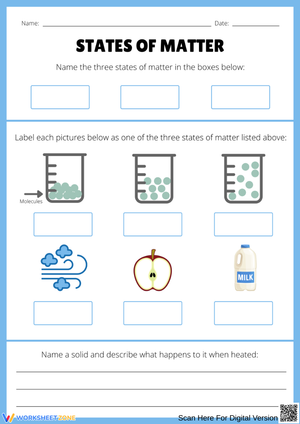
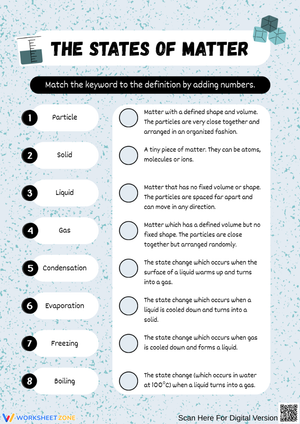
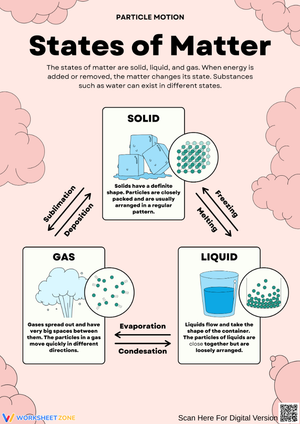
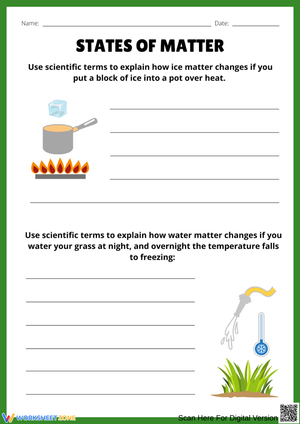
The skills across these matter and change pdf worksheets move from definitional to analytical. Students begin by working with the properties of matter — identifying whether density, color, melting point, mass, or volume are intensive or extensive — then use density calculations to distinguish between materials. From there, worksheets shift to state changes: fill-in diagrams of the phase change cycle ask students to label melting, freezing, condensation, evaporation, and sublimation, then write a sentence explaining what thermal energy does during each transition.
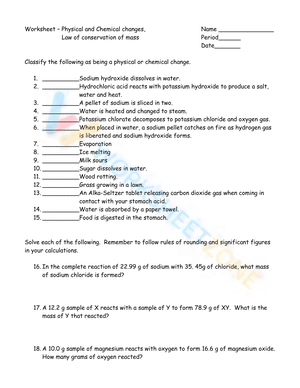
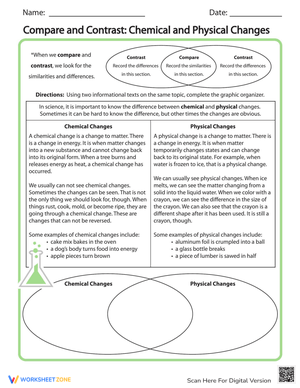
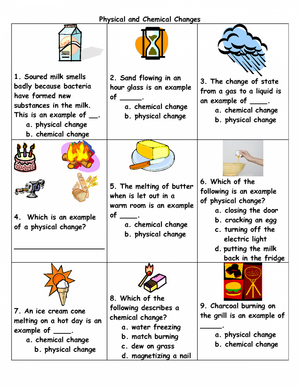
Physical and chemical change classification carries the most worksheet weight, as it should. Students sort real-world examples, mark indicators of chemical change — unexpected color shift, gas production, light or heat release, precipitate formation — and write short justifications for each. A separate worksheet presents heating curve data and asks students to read melting and boiling points from temperature plateaus. The conservation of mass worksheets are math-integrated: students track grams of reactants and products in both closed and open systems and explain any apparent discrepancies in writing.
Student Errors Worth Anticipating Before You Teach This Unit
Dissolving is the classification students get wrong most reliably. Because sugar disappears into water, many conclude it has undergone a chemical change — the substance seems to be gone. Pointing out that evaporating the water recovers the sugar introduces the reversibility argument these worksheets build into their justification prompts, but students need that reasoning made explicit before they encounter it on the page.
Conservation of mass produces a distinct error. When gas escapes an open system — the vinegar-and-baking-soda scenario is the one students remember — they record a lower total mass and conclude that matter was destroyed. They are not wrong that the mass reading dropped; they are wrong about why. Worksheets that pair an open-system and a closed-system version of the same reaction expose this gap directly: students calculate expected product mass, compare it to a measured value in the open system, and account for the difference in writing. That side-by-side structure makes the gas-escape explanation concrete rather than an assertion students accept on faith.
On heating curve diagrams, the flat line at a phase transition trips up nearly every class. Students read "no temperature change" as "no energy added," collapsing two separate ideas into one. The worksheets address this by asking students to describe particle behavior at the plateau separately from temperature — a small prompt shift that forces the two concepts apart before students try to explain the graph as a whole.
Standard Alignment
NGSS MS-PS1-2 asks students to analyze and interpret data on the properties of substances before and after an interaction to determine whether a chemical reaction occurred. Worksheets that present before-and-after data tables — color, odor, temperature, pH — and require students to write an evidence-based argument address that performance expectation directly. MS-PS1-4, which calls on students to develop models describing conservation of matter in a chemical reaction, is supported by the mass-tracking worksheets, particularly the closed-system problems where students verify that reactant mass equals product mass to the gram and then predict what would change in an open container.
Fitting These Worksheets Into Your Weekly Lesson Flow
The physical/chemical change identification worksheets work best in the first five minutes of class before formal instruction on indicators begins. Students' initial sort reveals exactly where the misconceptions sit, and reviewing answers aloud takes about eight minutes while generating the kind of discussion a direct-instruction opener would not. Used this way, matter and change pdf worksheets function as formative checks that also launch the lesson — the diagnostic and the hook in one document.
Heating curve diagrams belong before a calorimetry lab, not after. Students who complete the reading-the-diagram worksheet first arrive at the bench knowing what they are looking for when temperature stops rising mid-experiment. That pre-lab placement changes how students observe — they are checking a hypothesis rather than waiting to be told what happened. One honest caveat: the diagram worksheets frustrate students who have not yet seen any phase-change demonstration; the graph reads as abstract notation without a concrete referent. A two-minute demonstration with ice and a hot plate before distributing the worksheet closes that gap reliably.
Reaching Students at Different Points in the Learning Curve
Students who struggle with the physical/chemical distinction benefit from a shorter list of indicators — two or three, not seven — and examples they already know well, like rust and melting ice, before they encounter ambiguous cases. The classification worksheets can be split at the midpoint: give those students the first section, which uses familiar examples, and hold the harder scenarios for a second pass once the core logic is solid.
For students who move through material quickly, matter and change pdf worksheets with open-ended conservation problems have genuine ceiling. Asking them to design an open-system experiment, predict the mass discrepancy, and explain how a scientist would account for the missing mass extends the concept well beyond identification. That kind of extension gives advanced students something to push against rather than simply finishing early and waiting.
Frequently Asked Questions
Do these worksheets work for eighth grade, or are they pitched lower?
The set spans a range. Vocabulary diagrams and basic sorting tasks are calibrated for sixth and seventh grade. The mass-tracking problems and heating curve analysis are appropriate for eighth grade and serve well as review for ninth-grade physical science. No single worksheet in the set is too elementary for eighth grade if it functions as a warm-up or pre-lab — context changes how students engage with even a straightforward task.
How do I use these if my textbook organizes the content differently?
Pull by skill, not by set order. If the textbook addresses phase changes before properties of matter, start with the phase change diagrams. Each worksheet stands alone with no assumed sequence. The conservation of mass problems make the most sense after students have seen at least one reaction, but every other worksheet drops in wherever the topic appears in a teacher's existing scope and sequence.
Are answer keys included?
Yes. Every worksheet includes a key, including the short-answer justification prompts. For those questions — "explain whether total mass would change in an open system" — the key provides a complete model response and flags the scientific vocabulary students should include. That detail makes the key useful for whole-class discussion after independent practice, not only for grading.












 Interactive Worksheet Maker
 Quiz Maker
 Word Search Maker
 Crossword Puzzle Maker
 Word Scramble Generator
 Sentence Scramble Generator
 Handwriting Worksheet Generator
 Name Tracing Generator
 Fill In The Blank Generator