


























Views
Downloads

Grade 1 Comparing Objects — Printable No-Prep Worksheet
Paste this activity's link or code into your existing LMS (Google Classroom, Canvas, Teams, Schoology, Moodle, etc.).
Students can open and work on the activity right away, with no student login required.
You'll still be able to track student progress and results from your teacher account.
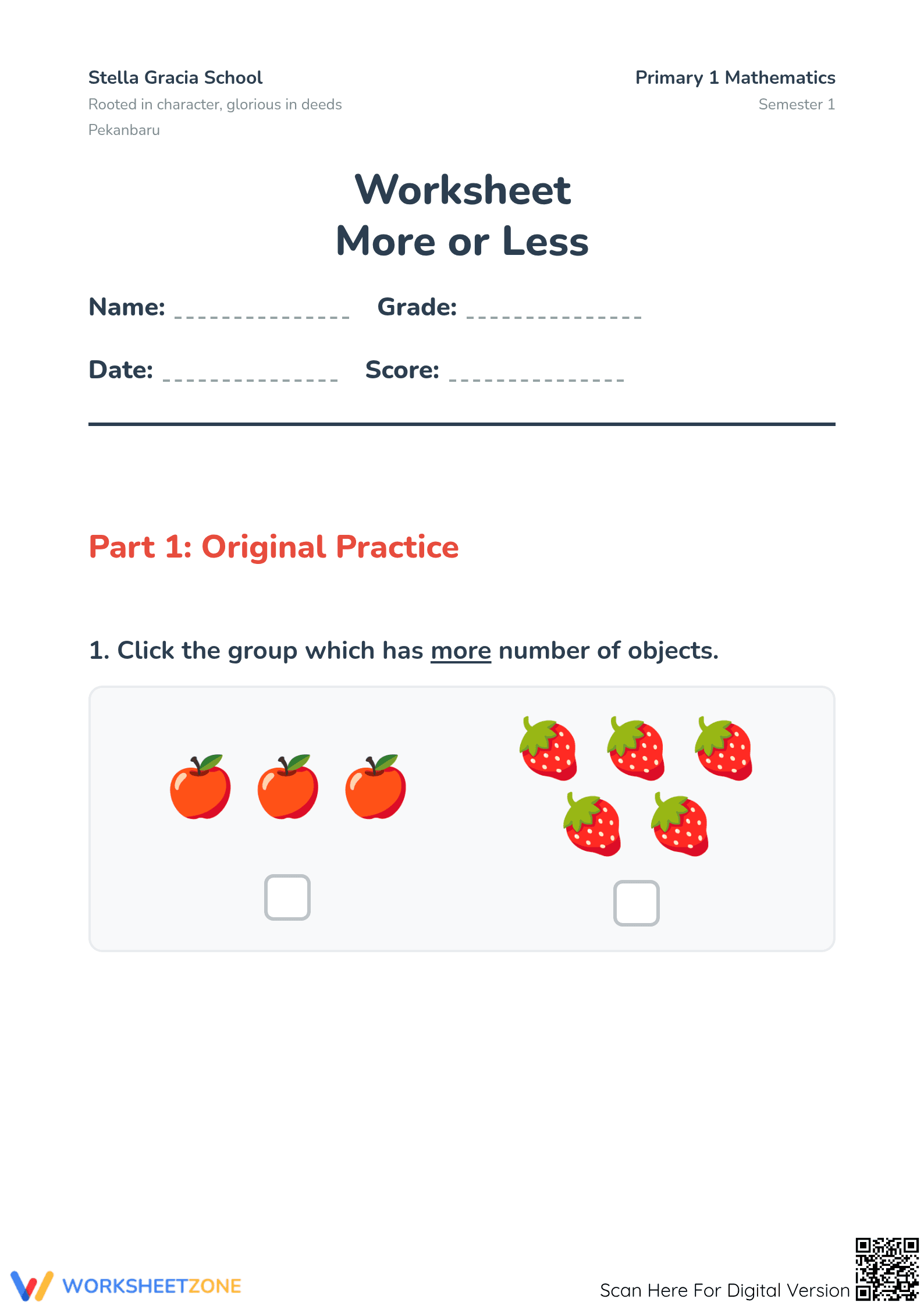
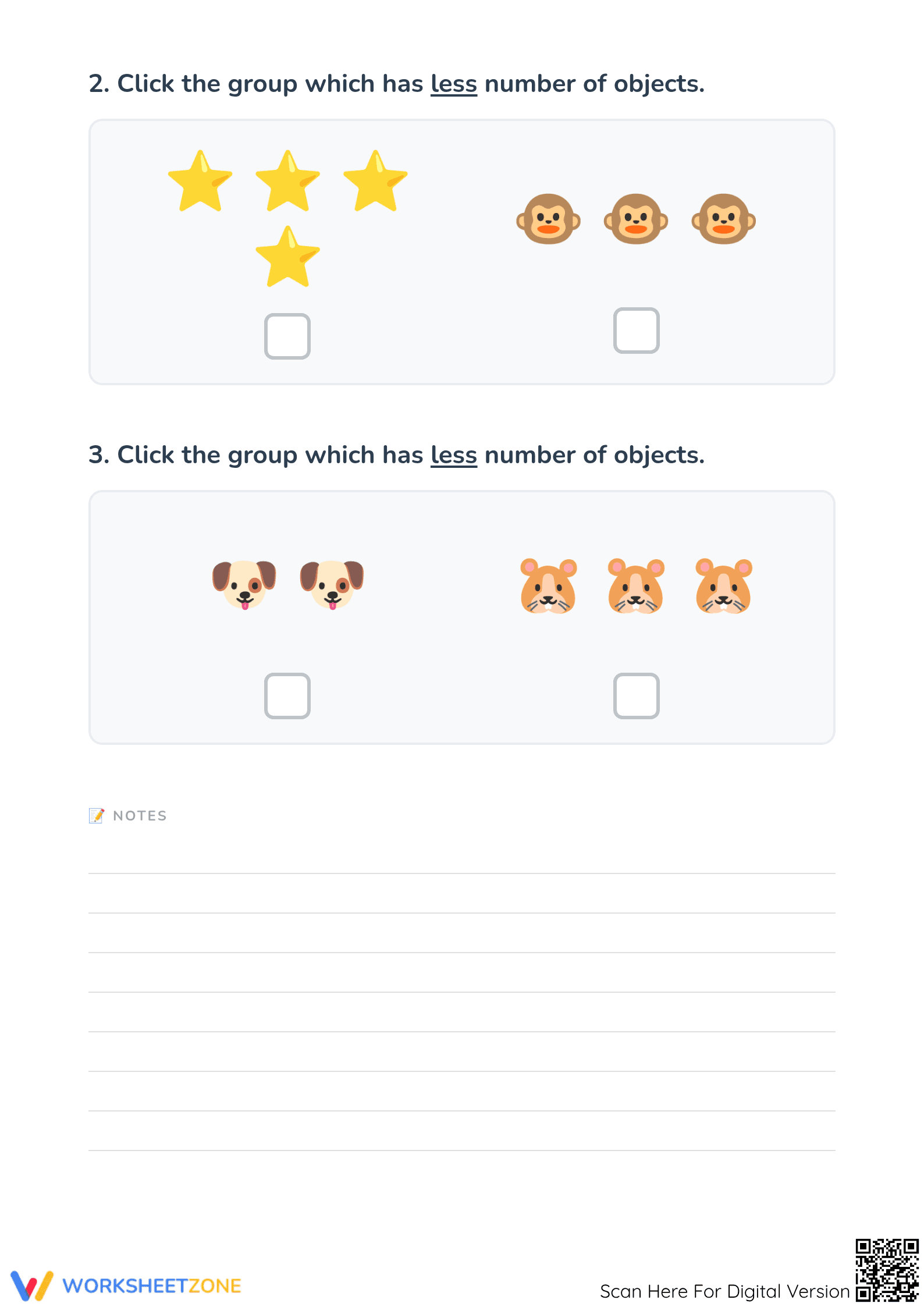
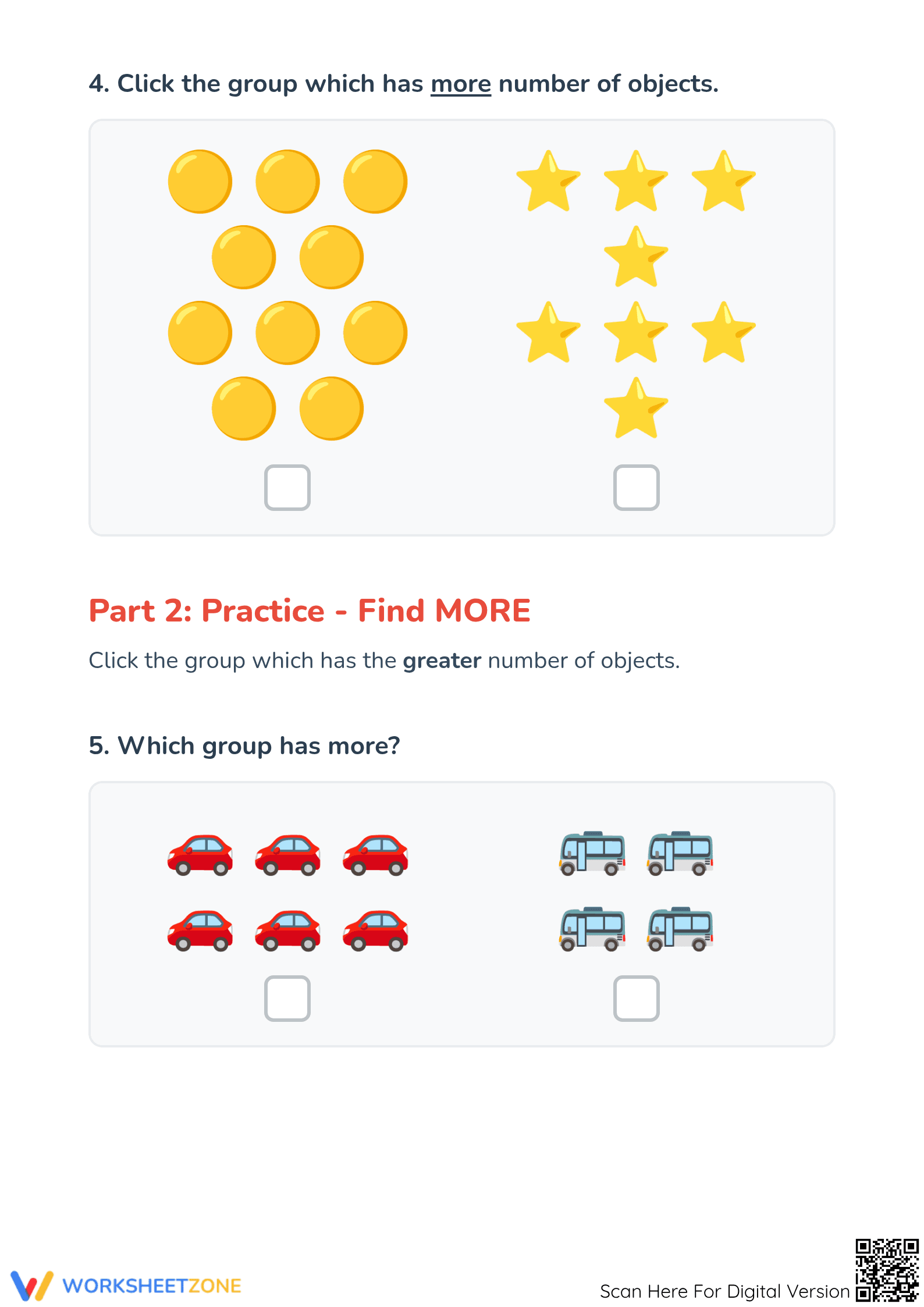
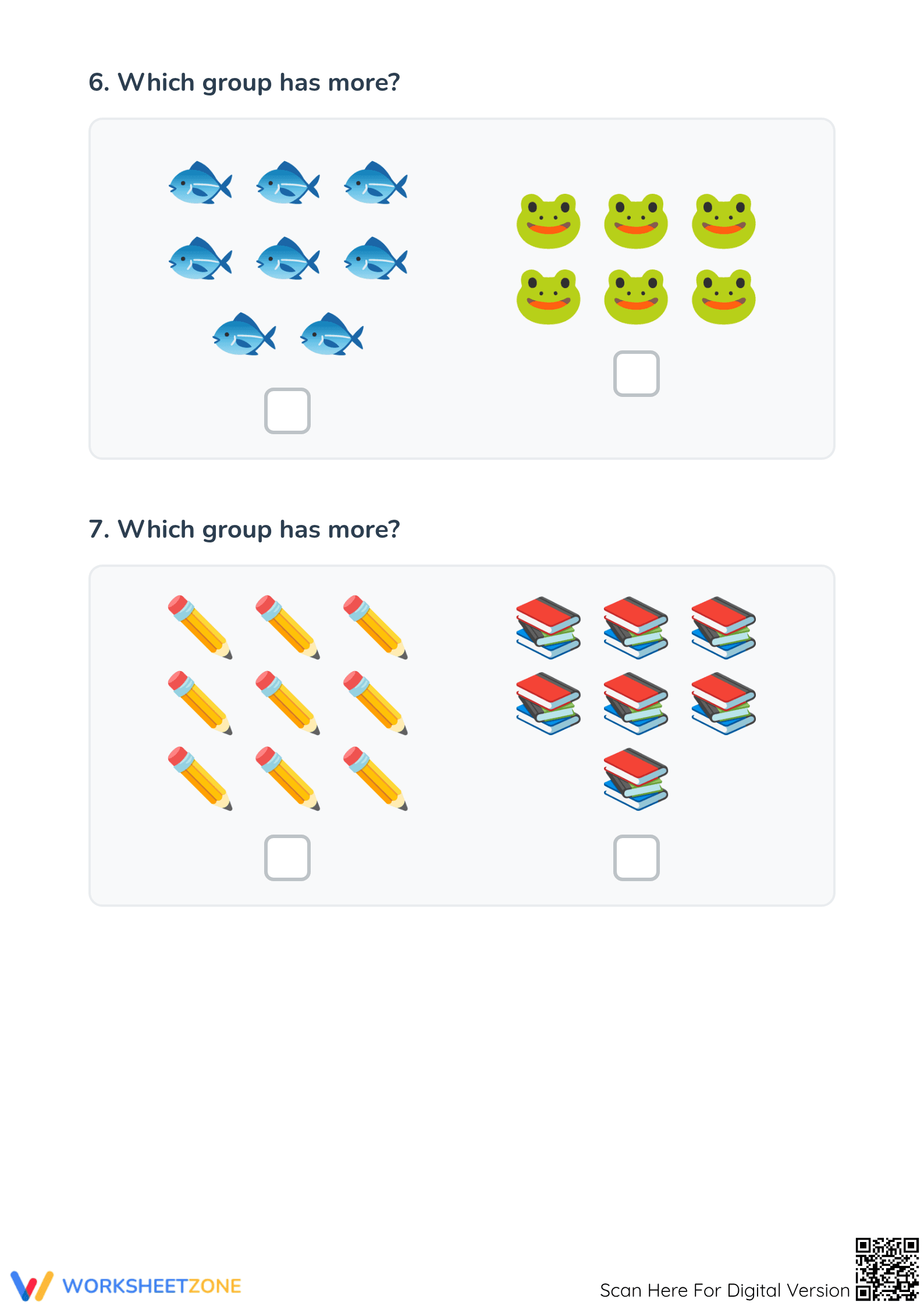
This Essential Comparing Objects worksheet provides young learners with targeted practice in identifying quantities across 5 pages. By evaluating groups of colorful illustrations, students develop a conceptual understanding of more and less. This resource ensures mastery of foundational number sense through repetitive, structured engagement with varying sets.
At a Glance
- Grade: Grade 1 · Subject: Math
- Standard:
K.CC.C.6— Identify whether the number of objects in one group is greater or less- Skill Focus: Comparing Quantities
- Format: 5 pages · 9 problems · Answer key included · PDF
- Best For: Independent math centers and homework practice
- Time: 15–20 minutes
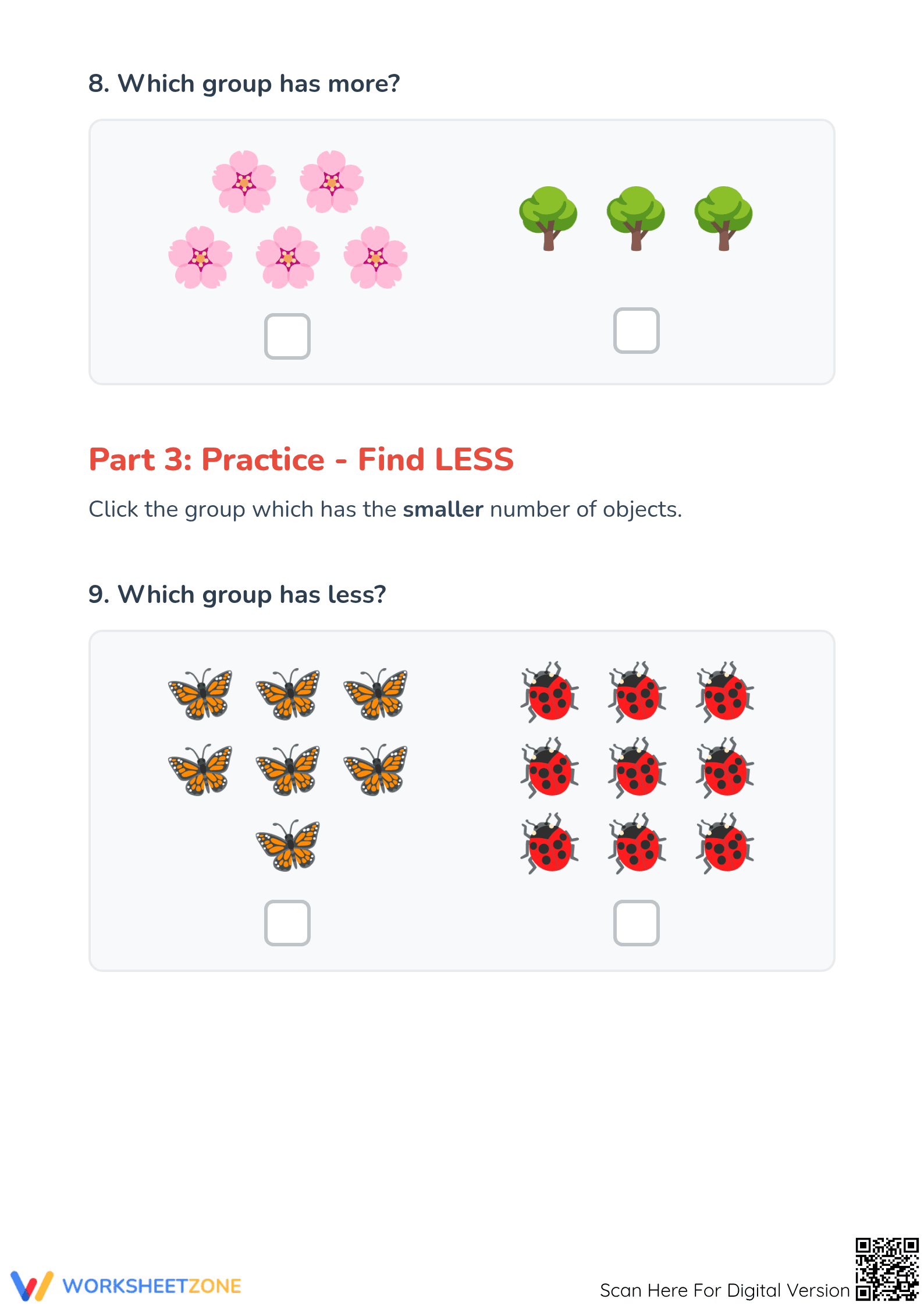
The worksheet packet contains five pages featuring nine engaging tasks. Students evaluate pairs of object groups—ranging from fruit to vehicles—selecting the group matching the specific criteria. The layout includes clear checkboxes for easy marking, generous spacing for student focus, and a dedicated notes section on page two for teacher observations or student reflections.
This resource is designed for maximum efficiency. Teachers can move from discovery to distribution in under two minutes:
- Print: Send the 5-page PDF to your network printer (20 seconds).
- Distribute: Pass out packets for independent work or math rotations (60 seconds).
- Review: Use the answer key for rapid grading or peer-checking (30 seconds).
This activity focuses on K.CC.C.6, requiring students to identify whether the number of objects in one group is greater or less than another using counting strategies. It supports Grade 1 comparisons as students transition to numeric symbols. Both standard codes can be copied directly into lesson plans, IEP goals, or district curriculum mapping tools.
This is ideal for the Independent Practice phase. After using physical manipulatives, assign this packet to solidify the transition to pictorial representations. For a formative assessment observation, watch if students use one-to-one correspondence or subitizing. Completion typically takes 15-20 minutes, making it an excellent bridge between whole-group teaching and small-group intervention.
Targeted primarily at Grade 1 students, this resource is perfect for early learners building mathematical confidence. It serves as an effective intervention tool for students needing support with number magnitude or as enrichment for preschoolers. It pairs naturally with an anchor chart displaying "More" and "Less" terminology or a counting passage.
Research from RAND AIRS 2024 emphasizes that visual quantity comparison is a critical precursor to symbolic number system mastery. This worksheet aligns with K.CC.C.6, focusing on the essential skill of identifying greater and smaller sets through pictorial representations. By engaging with structured tasks that vary between "more" and "less" prompts, students build the cognitive flexibility required for later operations. Fisher & Frey (2014) highlight the importance of high-quality scaffolds like the illustrations used here to support students as they move from concrete counting to abstract comparison. This resource provides nine high-signal tasks that allow educators to observe and measure student progress in subitizing and one-to-one correspondence accurately. The clear format ensures that students maintain focus on the core comparison objective. Educators can use these results to inform future instruction or as evidence for standards-based reporting.


