


























Views
Downloads
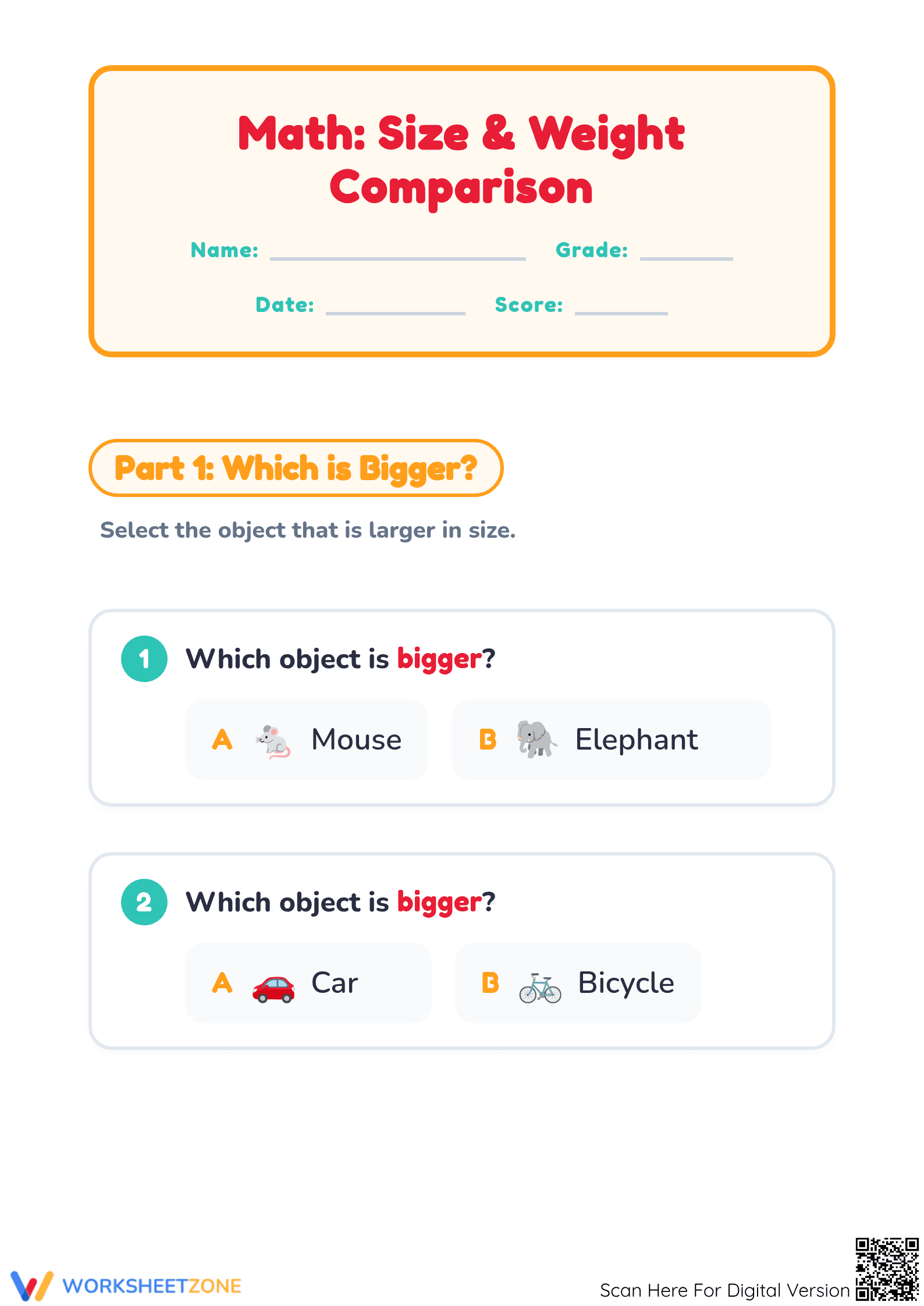

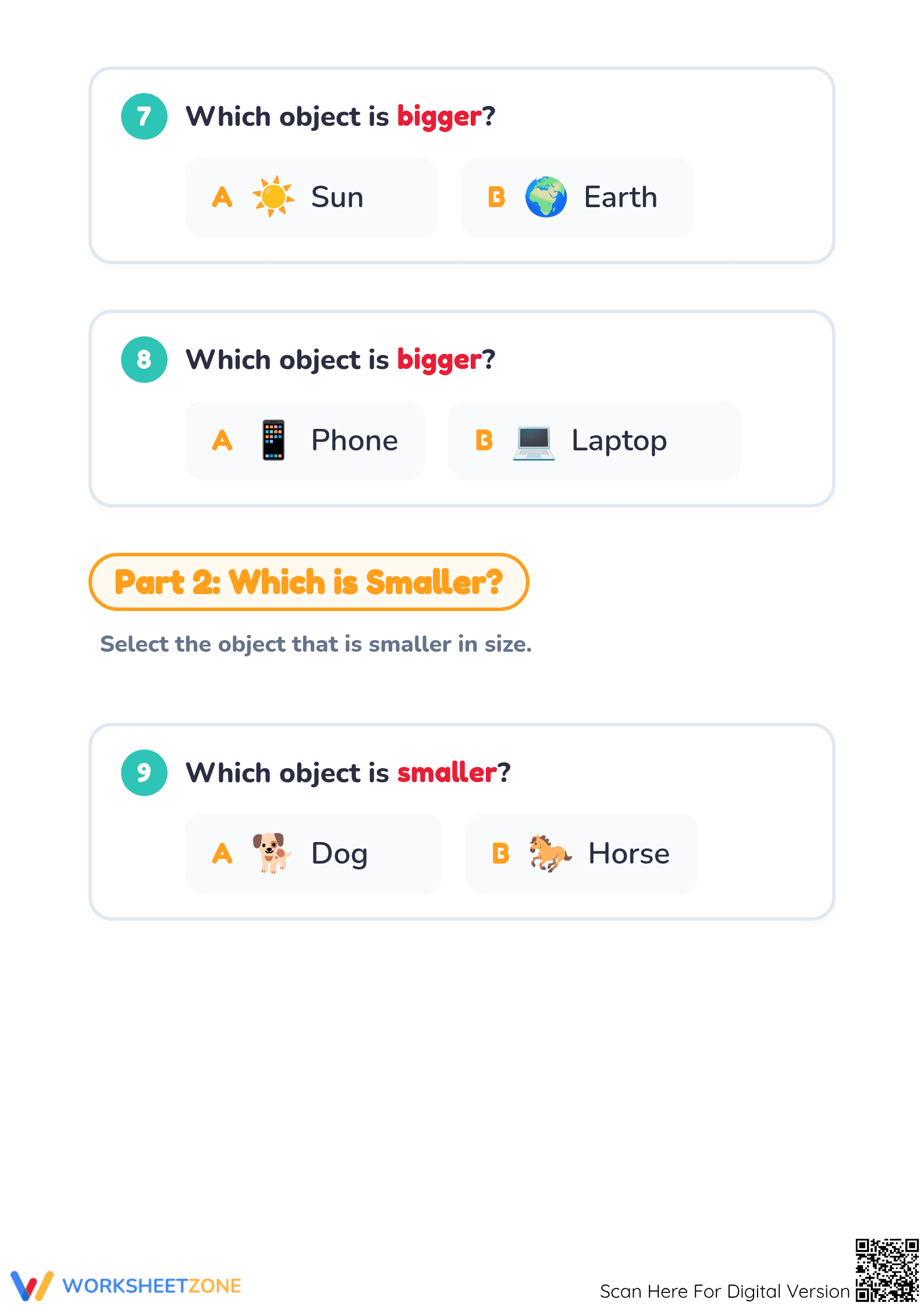
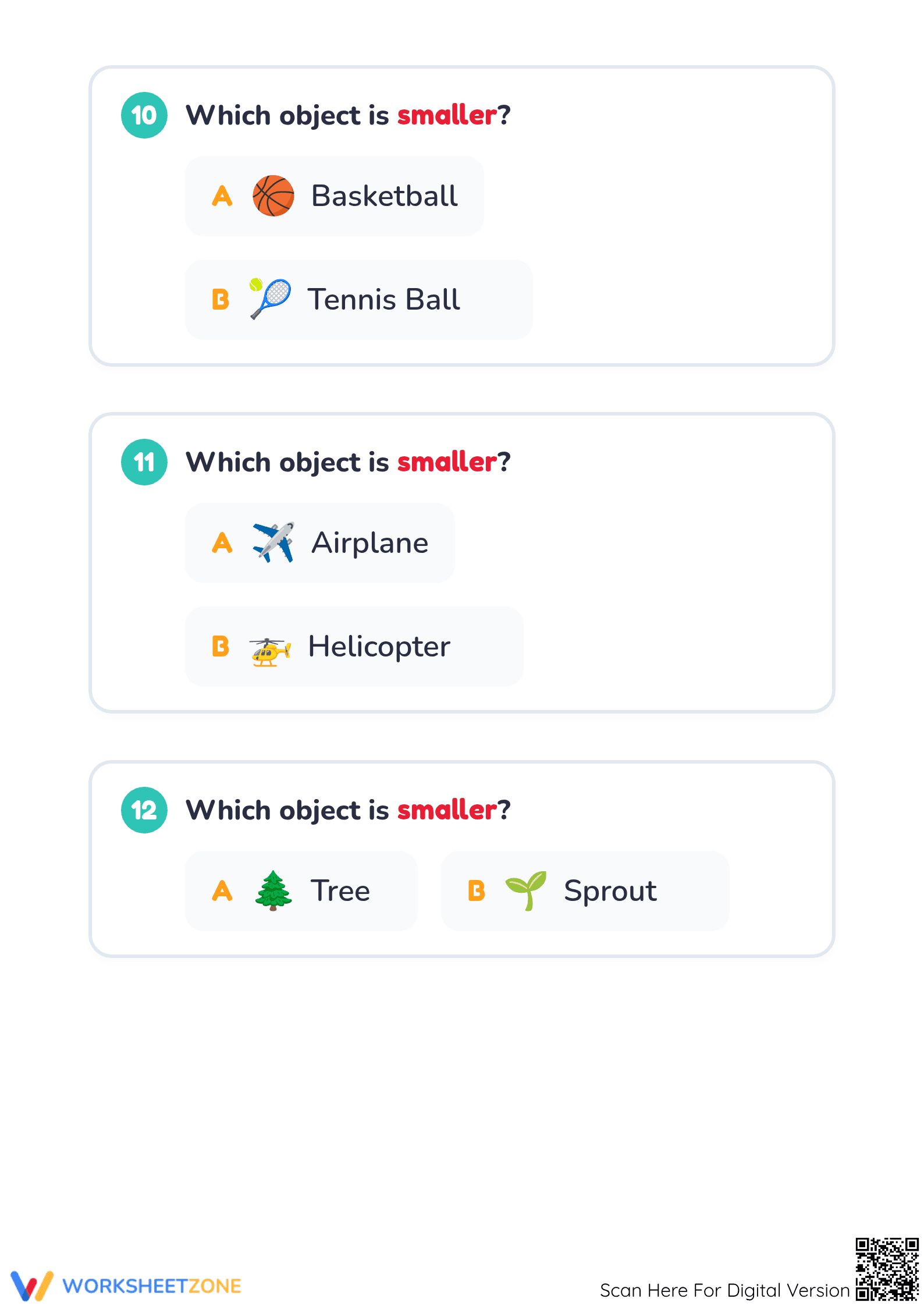
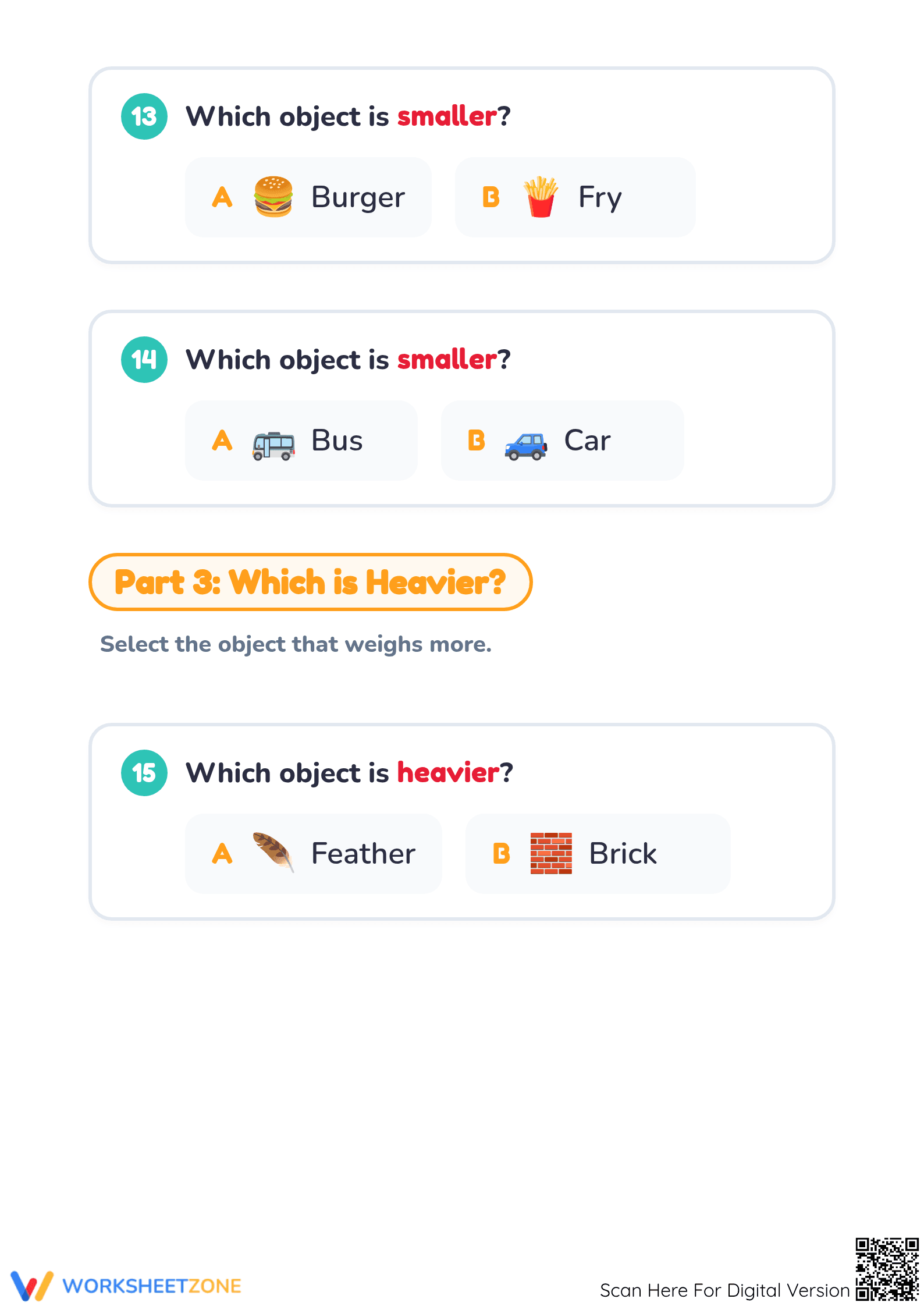

Printable Grade K-1 Math: Insect Size & Weight Sorting
Paste this activity's link or code into your existing LMS (Google Classroom, Canvas, Teams, Schoology, Moodle, etc.).
Students can open and work on the activity right away, with no student login required.
You'll still be able to track student progress and results from your teacher account.
This Interactive Insect Sorting Worksheet provides Kindergarten and Grade 1 students with a hands-on way to master size and weight comparison. By classifying insects into categories like big and small or heavy and light, learners develop foundational measurement skills while improving their critical thinking through engaging, visual sorting tasks that promote academic growth.
At a Glance
- Grade: Kindergarten · Grade 1 · Subject: Math
- Standard:
CCSS.MATH.CONTENT.K.MD.A.2— Directly compare two objects with a measurable attribute in common to see which has more- Skill Focus: Size and weight classification and comparison
- Format: 5 pages · 25 sorting tasks · Answer key included · PDF
- Best For: Independent math centers and sub plans
- Time: 15–20 minutes per page
What's Inside
This 5-page resource features interactive cut-and-paste sorting activities for early learners. Each page focuses on a different measurable attribute, including size, height, and weight. The worksheet includes a clear answer key for each page, allowing for quick grading or student self-correction. The visual nature of the insect illustrations ensures that students remain engaged while they practice essential classification skills, making learning both fun and productive.
Zero-Prep Workflow
The zero-prep workflow for this worksheet is designed to save teachers time. First, print the necessary pages for your class, which takes less than one minute. Next, distribute the sheets along with scissors and glue; students can begin immediately with minimal teacher explanation. Finally, use the included answer keys to review student work in under two minutes, making this an ideal resource for busy mornings or unexpected substitute teacher needs.
Standards Alignment
This resource is directly aligned to `CCSS.MATH.CONTENT.K.MD.A.2`: "Directly compare two objects with a measurable attribute in common, to see which object has 'more of'/'less of' the attribute." It also supports `K.MD.A.1` by helping students describe measurable attributes of objects. These standard codes can be copied directly into lesson plans, IEP goals, or district curriculum mapping tools.
How to Use It
Use this worksheet as a formative assessment after an introductory lesson on measurement. Observe how students categorize insects to identify those needing support with specific attributes like weight. It also serves as an excellent independent center activity; place the printed pages in a math station for students to complete independently. Completion time typically ranges from 15 to 20 minutes per page.
Who It's For
This activity is designed for Kindergarten and Grade 1 students developing spatial reasoning and measurement vocabulary. It is also suitable for English Language Learners (ELLs) as visual cues scaffold terms like "heavier" and "shorter." For a complete lesson, pair this worksheet with a non-fiction passage about insects or an anchor chart displaying different measurement tools and descriptive vocabulary.
According to the RAND AIRS 2024 report, hands-on classification activities in early childhood education significantly improve a student's ability to internalize abstract mathematical concepts such as relative size and weight. This Interactive Insect Sorting Worksheet directly addresses the CCSS.MATH.CONTENT.K.MD.A.2 standard by requiring students to perform direct comparisons of measurable attributes through visual and tactile engagement. By engaging in these sorting tasks, students develop the foundational critical thinking skills necessary for later success in more complex data analysis and geometry. The structured nature of the tasks, combined with immediate visual feedback, ensures that learners can bridge the gap between concrete observation and symbolic representation. This approach aligns with evidence-based practices for early math instruction, providing a robust framework for developing measurement fluency and comparative logic in a classroom setting, ensuring all students reach mastery.


