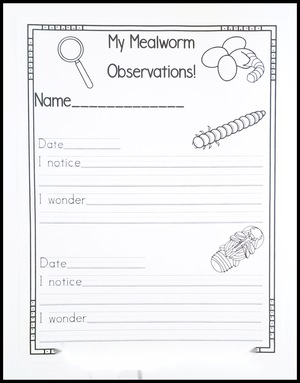
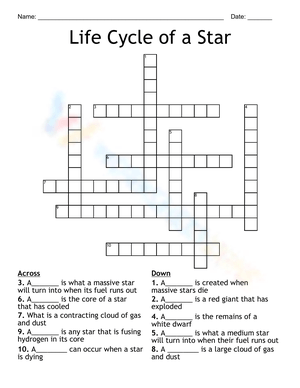
These 8th grade life cycle worksheets resources give middle school science teachers ready-to-print tasks built for the actual demands of eighth-grade life science — not simplified identification exercises, but work that asks students to sequence stages, connect physical structures to reproductive success, and compare patterns across different organisms.
The Specific Skills These Worksheets Target
At Grade 8, life cycle work is less about knowing that a frog passes through egg, tadpole, and adult stages and more about explaining why those stages exist and what makes each one critical to the species continuing. These worksheets push students toward four interconnected skills. They identify stages in accurate order. They connect physical structures — gill filaments, flower parts, seed coats — to the function of reproduction or dispersal. They compare life cycle patterns across plant and animal groups, noticing which stages are shared and which are organism-specific. Finally, they explain how a change between stages improves an organism's chances of reproductive success. That last skill is where Grade 8 separates from earlier life cycle practice, and it's where the worksheet prompts are deliberately aimed.
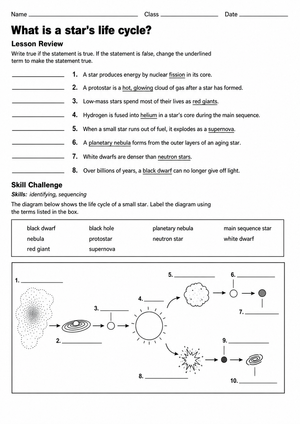
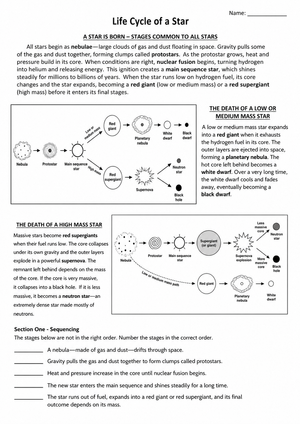
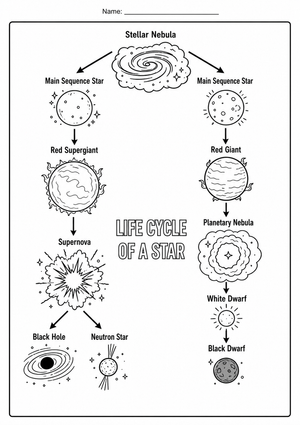
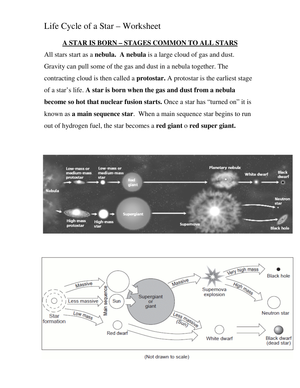
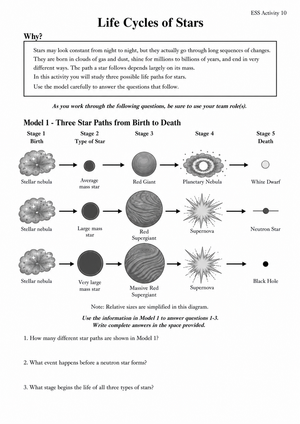
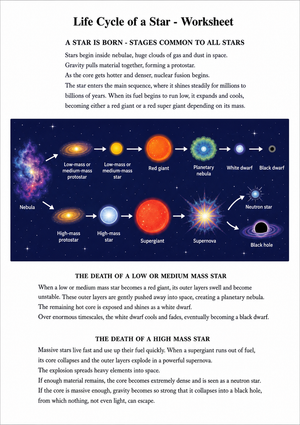
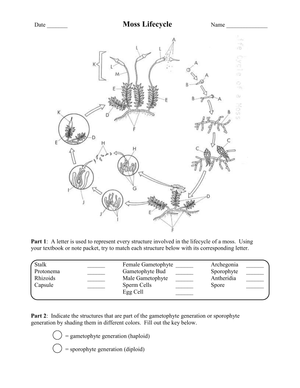
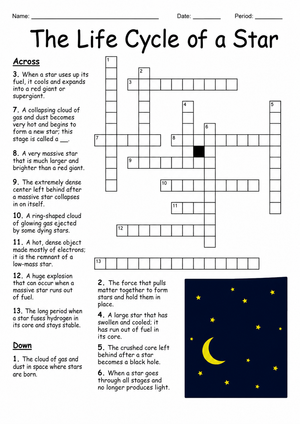
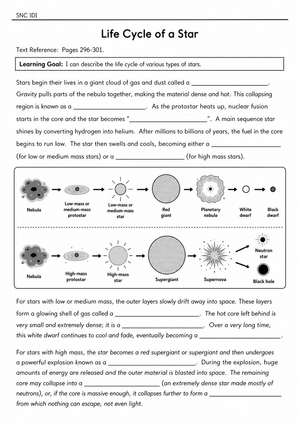
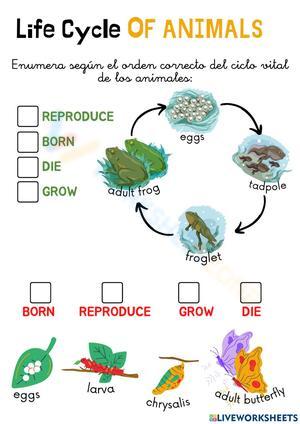
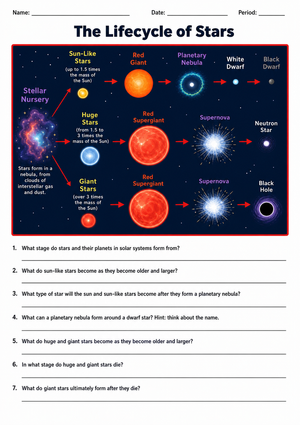
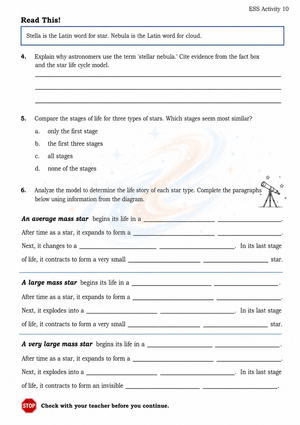
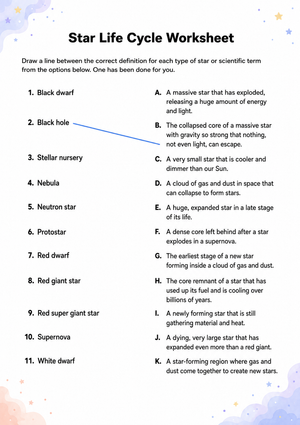
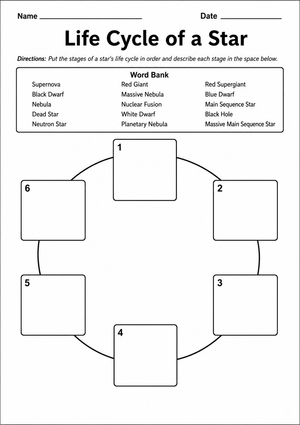
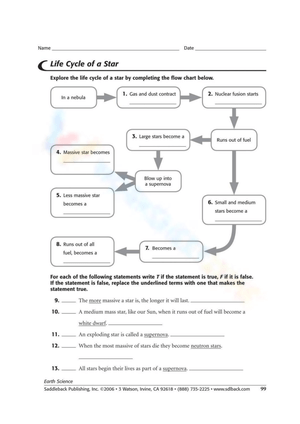
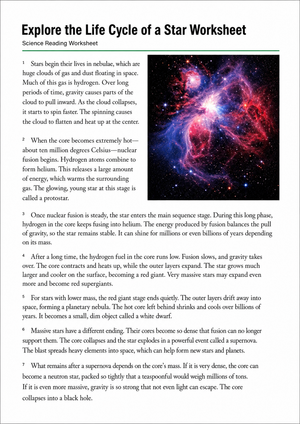
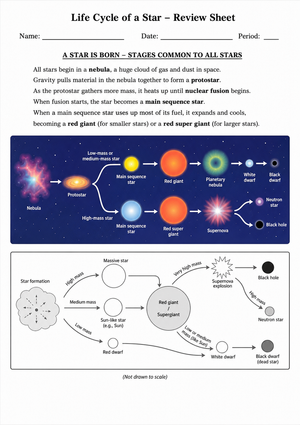
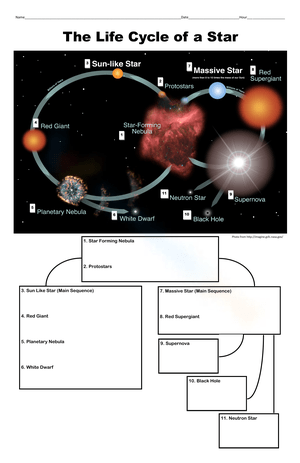
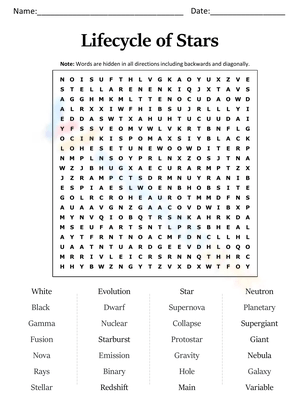
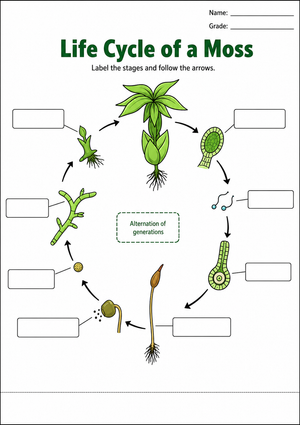
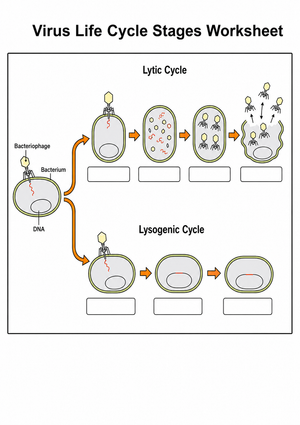
The set spans several organism types — animal, plant, frog, human, and star life cycles. That range serves middle school planning better than a single-organism focus. When students can place frog metamorphosis alongside angiosperm reproduction and articulate what those cycles share, they are doing the kind of cross-pattern comparison NGSS actually targets at this level.
Common Misconceptions to Watch For and Correct
The most persistent error at Grade 8 is treating the life cycle as a sequence rather than a cycle. Students who correctly order egg, tadpole, and adult will still write explanations that stop at the adult stage — as if the organism's story ends there. They are not yet seeing that the point of reaching adulthood is reproduction, and that reproduction closes the loop back to the next generation. A short constructed-response prompt asking what happens after the adult stage and why it matters surfaces this gap immediately. Without that prompt, the labeling task alone will not reveal it.
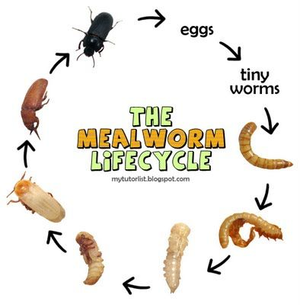
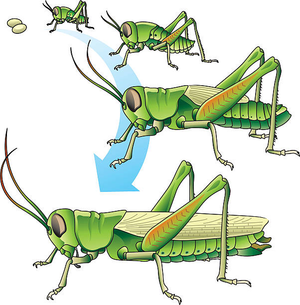
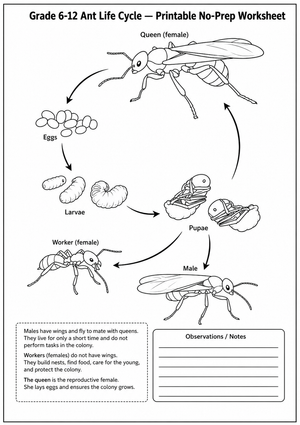
A second common error involves complete versus incomplete metamorphosis. Students frequently memorize the four stages of complete metamorphosis but cannot explain why the pupal stage exists. When asked what the organism is actually doing inside the pupal case, they either guess or go blank. Worksheets that pair a stage diagram with an evidence-based explanation prompt catch this more reliably than a multiple-choice check ever will.
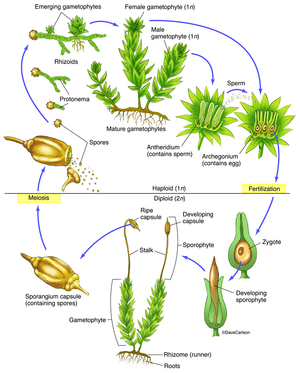
A third error, particularly with plant life cycles, is conflating pollination and fertilization. Students know that flowers and insects are involved, but they treat pollen transfer and seed production as the same event. A matching task that asks students to place pollination, fertilization, germination, and dispersal in sequence — and briefly describe what is actually happening at each step — shows quickly who understands the distinction and who is filling blanks from memory.
How to Build These Worksheets Into Your Lesson Plans
The most effective classroom use treats each worksheet as one component in a sequence, not the lesson itself. A clean entry routine: project the organism diagram for two minutes before distributing anything, then let students work the worksheet for eight minutes independently, then spend four minutes in partner talk about one stage they found surprising or confusing. That last step moves thinking from private to social before students write — which consistently produces stronger explanations than writing cold.
For the 8th grade life cycle worksheets resources tied to specific organisms, small-group reteaching is particularly productive. Pull three or four students who correctly ordered stages on a quiz but wrote vague explanations. Give them one worksheet focused on structure-function connections — specifically which anatomical feature makes reproduction more likely at each stage — and ask them to defend their answers to each other before writing. That peer-defense step, even if it only lasts three minutes, sharpens the explanation they eventually put on paper.
Printable worksheets also solve sub-plan and co-teaching problems that device-dependent resources do not. When technology is unavailable or a plan needs to run without live facilitation, a clearly formatted worksheet with a vocabulary bank and a written response prompt gives students a real science task, not busywork.
- Bell ringer: Order stages for one organism, then write one sentence explaining the transition between the two middle stages.
- Exit ticket: Name one structure from today's organism and explain how it increases reproductive success.
- Small-group reteach: Sort stage cards, compare sequences with a partner, then write a joint explanation of the most important transition.
- Sub plan: One worksheet with vocabulary bank, stage diagram, and a constructed-response prompt that requires evidence drawn directly from the diagram.
Standard Alignment
NGSS MS-LS1-4 is the primary anchor for Grade 8 life cycle instruction. The performance expectation asks students to use argument from evidence to explain how animal behaviors and specialized plant structures affect the probability of successful reproduction. That is a more demanding task than labeling a diagram — it asks students to reason from evidence toward a claim about survival and continuation. A worksheet that stops at "label the stages" does not fully address this target. One that adds a prompt asking students to identify which structure or behavior in the diagram makes reproduction more likely starts to close that gap. The NGSS Evidence Statements document for MS-LS1-4, released June 2015, specifically points toward using evidence to explain reproductive behaviors and structural adaptations in plants — both of which appear in the organism comparisons this set supports.
Differentiating These Worksheets Across Readiness Levels
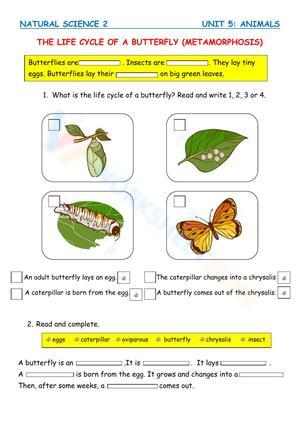
The most practical move with these worksheets is keeping the same core task for the whole class and changing the response demand. Every student sequences stages and labels structures. Students who need more challenge add a written comparison — how does the frog life cycle differ from the butterfly's at the larval stage, and what does that difference suggest about survival strategy? Students who need more support get a partial organizer or a vocabulary list to reference as they work. Nobody gets a different worksheet; you adjust what they produce in response to the same material.
For students who freeze when asked to produce open-ended written explanations, a sentence frame surfaces knowledge that the open prompt never reaches: "At the ______ stage, the organism ______, which increases reproductive success because ______." These students often understand more than their blank page shows. The frame gives them a way in without giving away the reasoning.
Advanced learners benefit from cross-organism comparison tasks that the 8th grade life cycle worksheets set supports well. Instead of answering questions about one organism, they compare two, write a claim about what the patterns share, and defend it with specific stage-level evidence from both worksheets. That moves them toward the argument-based reasoning that MS-LS1-4 actually targets — and it uses materials already on hand rather than requiring a separate extension task.
Frequently Asked Questions
What topics and organisms do these worksheets cover?
The set includes worksheets tied to animal, plant, human, frog, and star life cycles. That range makes it easier to plan comparison-based lessons where students move across organism types in a single unit, building the cross-pattern reasoning that Grade 8 science requires.
Are these formatted for printing without extra prep?
Yes. The worksheets are available as printable PDFs with layouts clean enough for students to work through independently. Response prompts are clearly separated from diagrams and vocabulary banks, which matters when students are working without direct teacher support — during a sub day, an independent station, or a quiet review block.
How do I connect these worksheets to NGSS without rewriting them?
The simplest move is a follow-up question, not a new handout. After students complete the visible task — labeling, sequencing, matching — ask them to underline one piece of evidence on the worksheet and write one sentence explaining how that structure or behavior affects reproductive success. That single step raises the task closer to MS-LS1-4 without changing the worksheet itself.
Can these worksheets be used for intervention?
Consistently. The printable format works well for small groups because a shared visual reference makes discussion easier — students who struggle with abstract explanation can point to something concrete on the worksheet while they talk through their thinking. The 8th grade life cycle worksheets resources work best in intervention when the labeled diagram is the starting point for a conversation, not the ending point of the task.












 Interactive Worksheet Maker
 Quiz Maker
 Word Search Maker
 Crossword Puzzle Maker
 Word Scramble Generator
 Sentence Scramble Generator
 Handwriting Worksheet Generator
 Name Tracing Generator
 Fill In The Blank Generator