




























Views
Downloads

Grade 7-9 Snowflake Life Cycle — Printable No-Prep Guide

Paste this activity's link or code into your existing LMS (Google Classroom, Canvas, Teams, Schoology, Moodle, etc.).
Students can open and work on the activity right away, with no student login required.
You'll still be able to track student progress and results from your teacher account.
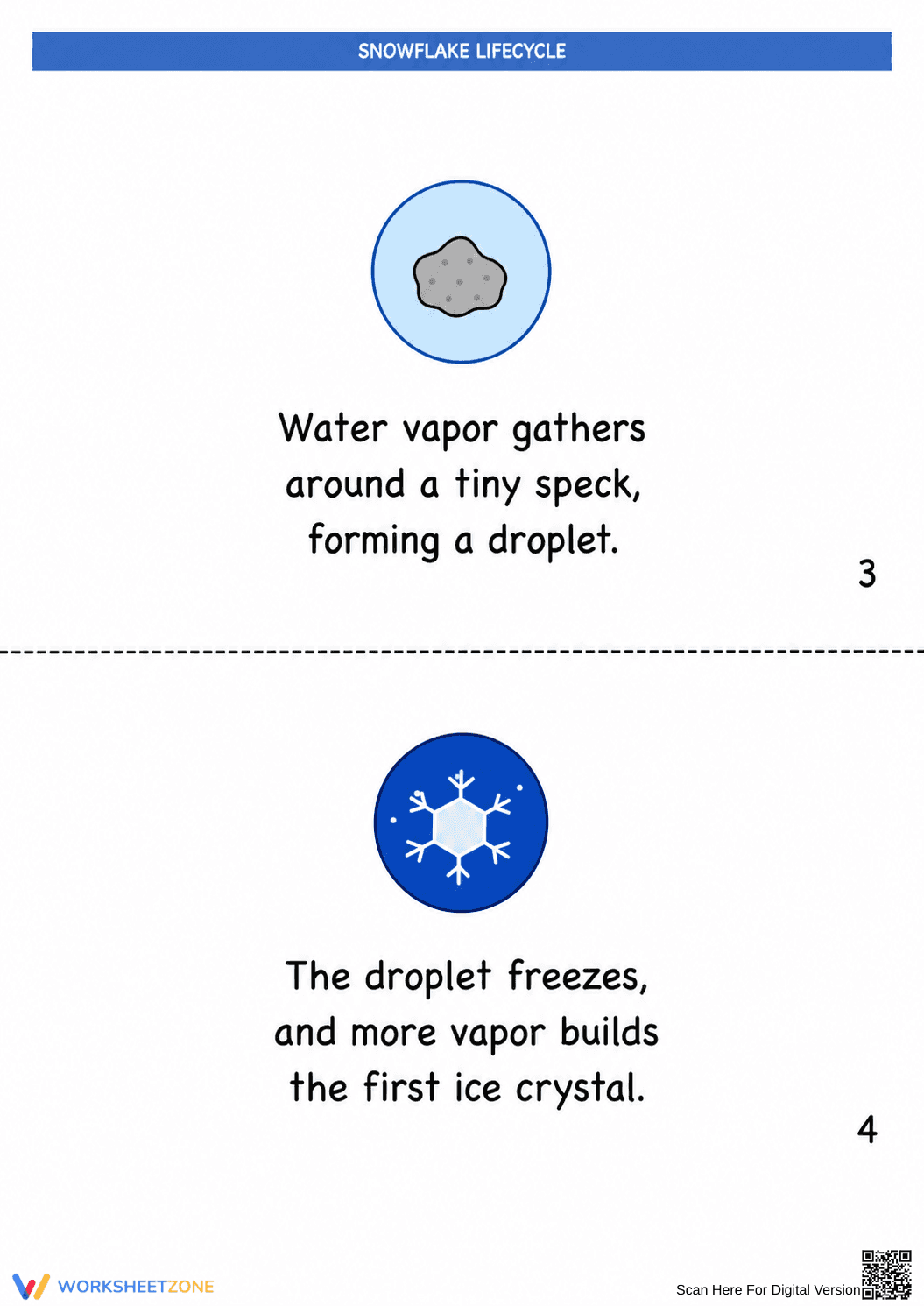
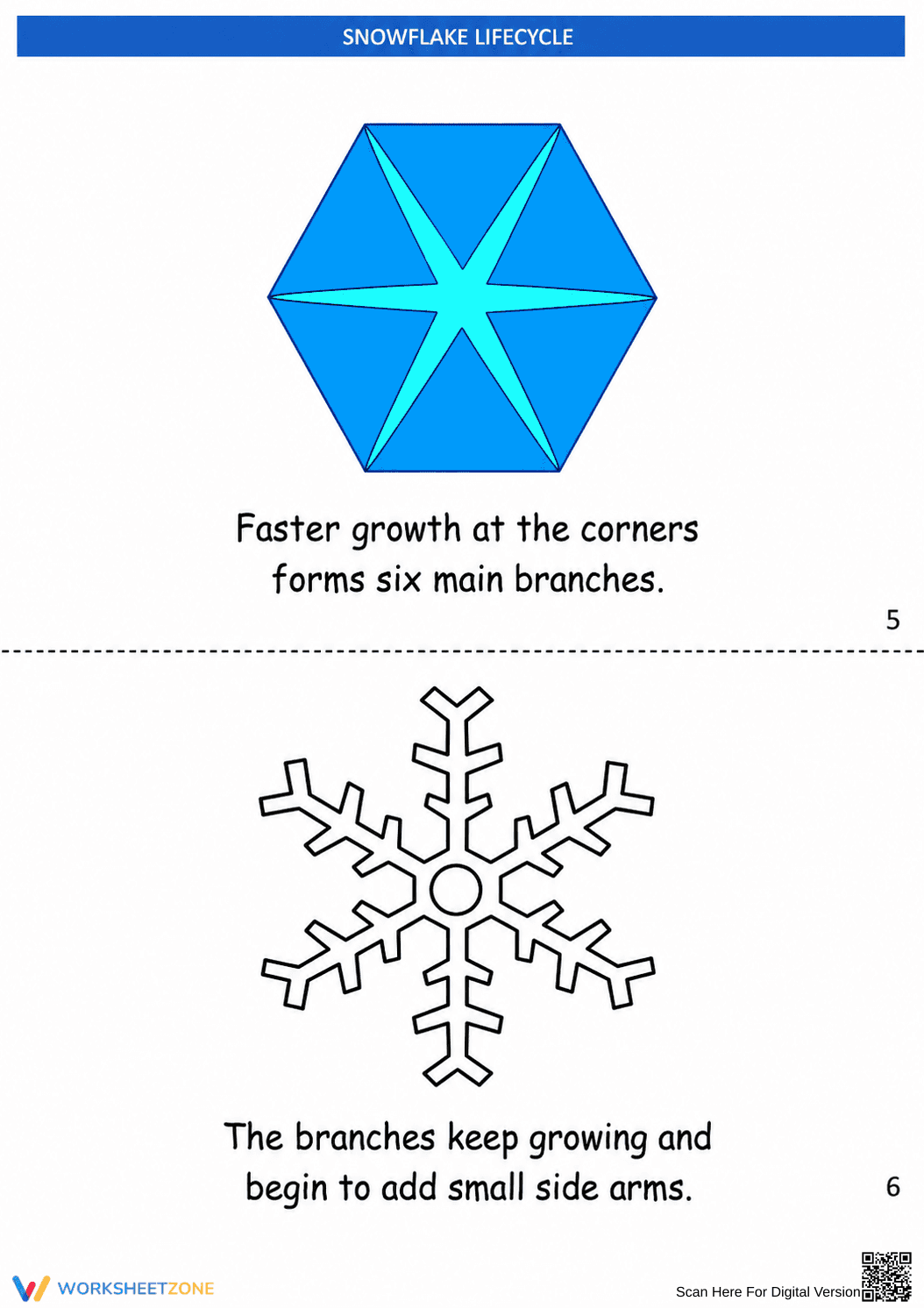
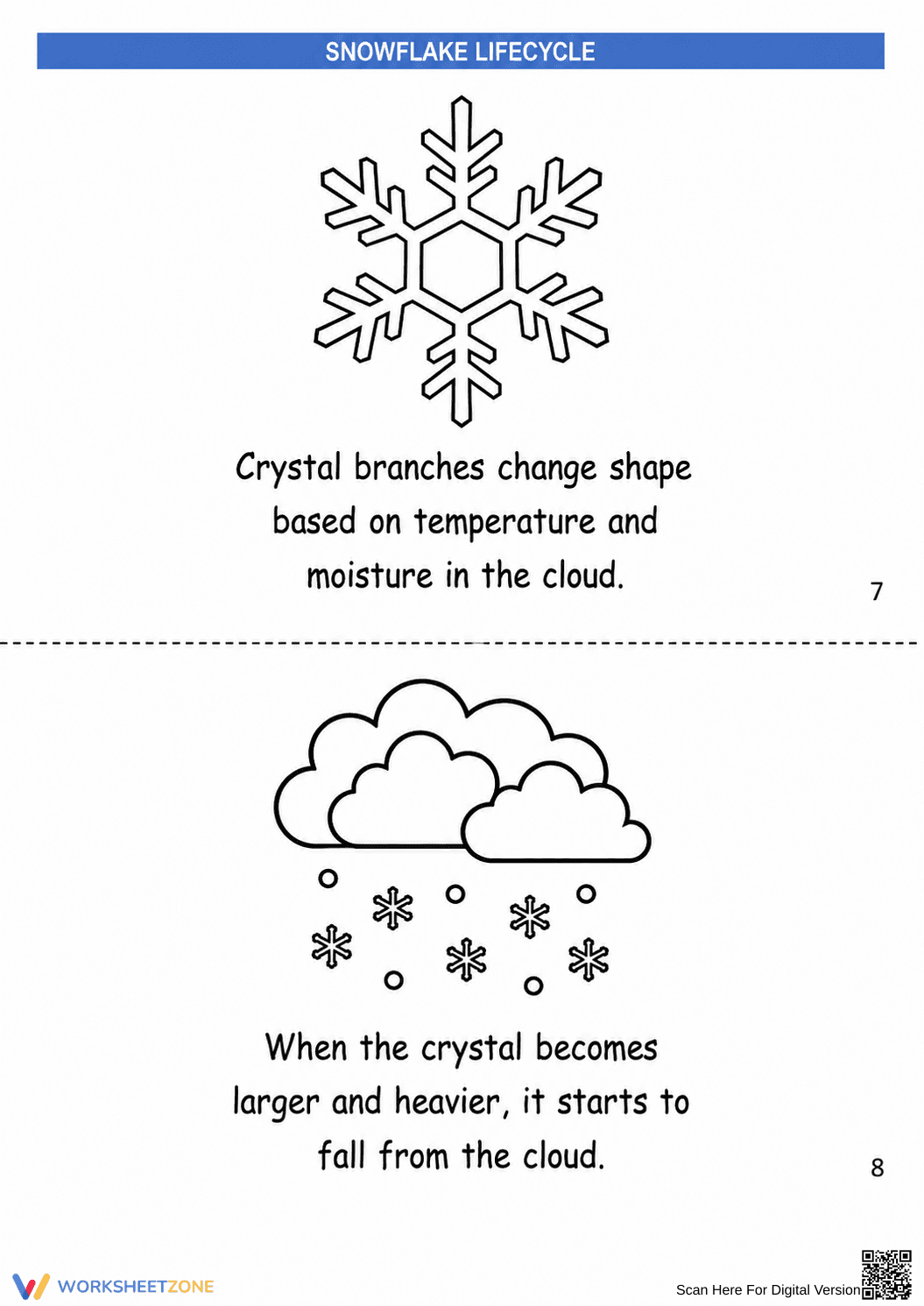
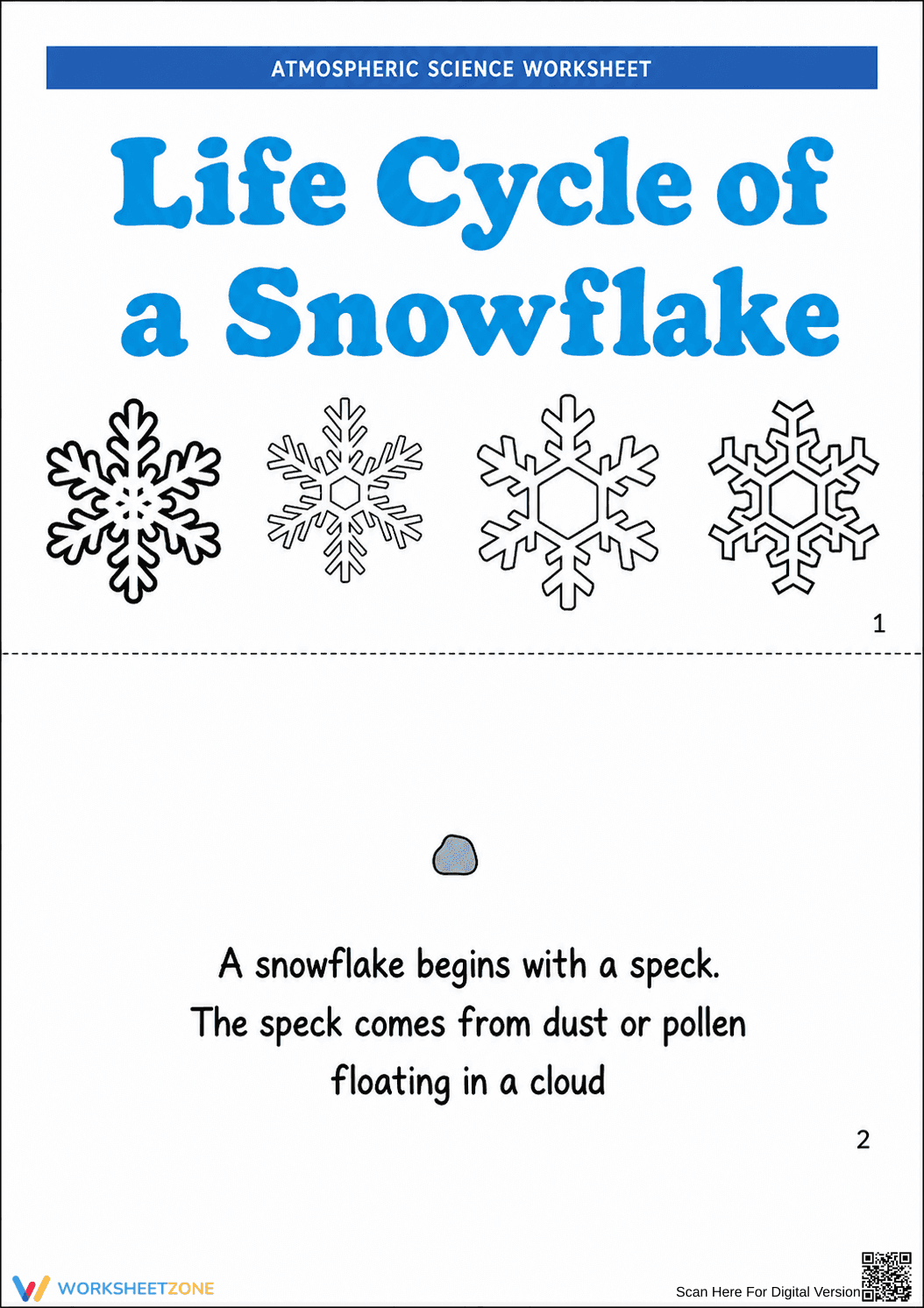
This Grade 7-9 science resource provides a clear, step-by-step visual guide to the formation of a snowflake. Students follow the transition from a microscopic speck of dust to a complex ice crystal falling from the clouds. It simplifies atmospheric physics into an accessible sequence that reinforces concepts of phase changes and crystallization.
At a Glance
- Grade: 7-9 · Subject: Science
- Standard:
MS-ESS2-4— Develop a model to describe the cycling of water- Skill Focus: Atmospheric crystallization and sequencing
- Format: 4 pages · 8 panels · No answer key needed · PDF
- Best For: Supplemental weather and phase change units
- Time: 15–20 minutes
The resource consists of four printable pages, each containing two numbered panels that detail the snowflake's journey. It begins with the nucleation process around pollen or dust and progresses through water vapor accumulation, freezing, and the development of hexagonal branches. The clear illustrations and concise text descriptions make it an ideal tool for visual learners to grasp complex earth science concepts.
This resource is designed for a zero-prep workflow. First, print the four pages (30 seconds). Second, distribute the sheets to students for reading or assembly into a mini-booklet (1 minute). Third, review the sequence as a class to check for understanding of phase changes (5 minutes). Total teacher preparation time is under two minutes, making it an excellent choice for emergency sub plans or quick bell-ringer activities.
Aligned to MS-ESS2-4, this worksheet helps students model how water changes state and moves through the Earth's systems. It specifically addresses how energy and gravity influence the water cycle and atmospheric crystallization. Both standard codes can be copied directly into lesson plans, IEP goals, or district curriculum mapping tools.
Use this visual guide during a unit on weather or the states of matter. It works well as a formative assessment after a lecture on crystallization, where teachers can observe students as they explain the transition from liquid droplet to solid ice crystal. Expected completion time is approximately 15 to 20 minutes depending on whether students are asked to summarize the steps in their own words or assemble the booklet.
This material is designed for middle and high school students in general science or biology courses. It is particularly effective for students who benefit from broken-down, sequential information and visual scaffolds. Pair this worksheet with a video on crystal growth or a laboratory activity involving supersaturated solutions to provide a comprehensive learning experience.
According to Fisher & Frey (2014), the use of visual sequencing and informational text supports the gradual release of responsibility by providing students with a clear mental model of complex natural processes. This snowflake lifecycle guide utilizes these principles to help students master the MS-ESS2-4 standard, which requires them to develop a model to describe the cycling of water. By breaking down the crystallization process into eight distinct, numbered stages, the resource reduces cognitive load while maintaining scientific accuracy. Research from the NAEP suggests that students who can successfully sequence physical changes are better prepared for higher-level chemistry and earth science concepts. This printable guide serves as a foundational tool for understanding how microscopic interactions lead to macroscopic weather events. The inclusion of specific terminology ensures that students are building the academic vocabulary necessary for scientific literacy.


