


























Views
Downloads






Snowflake Life Cycle Worksheet (3 Levels) | Grade 7-9 Ready
Paste this activity's link or code into your existing LMS (Google Classroom, Canvas, Teams, Schoology, Moodle, etc.).
Students can open and work on the activity right away, with no student login required.
You'll still be able to track student progress and results from your teacher account.
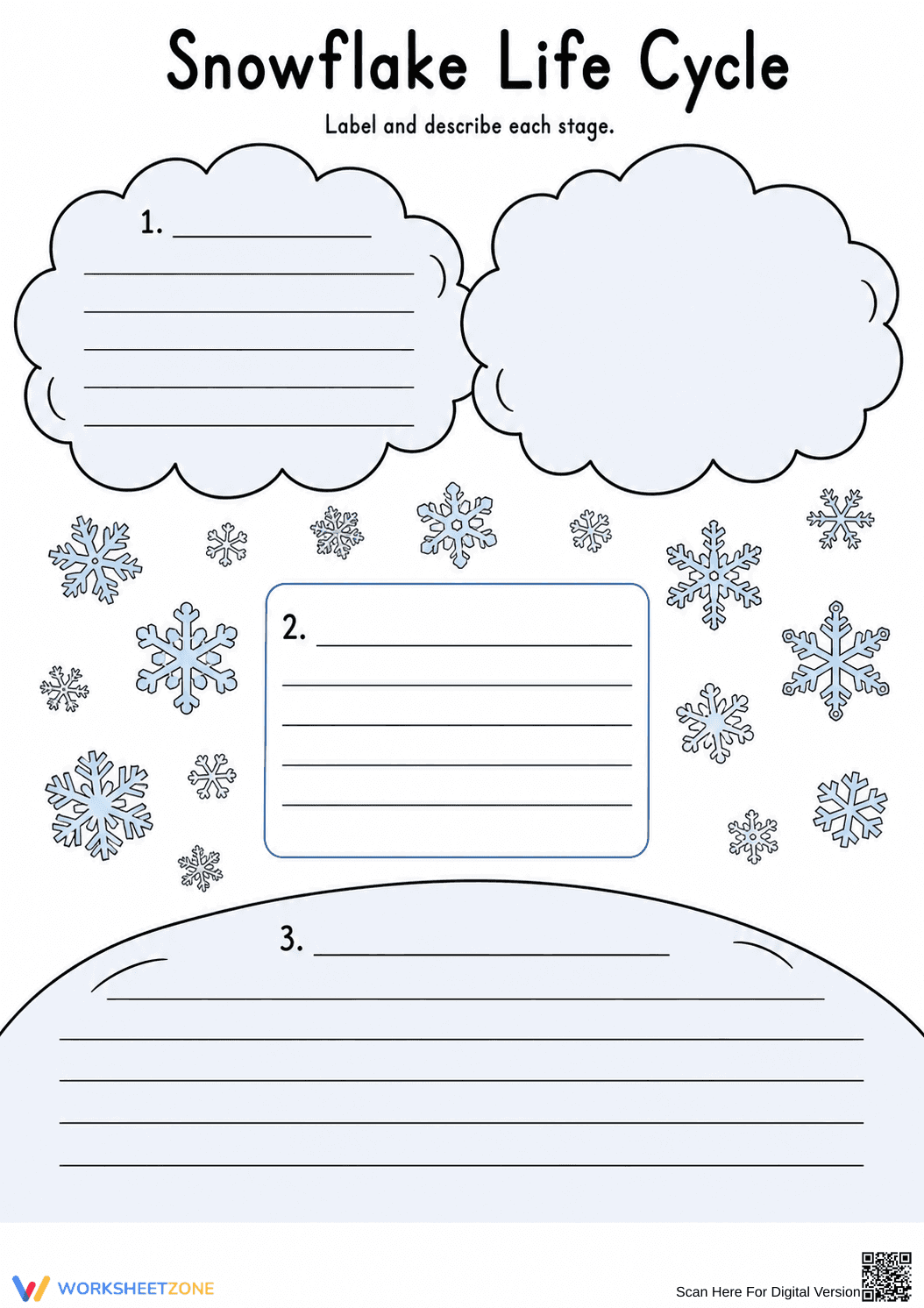
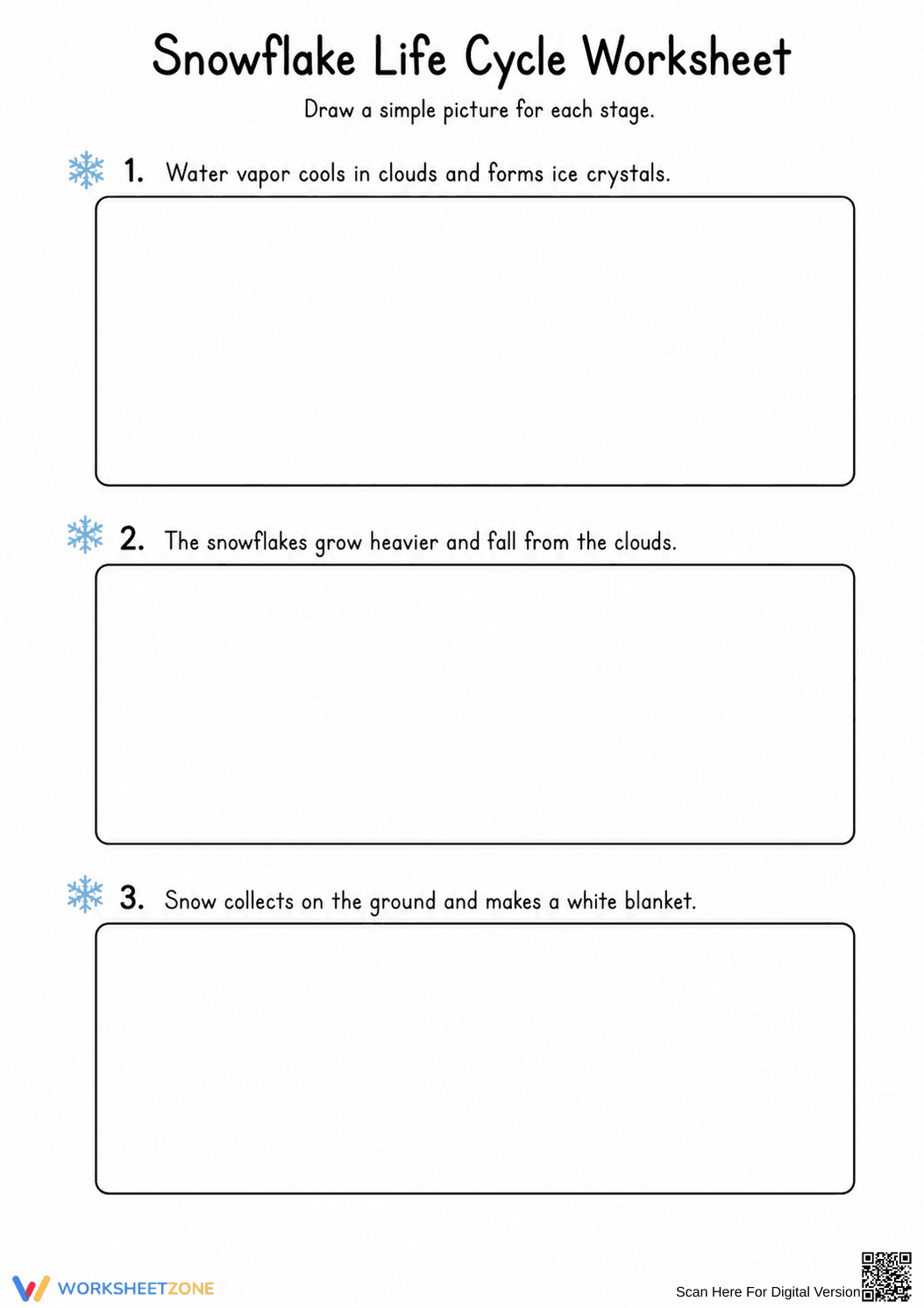
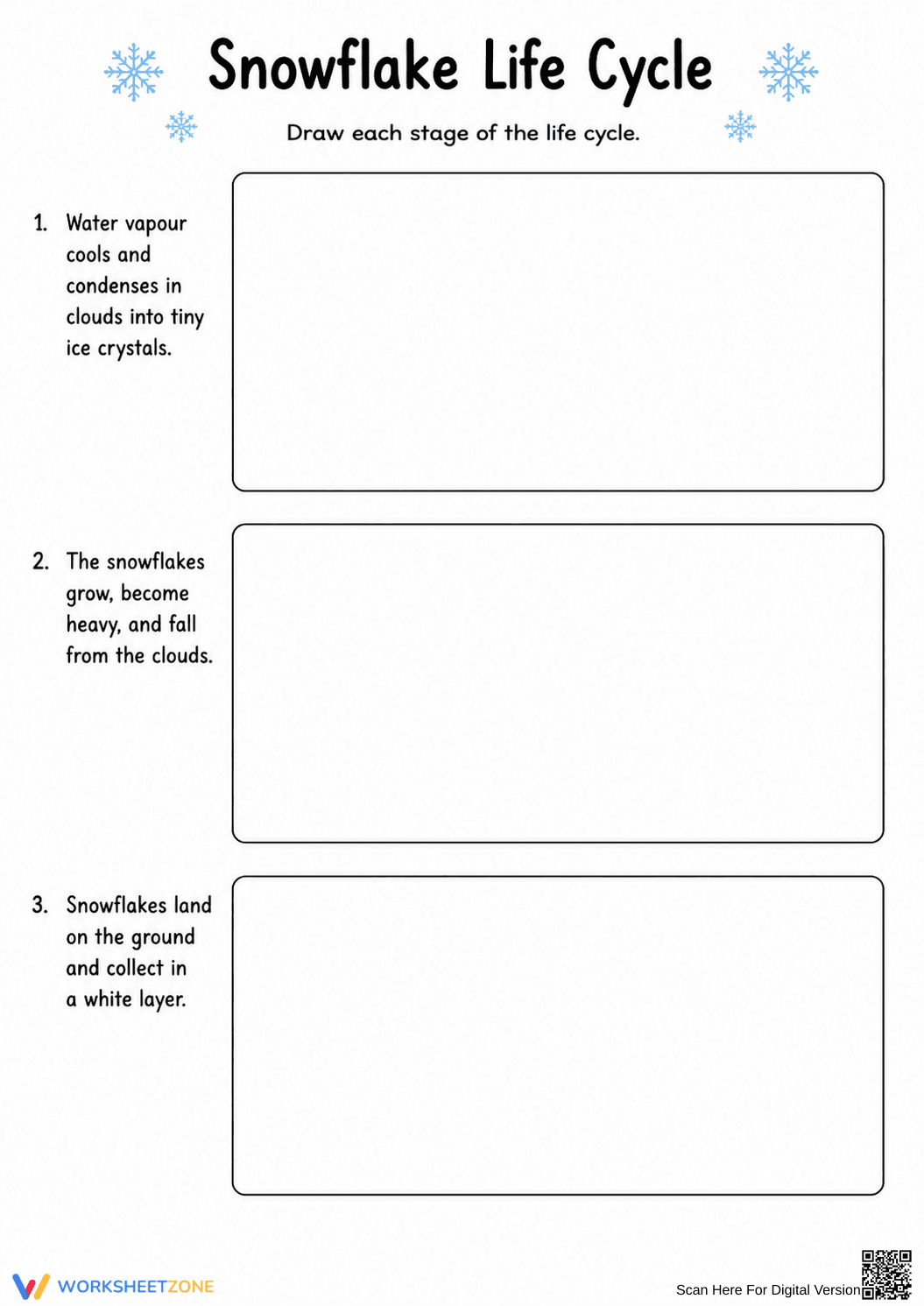
This Grade 7-9 snowflake life cycle worksheet provides a comprehensive look at the physical science behind winter precipitation. Students track water vapor as it condenses into ice crystals, falls as snow, and accumulates on the ground. By engaging with these materials, learners master the specific vocabulary and phase changes essential for understanding earth science systems.
At a Glance
- Grade: 7-9 · Subject: Science
- Standard:
MS-ESS2-4— Develop a model to describe the cycling of water through Earth's systems.- Skill Focus: Phase changes and atmospheric cycles
- Format: 14 pages · 12 tasks · Answer key included · PDF
- Best For: Winter science units and weather modeling
- Time: 30–45 minutes
This 14-page instructional packet features multiple versions of the snowflake life cycle to accommodate various learning styles. It includes detailed reading passages, cut-and-paste sequencing activities, and blank templates for student-led illustration. The resource also provides regional spelling variations for "vapor" and "vapour," ensuring it is ready for use in any English-speaking classroom.
Level Descriptions
- Below Grade Level: Focuses on the basic 3-step sequence using visual cut-and-paste prompts and simplified vocabulary to build foundational understanding of the water cycle.
- On Grade Level: Incorporates more in-depth descriptions of ice crystal formation and the impact of humidity on snow pack density, requiring students to match complex text to diagrams.
- Above Grade Level: Features open-ended drawing and writing prompts where students must synthesize their own models of atmospheric condensation without provided word banks.
This resource is primarily aligned to `MS-ESS2-4`, focusing on how water changes state as it moves through the atmosphere. It also supports `MS-PS1-4` by illustrating how thermal energy affects the arrangement of water molecules during crystal formation. Both standard codes can be copied directly into lesson plans, IEP goals, or district curriculum mapping tools.
How to Use It
Assign the basic version during the initial direct instruction phase to establish a common vocabulary. Use the in-depth version as a formative assessment mid-unit to check for understanding of atmospheric variables. For a quick check, observe students during the cut-and-paste activity to identify misconceptions about the sequence of condensation. Expected completion time ranges from 30 to 45 minutes depending on the selected level.
Who It's For
This packet is designed for middle school science students, but the visual nature makes it an excellent fit for ELL populations or students with IEPs requiring modified text. It pairs naturally with a weather-tracking project or a laboratory demonstration on phase changes and crystallization.
According to the RAND AIRS 2024 report on science literacy, visual modeling of invisible atmospheric processes, such as the transition from water vapor to ice crystals, significantly improves long-term retention of earth science concepts. This snowflake life cycle worksheet utilizes the `MS-ESS2-4` standard to bridge the gap between abstract phase changes and observable winter weather patterns. By providing three distinct levels of scaffolding, the resource ensures that 100% of students can access the core curriculum regardless of their starting reading level. Research from Fisher & Frey (2014) supports this gradual release of responsibility, moving students from supported cut-and-paste tasks to independent modeling. This approach is essential for meeting the rigorous demands of modern science frameworks while maintaining high engagement during seasonal instruction. The inclusion of 14 pages of varied content allows for flexible implementation across multiple class periods or as a comprehensive sub-plan.


