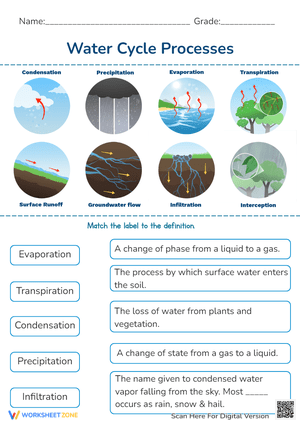
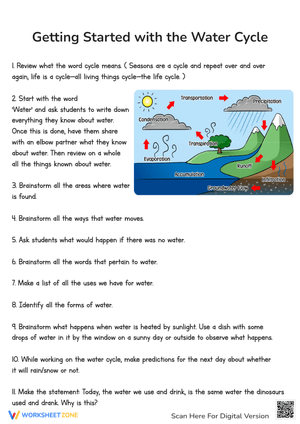
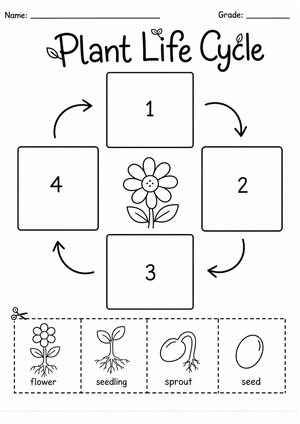
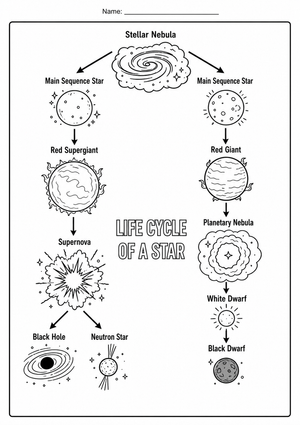
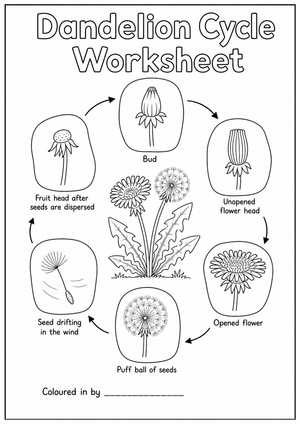
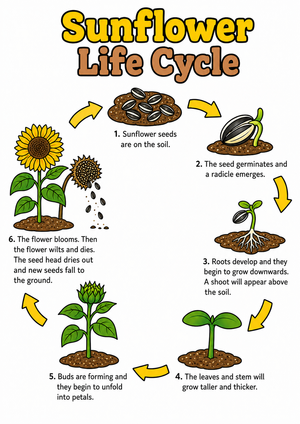
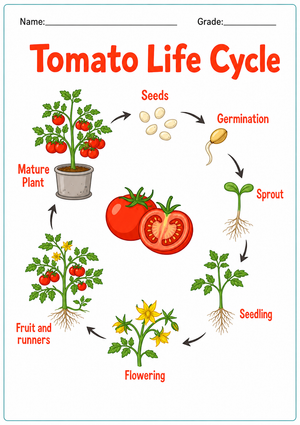
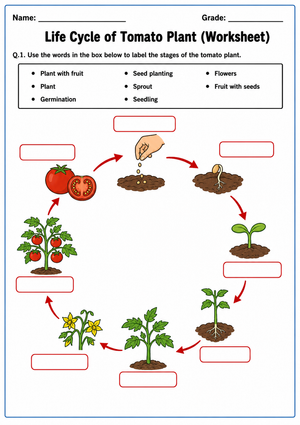
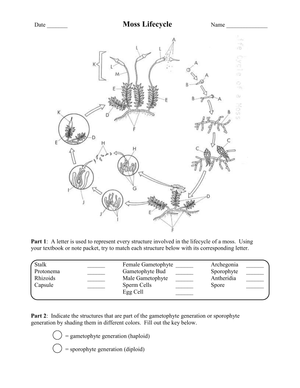
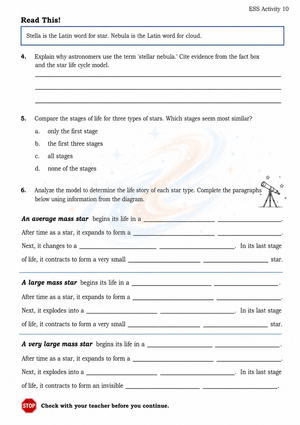
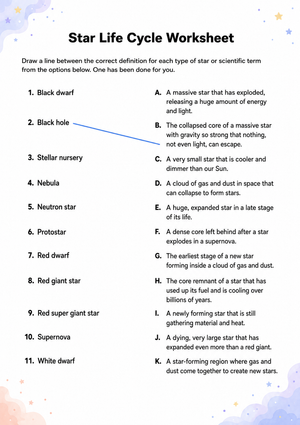
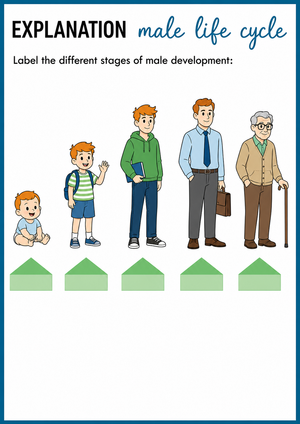
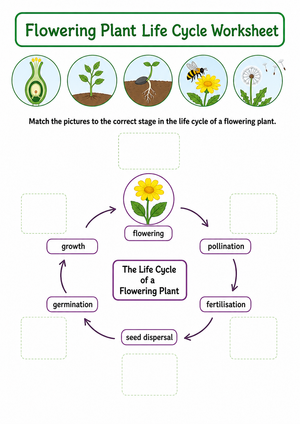
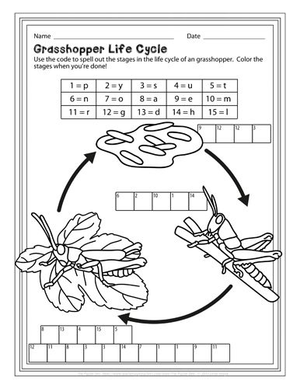
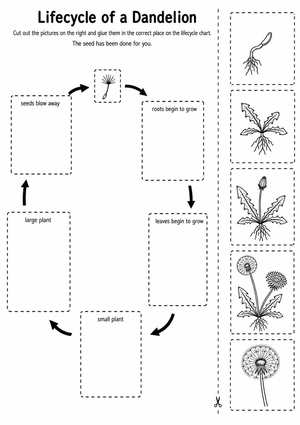
These 6th grade life cycle worksheets resources move students past the name-the-stages work that belongs in elementary science and into the explanatory thinking middle school life science demands. At this level, students need to connect developmental patterns to reproduction and survival — not just recall that a caterpillar becomes a butterfly. Each worksheet in the set gives students a focused context for sequencing, labeling, comparing, and writing about life cycles across plants, insects, and amphibians.
What These Worksheets Ask Students to Do
The tasks build in a deliberate order. Students begin by identifying stages and matching vocabulary, then move toward sequencing and labeling unlabeled diagrams, and eventually reach comparison and written-explanation tasks that require reasoning across two or more organisms. That progression reflects how most teachers plan life science instruction: identify first, organize second, explain and apply once the content is grounded.
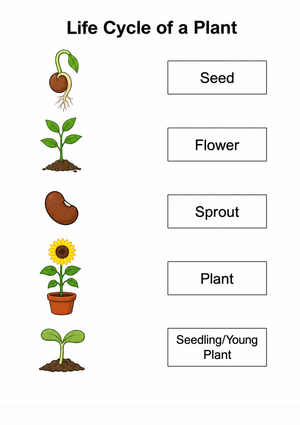
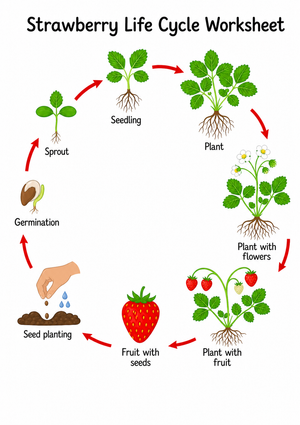
- Sequencing life cycle stages for plant and animal examples, including flowering plants, insects, amphibians, and birds
- Labeling diagrams with precise terminology — germination, larva, pupa, nymph, metamorphosis, pollination
- Distinguishing complete metamorphosis from incomplete metamorphosis, one of the most consistently assessed concepts at this level
- Writing short explanations that connect specific stages to growth, reproduction, and survival
- Comparing two organisms' life cycles using structured prompts or open-ended written tasks
Frequent Student Errors Worth Catching Early
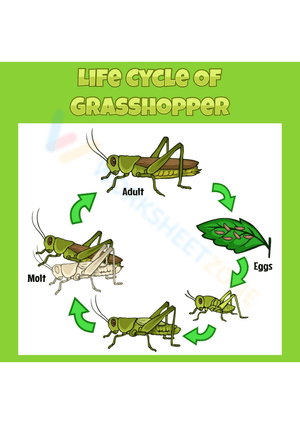
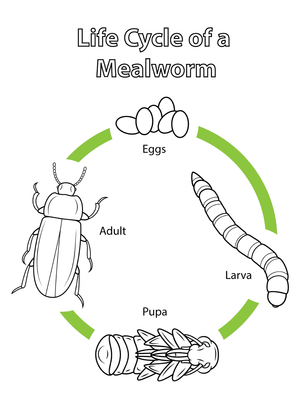
The complete versus incomplete metamorphosis distinction trips students up in a predictable way. Most 6th graders can correctly sequence a butterfly's egg-larva-pupa-adult cycle, but then apply the word "larva" to a grasshopper nymph — because they assume all immature insects share the same vocabulary. That's a deeper misconception than it appears. Students genuinely don't realize that "larva" belongs specifically to complete metamorphosis while "nymph" describes the immature form in incomplete metamorphosis. Worksheets that place both cycles side by side and require students to label each stage using organism-specific vocabulary surface this confusion much faster than a unit-end assessment will.
A second pattern shows up in written responses. Students describe life cycle stages as things that happen to the organism rather than processes the organism undergoes as part of growth and reproduction. A student might write "the frog gets legs" rather than "the frog develops hind limbs as it transitions from an aquatic to a terrestrial life stage." The short-answer tasks in this set push students toward more precise explanation by requiring them to address both what happens and why it matters for the organism's survival.
How to Work These Worksheets Into Your Unit Sequence
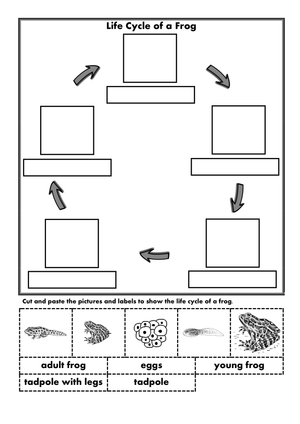
One approach that holds up across a week of instruction: use the same organism across three different worksheets in sequence. Monday, students label a frog life cycle diagram. Wednesday, they sequence the stages without the diagram visible. Friday, they write a comparison between the frog's development and a flowering plant's reproductive cycle. Repeating the content while changing the task type means students aren't simultaneously absorbing new facts and figuring out a new format — the familiar content frees up attention for the new reasoning each task demands.
Teachers who reach for a 6th grade life cycle worksheets set partway through a unit often find that sequencing and labeling worksheets work well for independent practice, while comparison and written-response tasks are better placed on a review day or the class before a summative assessment.
These worksheets also work cleanly as formative checks. Collecting one comparison worksheet — the kind where students explain how a plant and an insect life cycle differ — gives you specific evidence quickly: which students can name both cycles, which can sequence them correctly, and which can articulate the biological difference. That evidence is often more actionable than a quiz score because it points to exactly what to address in the next lesson. For sub plans, the diagram-labeling and vocabulary-matching worksheets run without setup explanation from a substitute. For station rotations, pair a labeling worksheet at one station with a short written-comparison task at another.
Standard Alignment
The tasks in a well-built 6th grade life cycle worksheets set connect directly to two NGSS middle school standards. MS-LS1-4 asks students to use evidence and scientific reasoning to explain how specialized plant structures and characteristic animal behaviors support successful reproduction — life cycle stages like pollination, seed dispersal, and metamorphic body changes are central content evidence for that standard. MS-LS1-5 focuses on how environmental and genetic factors influence organism growth, which comparison tasks address directly when students explain why different developmental patterns exist across species.
These are middle school band standards, not locked to a specific grade. Many districts place life science in 6th grade; others in 7th. Either way, the worksheet content maps cleanly to the MS-LS1 cluster. The crosscutting concept of Patterns (CCC-1) applies here as well — students examining multiple life cycles and identifying shared developmental features are practicing exactly that kind of scientific thinking, and written-response tasks make that reasoning visible in student work.
Adjusting These Worksheets for Different Readiness Levels
The most practical differentiation move for this content is controlling how much language support students receive without changing the science expectations. Students who need additional reading support benefit from worksheets that include a labeled reference diagram alongside the blank task diagram — they can compare across, not guess. Reducing answer choices in a matching task from eight options to five lowers working memory demand without lowering the standard.
- Students needing language support: Pair each blank diagram with a labeled reference image; provide sentence frames such as "The __ stage follows __ because..."; use word banks that include small images alongside each term rather than text alone
- On-level students: Use unlabeled diagrams, standard vocabulary matching, and short-answer prompts asking for one to two sentences of explanation without sentence starters
- Students ready for extension: Ask them to compare two organisms' life cycles and argue which developmental pattern provides a survival advantage in a specific environment — a task requiring both content knowledge and evidence-based reasoning
The same worksheet can serve multiple readiness levels when you vary the support materials rather than the task itself. One student receives the word bank; another does not. One student has a labeled reference diagram available; another works from memory. The science target stays the same across the classroom.
Frequently Asked Questions
Do these worksheets cover both plant and animal life cycles?
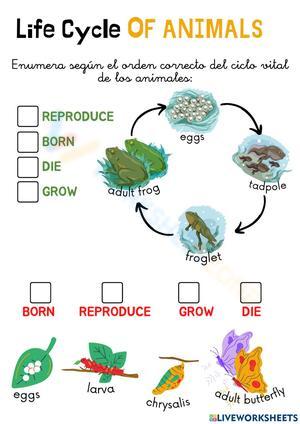
Yes. The set includes worksheets on flowering plant development, complete and incomplete insect metamorphosis, amphibian development, and comparison tasks that place plant and animal cycles side by side. That variety helps students recognize patterns across living things rather than treating each organism as a separate memorization task.
How do I know when students are ready to move from labeling tasks to written explanation tasks?
If students can correctly sequence stages and label diagrams with precise vocabulary without relying on a word bank, they're ready for written explanation. If they still need the word bank to label stages accurately, use structured comparison prompts first — the kind that give students both organisms and ask them to identify similarities and differences, rather than requiring them to generate a full explanation from scratch.
Can teachers in 7th grade life science courses use these worksheets?
The 6th grade life cycle worksheets label reflects how most districts sequence life science, but the content maps to NGSS middle school band standards rather than a locked grade level. Teachers in 7th grade courses use the same worksheets without modification, and the tasks hold up as appropriately demanding for either year depending on students' prior exposure to the content.
What's the most efficient way to use these as formative assessment rather than practice?
Assign one comparison worksheet as an exit ticket or collected independent task at the close of a lesson. Student responses show three things at once: whether students can name the stages, whether they sequence them correctly, and whether they can explain why each stage matters for reproduction or survival. A collected set of worksheets from one class period takes roughly ten minutes to sort into "ready to move on" and "needs another look" — which is enough evidence to plan the next day's instruction without running a formal quiz.












 Interactive Worksheet Maker
 Quiz Maker
 Word Search Maker
 Crossword Puzzle Maker
 Word Scramble Generator
 Sentence Scramble Generator
 Handwriting Worksheet Generator
 Name Tracing Generator
 Fill In The Blank Generator




 BACK TOSCHOOL