


























Views
Downloads

Life Cycle of a Frog Worksheet | Essential Grade 3 Science
Paste this activity's link or code into your existing LMS (Google Classroom, Canvas, Teams, Schoology, Moodle, etc.).
Students can open and work on the activity right away, with no student login required.
You'll still be able to track student progress and results from your teacher account.
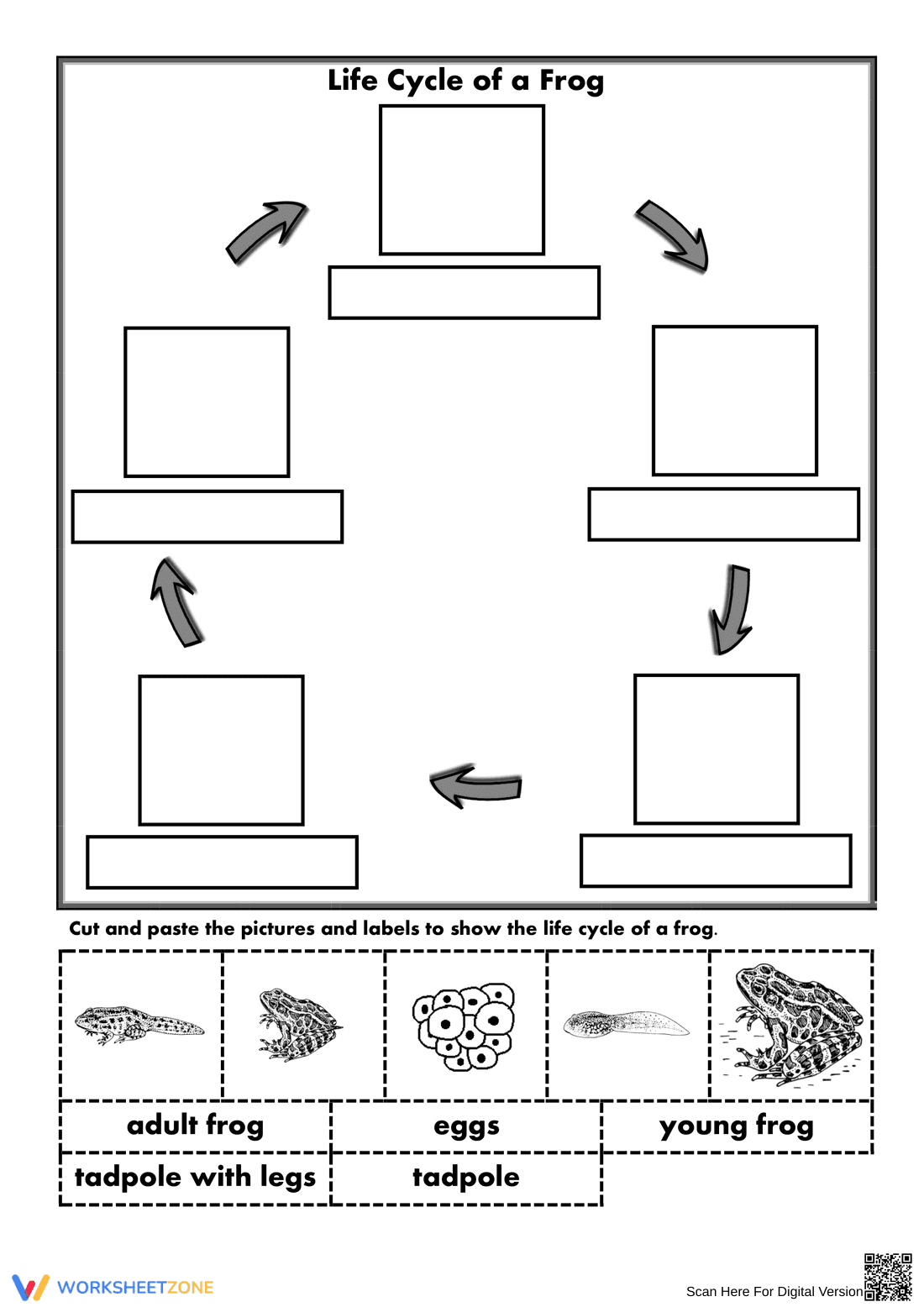
This Life Cycle of a Frog worksheet provides a hands-on approach to understanding biological development. Students engage directly with the stages of amphibian growth, moving from abstract concepts to a concrete visual model. By sequencing the five key phases, learners internalize the cyclical nature of life in the natural world.
At a Glance
- Grade: 3 · Subject: Science
- Standard:
3-LS1-1— Develop models to describe that organisms have unique and diverse life cycles- Skill Focus: Biological sequencing and identification
- Format: 2 pages · 10 problems · Answer key included · PDF
- Best For: Independent practice or science centers
- Time: 15–20 minutes
What's Inside
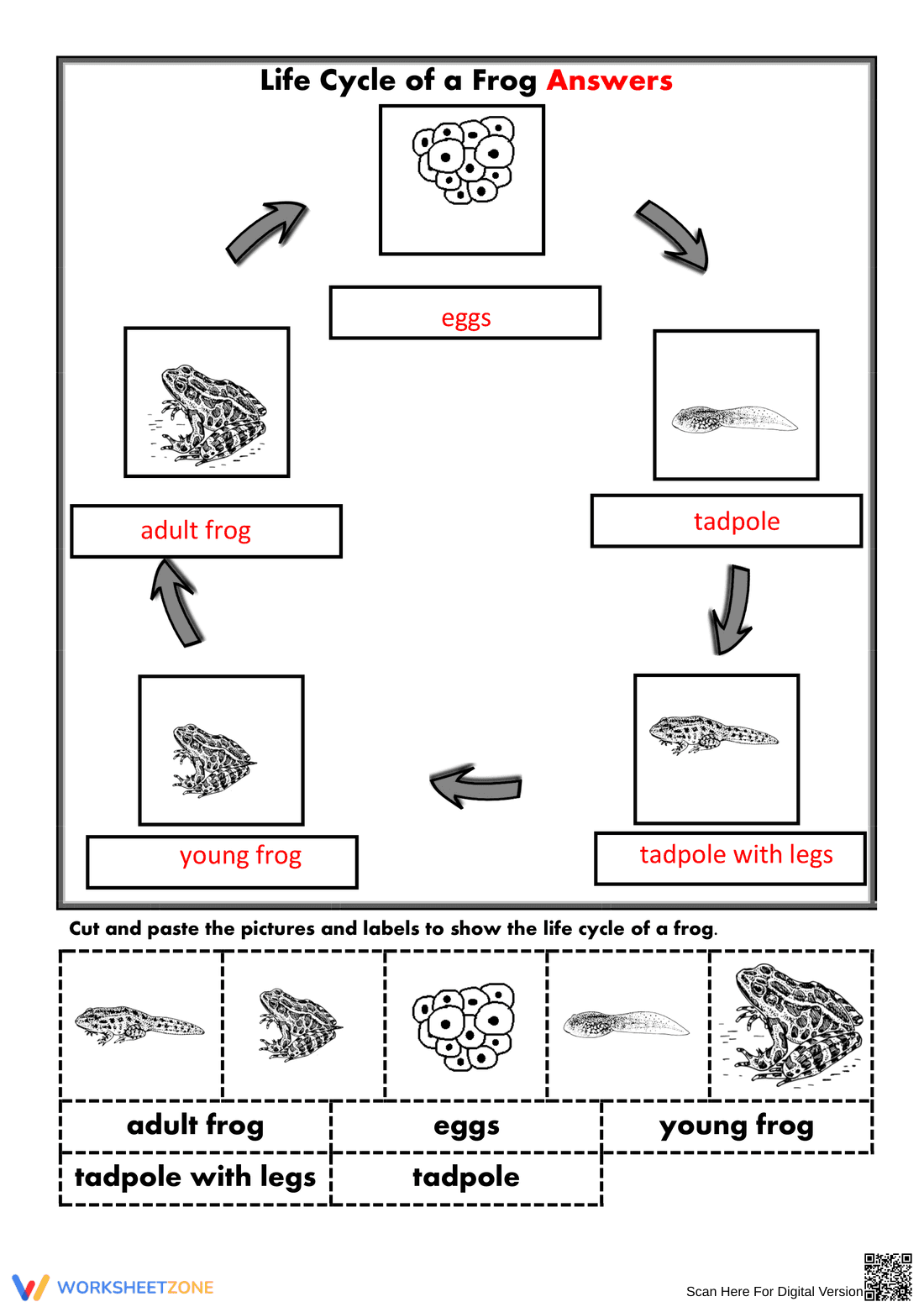
The PDF includes a primary activity page featuring a circular flow diagram with five empty stages and five corresponding label boxes. At the bottom of the page, students will find a cut-out section containing five detailed illustrations and five text labels: eggs, tadpole, tadpole with legs, young frog, and adult frog. A full-color answer key is provided on the second page for quick grading.
Zero-Prep Workflow
This resource is designed for a zero-prep classroom environment. First, print the single-page worksheet for each student. Second, distribute the sheets; students will spend approximately 15 minutes cutting, sorting, and pasting the 10 components. Finally, review the completed cycles using the provided answer key. The total teacher preparation time is under 2 minutes, making it an ideal choice for emergency sub plans.
Standards Alignment
This activity aligns with `3-LS1-1`: "Develop models to describe that organisms have unique and diverse life cycles but all have in common birth, growth, reproduction, and death." It also supports literacy in science by requiring students to match technical vocabulary with visual representations. Both standard codes can be copied directly into lesson plans, IEP goals, or district curriculum mapping tools.
How to Use It
Use this worksheet during the elaborate phase of a science lesson after students have observed tadpoles or watched a video on amphibian metamorphosis. It serves as an excellent formative assessment to check for understanding of chronological sequencing. Expect students to complete the task in 15 to 20 minutes depending on their fine motor skills.
Who It's For
This worksheet is tailored for Grade 3 students but is effective for Grade 2 through Grade 5 learners who need visual support. It is particularly useful for English Language Learners (ELLs) due to the heavy emphasis on visual-to-text matching. Pair this with a non-fiction text about pond habitats for a comprehensive science unit.
The 3-LS1-1 standard requires students to develop models describing that organisms have unique and diverse life cycles. This worksheet facilitates this by providing a concrete, visual sequencing task that reinforces the progression from eggs to adult frog. According to the RAND AIRS 2024 report, tactile learning activities like cut-and-paste exercises significantly improve retention of biological sequences in elementary students compared to passive reading alone. By identifying the five distinct stages—eggs, tadpole, tadpole with legs, young frog, and adult frog—students build a foundational understanding of growth and development. This resource provides the necessary scaffolding for young learners to master complex biological concepts through active participation. The inclusion of a clear answer key ensures that educators can provide immediate feedback, which is a critical component of effective science instruction. This model-based approach aligns with modern pedagogical strategies for early life science education.


