Middle school NGSS standards for grades 6-8 organize content into three domains: Physical Science, Life Science, and Earth and Space Science, alongside Engineering Design. That structure means the worksheets on your desk should be sortable the same way your pacing guide is sorted, so you can pull a printable the moment a unit starts rather than searching mid-lesson.
Most 6th grade scope and sequences move through the same core units in some order: the rock cycle, plate tectonics, weather and climate, ecosystems and biomes, energy, and the solar system. When worksheets are labeled by these specific units instead of vague grade-level tags, you can match a resource to this week's objective without reading through pages of unrelated content first.
Earth and Space Science Worksheets: Rock Cycle, Plate Tectonics, and Weather
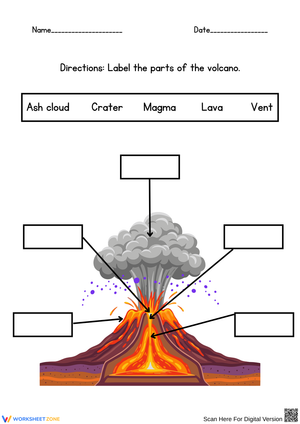
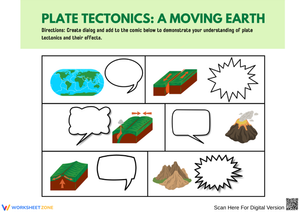
Earth science tends to open the 6th grade year in many classrooms, and it gives students a concrete, visual entry point into scientific thinking. Worksheets on the rock cycle work well when paired with a rock and mineral sample station, letting students label diagrams while handling physical specimens. Plate tectonics worksheets that ask students to trace boundary types and predict resulting landforms reinforce the cause and effect thinking NGSS expects at this grade band.
Weather and climate worksheets are useful both as stand-alone review and as a bridge into data literacy. A worksheet that has students read a simple weather map or a short data table and answer inference questions builds toward the same skills they will need later in the year when interpreting climate graphs. Keep a few of these on hand for early-finisher work, since they rarely require extra materials to complete.
Life Science Worksheets: Ecosystems, Biomes, and Photosynthesis
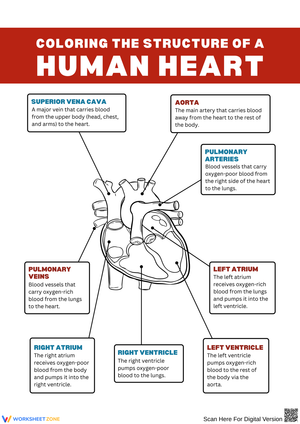
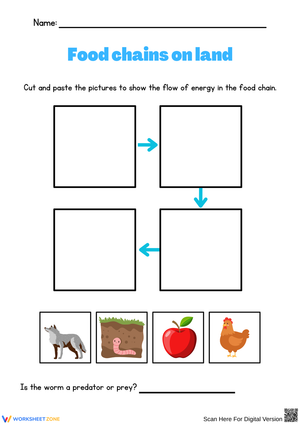
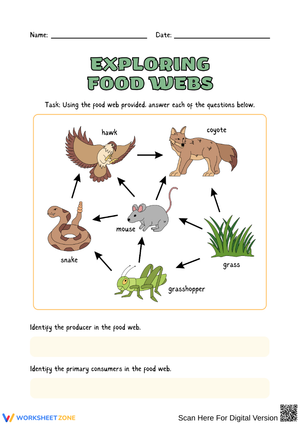
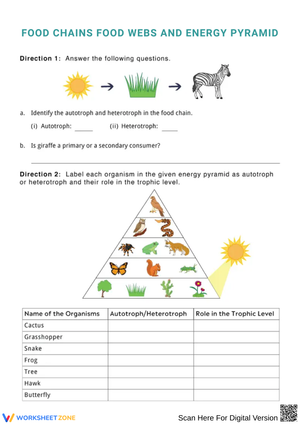
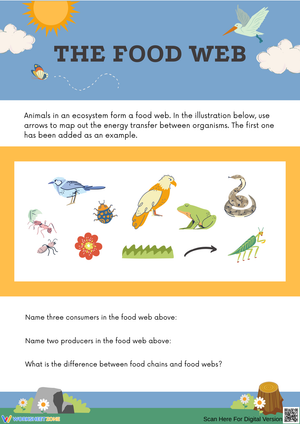
Life science units in 6th grade typically center on ecosystems, biomes, and the basics of photosynthesis and energy flow through food webs. Worksheets that ask students to build or complete a food web diagram are especially useful for small-group intervention, since they let you watch a student's reasoning in real time rather than only checking a final answer.
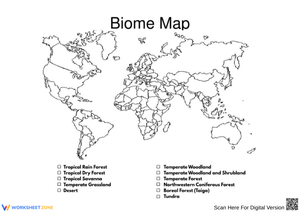
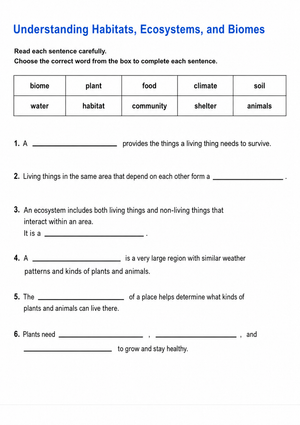
Biome comparison worksheets, where students match climate conditions to plant and animal adaptations, support both on-level instruction and enrichment. The same worksheet can serve two purposes: an on-level group completes it with guided notes nearby, while an enrichment group is asked to justify each answer with a written explanation. This kind of dual use matters when you are differentiating without doubling your prep time.
Physical Science Worksheets: Energy and Matter
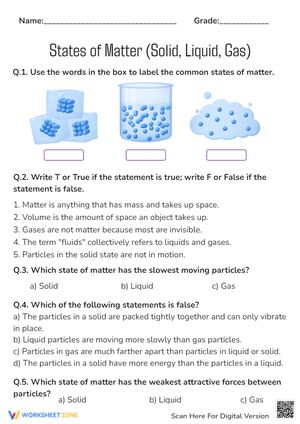
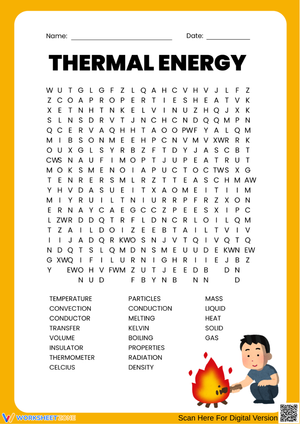
Energy and matter are often the most abstract topics of the 6th grade year, so worksheets here benefit from concrete framing. A worksheet that asks students to sort examples of potential and kinetic energy from their own school day, such as a ball on a shelf versus a ball rolling down a ramp, tends to land better than purely definitional questions. For matter, worksheets built around states of matter and simple particle diagrams give students a visual anchor before moving into more abstract density or phase-change concepts.
Classroom Implementation
Worksheets work best in 6th grade science when they are paired with something hands-on rather than used as the entire lesson. A rock cycle worksheet after a hands-on rock sample sort, or an ecosystems worksheet following a short food web card activity, gives students a chance to apply what they just explored instead of encountering the content cold on paper.
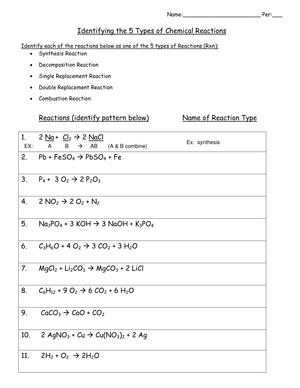
For small-group intervention, choose worksheets with a single clear skill target, such as identifying independent and dependent variables in a simple experiment, rather than a worksheet covering an entire unit at once. This lets you circulate, check in with each student, and adjust the next worksheet based on what you saw rather than waiting for a formal quiz. For sub plans, pick worksheets that are self-explanatory, with instructions a substitute teacher can read aloud without needing background in the content.
Exit tickets built from a single worksheet question are a low-prep way to get a quick formative read at the end of class. If most students miss the same question, that is a strong signal to revisit the concept the next day rather than moving forward on schedule.
Frequently Asked Questions
1. What science topics are typically covered in 6th grade?
Most 6th grade science courses move through Earth science units like the rock cycle, plate tectonics, and weather and climate, life science units like ecosystems, biomes, and photosynthesis, and physical science units like energy and matter, following the domain structure used in middle school NGSS standards.
2. Are these worksheets aligned to NGSS standards?
Worksheets organized by these units reflect the Physical Science, Life Science, and Earth and Space Science domains defined in middle school NGSS, and many also reinforce crosscutting concepts such as patterns, cause and effect, and systems across topics.
3. How can teachers use these worksheets for small-group or intervention support?
Choose worksheets with one clear skill target, such as identifying variables or reading a simple data table, so you can circulate, check understanding in real time, and adjust the next task based on what individual students need.
4. Can these worksheets be used for homework or independent review?
Yes. Worksheets on concrete topics such as the rock cycle, states of matter, or food webs work well for homework since students can complete them independently after direct instruction, using class notes as a reference.
5. How do these worksheets fit into a full-year 6th grade science scope and sequence?
Because most 6th grade courses cycle through the same core units in some sequence, worksheets labeled by specific unit topics rather than general grade level let you match resources to your pacing guide as each unit begins, without extra searching or adaptation.












 Interactive Worksheet Maker
 Quiz Maker
 Word Search Maker
 Crossword Puzzle Maker
 Word Scramble Generator
 Sentence Scramble Generator
 Handwriting Worksheet Generator
 Name Tracing Generator
 Fill In The Blank Generator