


























1 / 5
0
Views
0
Downloads



0.0
0
Save
0 Likes
Share
Earthworm Dissection Worksheet: Biology Lab
0 Views
0 Downloads
Paste this activity's link or code into your existing LMS (Google Classroom, Canvas, Teams, Schoology, Moodle, etc.).
Students can open and work on the activity right away, with no student login required.
You'll still be able to track student progress and results from your teacher account.
Information
Description
What It Is:
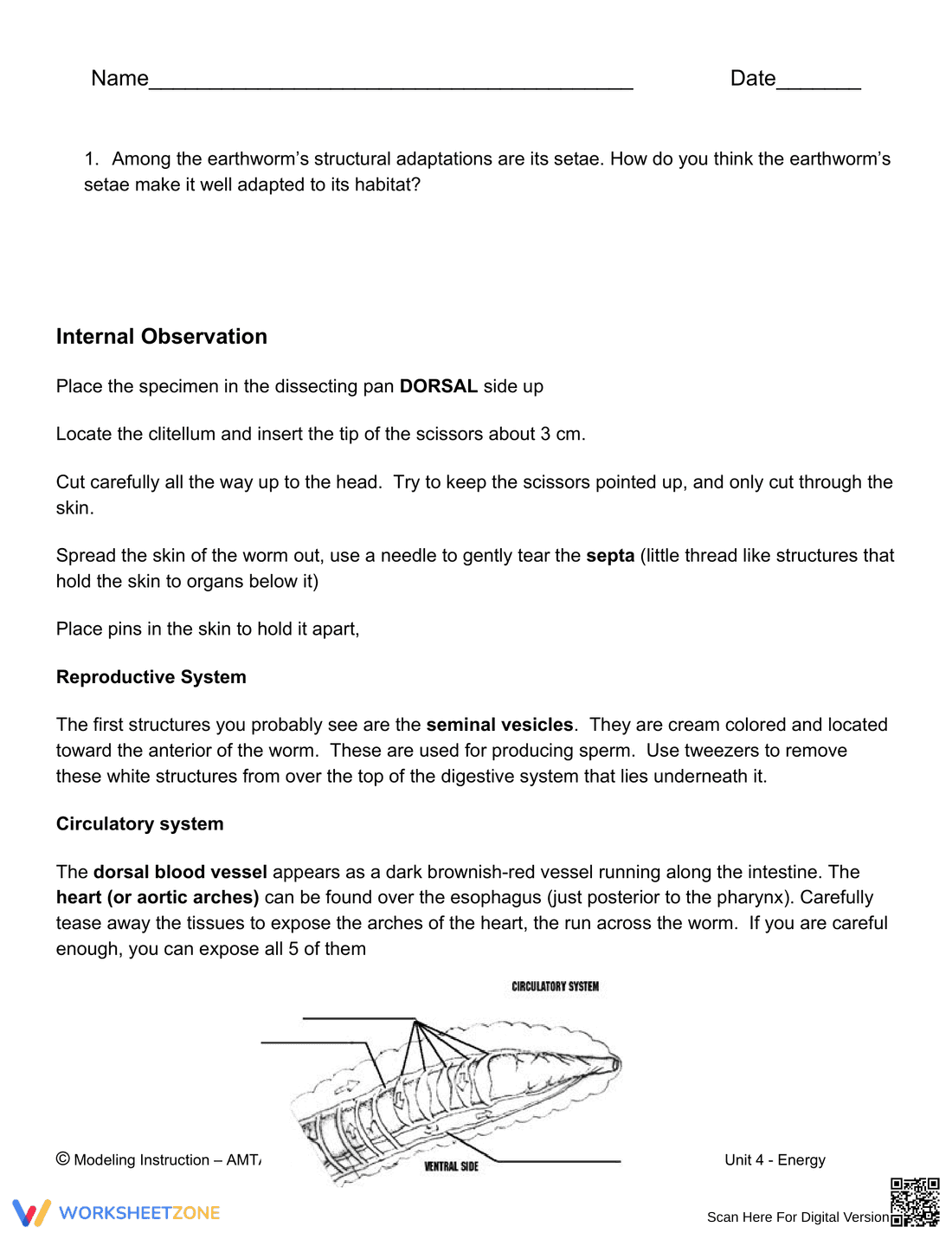
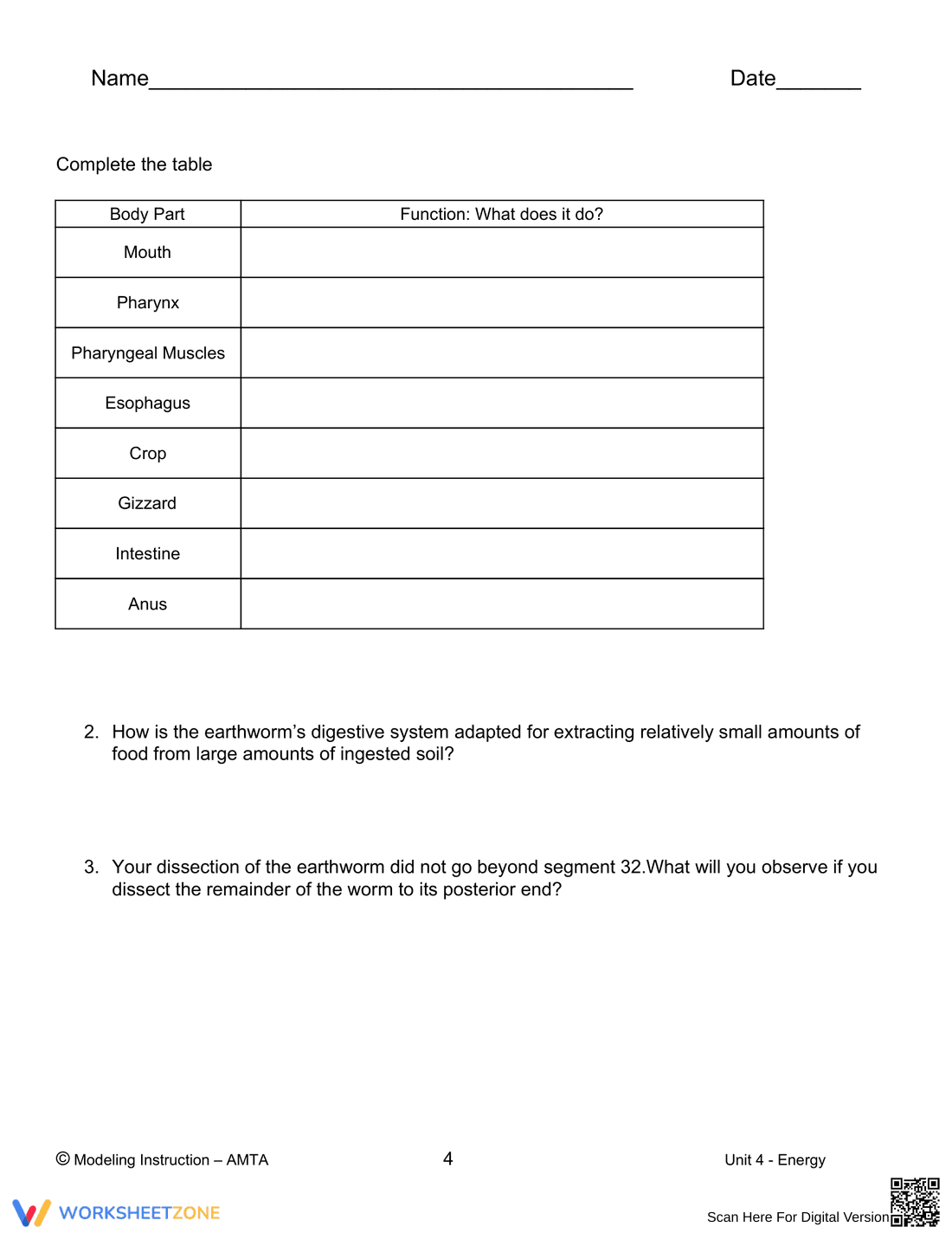
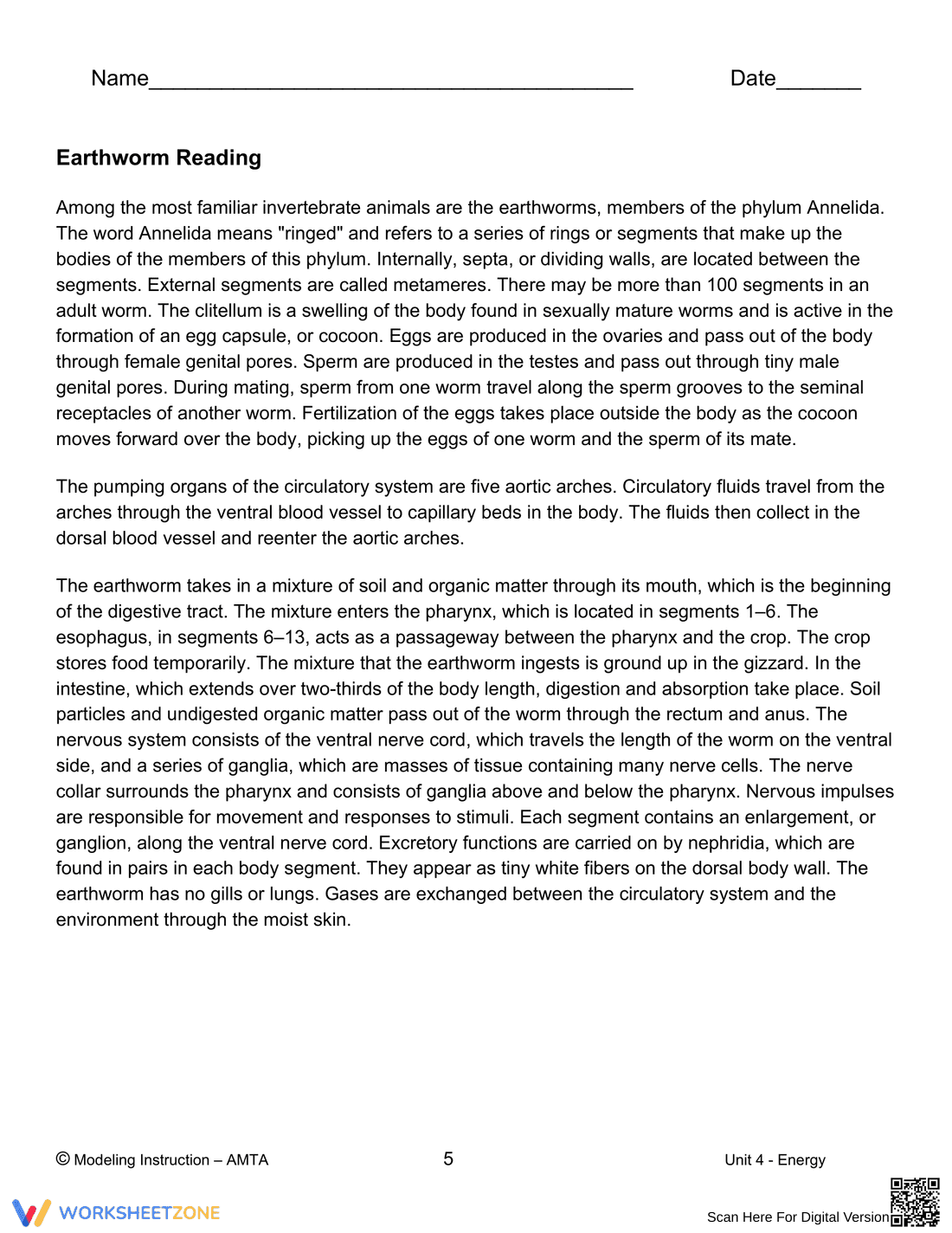
This is an earthworm dissection worksheet. It includes instructions for external observation of an earthworm, focusing on identifying dorsal and ventral sides, the clitellum, the dorsal and ventral blood vessels, setae, mouth, and anus. A labeled diagram of the earthworm anatomy shows segments, septum, setae, female genital pore, sperm groove, clitellum, prostomium, openings of seminal receptacles, and male genital pore.
Grade Level Suitability:
This worksheet is suitable for middle school (grades 6-8) and high school (grades 9-12) students. The complexity of the anatomical terms and dissection concepts are appropriate for these grade levels.
Why Use It:
This worksheet helps students learn about earthworm anatomy through observation and tactile exploration. It reinforces understanding of anatomical structures and their functions, promoting hands-on learning and critical thinking skills in biology.
How to Use It:
Students should follow the instructions to examine a real earthworm (or a preserved specimen). They need to identify the dorsal and ventral sides, locate the clitellum, dorsal and ventral blood vessels, and feel for the setae. They can use the labeled diagram to identify other external anatomical features.
Target Users:
This worksheet is designed for science teachers and students studying earthworm anatomy, biology, and dissection techniques in middle and high school science classes. It is also beneficial for homeschoolers covering similar topics.
This is an earthworm dissection worksheet. It includes instructions for external observation of an earthworm, focusing on identifying dorsal and ventral sides, the clitellum, the dorsal and ventral blood vessels, setae, mouth, and anus. A labeled diagram of the earthworm anatomy shows segments, septum, setae, female genital pore, sperm groove, clitellum, prostomium, openings of seminal receptacles, and male genital pore.
Grade Level Suitability:
This worksheet is suitable for middle school (grades 6-8) and high school (grades 9-12) students. The complexity of the anatomical terms and dissection concepts are appropriate for these grade levels.
Why Use It:
This worksheet helps students learn about earthworm anatomy through observation and tactile exploration. It reinforces understanding of anatomical structures and their functions, promoting hands-on learning and critical thinking skills in biology.
How to Use It:
Students should follow the instructions to examine a real earthworm (or a preserved specimen). They need to identify the dorsal and ventral sides, locate the clitellum, dorsal and ventral blood vessels, and feel for the setae. They can use the labeled diagram to identify other external anatomical features.
Target Users:
This worksheet is designed for science teachers and students studying earthworm anatomy, biology, and dissection techniques in middle and high school science classes. It is also beneficial for homeschoolers covering similar topics.


