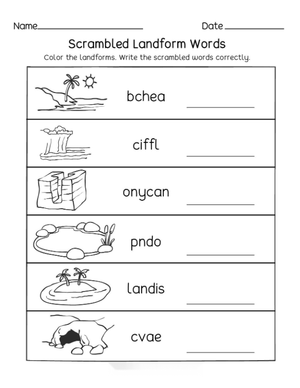
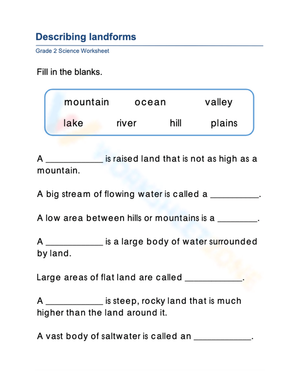
What Landforms Worksheets Cover in a Grades 2-4 Science Block
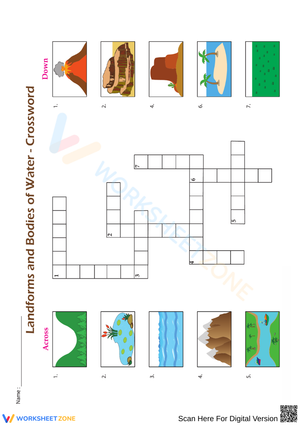
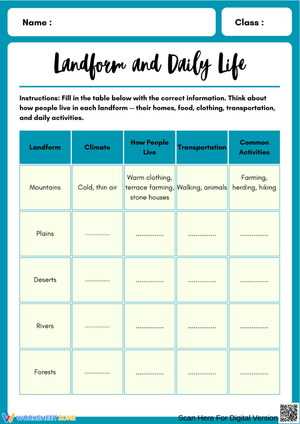
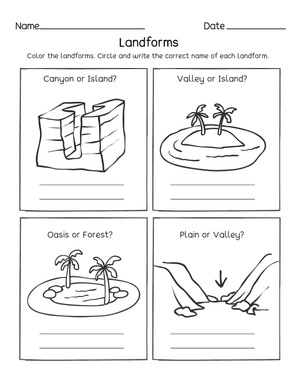
Landforms worksheets give elementary teachers a low-prep way to move students from naming a mountain in a picture to explaining how that mountain got there. At the grades 2-4 band, the work is not just identification. Students are expected to model the shapes and kinds of land in an area, then reason about the slow and fast processes that reshape it. A good worksheet set carries both jobs: it labels and sorts landforms, and it pushes students toward cause and effect.
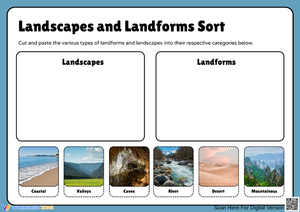
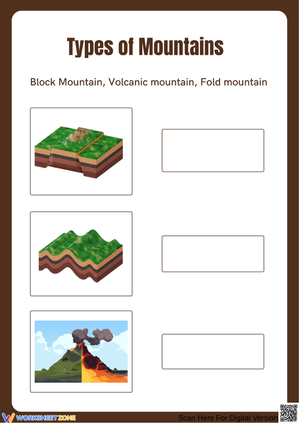
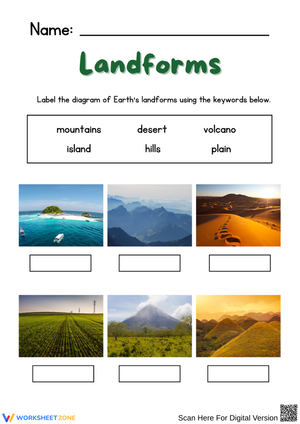
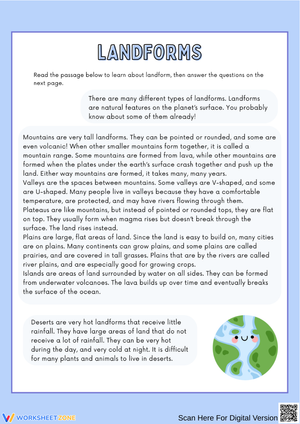
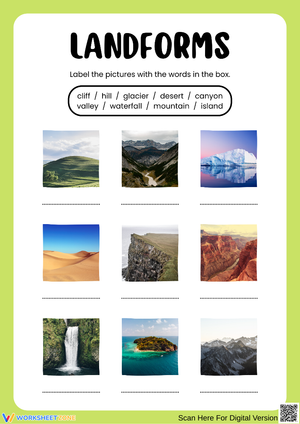
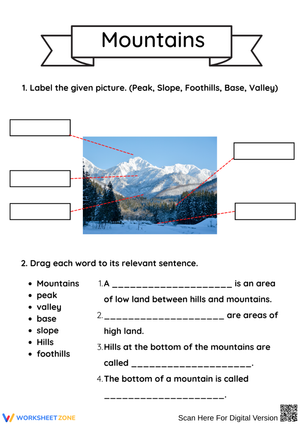
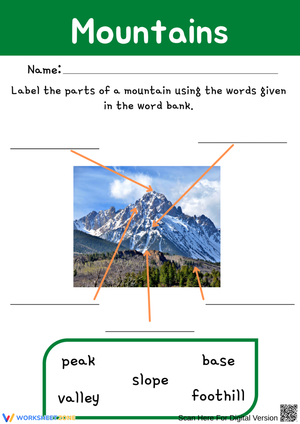
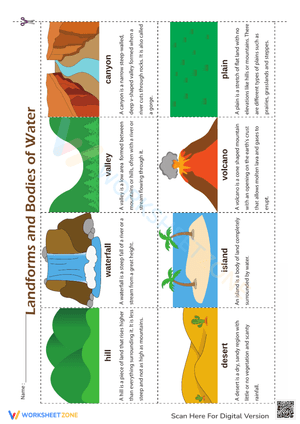
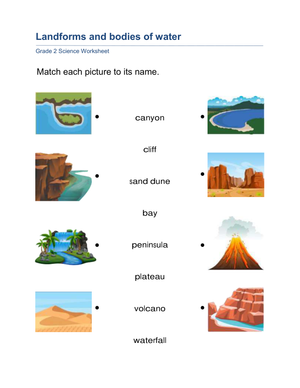
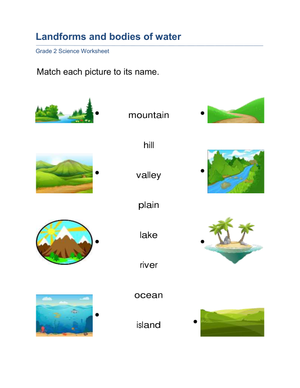
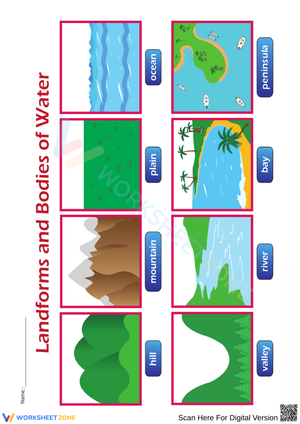
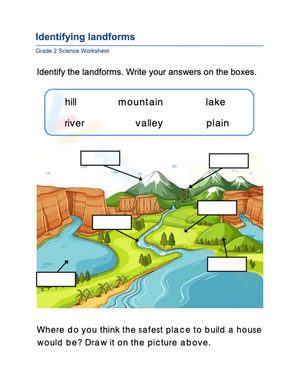
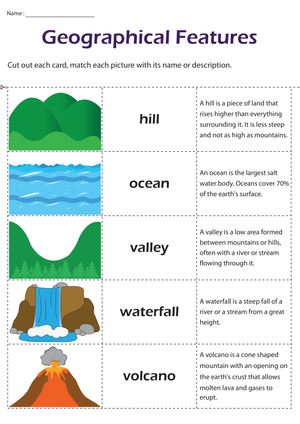
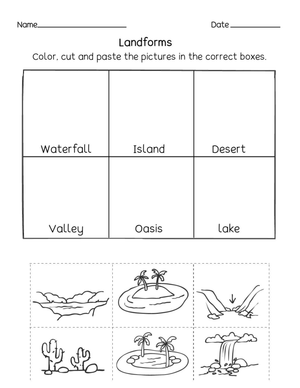
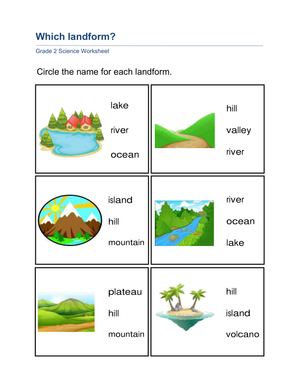
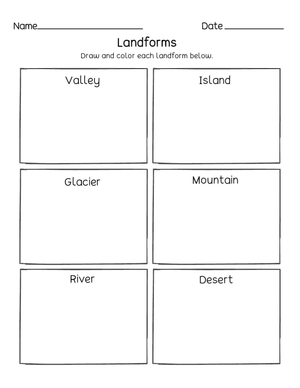
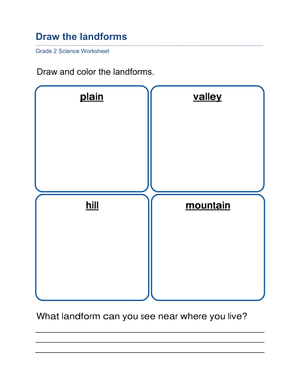
Most classroom sets center on five recurring categories: mountains, valleys, plains, plateaus, and canyons. Those five show up again and again because they map cleanly onto what students can see in photos, sand trays, and local field trips. When you plan a unit, treat these as the vocabulary spine and build every labeling, sorting, and short-answer task around them.
Identification alone is where a lot of landforms instruction stalls. A student can circle the canyon on a worksheet and still have no idea a river cut it over time. That gap is exactly what the grades 2-4 standards target, so choose worksheets that ask for more than a label. Look for prompts that pair a landform with the process that shaped it, or that ask students to predict what a place will look like after years of water flow.
Weathering, Erosion, and Deposition: The Distinction Worksheets Should Anchor
The single hardest idea in an elementary landforms unit is not a vocabulary word. It is the difference between weathering, erosion, and deposition. Students routinely collapse all three into "the rock broke." Worksheets that separate these processes into distinct columns, prompts, or diagrams do more to prevent misconceptions than any lecture.
Here is the pattern I see in student work: when a worksheet asks "what happened?" students write "erosion" for everything, including cases where a rock simply cracked in place from freezing water. That is a weathering event, not erosion. The fix is a worksheet design choice, not a reteach. Split the answer field into two steps, "break down" then "move away," and error rates on the process questions drop because students are forced to decide whether material actually traveled. This is why match-the-process tasks outperform open recall at this age.
How Landforms Worksheets Align With NGSS Earth Science Standards
Teachers rarely get to spend a period on landforms unless it earns its keep against the standards. The good news is that landforms content sits directly on several NGSS earth science performance expectations, so worksheet time is standards time.
NGSS 2-ESS2-2 asks second graders to develop a model that represents the shapes and kinds of land and bodies of water in an area. Labeling and map-style worksheets feed that modeling work directly. In fourth grade, NGSS 4-ESS2-1 and 4-ESS2-2 raise the bar to identifying evidence of weathering and erosion and making observations and models of landforms in an area.
NGSS performance expectation 4-ESS2-1 asks fourth graders to make observations and measurements of how weathering and erosion change land. Worksheets that ask students to label the five core landforms and match each to a shaping process give teachers direct, gradeable evidence for that one standard, which is exactly the kind of artifact an instructional coach wants to see.
Building Landform Vocabulary That State Tests Reward
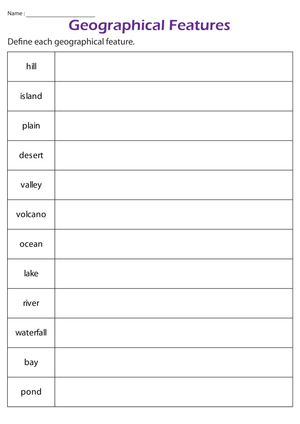
Academic vocabulary is where landforms worksheets quietly pay off on state science assessments. Words like plateau, canyon, delta, and sediment are not everyday language for most students, and they appear in test items well after the unit ends. Worksheets that recycle these terms across labeling, matching, and short-response formats give students the repeated exposure that sticks.
Build a running word bank and reuse it. When students meet "sediment" in a deposition diagram in October and again in a delta labeling task in January, the term moves from recognition to recall. Sorting tasks that ask students to group landforms by how they form, rather than by how they look, add a second layer that rewards understanding over memorization.
Timing matters here too. Front-load the hardest terms, plateau and sediment, early in the unit so students have weeks of exposure before a test rather than days. A quick vocabulary worksheet at the start of each lesson, five terms at most, keeps the load manageable and the review constant.
Classroom Implementation
Slot landforms worksheets into a science rotation rather than a whole-class sit-down. In a 45-minute block, a three-station setup works well: one hands-on erosion tray, one worksheet station for labeling and process matching, and one small-group table where you run a quick check or intervention. The worksheet station is what lets the other two run without you at every table.
For mixed-ability classrooms, print two versions of the same worksheet. Keep the landform set identical so the whole class shares vocabulary, but vary the support: a word bank and picture cues on one version, blank labeling and a short written explanation on the other. Students still discuss the same five landforms, which keeps small-group talk productive.
- Use labeling worksheets as the entry ticket after the first modeling lesson.
- Use match-the-process worksheets midway, once weathering and erosion are both introduced.
- Use a short written-explanation worksheet as the exit check for the unit.
Pairing Worksheets With Hands-On Erosion Stations
Worksheets work best as the recording half of a hands-on demonstration, not a replacement for it. A sand-and-water erosion tray shows material moving; a sugar-cube shake station shows weathering breaking a solid down. The worksheet is where students capture what they observed and name the process.
The National Park Service's "Changes in the Landscape: Weathering and Erosion" teaching resource makes the key distinction plain: weathering breaks rocks down in place, while erosion moves the broken material somewhere else. Pair that framing with a two-column observation worksheet, and students record what broke versus what traveled, which is the exact reasoning NGSS 4-ESS2-1 expects them to show.
One caution: keep the demonstration and the worksheet on the same timeline. If students fill in the observation sheet a day after the tray dries out, the connection between what they saw and what they wrote weakens. Run the station and the recording sheet in the same rotation, and collect the sheets while the sand tray is still on the table so students can check their own answers against the model.
Using Worksheets for Review and Formative Assessment
After the unit, landforms worksheets shift from teaching tool to evidence. A label-the-landform sheet tells you fast which students still confuse a plateau with a plain. A match-the-process sheet tells you who still collapses weathering and erosion into one idea. Both are quicker to score than a project and give you a clean signal before a summative test.
Keep a small stack of these on hand for spiral review. Two or three questions revisited every few weeks keep landform vocabulary warm long after the unit closes, which matters when the state assessment arrives months later. Formative worksheets also make useful data for grade-level teams comparing where students land on the same standard.
Frequently Asked Questions About Landforms Worksheets
1. What grade level are landforms worksheets best suited for?
They fit grades 2-4 most naturally. Second graders use them to model and name landforms, while third and fourth graders use them to connect landforms to weathering, erosion, and deposition. The same five-landform vocabulary spine works across the band with adjusted supports.
2. How do landforms worksheets align with NGSS earth science standards?
Labeling and modeling worksheets support NGSS 2-ESS2-2 in second grade. In fourth grade, evidence-and-process worksheets support NGSS 4-ESS2-1 and 4-ESS2-2, which focus on weathering, erosion, and observing the shapes and kinds of land in an area.
3. What is the difference between weathering and erosion on these worksheets?
Weathering is rock breaking down in place; erosion is the movement of that broken material. Good worksheets separate the two into distinct prompts so students decide whether material actually traveled, rather than labeling every change "erosion."
4. How can teachers pair landforms worksheets with hands-on demonstrations?
Run a sand-and-water tray or a sugar-cube weathering station, then use a two-column observation worksheet as the recording step. Students note what broke down versus what moved, turning a demonstration into gradeable evidence.
5. What landform vocabulary should worksheets reinforce?
Prioritize mountains, valleys, plains, plateaus, and canyons, plus process terms like sediment, deposition, and delta. Recycling these words across labeling and sorting tasks builds the academic vocabulary that state science items reward.












 Interactive Worksheet Maker
 Quiz Maker
 Word Search Maker
 Crossword Puzzle Maker
 Word Scramble Generator
 Sentence Scramble Generator
 Handwriting Worksheet Generator
 Name Tracing Generator
 Fill In The Blank Generator