




























0
Views
0
Downloads

0.0
0
Save
0 Likes
Share
Fold Mountains Reading and Diagram Worksheet
0 Views
0 Downloads

Paste this activity's link or code into your existing LMS (Google Classroom, Canvas, Teams, Schoology, Moodle, etc.).
Students can open and work on the activity right away, with no student login required.
You'll still be able to track student progress and results from your teacher account.
Information
Description
What It Is:
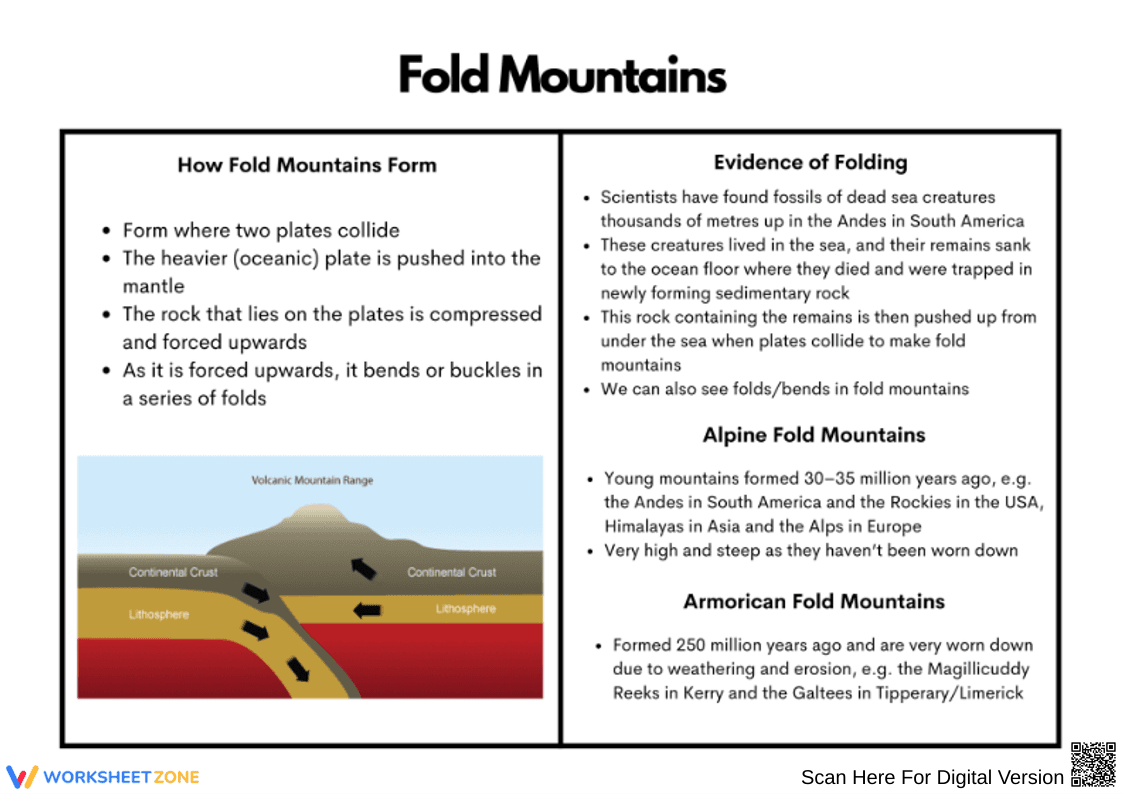
This worksheet explains how fold mountains form using clear bullet-point notes and a labeled diagram. It covers plate collision, rock compression, evidence of folding, and examples of Alpine and Armorican fold mountains around the world.
Why Use It:
This activity helps students understand Earth’s processes, plate tectonics, and mountain formation in a structured and visual way. It supports geography and earth science learning while reinforcing cause-and-effect relationships in natural processes.
How to Use It:
• Have students read the sections on how fold mountains form and the evidence of folding.
• Use the diagram to explain plate movement and rock compression.
• Ask students to compare Alpine and Armorican fold mountains using the examples provided.
Grade Suitability:
Best suited for students in Grade 6–9.
• Grade 4–7: Introduction to plate tectonics and landform formation.
• Grade 8–9: Deeper understanding of geological processes and real-world examples.
Target Users:
Middle school science and geography teachers, homeschool parents, and students studying earth science and physical geography.
This worksheet explains how fold mountains form using clear bullet-point notes and a labeled diagram. It covers plate collision, rock compression, evidence of folding, and examples of Alpine and Armorican fold mountains around the world.
Why Use It:
This activity helps students understand Earth’s processes, plate tectonics, and mountain formation in a structured and visual way. It supports geography and earth science learning while reinforcing cause-and-effect relationships in natural processes.
How to Use It:
• Have students read the sections on how fold mountains form and the evidence of folding.
• Use the diagram to explain plate movement and rock compression.
• Ask students to compare Alpine and Armorican fold mountains using the examples provided.
Grade Suitability:
Best suited for students in Grade 6–9.
• Grade 4–7: Introduction to plate tectonics and landform formation.
• Grade 8–9: Deeper understanding of geological processes and real-world examples.
Target Users:
Middle school science and geography teachers, homeschool parents, and students studying earth science and physical geography.


