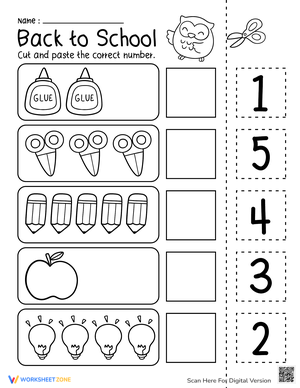
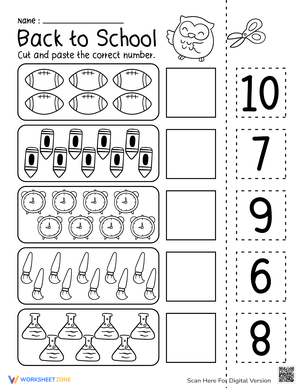
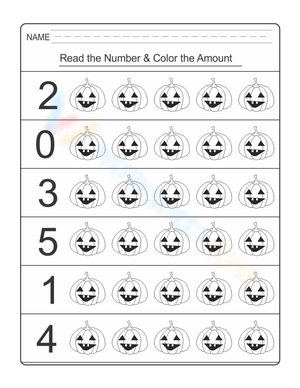
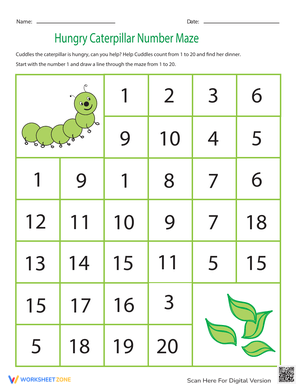
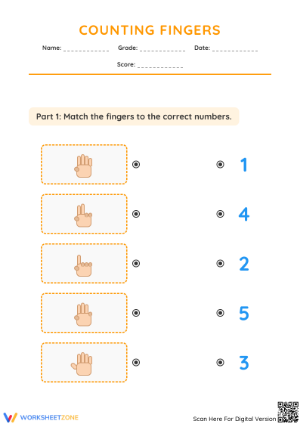
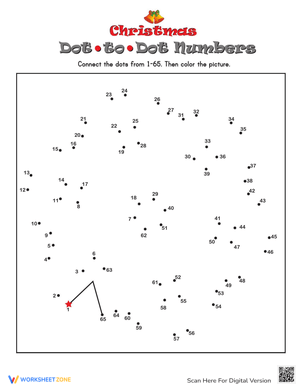
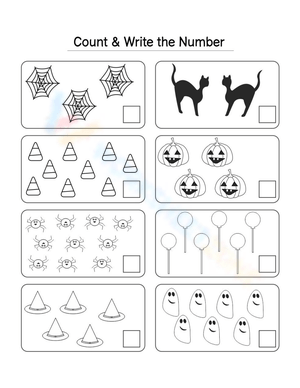
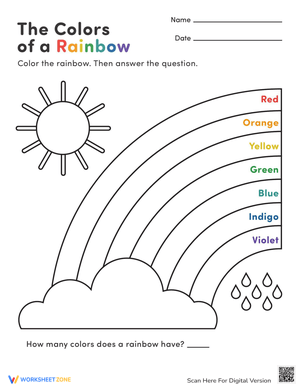
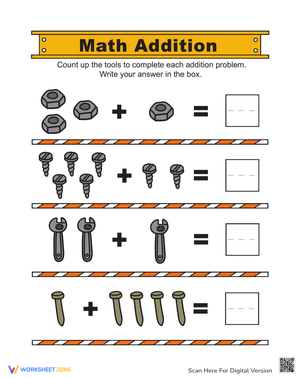
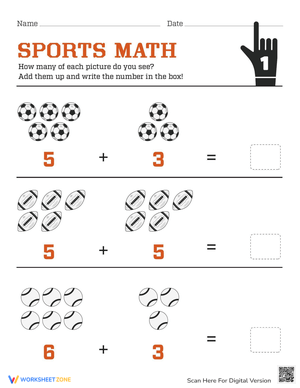
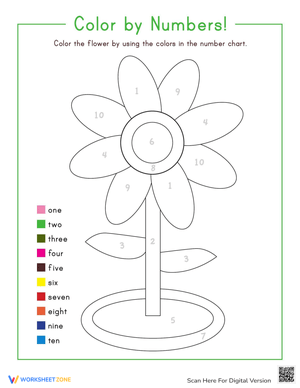
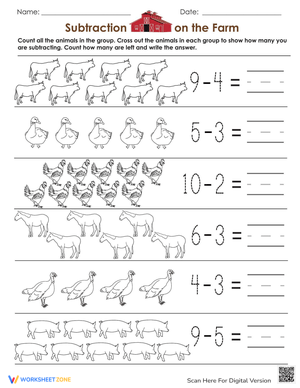
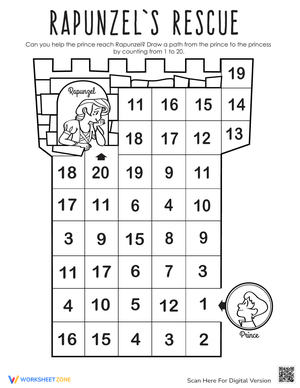
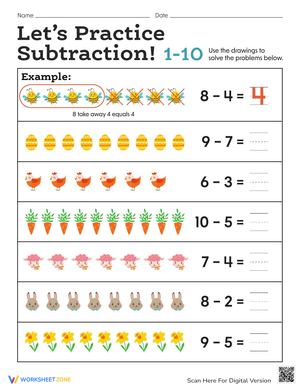
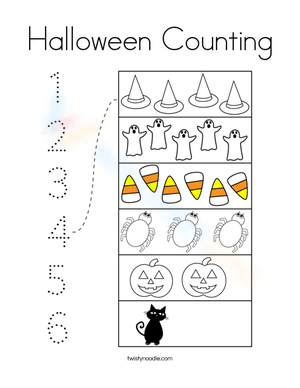
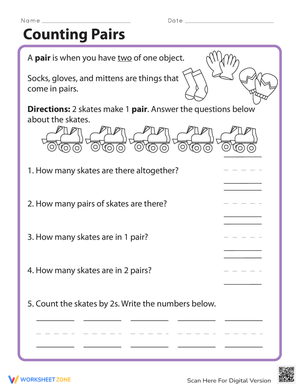
Before a kindergartner can add, subtract, or make sense of place value, they need a rock-solid grip on the numbers 1 through 10. Counting numbers 1-10 worksheets give you a low-prep way to practice number recognition, sequencing, and one-to-one correspondence during whole-group instruction, morning work, or a quiet moment at a center. Rather than starting with an abstract hook about worksheets in general, it helps to think about the specific job these pages do: they turn an oral counting routine into something a student can point at, circle, and write.
Kindergarten Standards That Counting 1-10 Worksheets Practices
Kindergarten counting instruction is anchored in the Counting and Cardinality domain. CCSS.Math.Content.K.CC.A.1 asks students to count to 100 by ones and tens, and the range 1-10 is the on-ramp for that goal. CCSS.Math.Content.K.CC.A.3 requires students to write numbers from 0 to 20, so a worksheet that has students trace and then independently write numerals 1-10 is doing double duty toward that standard.
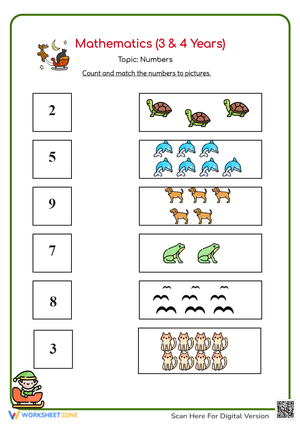
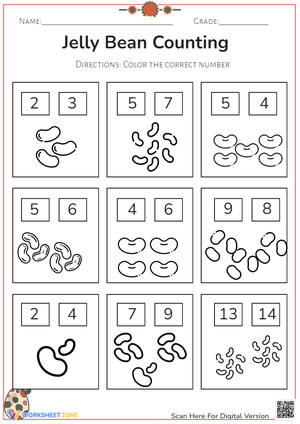
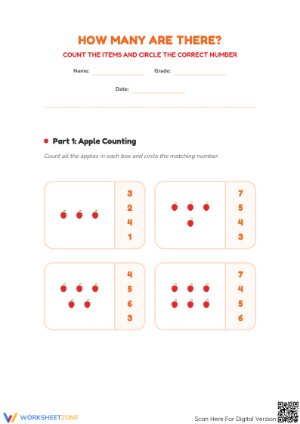
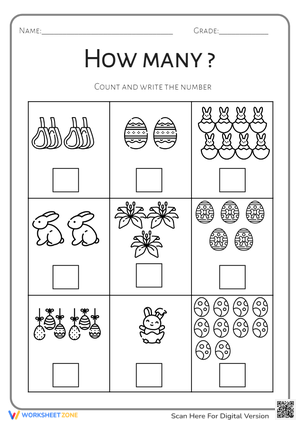
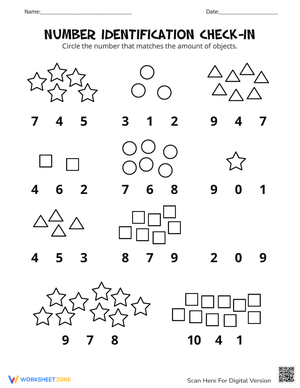
CCSS.Math.Content.K.CC.B.5 specifically requires kindergartners to count as many as 10 objects arranged in a scattered configuration, not just in a neat row. This detail matters for worksheet design: if every counting page you use shows objects in a straight line, you are not actually assessing the full standard. Mixing in scattered-object counting pages closes that gap and gives you a more accurate read on which students have truly internalized one-to-one correspondence.
Classroom Implementation
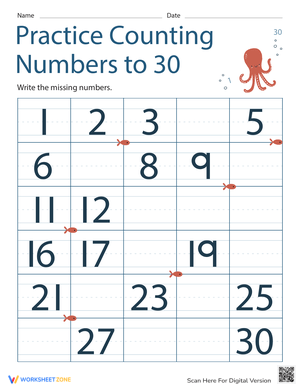
Start each week with a two-minute whole-group counting warm-up using a number line or hundred chart, then transition into worksheet practice at either the whole-group or center level depending on where your class is in the unit. Keep a simple tracking sheet of which students consistently miscount scattered sets versus which ones reverse numerals, since these are different intervention paths. Rotate worksheet formats between scattered-object counting, ordered number lines, and number-writing practice so no single skill dominates your instructional time. For students who finish early, extend with a worksheet that asks them to compare two counted sets and circle the larger number, directly practicing CCSS.Math.Content.K.CC.C.7 without needing new materials.
Frequently Asked Questions
1. What Common Core standard do counting 1-10 worksheets address in kindergarten
These worksheets primarily support CCSS.Math.Content.K.CC.A.1 for counting sequence, CCSS.Math.Content.K.CC.A.3 for writing numerals, CCSS.Math.Content.K.CC.B.4 for one-to-one correspondence and cardinality, and CCSS.Math.Content.K.CC.B.5 for counting objects in various arrangements.
2. How many objects should kindergartners be able to count according to CCSS.Math.Content.K.CC.B.5
The standard specifies that kindergartners should be able to count as many as 10 objects arranged in a line, an array, or a circle, and as many as 10 objects in a scattered configuration, as well as count out a given number of objects from 1-20 when asked.
3. How can teachers use these worksheets for one-to-one correspondence practice
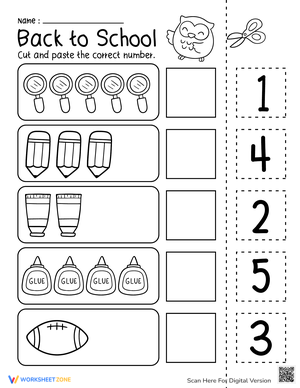
Choose worksheets where students must touch or mark each pictured object exactly once while counting, then write or circle the matching numeral. Scattered-object layouts are more diagnostic than neat rows because they require the student to track which objects have already been counted.
4. When should teachers move from counting 1-10 to teen numbers
Move on once a student can accurately count scattered sets up to 10, write numerals 1-10 without consistent reversals, and compare two numbers to identify the greater one, per CCSS.Math.Content.K.CC.C.7. Students who are not yet consistent in these areas benefit from continued 1-10 practice before adding the complexity of teen numbers.
5. How do counting worksheets help identify students who need small-group intervention
A short, low-stakes counting worksheet used as a formative check quickly surfaces which students miscount scattered sets, which reverse numerals, and which struggle to compare quantities, letting teachers group students by the specific skill gap rather than a general sense that a student is behind.













 Interactive Worksheet Maker
 Quiz Maker
 Word Search Maker
 Crossword Puzzle Maker
 Word Scramble Generator
 Sentence Scramble Generator
 Handwriting Worksheet Generator
 Name Tracing Generator
 Fill In The Blank Generator