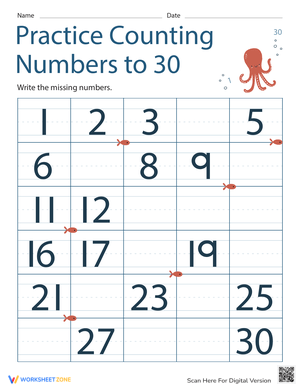
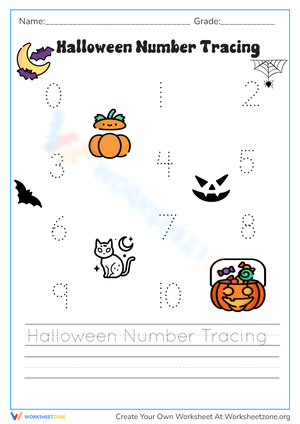
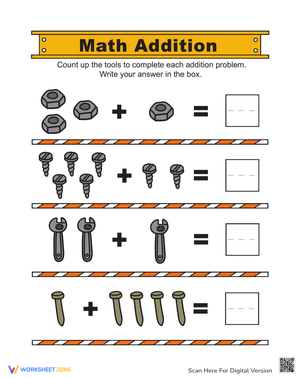
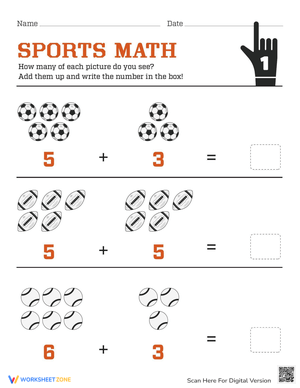
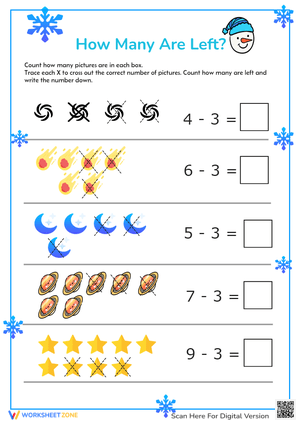
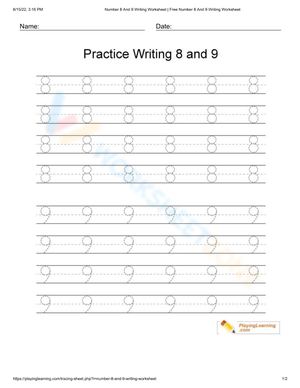
Kindergarten teachers know that a student who can count to ten out loud does not always have the hand control to write those same numerals on paper. Writing numbers 0-10 worksheets give teachers a low-prep way to close that gap, moving students from shaky, reversed strokes to consistent, automatic numeral formation over the course of the year.
Sequencing Instruction: Tracing to Guided Practice to Independent Writing
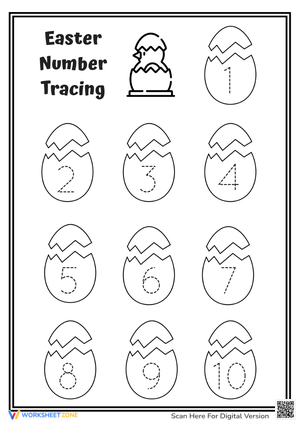
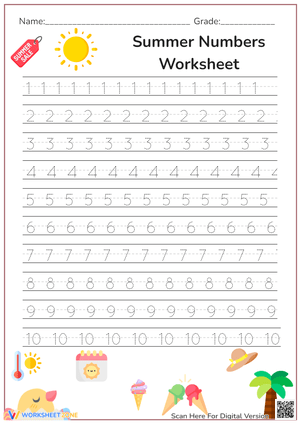
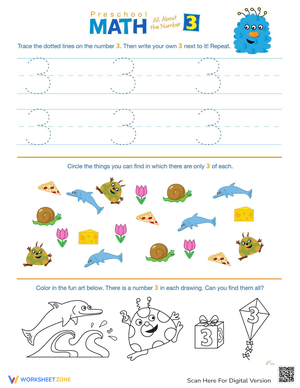
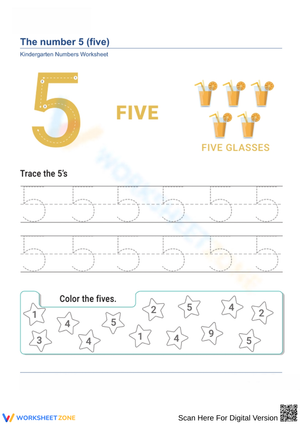
Most classroom-tested approaches move students through three stages. First, students trace a dotted or shaded numeral while saying the number name aloud, connecting the sound to the shape. Second, they copy the numeral next to a model with the model gradually fading, so they rely less on the visual guide. Third, they write the numeral independently, sometimes with a small quantity picture or ten-frame nearby to check their work against.
This gradual release matters because kindergartners vary widely in pencil control at the start of the year. A student who is not ready to write 7 independently in September may need several more weeks of tracing before that stage of the worksheet sequence makes sense. Worksheets organized by number, rather than mixed randomly, let teachers hold a student back on tracing for a specific numeral without slowing the whole group down.
Linking Number Writing to Counting and Cardinality
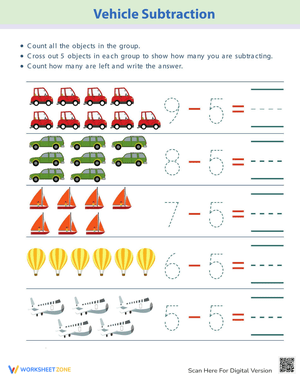
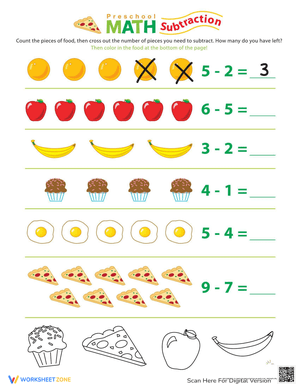
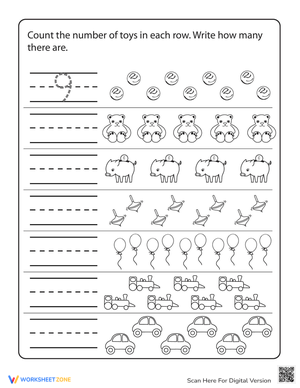
Number writing sticks best when it is tied to quantity, not treated as an isolated drawing exercise. Worksheets that pair each numeral with a matching set of objects, dots, or a ten-frame help students connect the symbol 6 to an actual group of six things, rather than memorizing a shape with no meaning attached.
Teachers can extend this connection by asking students to write the numeral and then build or draw the matching quantity, or the reverse: show a quantity and have students write the numeral that names it. This back-and-forth keeps number writing anchored in number sense instead of becoming a purely mechanical handwriting drill, and it gives teachers an easy formative check on whether a student truly understands the number, not just its shape.
Teacher Tips
Numeral reversals are common in kindergarten and are not automatically a sign of a bigger problem, but they are worth catching early. A quick weekly check, where students write numbers 0-10 from dictation without a model to copy, gives a fast snapshot of which numerals are still shaky for each student.
When a reversal shows up, verbal cues tend to work better than simply erasing and redoing the number. Describing the stroke direction out loud, referencing a formation rhyme, or having the student trace the correct numeral with a finger before writing it again on paper helps rebuild the correct motor pattern instead of just producing one clean copy. Keep a simple running note of which students reverse which numerals so the pattern is easy to reference at conferences or when planning small groups.
Frequently Asked Questions
1. How many times should kindergartners practice writing each number before moving on?
There is no fixed number that works for every student, but most kindergartners benefit from writing a numeral across several sessions, moving from tracing to guided practice to independent writing, rather than mastering it in a single sitting. Watch for consistent, correctly oriented formation rather than counting exact repetitions.
2. What is the best way to correct number reversals like 3 or 7 in kindergarten?
Pair verbal stroke-direction cues with a formation rhyme, and have the student trace the correct version before writing it again independently. Isolated erasing without re-teaching the stroke sequence rarely fixes the pattern for long.
3. Should number writing practice be timed or paced individually for kindergartners?
Individual pacing works better for most classrooms. Fine motor readiness varies widely among five- and six-year-olds, so a student who needs extra tracing time on a specific numeral should get it rather than being rushed to match the group.
4. How can teachers use writing numbers 0-10 worksheets in a small-group or intervention setting?
Group students who struggle with the same numerals, model the stroke sequence up close, and slow the tracing-to-independent sequence down to one number per short session, tracking which numerals each student can write without support.
5. What multi-sensory activities pair well with number-writing worksheets?
Sand trays, playdough, finger tracing in shaving cream, and verbal formation rhymes all help students rehearse the numeral shape before transferring it to a worksheet, which is especially useful for students who feel anxious about handwriting neatness.













 Interactive Worksheet Maker
 Quiz Maker
 Word Search Maker
 Crossword Puzzle Maker
 Word Scramble Generator
 Sentence Scramble Generator
 Handwriting Worksheet Generator
 Name Tracing Generator
 Fill In The Blank Generator