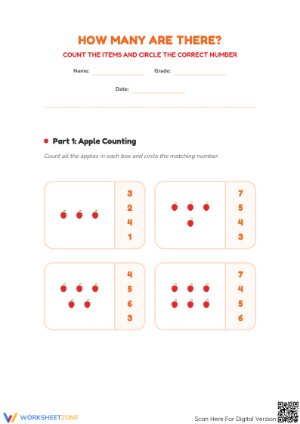
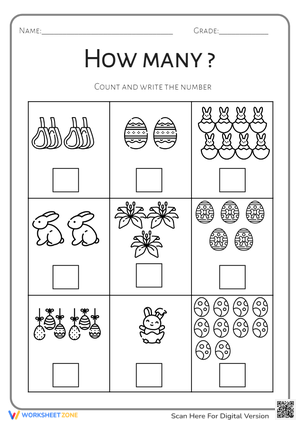
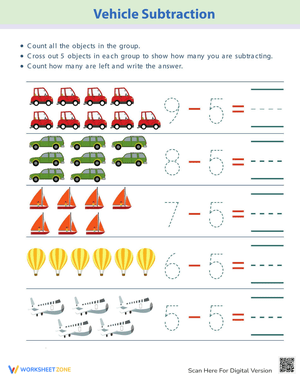
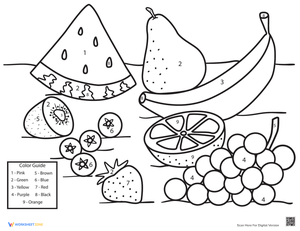
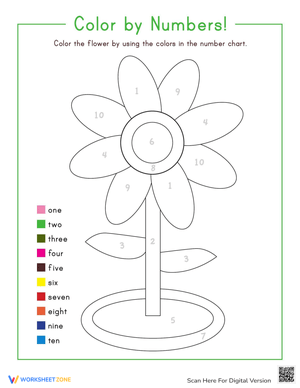
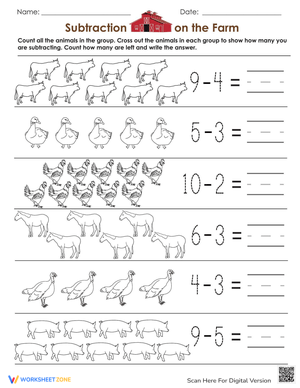
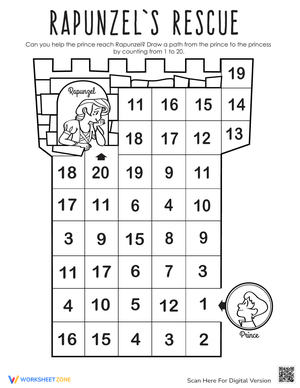
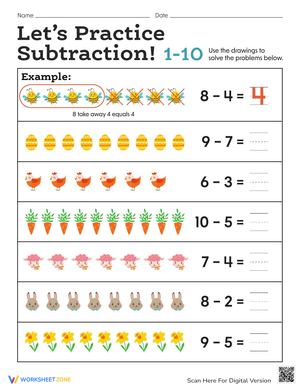
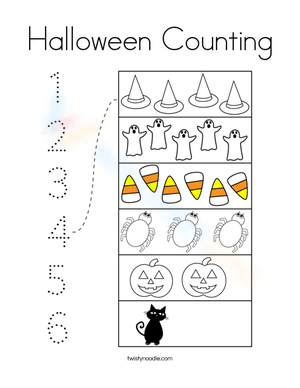
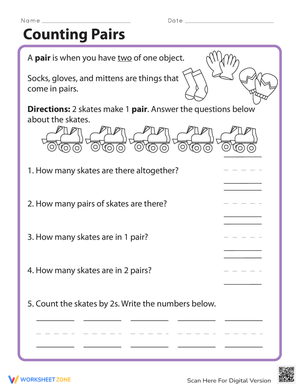
These counting numbers 1–10 worksheets give PreK and Kindergarten teachers a focused, printable toolkit for the skills that sit directly beneath every early arithmetic concept: numeral recognition, one-to-one correspondence, cardinality, and digit formation. Each worksheet targets one or two of those skills at a time, keeping the cognitive demand manageable for children who are still building the mental model that numbers represent quantities.
What Each Worksheet Practices
The set covers the specific competencies teachers observe — and watch fall apart — in daily counting work with four- and five-year-olds.
- One-to-one correspondence: Students touch or mark each printed image once while counting aloud, anchoring the verbal count to a physical action. This is the skill that breaks down when a child recites "one, two, three, four" while pointing at only two objects.
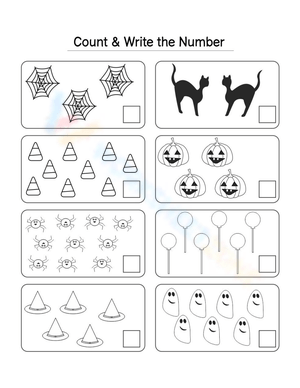
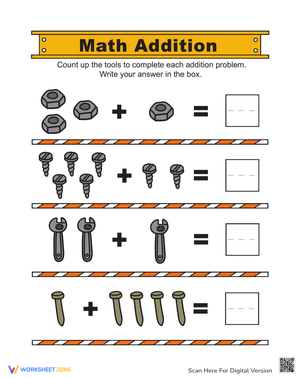
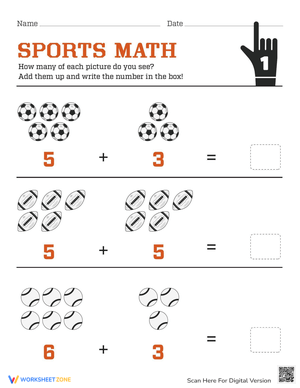
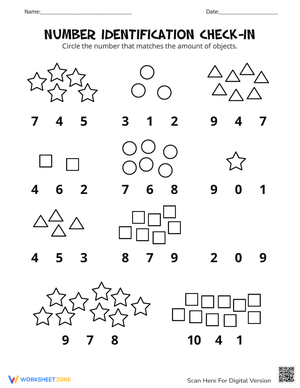
- Cardinality: Worksheets close counting tasks with a "How many?" prompt that asks students to record the total — reinforcing the principle that the last number said names the whole group, not just the final item.
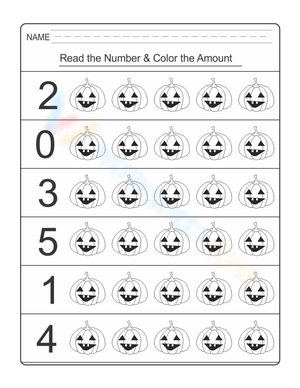
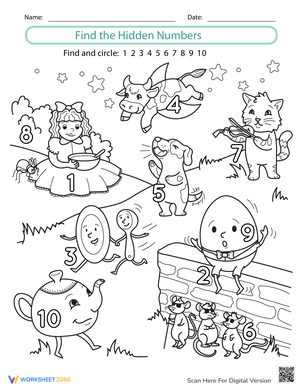
- Numeral recognition: Worksheets ask students to circle, underline, or color a target digit across a mixed field of numbers, building instant recognition of each symbol from 1 through 10.
- Digit formation: Tracing lines follow correct stroke sequence for each numeral, then release students to write independently. Students who reverse 7 or collapse 5 into a shape that could read as 6 get structured repetition with each format.
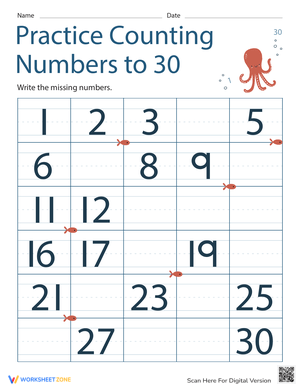
- Sequence and order: Missing-number tasks along a 1–10 number line require students to internalize the counting order, not just recite it from the start each time.
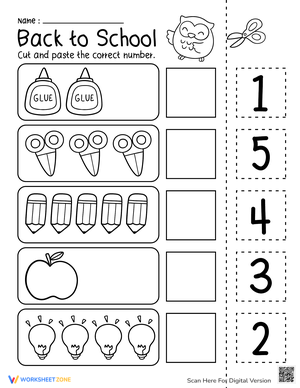
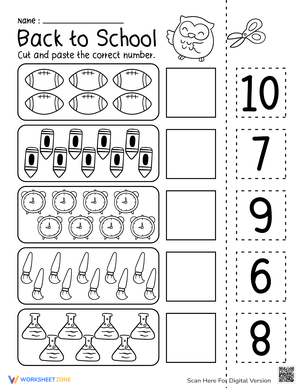
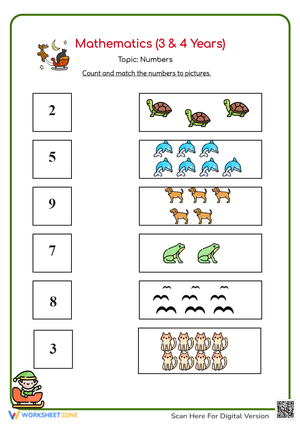
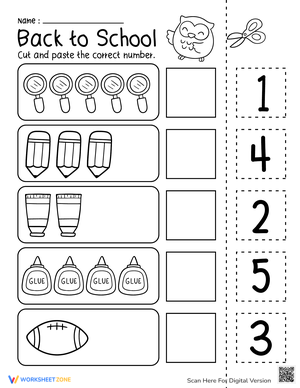
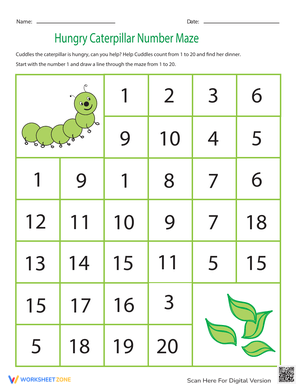
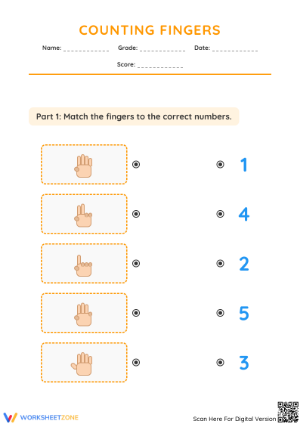
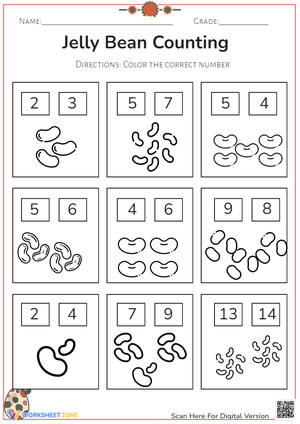
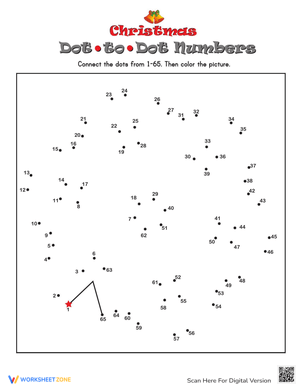
Formats rotate across the set — count-and-color, cut-and-paste, dot-to-dot, tracing, matching columns, and fill-in-the-blank number lines — so students encounter the same underlying skills through different surface tasks. A child who breezes through a tracing page may slow down on a matching task that strips away the visual cue of the numeral right next to its picture group.
Standard Alignment
These worksheets address CCSS.MATH.CONTENT.K.CC.A.3 (write numbers from 0 to 20; represent a number of objects with a written numeral) and K.CC.B.4 (understand the relationship between numbers and quantities; connect counting to cardinality). In classroom terms, K.CC.B.4 is the standard teachers are really working on when they use these pages — it encompasses one-to-one correspondence, the understanding that each successive number names a quantity one larger, and the cardinality principle. K.CC.A.3 covers the formation and recognition work built into the tracing and matching formats. Both standards are introduced in Kindergarten because children at this age are making the cognitive shift from rote verbal counting to understanding that numerals are symbols for real quantities — a shift that requires repeated, varied practice before it solidifies.
Frequent Student Errors Worth Watching For and Correcting
The most persistent problem in early counting work is the correspondence collapse: students say the number sequence correctly but their pointing drifts, tagging one object twice or skipping one entirely, so the count comes out wrong even when the sequence is right. Worksheets that provide rows of clearly separated images — not overlapping clip art — reduce this error because there's a distinct visual boundary for each item. You still need to watch for it, especially when students count groups larger than six.
A second error shows up on cardinality prompts: after counting nine objects correctly, a student writes 8, recording the second-to-last number said rather than the last. This is not a writing error — it reveals that the child hasn't yet consolidated the cardinality principle. When you see this pattern on a worksheet, it tells you the child needs more practice stopping after the final count and stating "there are nine" before recording anything.
Numeral reversal is common through early Kindergarten and tends to cluster around 2, 3, 5, and 7. Students who reverse these on worksheets benefit from re-tracing with a verbal cue attached to each starting point — "start at the top, curve down" — rather than simply repeating the worksheet without any change in approach.
Building These Worksheets Into Your Lesson Plans
The strongest use of these counting numbers 1–10 worksheets is not as the main instructional event but as the consolidation layer after a brief concrete lesson. Teach or review the skill with manipulatives or a shared counting activity, then put a worksheet in front of students to move the skill from guided to independent practice. That sequence — concrete, then representational — is where printable pages earn their place in early math instruction.
For morning arrival, placing a single dot-to-dot or count-and-color page at each seat before students enter gives the first five minutes of the day a clear task. It settles the room and activates number sense before morning meeting. The matching-columns format works particularly well here because it requires no scissors or glue — there's nothing to set up or clean up in a tight window.
In a math center rotation, pair each worksheet with a small bag of counters — linking cubes, bear counters, or even dried beans work fine. Asking students to place one physical object on each printed image before writing the total builds the concrete-to-representational bridge that helps one-to-one correspondence accuracy stick. Teachers who use manipulatives alongside the printed page consistently see faster gains than those who use worksheets alone.
As a quick formative tool, run a count-and-write page every two to three weeks. Mark which numerals each student writes legibly, which they reverse, and whether the cardinality prompt is answered correctly. That takes about ninety seconds per paper and gives you grouping information for the following week's reteaching.
Adjusting the Worksheets for a Range of Learners
Students who are not yet secure in the sequence 1–5 should work with pages drawn from that narrower range before encountering 6–10. The visual field on a full 1–10 page can overwhelm a child who is still consolidating whether 4 or 5 comes first; reducing the range removes that load and lets the child experience accuracy and completion. Once 1–5 is stable, full-range pages follow naturally.
On-level learners benefit most from rotating formats week to week rather than repeating the same layout. A student who has mastered count-and-color should be moved to a cut-and-paste or fill-in-the-blank format — the same skill, but without the familiar visual scaffold, which is where deeper consolidation happens.
For students who are ready to move beyond 10, pages that include simple "one more / one less" prompts alongside the counting task extend the work without requiring a completely different resource. A child who writes 7 under a group of seven apples and then answers "one more would be ___" is beginning to build the additive reasoning that first-grade operations depend on.
Frequently Asked Questions
What counting skills should students have in place by the end of Kindergarten?
Students leaving Kindergarten should recognize and write all numerals from 1 to 10 without reversals, count a set of objects with reliable one-to-one correspondence, and demonstrate cardinality — meaning they understand that the last number counted names the total quantity in the set, not just the position of the last object.
How do these worksheets fit alongside manipulative-based counting instruction?
These worksheets work as the representational layer after concrete work with physical objects. Use manipulatives during the instructional portion of the lesson, then move to the worksheet for independent practice. Students who go straight to paper without first handling objects often skip the correspondence step mentally and count by memory rather than by actually tracking each image.
My students finish the count-and-color pages quickly but struggle with the missing-number format. Is that normal?
Yes, and it's a useful diagnostic signal. Count-and-color relies on perception — the objects are right there to count. Missing-number tasks require students to hold the sequence in memory and identify a gap in it, which is a different cognitive demand. Students who stall on that format need more practice with the ordered sequence specifically: number lines, chanting the sequence while pointing, and then returning to the worksheet.
Can these worksheets be sent home for family practice?
These pages work well for home practice precisely because they need no materials beyond a pencil and crayons. A brief note explaining the task — "count the objects in each box, then write the number on the line" — is usually enough for families. Sending a thematically relevant page (leaves in fall, snowflakes in winter) tends to increase the chance that students actually complete them.













 Interactive Worksheet Maker
 Quiz Maker
 Word Search Maker
 Crossword Puzzle Maker
 Word Scramble Generator
 Sentence Scramble Generator
 Handwriting Worksheet Generator
 Name Tracing Generator
 Fill In The Blank Generator