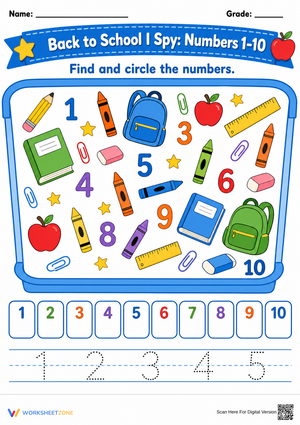
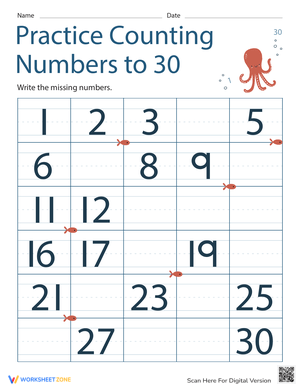
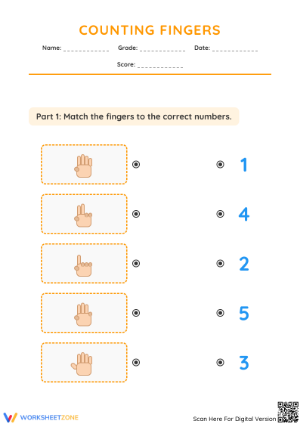
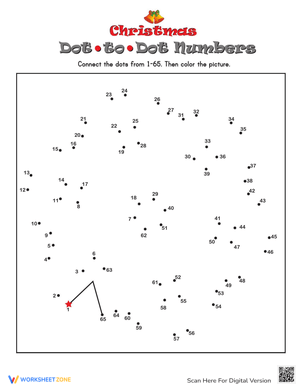
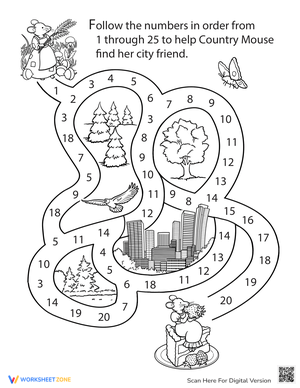
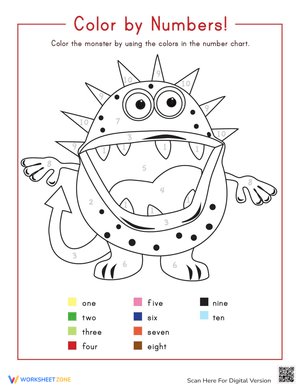
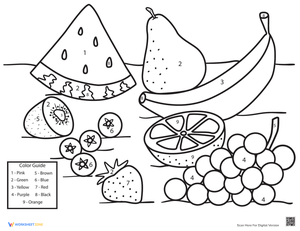
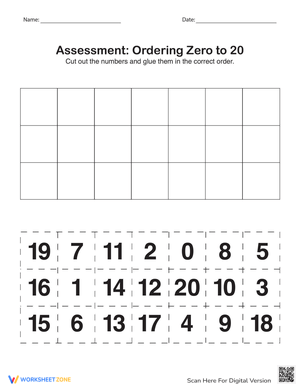
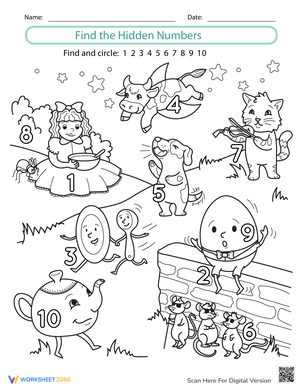
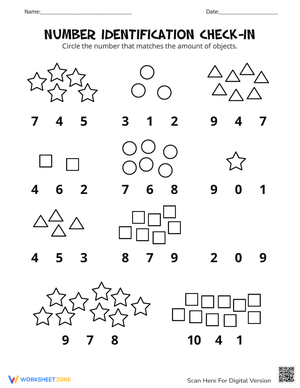
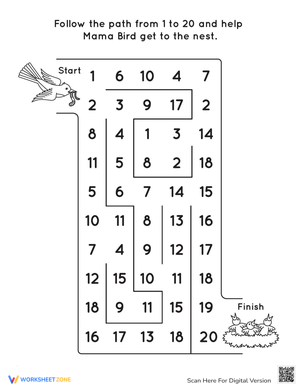
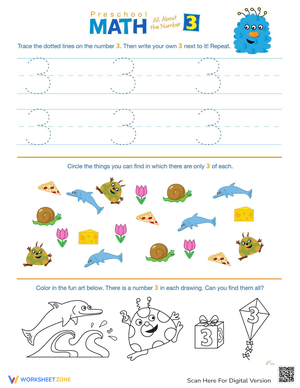
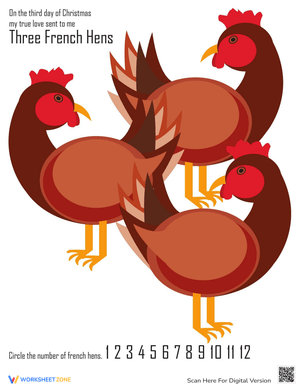
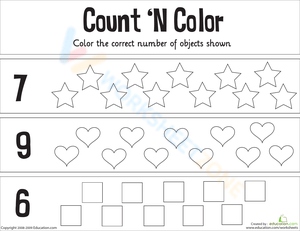
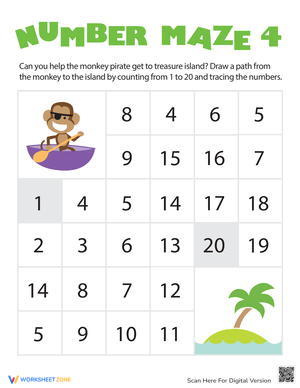
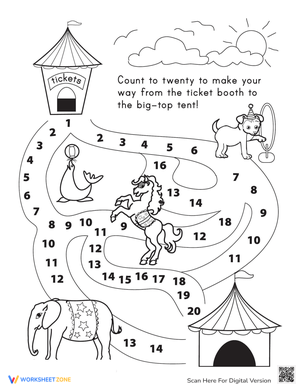
Number identification is one of the first academic skills kindergarten teachers assess, and it shows up on nearly every progress-monitoring checklist by October. Worksheets that ask students to identify numbers 0-10 give teachers a low-prep way to practice the exact skill named in CCSS K.CC.B.4: connecting counting to cardinality, so a student understands that the last number said tells how many objects were counted. Pairing that standard with CCSS K.CC.3, which asks students to write numbers 0-20 and represent a count of objects with a written numeral, means a single worksheet can reinforce two related expectations at once.
Moving From Numeral Recognition to True Number Sense For Kindergarteners
Rote counting to ten and true number recognition are not the same skill. A child can chant 'one, two, three' without connecting any of those words to an actual quantity. Meaningful numeral-to-quantity understanding is usually built through visual supports like ten-frames, number lines, and countable objects placed right next to the worksheet, not through repetition of the worksheet alone.
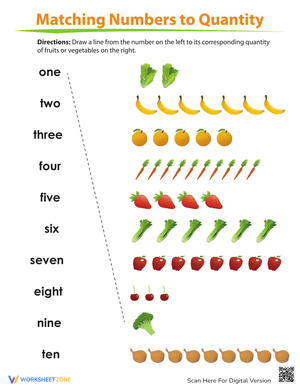
When you introduce a 0-10 identification worksheet, keep a ten-frame or a set of counters on the table. Ask students to build the quantity before they circle or write the numeral. This turns a static page into an active check of whether the child actually understands what the numeral 7 represents, rather than simply recognizing the shape of the digit.
Research on early number competence found that kindergartners from low-income households showed both lower average performance and slower growth in number skills compared with middle-income peers, which is one reason consistent, structured practice materials like these worksheets carry real weight for equity, not just convenience.
Classroom Implementation
Number identification worksheets fit naturally into several parts of a kindergarten day. Morning work is a common home for a single 0-10 worksheet, since students can complete it independently while you take attendance or check in with families at drop-off. Math centers are another strong fit, especially when a worksheet is paired with a hands-on tool at the same table, such as counters, a number line taped to the desk, or number cards for matching.
Homework works best when the worksheet stays simple and requires no new instruction, since not every family has time to reteach a concept at home. Send worksheets that reinforce numerals already taught in class rather than introducing new ones. If your school allows take-home folders, include a short note explaining what the worksheet checks so families understand the purpose.
Pairing Worksheets With Hands-On Number Tools
Worksheets work best as one piece of a larger number-sense routine rather than a stand-alone activity. Number lines posted at eye level give students a reference to check their answers. Ten-frames make the structure of numbers 6 through 10 visible, since students can see the 'five and some more' pattern instead of counting every dot from one. Physical counters let students build a quantity first and then find the matching numeral on the worksheet, reinforcing the numeral-to-quantity connection that separates real number recognition from memorized counting.
Teacher-created engagement strategies, such as short numeral scavenger hunts around the room before returning to a worksheet, can also help students transfer numeral recognition beyond the printed page, according to classroom practice guidance on teaching number recognition in kindergarten.
Frequently Asked Questions
1. What CCSS standard do identifying numbers 0-10 worksheets align to?
These worksheets primarily support CCSS K.CC.B.4 and K.CC.3, which cover connecting counting to cardinality and writing numbers 0-20 to represent a count of objects. Worksheets that include comparison tasks also touch K.CC.7.
2. How often should kindergartners practice number identification 0-10?
Short, frequent practice works better than long, infrequent sessions. A brief worksheet three to four times a week, paired with hands-on counting activities, tends to build stronger recognition than one long worksheet packet per week.
3. What's the difference between number recognition and true number sense?
Number recognition means a student can name or identify a numeral by sight. True number sense means the student also understands the quantity that numeral represents and can compare it to other numbers, which is why worksheets should be paired with counters or ten-frames.
4. How can teachers use these worksheets for intervention with struggling students?
Start intervention groups with numerals 0-5 before moving to the full 0-10 range, and have students say each number aloud while pointing to it. This gives you a quick, informal check of both recognition and confidence.
5. What classroom tools pair well with number identification worksheets?
Ten-frames, number lines, and physical counters are the most effective pairings because they let students build or see a quantity before matching it to a written numeral on the worksheet.













 Interactive Worksheet Maker
 Quiz Maker
 Word Search Maker
 Crossword Puzzle Maker
 Word Scramble Generator
 Sentence Scramble Generator
 Handwriting Worksheet Generator
 Name Tracing Generator
 Fill In The Blank Generator