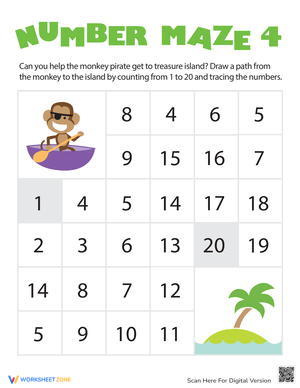
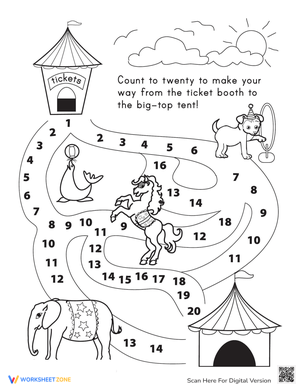
Ordering numbers 0-10 worksheets give students repeated, low-stakes practice arranging numerals from least to greatest and greatest to least, which strengthens the number sense they will lean on for addition, subtraction, and later comparison work. This skill sits right alongside counting and cardinality goals, so it fits naturally into any kindergarten math block that already includes rote counting and one-to-one correspondence routines.
Sequencing practice also gives teachers a quick window into how a student thinks about quantity. A child who can count to ten but struggles to say which number comes right before eight is telling you something specific about their number sense that a simple counting check would miss.
What Practice Ordering Numbers 0-10 Worksheets For Kindergarten Include?
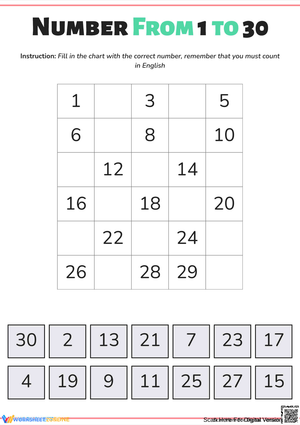
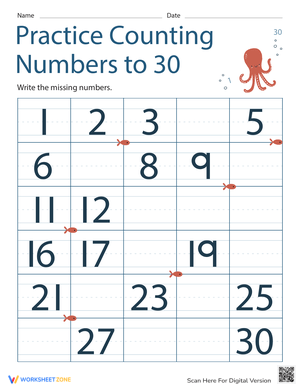
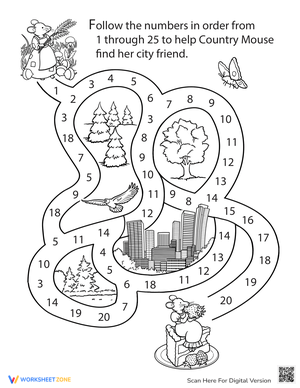
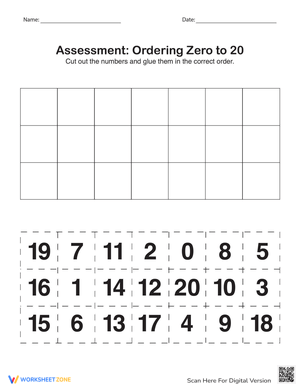
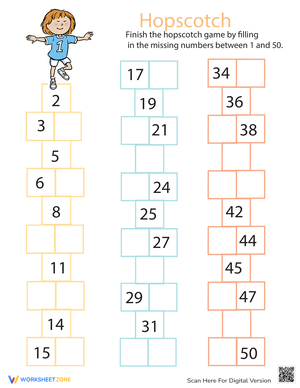
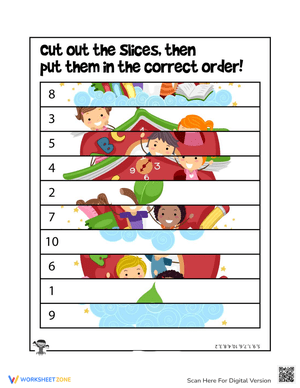
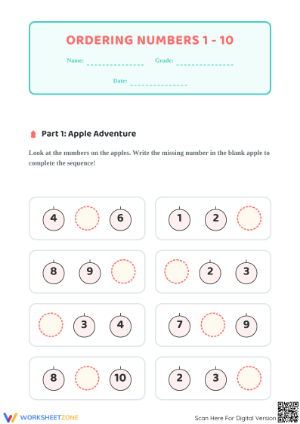
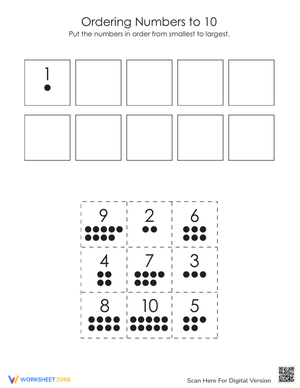
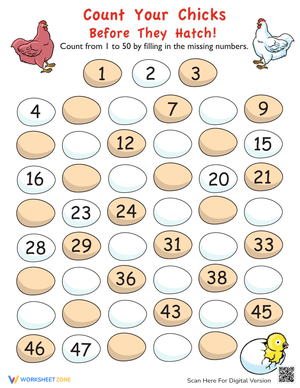
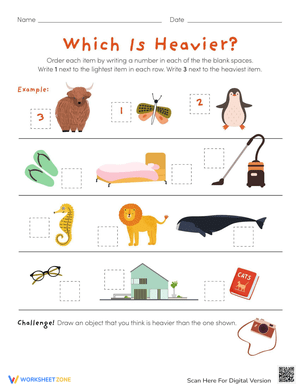
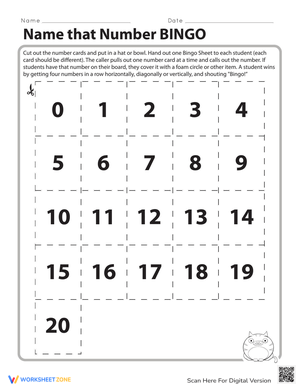
Most printable ordering worksheets for this age group use one of three formats. The first asks students to arrange a scattered set of number cards from smallest to largest, often with space to write each numeral in a row of boxes. The second uses a partially filled number line from 0 to 10 where students write in the missing numerals. The third presents pairs or small groups of numbers and asks students to circle the smaller or larger value.
Each format targets a slightly different skill. Arranging scattered numbers checks whether a student understands full sequence order, filling in a number line checks whether they can identify a missing quantity within a known sequence, and circling the larger or smaller number checks basic comparison, a skill that later connects directly to greater-than and less-than symbols.
Common Misconceptions Kindergartners Show When Ordering Numbers
A few patterns show up again and again on ordering worksheets. Some students reverse numerals like 6 and 9 or write digits backward, which is common at this age and worth noting but not treating as a sequencing error on its own. Others skip a number in the middle of a sequence, often one they have not yet fully memorized, such as seven or eight. A smaller group of students can order numbers correctly when counting aloud but cannot do the same task with written numerals alone, which points to a numeral recognition gap rather than a sequencing gap.
Common Core State Standards Initiative guidance for Kindergarten Counting and Cardinality notes that CCSS.MATH.CONTENT.K.CC.A.7 asks students to compare two written numerals between 1 and 10, while CCSS.MATH.CONTENT.K.CC.B.6 focuses on comparing group sizes using matching and counting strategies up to ten objects: together these standards frame ordering practice as a bridge between counting objects and reasoning about written numerals, a distinction worth naming explicitly when planning kindergarten number sense lessons.
Classroom Implementation
A few practical habits make ordering numbers 0-10 worksheets more effective in a real classroom. Start each new worksheet format with a quick whole-group example on the board so students see the expected process before working independently. Keep worksheets to a single skill focus at a time rather than mixing arranging, missing-number, and comparison tasks on one page, since kindergartners benefit from clear, single-purpose practice early in the year.
Use ordering worksheets two to three times per week rather than daily during the unit when this skill is first introduced, and rotate in comparison and counting worksheets on the other days so the skill stays connected to the broader counting and cardinality goals it supports. Save completed worksheets in a simple folder or binder so you can track whether specific misconceptions, like numeral reversals or skipped numbers, are improving over a few weeks.
Frequently Asked Questions
1. What is the best way to introduce ordering numbers 0-10 to kindergartners?
Start with a whole-group demonstration using physical number cards on a pocket chart or the floor, then move to the same task on paper once students can explain their ordering strategy out loud.
2. How many ordering-numbers worksheets should a kindergarten teacher use per week?
Two to three worksheets per week works well while the skill is first introduced, paired with hands-on card or counter activities on other days of the unit.
3. What standard does ordering numbers 0-10 practice align to?
Ordering practice connects to CCSS.MATH.CONTENT.K.CC.A.3 for writing numerals, CCSS.MATH.CONTENT.K.CC.A.7 for comparing written numerals, and CCSS.MATH.CONTENT.K.CC.B.6 for comparing group sizes, all part of Kindergarten Counting and Cardinality.
4. How can teachers tell if a student is ready to move from counting to ordering numbers?
A student who can count a set accurately and consistently match that count to the correct written numeral is usually ready to begin ordering practice.
5. What classroom activities pair well with ordering numbers worksheets?
Physical number card sorting, number-line pocket charts, and counter-based matching activities all reinforce the same sequencing skill in a hands-on format before or after worksheet practice.













 Interactive Worksheet Maker
 Quiz Maker
 Word Search Maker
 Crossword Puzzle Maker
 Word Scramble Generator
 Sentence Scramble Generator
 Handwriting Worksheet Generator
 Name Tracing Generator
 Fill In The Blank Generator