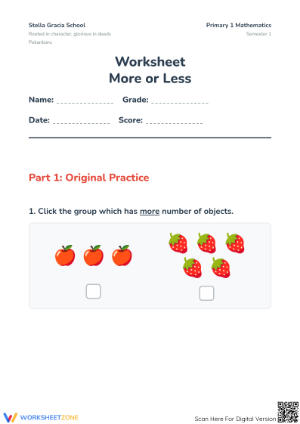
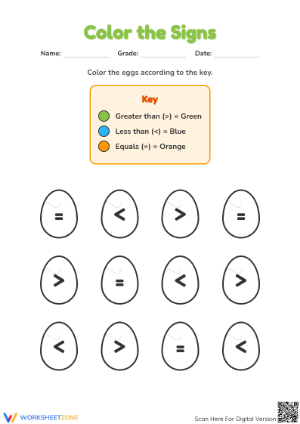
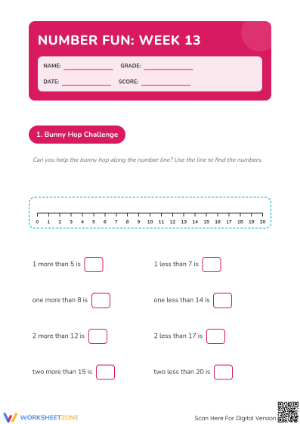
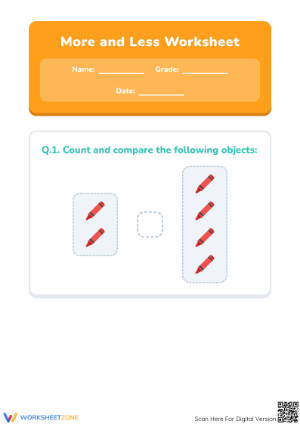
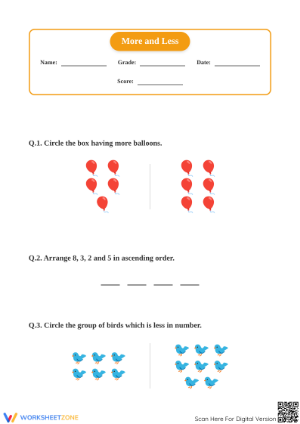
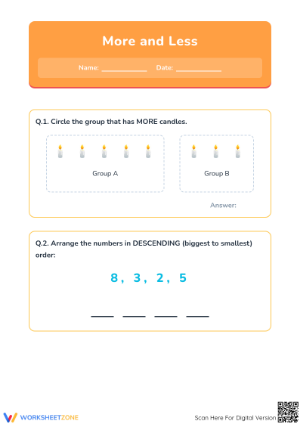
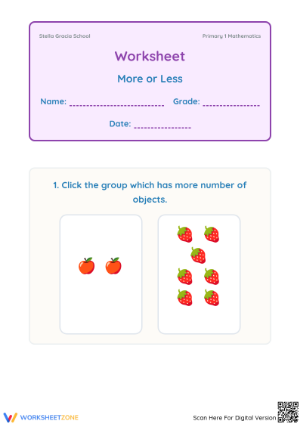
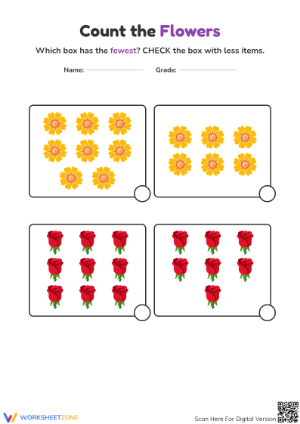
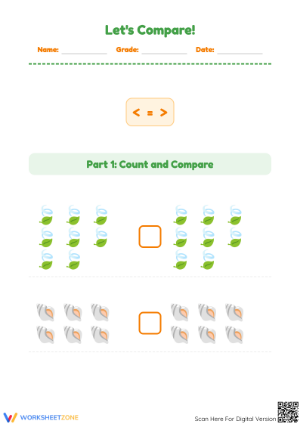
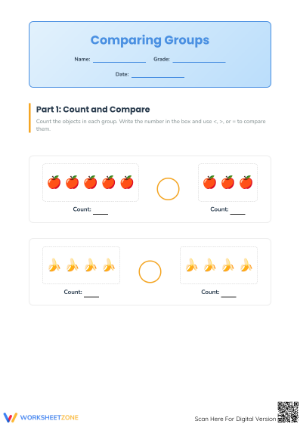
Kindergarten comparison printable worksheets give students repeated visual practice with the math language that early number sense depends on — more, fewer, equal, bigger, shorter — at a stage when those words need to move from classroom conversation into independent work. The set targets picture-based and numeral-based comparison across a range of task types: counting sets, matching quantities, comparing measurable attributes, and marking the greater or smaller group. Because five- and six-year-olds are not yet reading directions independently, prompts are short and response formats — circle, color, draw, mark — stay consistent within each worksheet.
What the Set Covers
The comparison skills in this collection map directly to what kindergartners encounter in the first half of the school year, when counting fluency and number relationships develop in parallel. Across the worksheets, students practice:
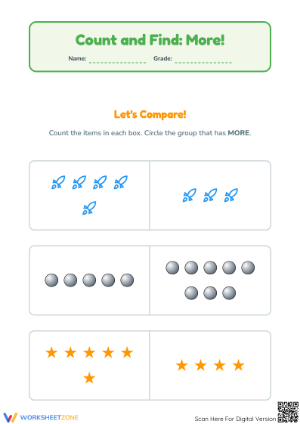
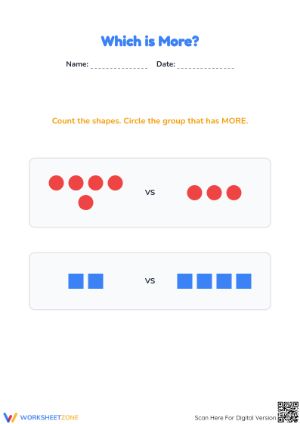
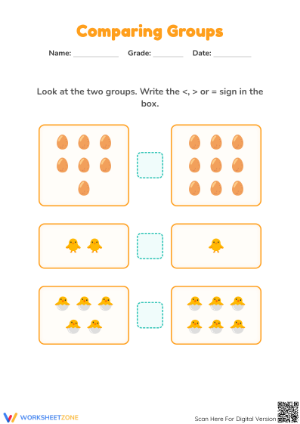
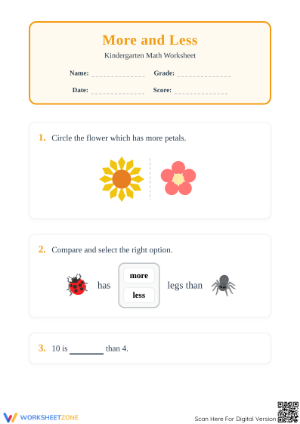
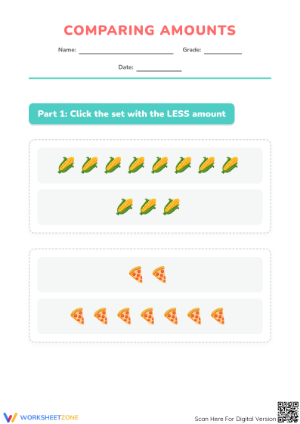
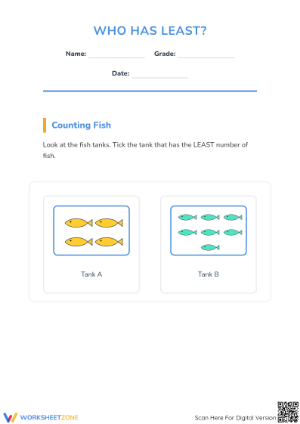
- More and fewer: Comparing two groups of objects and identifying which has more or which has fewer items.
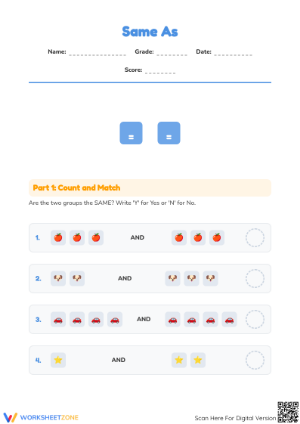
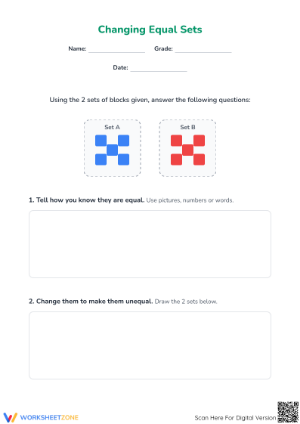
- Equal sets: Recognizing when two groups contain the same number of objects.
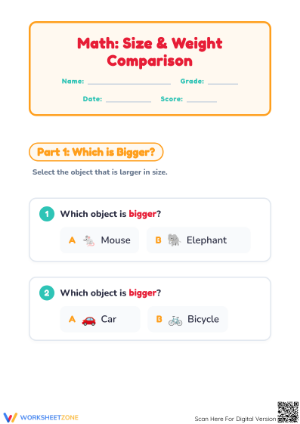
- Size comparison: Determining which object is bigger or smaller using visual evidence.
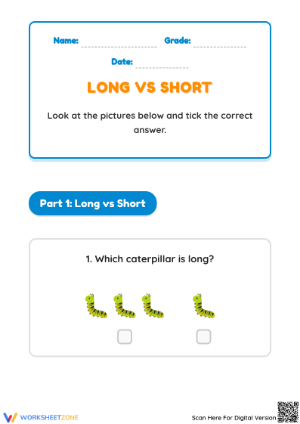
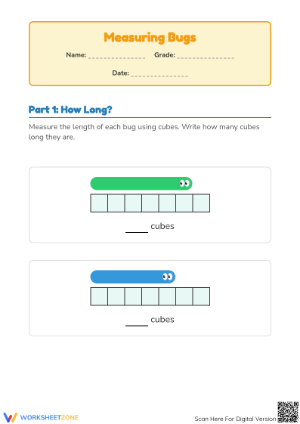
- Height and length: Comparing two objects directly and identifying the taller, shorter, or longer one.
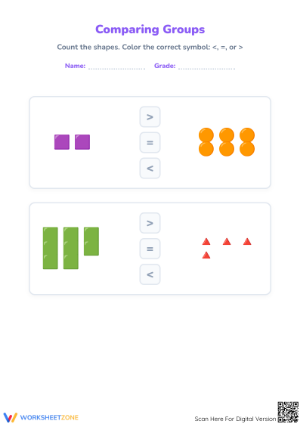
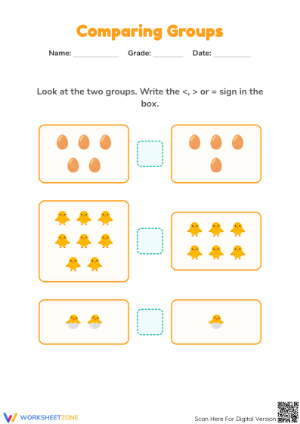
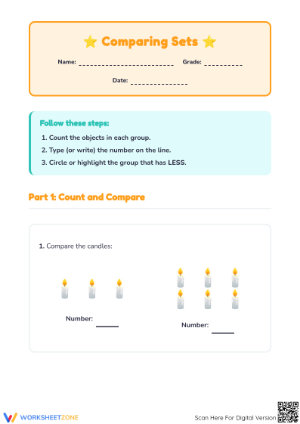
- Set comparison with counting: Counting each group and selecting the greater or smaller quantity, with quantities ranging from one through ten.
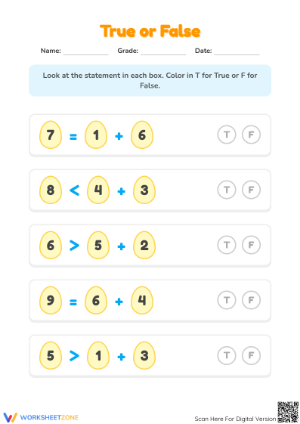
- Numeral comparison: Comparing written numerals after building fluency with picture-based tasks first.
Each worksheet keeps a narrow skill focus. A worksheet on more and fewer does not layer in size comparison on the same worksheet — that combination overloads working memory for a five-year-old who is simultaneously building counting accuracy and math vocabulary.
Common Student Mistakes Teachers Should Anticipate and Address
The most reliable error in kindergarten comparison is trusting visual spread over an actual count. A student who counts one-to-one accurately during a warm-up will often mark the spatially larger group as "more" when the dots or objects are scattered unevenly across the worksheet. This is Piaget's conservation problem in printed form: the child perceives area and treats it as a proxy for quantity. It appears most clearly when one group is arranged in a neat row and the other is scattered across a wider space. The correction is to have students tap or draw a line through each item as they count, rather than scanning the group visually.
A second pattern involves vocabulary rather than counting. Students who correctly identify "more" when pointing at two physical piles will stall when a prompt uses "fewer" — especially if that word hasn't appeared regularly in daily math talk. Reading comparison terms aloud before students begin any new worksheet matters, even when the pictures seem self-explanatory. The third error appears on height and length comparisons: students anchor to the top edge of the taller object and ignore whether both items share the same baseline. On any worksheet where a shorter object is positioned higher on the worksheet than the taller one, expect a significant number of incorrect responses unless baseline alignment gets addressed before the worksheet is distributed.
Fitting These Worksheets Into Your Week
The strongest use pattern is model-then-release. Count and compare two physical groups with students, settle on the answer together, then assign the worksheet as independent follow-up while the concrete work is still fresh. The window right after morning meeting — before centers open — works well for this sequence. Students are still focused, the vocabulary is live in the room, and the worksheet becomes a natural extension of the lesson rather than a cold paper task. When kindergarten comparison printable worksheets are used in math centers, placing each worksheet inside a dry-erase sleeve lets students mark answers with an erasable marker and try again without needing a new copy.
One organizational move worth making: sort the worksheets by response format, not only by skill. A circle-the-answer task and a color-the-answer task may both address more and fewer, but switching formats mid-week adds a procedural layer on top of the math. When kindergartners misread a task format, teachers tend to score it as a math error when it's really a direction-following issue. Keeping the response routine consistent within a given week produces cleaner formative data and makes centers run more smoothly.
Standard Alignment
These kindergarten comparison printable worksheets address three overlapping standards in the counting and cardinality domain. Picture-based set comparison tasks directly align with CCSS.MATH.CONTENT.K.CC.C.6, which requires students to identify whether the number of objects in one group is greater than, less than, or equal to the number in another group, for sets up to ten objects. The numeral comparison worksheets connect to CCSS.MATH.CONTENT.K.CC.C.7, which extends that work to comparing two written numerals between one and ten. Worksheets involving height and length address CCSS.MATH.CONTENT.K.MD.A.2, the direct comparison standard for measurable attributes in common. Most kindergarten pacing guides sequence these standards in the first semester. The worksheets work best as follow-up after students have handled the concepts with physical materials — not as initial instruction.
Adjusting the Worksheets for Different Readiness Levels
Students who are still building one-to-one correspondence do best with worksheets that show five or fewer objects per group. Letting those students place a counter on each printed image before marking an answer interrupts the perceptual shortcut — the tendency to mark the group that takes up more space — and redirects attention to the actual count. Reading the direction aloud and pointing to each group together removes one more barrier before students work independently.
Students who compare objects accurately are ready to move from circling an answer to explaining it. After completing each worksheet, those students can write or dictate a sentence: This group has more because it has six and the other has four. That kind of explanation builds the reasoning behind the answer in a way that marking a response alone does not. A strong extension: give those students a blank template and ask them to create a comparison problem for a partner to solve using stamps, stickers, or drawings. Students who can construct a valid comparison item understand the concept at a depth most kindergartners don't reach until late spring. For students in the middle — who count accurately but hesitate on vocabulary — doing a worksheet immediately after a brief class discussion that uses comparison words in context is usually enough to move them forward.
Frequently Asked Questions
When in the school year should I introduce these worksheets?
Most kindergartners are ready for picture-based comparison practice by September or October, after a few weeks of counting and one-to-one correspondence work. Numeral comparison worksheets should wait until students reliably recognize numerals one through ten and can connect each numeral to a matching quantity without hesitation.
Can these worksheets serve as a formative assessment tool?
Yes. A completed worksheet gives enough information to see which students are counting and which are guessing by visual spread — those are two different problems that call for different responses. Kindergarten comparison printable worksheets work particularly well as pre- and post-checks around a comparison unit because the format stays stable, which makes it easier to attribute changes in student performance to actual learning rather than unfamiliarity with the task type.
Do students need to be able to read to use these worksheets?
No. The task prompts use short action words — circle, color, draw — alongside clear visuals. For any student who pauses at a written direction, reading it aloud before the worksheet begins removes that barrier entirely.
How do I make a center work with these when I can't be nearby to help?
Post a reference card at the center that shows comparison vocabulary with matching picture examples — a group of three beside a group of five, labeled "fewer" and "more." Students who internalize that card during the first few center sessions need very little adult support to complete picture-based comparison tasks independently from that point on.













 Interactive Worksheet Maker
 Quiz Maker
 Word Search Maker
 Crossword Puzzle Maker
 Word Scramble Generator
 Sentence Scramble Generator
 Handwriting Worksheet Generator
 Name Tracing Generator
 Fill In The Blank Generator