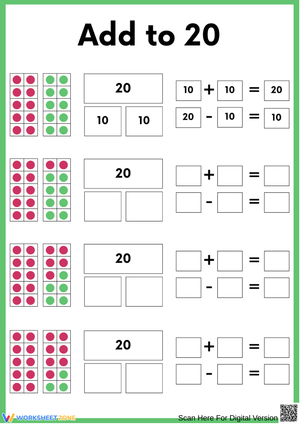
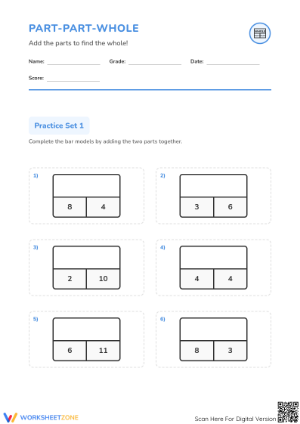
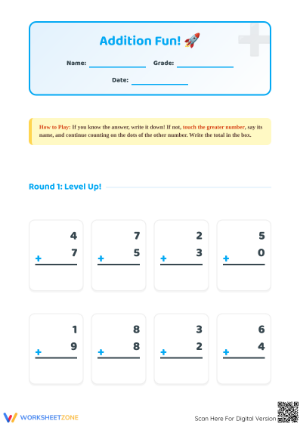
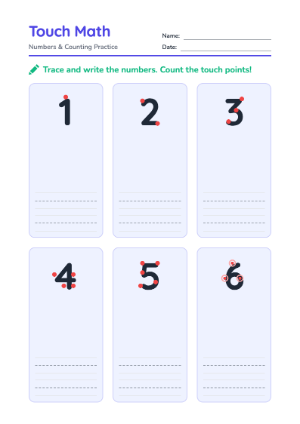
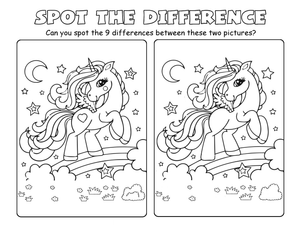
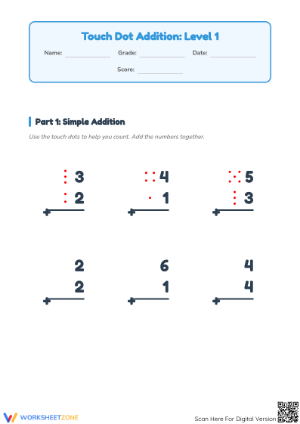
These others math printable worksheets for kindergarten pull together the early math skills teachers cycle through most across the first and second trimester — counting object sets, matching quantities to numerals, comparing groups, recognizing shapes, continuing patterns, and working through picture-based joining and separating. Rather than tracking down a separate resource for each concept, the set gives teachers mixed review material ready for morning work, centers, or a quick independent check after small-group instruction.
What's Inside the Set
Each worksheet targets a specific task type while touching several familiar concepts. The core skills across the set include:
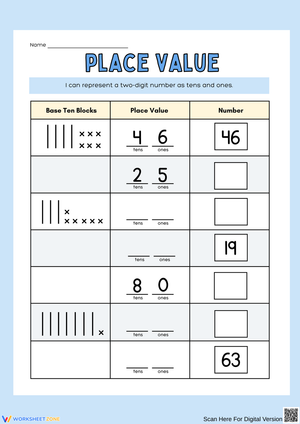
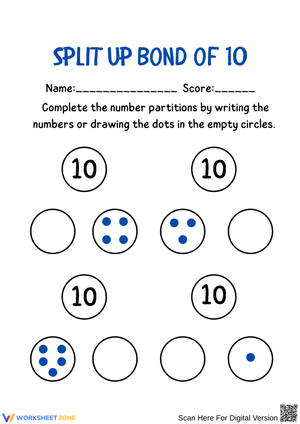
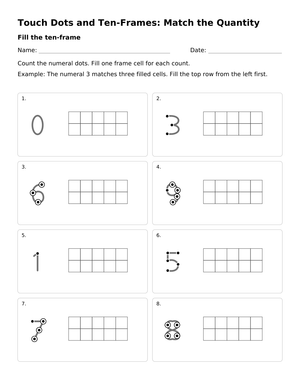
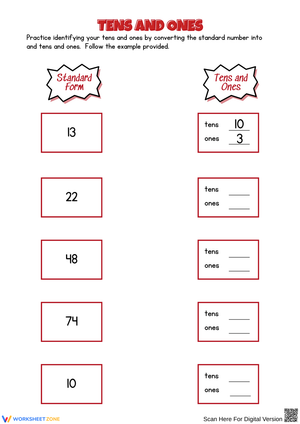
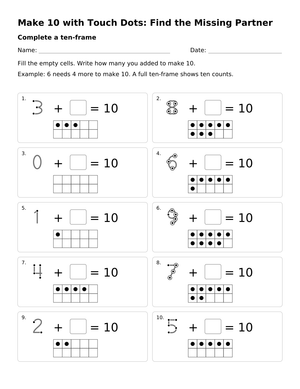
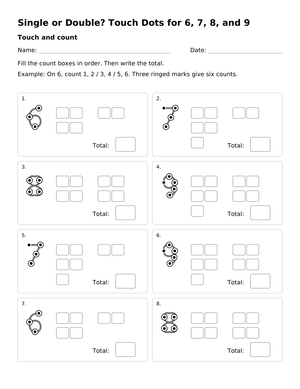
- Counting and quantity: Students count objects and circle or write the matching numeral, or draw additional objects to reach a target number.
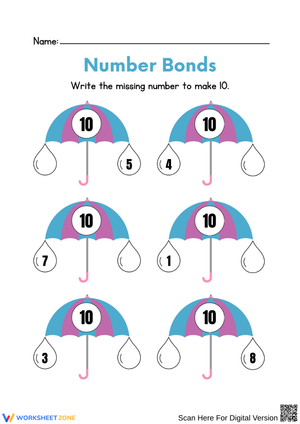
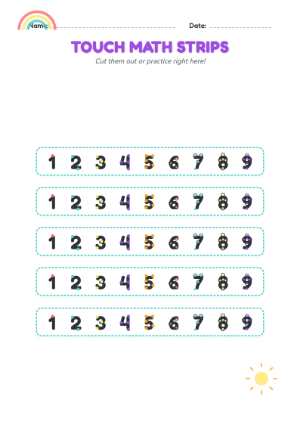
- Number recognition and ordering: Students identify, trace, or sequence numerals — typically within 1–10 on earlier worksheets, extending to 20 later in the year.
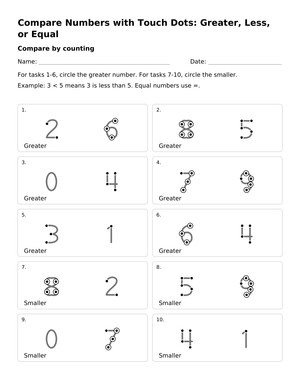
- Comparing quantities: Students mark which group has more or fewer, and some worksheets ask them to cross out extras to make two groups equal.
- Shape recognition: Students name, sort, or match 2D shapes — circles, squares, triangles, rectangles — and connect them to everyday objects.
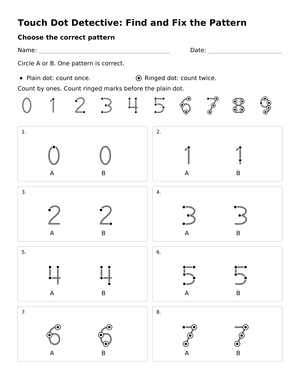
- Repeating patterns: Students continue or extend AB and ABC patterns using pictures, shapes, or colors.
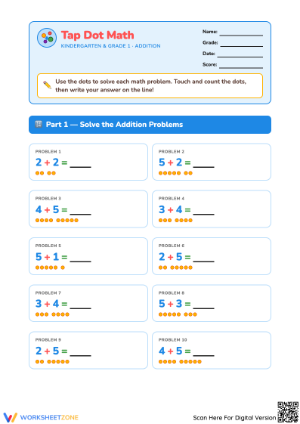
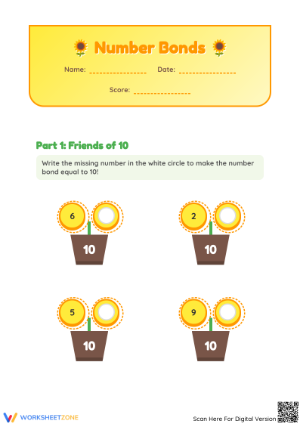
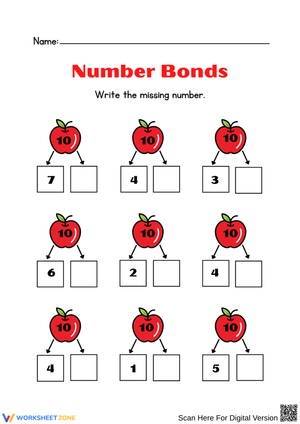
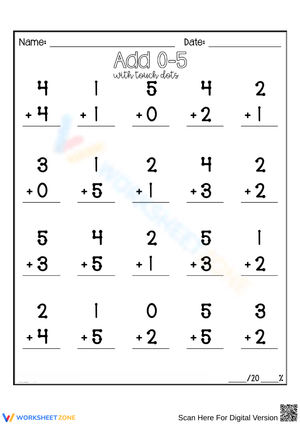
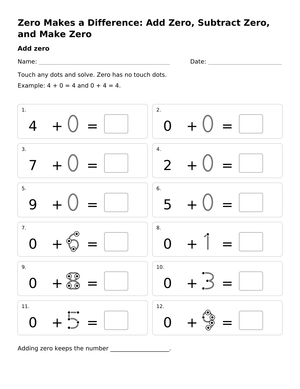
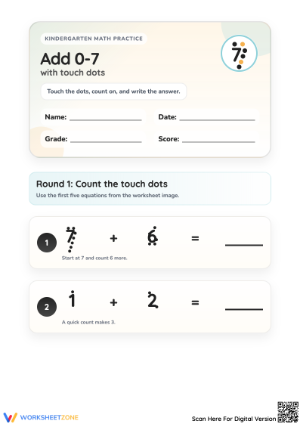
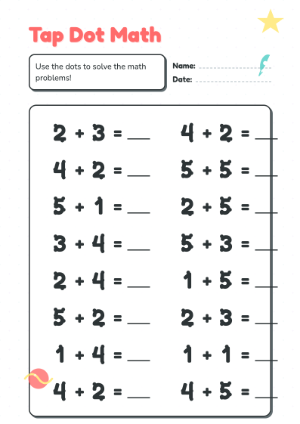
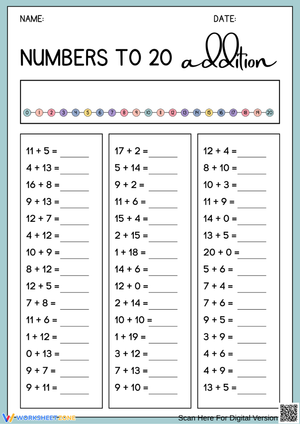
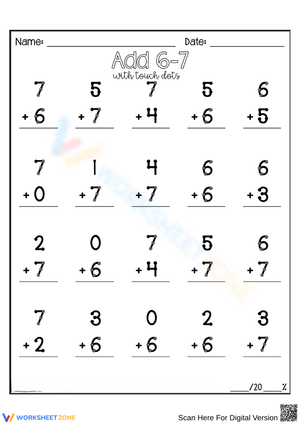
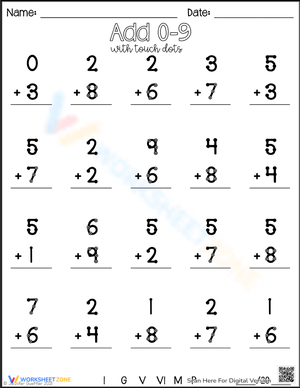
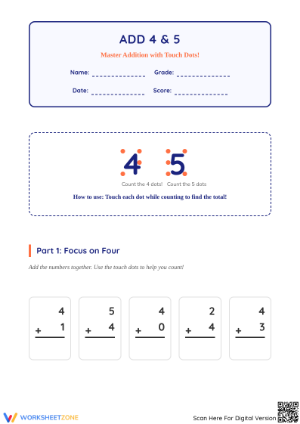
- Beginning operations: Students use pictures to show joining or separating, often counting on from a group or identifying what remains after taking away.
- Measurement comparisons: Students circle the taller, longer, or fuller object using side-by-side visual comparisons rather than standard units.
Worksheets that keep directions short and rely on a visual model — a dotted example, a sample answer, a labeled arrow — let students work independently without re-explanation at each item. Having a deep bank of others math printable worksheets for kindergarten on hand means teachers can match a task to a student's current readiness rather than assigning the same worksheet to the entire class.
Errors Worth Anticipating in Early Math Practice
The most common counting worksheet error isn't miscounting in the literal sense — it's losing track of which objects have already been tagged. A student counts aloud correctly, but the finger drifts, one object gets counted twice, the student self-corrects verbally but not in their marking, and the circled numeral reflects the uncorrected count. On paper this looks like a math mistake. In practice it's a one-to-one correspondence habit that needs more physical tracking work, not additional numeral instruction.
Comparison tasks surface a different problem. Ask students to circle the group with more, and a set of three large elephants will beat a set of six small ants in a significant percentage of kindergarten responses. Students are reading visual weight rather than counted quantity. Worksheets that deliberately pair size-mismatched groups expose this reasoning pattern before teachers discover it only at a report card checkpoint.
Pattern worksheets reveal a subtler issue. Most kindergarteners can extend an AB pattern by visual logic without being able to name or isolate the repeating unit — and that strategy breaks down for AABB or ABC sequences. Asking students to circle the core unit rather than simply continue the pattern changes what the worksheet reveals, and it costs nothing extra in prep time.
Where These Worksheets Fit Best Across the Week
Others math printable worksheets for kindergarten work best as reinforcement, not introduction. A worksheet that asks students to count and compare groups should follow a lesson where they physically sorted linking cubes — not precede it. When used this way, the worksheet confirms whether students can transfer a concept independently, which is separate from whether they can perform it with a teacher nearby.
Practical placement points across the week:
- Morning work: Use a short counting or shape worksheet during the 10–12 minutes while students arrive and settle in.
- Math centers: Pair a comparison or pattern worksheet with a bin of counters or shape tiles so students can verify their thinking before marking their answers.
- After small-group instruction: Send one worksheet with the group as an independent transfer task right after guided practice. The gap between guided and solo work is where you see who has genuinely internalized the skill.
- Sub days: A stack of mixed review worksheets sorted into labeled folders by skill gives a substitute clear structure without requiring math background or extra prep.
- End-of-unit snapshot: Use a mixed worksheet informally before report cards. If most of the class misses the same item type, that's a reteaching signal for the whole group, not an individual intervention flag.
One sorting habit that pays off at center time: organize worksheets by independence demand rather than skill alone. Some tasks students can begin with a single visual model on the board; others require teacher proximity for the first few items. Keeping those groups of worksheets separate — not just by skill folder — makes assigning the right worksheet faster without additional prep each week.
Working the Set Into a Mixed-Ability Classroom
For students who are still building foundational numeracy — those who lose one-to-one correspondence above 5, or who aren't yet consistent with numerals 6 through 9 — choose worksheets that ask them to count, circle, or trace rather than write and compare simultaneously. Separating those demands gives a clearer picture of where the gap actually sits. A student who counts accurately but writes "9" instead of "6" has a different instructional need than one who miscounts and also misnames the numeral.
Students who have moved past foundational counting can work with worksheets that layer two related tasks: count the objects, write the numeral, then circle whether the group is greater than or less than 5. That layering doesn't require a different worksheet format — it just shifts the demand to match the student's current level.
For English learners or students with limited print experience, prioritize worksheets where the task is communicated entirely through visual modeling. The student should be able to understand what to do by looking at a completed example, not by reading a direction line. In practice, this means previewing each worksheet before distributing it rather than handing out the full set at once.
Standard Alignment
These worksheets address multiple Common Core State Standards for kindergarten mathematics. Counting tasks connect to K.CC.B.4 (understanding the relationship between numbers and quantities) and K.CC.B.5 (counting to answer "how many?" questions up to 20). Comparison worksheets align with K.CC.C.6, which asks students to identify whether a group of objects has greater than, less than, or equal to the number of objects in another group. Shape recognition tasks address K.G.A.2 (correctly naming shapes regardless of their orientation or size). Beginning addition and subtraction work falls under K.OA.A.1 (representing addition and subtraction with objects and drawings). Measurement comparisons align with K.MD.A.2 (directly comparing two objects with a measurable attribute in common). Teachers working outside CCSS states will find these skills map closely to equivalent kindergarten standards under TEKS, Virginia SOLs, and most comparable state frameworks.
Frequently Asked Questions
Can I use these worksheets at the very start of Kindergarten?
Some work well in September, but choose carefully. Early in the year, students are still learning classroom routines and what "circle the answer" means in a worksheet context. Stick to worksheets with one task type, large visuals, and very few items until those habits are established. Counting and tracing worksheets settle into the first weeks without much friction; comparison and pattern worksheets usually need more classroom grounding first.
Should students be able to complete these independently?
That depends on when and why you're using them. For morning work or center time, choose worksheets students can complete with minimal support — if a student needs constant re-explanation, the worksheet is working against other instructional priorities. For small-group work, you can assign worksheets that push a bit beyond independent level because the teacher is present to prompt and observe. The key is matching the independence demand to the setting, not forcing every worksheet into a solo-completion context.
How many worksheets should students complete in one block?
In kindergarten, one worksheet is usually the right amount for a focused independent practice block. Attention and fine motor stamina both affect performance, and a student who rushes through several worksheets quickly is often not thinking carefully about any of them. One focused worksheet produces more reliable information about what a student actually understands than a stack of half-attended ones.
How do these work for students who aren't yet writing numerals?
Look for worksheets that let students respond by circling, coloring, or drawing rather than writing. Many mixed sets include both response types across different worksheets, so pulling the right ones requires only a quick sort before the lesson. When others math printable worksheets for kindergarten include circling and matching tasks alongside write-in tasks, you can differentiate with minimal additional prep — assign the circling version to students not yet writing and the write-in version to those who are ready.













 Interactive Worksheet Maker
 Quiz Maker
 Word Search Maker
 Crossword Puzzle Maker
 Word Scramble Generator
 Sentence Scramble Generator
 Handwriting Worksheet Generator
 Name Tracing Generator
 Fill In The Blank Generator