




























Views
Downloads
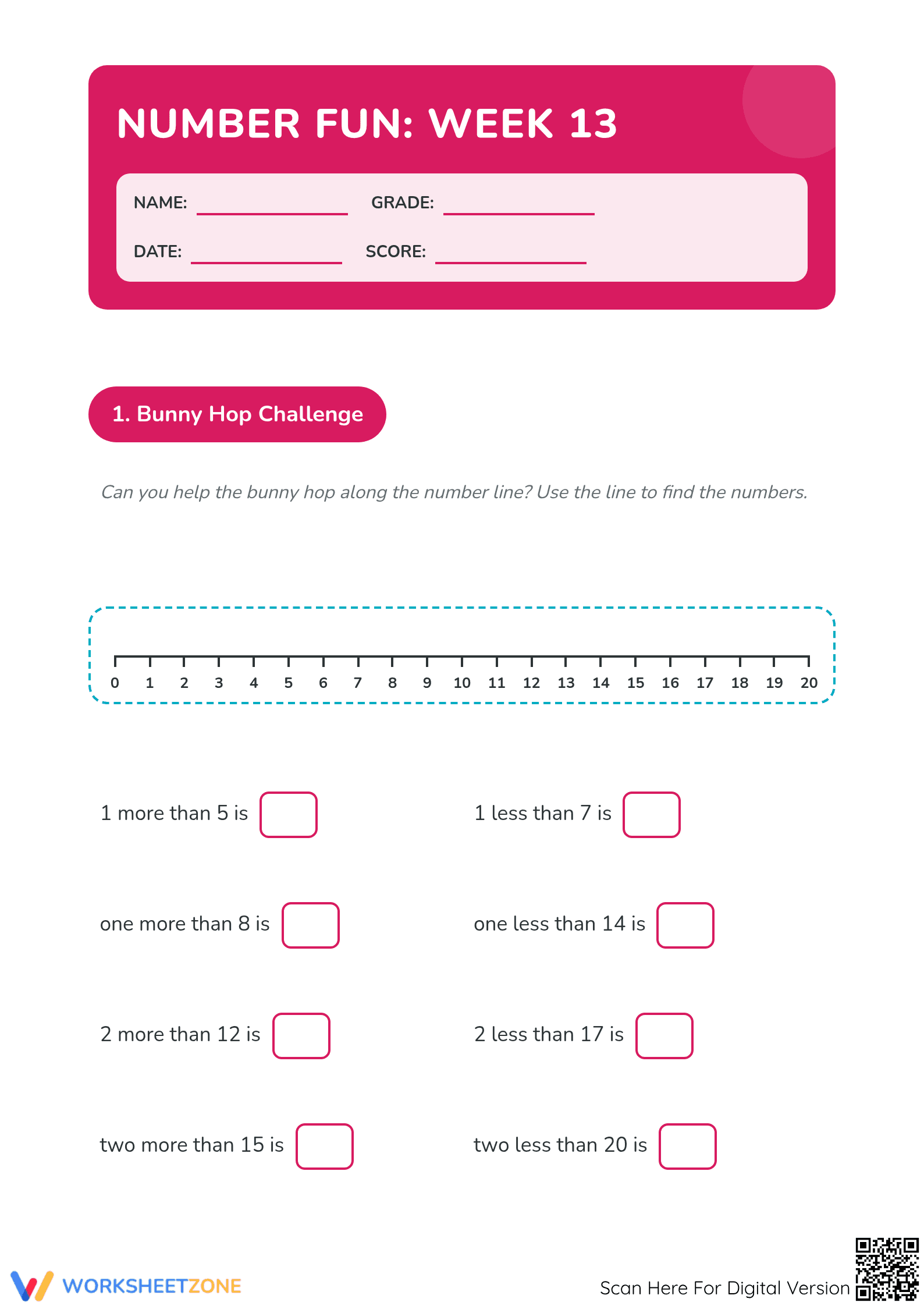



Essential More and Less Comparison Worksheet | Kindergarten

Paste this activity's link or code into your existing LMS (Google Classroom, Canvas, Teams, Schoology, Moodle, etc.).
Students can open and work on the activity right away, with no student login required.
You'll still be able to track student progress and results from your teacher account.
Help young learners master the foundational concept of quantity comparison with this comprehensive math practice set. Students will engage with vibrant visual groups to identify which sets contain more or fewer items, bridging the gap between counting and abstract number comparison. This resource ensures early mathematicians develop the visual discrimination necessary for future algebraic thinking and numerical fluency.
At a Glance
- Grade: Kindergarten · Subject: Math Comparison
- Standard:
K.CC.C.6— Identify whether the number of objects in one group is greater than or less than another- Skill Focus: Visual Quantity Comparison (More vs. Less)
- Format: 5 pages · 25 problems · Answer key included · PDF
- Best For: Independent practice and small group rotation
- Time: 15–20 minutes
What's Inside
This five-page PDF resource features structured comparison tasks that utilize recognizable icons like apples, bees, and geometric shapes. Each page contains five distinct comparison problems, totaling twenty-five opportunities for students to apply their counting skills. The layout includes clear ticking boxes for student responses and a complete answer key for rapid grading or self-correction.
Skill Progression
- Guided practice: The first page introduces simple, high-contrast groups (e.g., 2 vs. 5) to establish the visual logic of "more" with minimal counting strain.
- Supported practice: Middle pages increase complexity by using similar object sizes and larger quantities, requiring students to count carefully before making a determination.
- Independent practice: The final pages alternate between identifying the "more" and "less" groups, challenging students to pivot their focus based on written instructions.
This "I Do, We Do, You Do" approach scaffolds the cognitive load, allowing students to build confidence before tackling mixed comparison sets.
Standards Alignment
This resource directly aligns with `CCSS.MATH.CONTENT.K.CC.C.6`: "Identify whether the number of objects in one group is greater than, less than, or equal to the number of objects in another group." It also supports `1.NBT.B.3` for symbolic comparison. Both standard codes can be copied into lesson plans or curriculum tools.
How to Use It
Use this worksheet for independent practice or as a math center activity. Encourage students to count aloud to reinforce one-to-one correspondence. It serves as an excellent formative assessment tool to gauge mathematical maturity by observing if students are "subitizing" or counting individually.
Who It's For
This set is designed for Preschool, Kindergarten, and Grade 1 students who are developing their sense of number magnitude. It is particularly effective for English Language Learners (ELLs) due to its heavy reliance on visual cues rather than dense text. Pair this with physical manipulatives like counting cubes to provide a concrete-representational-abstract (CRA) learning experience.
Mastering quantity comparison in early childhood is a critical predictor of later mathematical success. This resource provides 25 structured tasks for repeated practice, essential for students to achieve fluency in identifying "more" and "less" without cognitive overload. The use of familiar objects aligns with best practices, ensuring the focus remains on mathematical skill. This printable resource supports both teacher efficiency and student mastery in early elementary math classroom.


