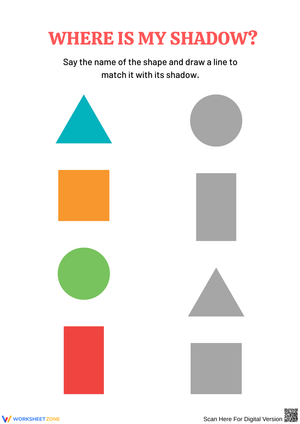
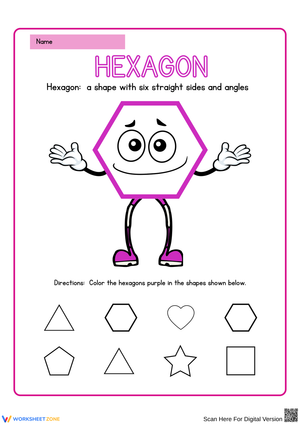
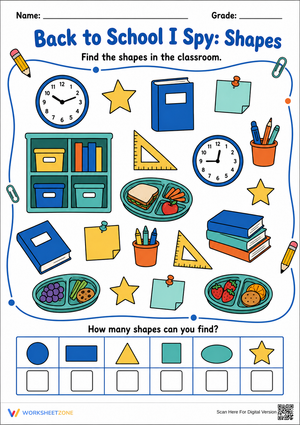
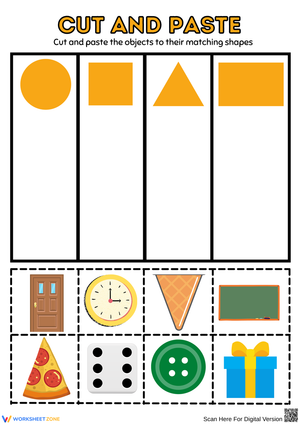
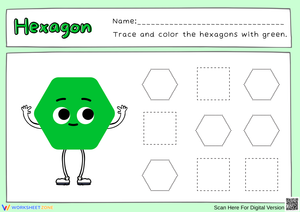
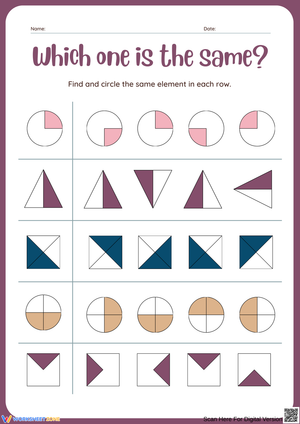
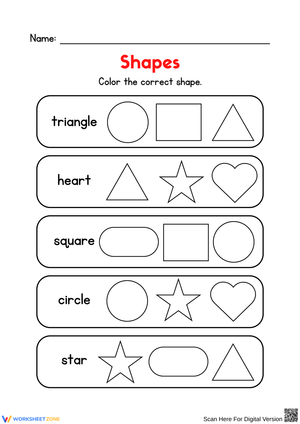
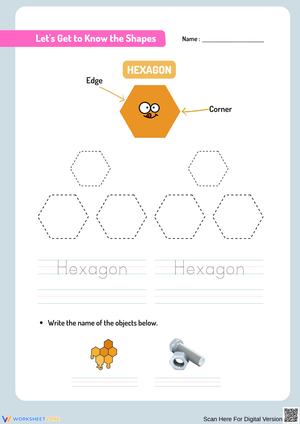
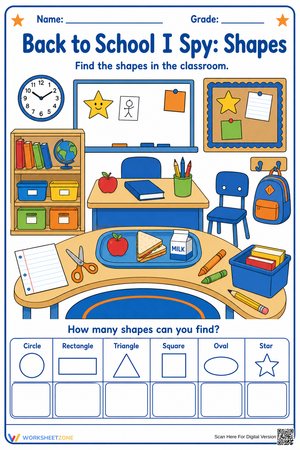
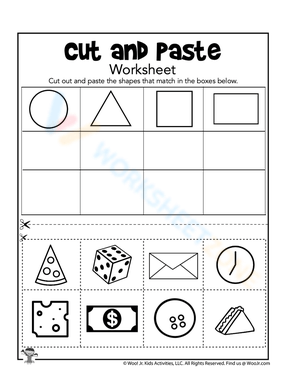
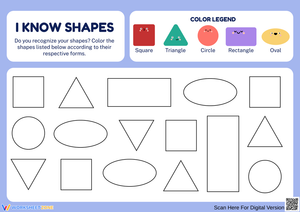
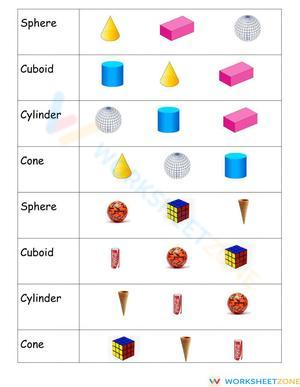
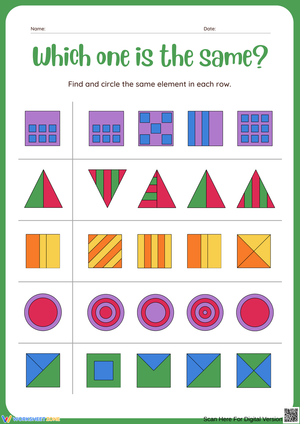
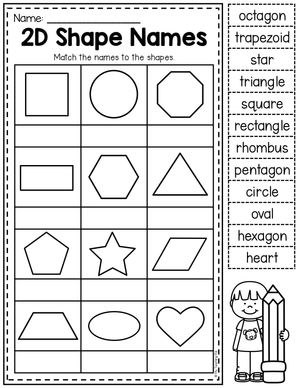
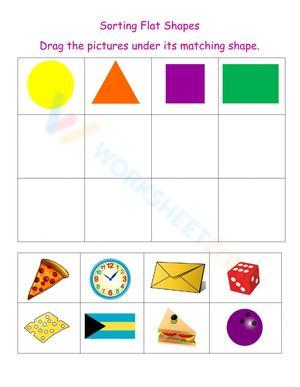
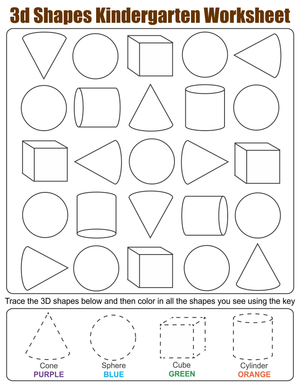
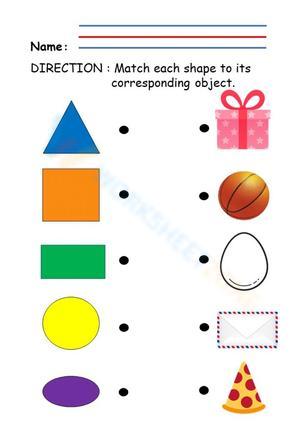
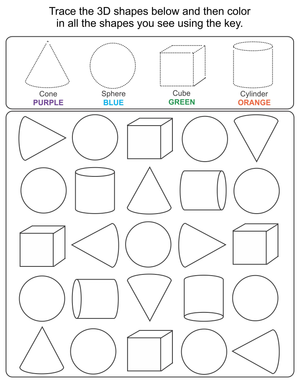
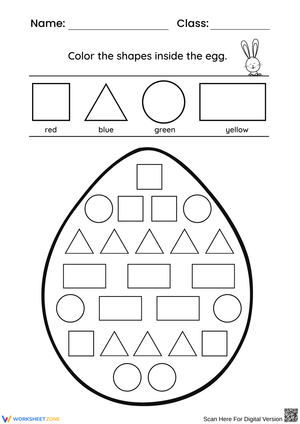
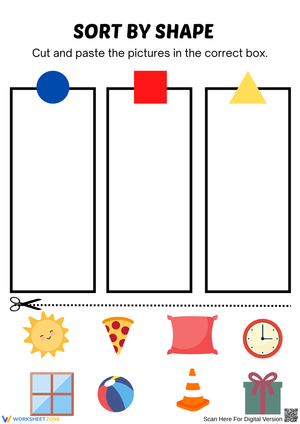
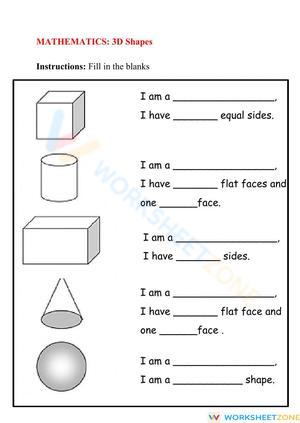
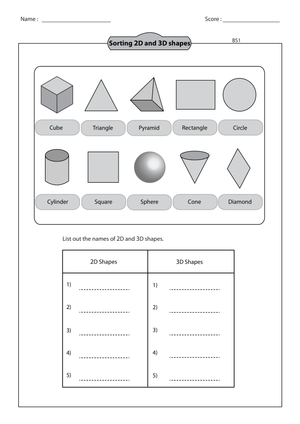
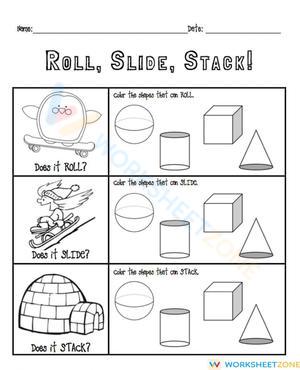
These geometry printable worksheets for kindergarten give teachers a ready-made set of visual tasks that slot into morning work, center rotations, small-group instruction, and end-of-lesson quick checks without extra setup. The set covers 2D and 3D shape recognition, attribute sorting, tracing, matching, and spatial vocabulary, all formatted with large visuals and minimal text so kindergarteners can work independently or with brief oral direction.
The Specific Skills Targeted
Early geometry at the kindergarten level moves from recognition to analysis — students start by naming shapes in clean, isolated formats, then shift to tasks that ask them to notice edges, corners, and whether a shape is flat or solid. By the end of the set, they are applying that knowledge in context: sorting, matching, combining shapes, and using positional language to describe placement.
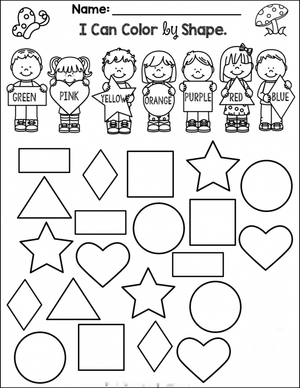
- 2D shape recognition: Circles, squares, triangles, rectangles, and hexagons presented in multiple orientations and sizes
- 3D shape recognition: Cubes, cones, cylinders, and spheres matched to familiar classroom objects
- Tracing tasks: Students trace shape outlines to reinforce visual boundaries and fine motor control simultaneously
- Attribute sorting: Grouping by number of sides, number of corners, or flat versus solid
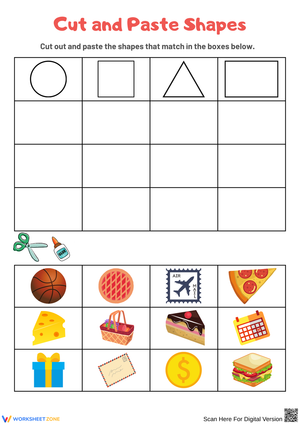
- Real-world matching: Connecting a shape to an everyday object — a soup can to a cylinder, a die to a cube
- Spatial vocabulary: Position-word tasks using above, below, beside, in front of, and behind
Frequent Student Errors Worth Watching For and Correcting
The error that surfaces most reliably is the rotated-square problem. A student who correctly names a square sitting flat on its base will often call that same square a "diamond" once it is tilted 45 degrees. This is not a vocabulary gap — it reflects a genuine conceptual sticking point at the visualization stage of geometric thinking, where students depend on a shape's orientation rather than its defining attributes. Several worksheets in the set present shapes in multiple orientations precisely because of this. When a student writes "diamond" next to a tilted square, that tells you they are not yet treating sides and angles as fixed properties of the shape.
A related confusion runs between 2D and 3D vocabulary. Students who correctly circle a "circle" on a worksheet will still point to a basketball and say "circle" rather than "sphere." The same slip happens with squares and the faces of a cube. These errors show up during oral review more than in written responses, which is why the real-world matching tasks are worth pausing on — ask students to explain their choices aloud rather than just drawing a line from shape to object.
Building These Worksheets Into a Lesson Sequence
The most effective approach treats each worksheet as the record of thinking rather than the lesson itself. Students explore shapes first — with pattern blocks, classroom objects, or a quick shape hunt around the room — and then complete the printable to show what they noticed. That sequence keeps the worksheet purposeful and gives you evidence of whether students can transfer hands-on learning into a visual format, which is the actual cognitive move kindergarteners need to practice.
For whole-group instruction, project the worksheet and work through the first example together before releasing students. In centers, pair each worksheet with one physical material: a sorting task works alongside a tray of small solids, and a matching worksheet pairs cleanly with shape cards. Tracing and identification tasks are low-stakes enough for morning work while you take attendance. Save attribute-sorting and composing tasks for small-group time, where you can listen for shape vocabulary and catch misconceptions before they set in.
These geometry printable worksheets for kindergarten also function as informal formative tools. A student who sorts shapes correctly on paper but cannot explain what a "corner" is during the debrief needs a different follow-up than one who reverses those outcomes — and the worksheet gives you the opening to find out which situation you are in.
Standard Alignment
The set addresses the Kindergarten Geometry domain of the Common Core State Standards (CCSS.MATH.CONTENT.K.G), spanning K.G.A.1 through K.G.B.6. K.G.A.1 covers describing objects in the environment using shape names and positional terms. K.G.A.2 — the standard that directly targets the rotated-square error described above — asks students to correctly name shapes regardless of orientation or size. K.G.B.4 addresses analyzing and comparing two- and three-dimensional shapes, which the attribute-sorting worksheets support. K.G.B.6 involves composing larger shapes from smaller components, addressed in the combining and building tasks. These are foundation-level standards meant to establish geometric thinking, not mastery benchmarks, so the worksheets fit best during initial instruction and guided practice rather than end-of-unit summative review.
Differentiating the Set Across Readiness Levels
Kindergarten classrooms rarely start a geometry unit at the same place. Some students arrive already naming shapes from pre-K experience; others are encountering the idea that a triangle has three sides for the first time. For students still developing basic recognition, use the tracing and circle-the-shape worksheets with oral directions, and limit the task to two or three familiar shapes before expanding. Completing the first item together removes the "what do I do?" freeze that stops these students before they have even looked at the math content.
For students who move through recognition quickly, the attribute-sorting and real-world matching worksheets offer natural extension. Add a brief verbal prompt: Tell me two ways this shape is different from that one, or Which of these shapes cannot roll, and why? That kind of oral extension keeps the task within kindergarten-level expectations while requiring more precise geometric reasoning. A separate worksheet is not always needed — the conversation changes the cognitive demand of the same task.
Frequently Asked Questions
Do the worksheets cover both 2D and 3D shapes?
Yes. The set addresses flat shapes — circles, squares, triangles, rectangles, hexagons — alongside solid shapes including cubes, cones, cylinders, and spheres. Some worksheets focus on one category at a time; others ask students to sort or compare across both. That mix matters because the flat/solid distinction is a recurring trouble spot for kindergarteners, and practicing it in multiple formats helps the concept hold.
Can these worksheets be used with students who are not yet reading?
The geometry printable worksheets for kindergarten in this set are built for pre-readers. Directions use minimal text, tasks rely on visual prompts, and most activities involve circling, tracing, coloring, or drawing lines rather than writing sentences. For the few worksheets that include shape names as answer choices, reading the options aloud takes under a minute and keeps the task fully accessible.
Are the worksheets meant to be used in a particular order?
These geometry printable worksheets for kindergarten are arranged roughly from recognition to analysis to application — naming shapes first, then comparing and describing them, then using spatial language or combining shapes in simple composition tasks. Teachers can follow that progression across a unit or pull individual worksheets to match a specific lesson goal. Nothing in the format requires sequential use.













 Interactive Worksheet Maker
 Quiz Maker
 Word Search Maker
 Crossword Puzzle Maker
 Word Scramble Generator
 Sentence Scramble Generator
 Handwriting Worksheet Generator
 Name Tracing Generator
 Fill In The Blank Generator