




























Views
Downloads
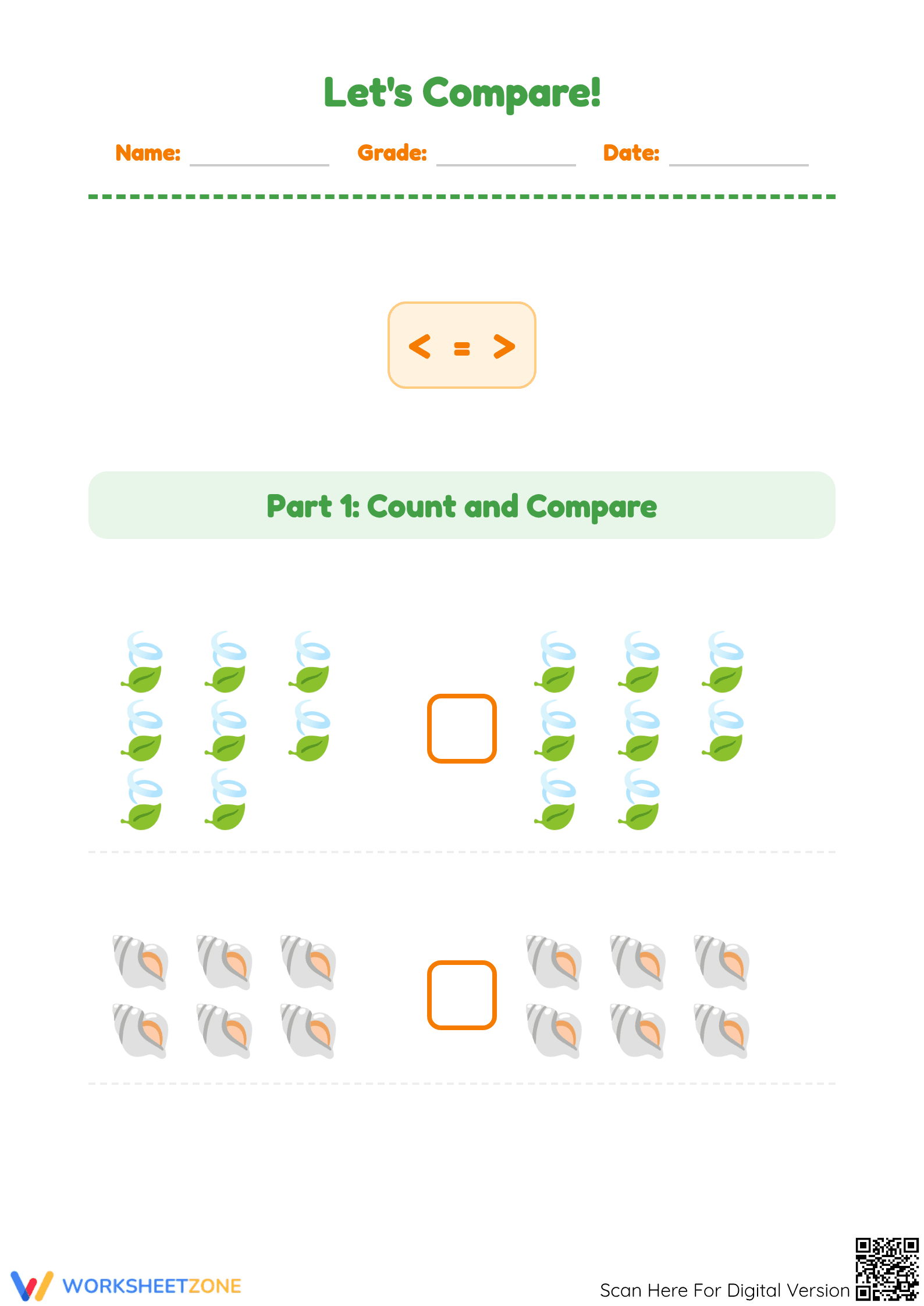
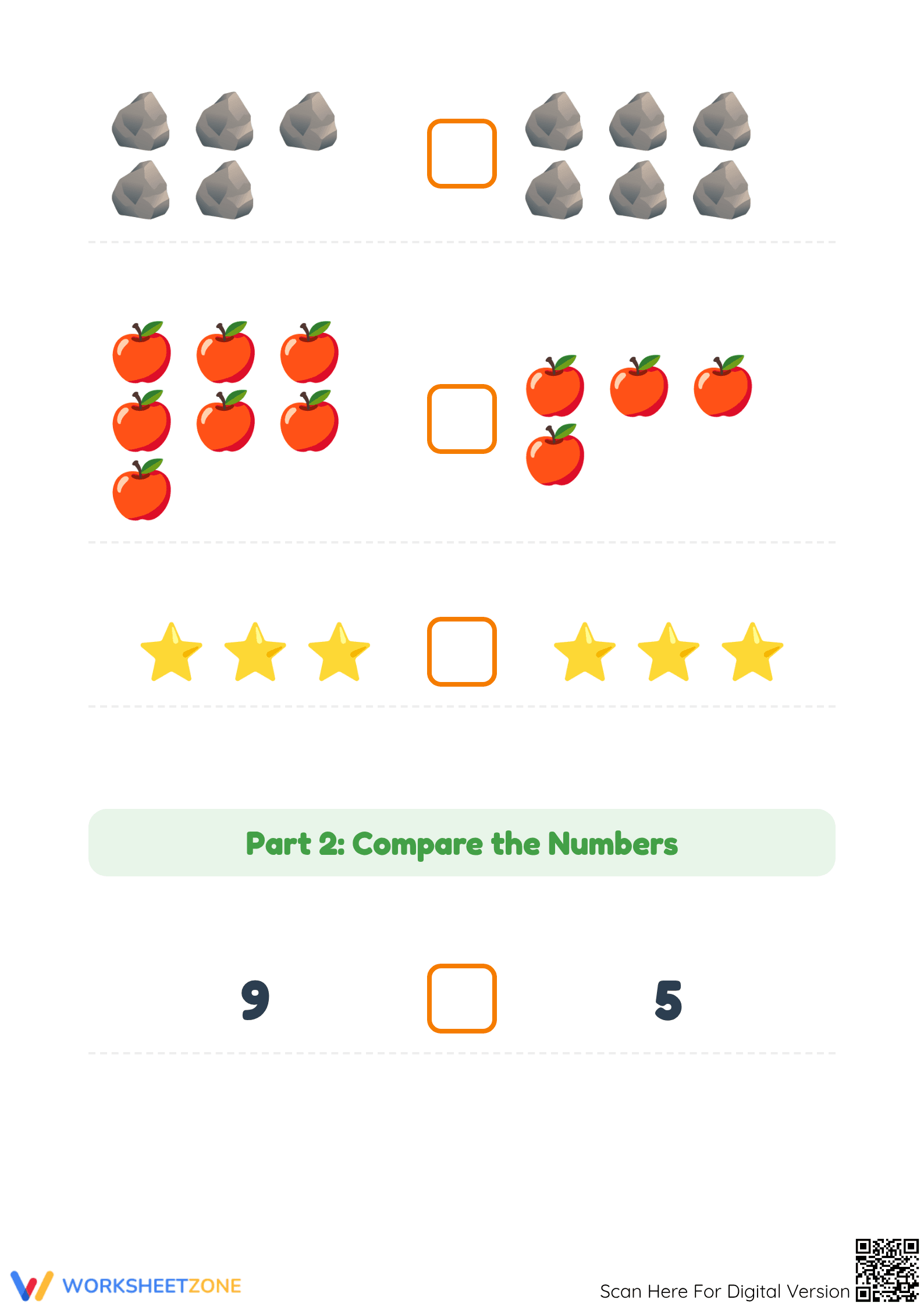
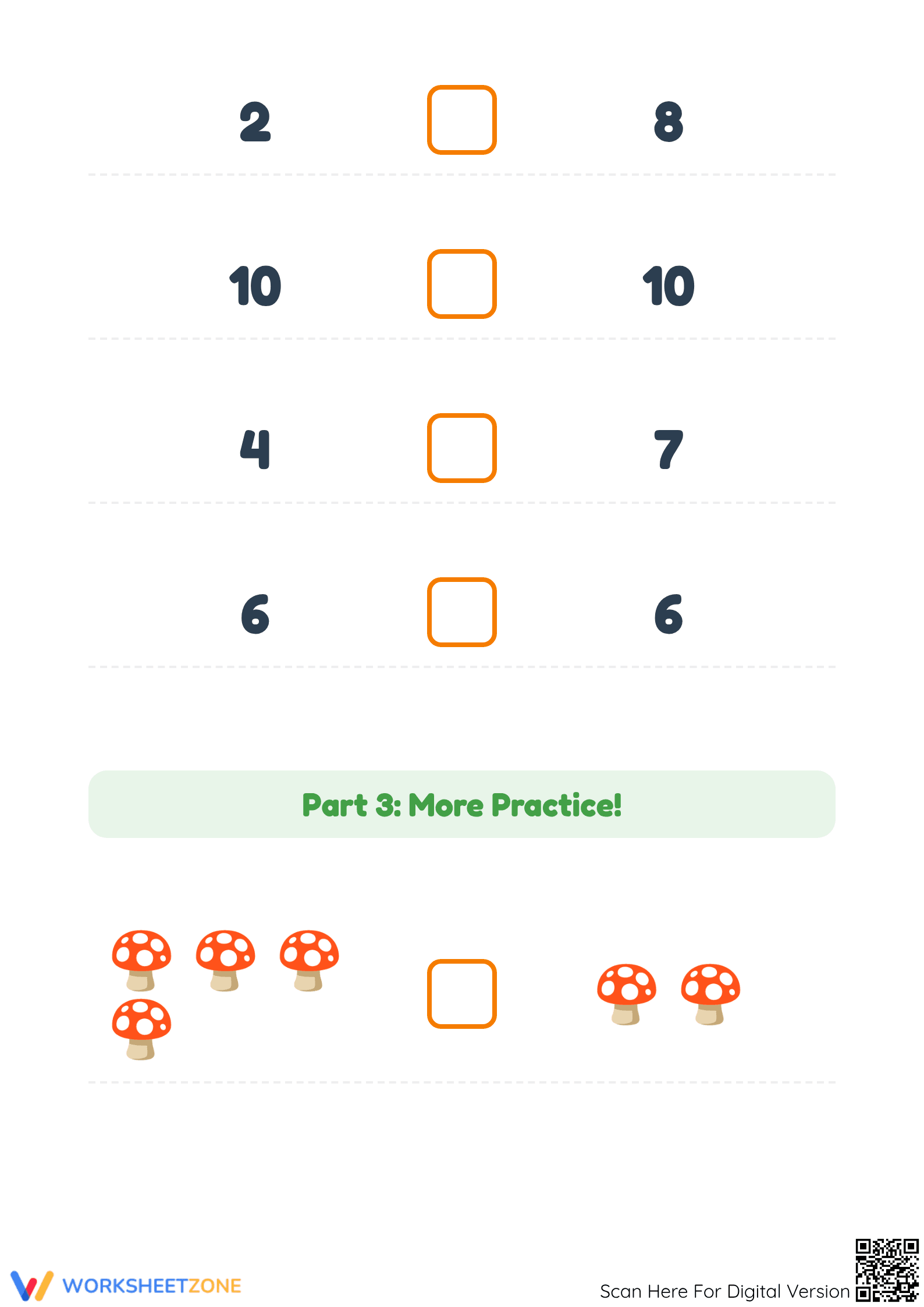
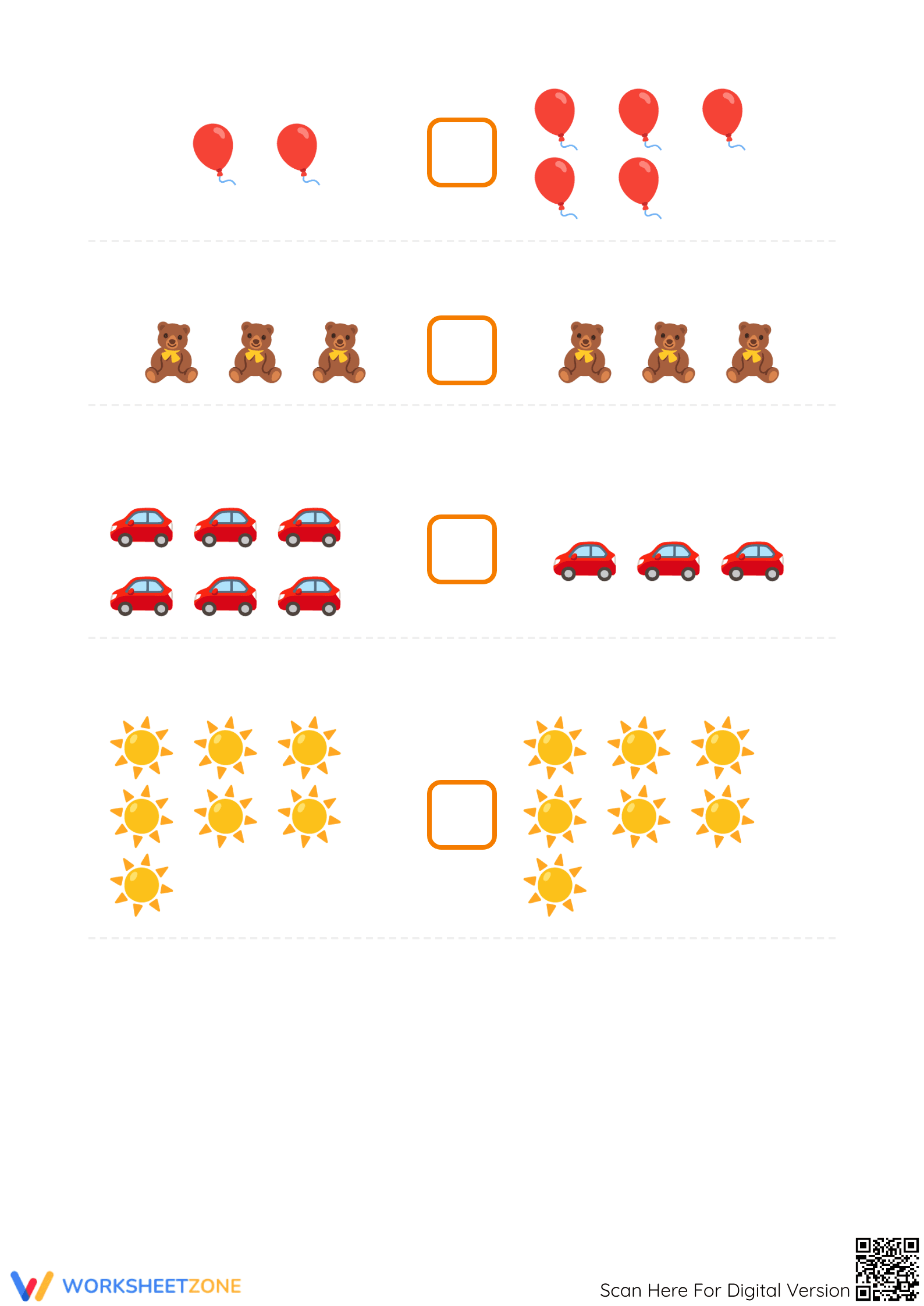

Printable Comparing Quantities Worksheet | Grade K-1 Math

Paste this activity's link or code into your existing LMS (Google Classroom, Canvas, Teams, Schoology, Moodle, etc.).
Students can open and work on the activity right away, with no student login required.
You'll still be able to track student progress and results from your teacher account.
Strengthen early numeracy skills with this comprehensive comparing quantities worksheet designed for Kindergarten and Grade 1 students. This activity provides structured practice in identifying relationships between different sets of objects and numerical values. By utilizing the greater than, less than, and equal to symbols, students build a concrete understanding of quantity that serves as a foundation for all future mathematical operations.
At a Glance
- Grade: Kindergarten · Subject: Math
- Standard:
K.CC.C.6— Identify if groups of objects are greater than, less than, or equal.- Skill Focus: Comparative symbols (<, =, >)
- Format: 5 pages · 15 problems · Answer key included · PDF
- Best For: Independent math center practice and assessment
- Time: 15–20 minutes
This five-page PDF resource is meticulously structured to guide learners through the three distinct phases of comparative reasoning. Inside, you will find high-quality illustrations of everyday objects like balloons, bears, and suns that make counting engaging and accessible. The worksheet includes a dedicated answer key for rapid grading and a feedback section to help teachers track student progress and set goals for future learning sessions.
Skill Progression
- Guided Practice: The first five problems feature side-by-side object groups with clear counting cues to help students visualize the concepts of more and less before applying symbols.
- Supported Practice: Five numerical comparison tasks transition students from physical objects to abstract digits, requiring them to recall number values to determine the correct symbol.
- Independent Practice: The final five challenges present varied object sets without scaffolds, encouraging students to apply their counting and comparison strategies autonomously.
This progression follows the evidence-based gradual release of responsibility model, ensuring students move confidently from concrete representation to abstract mathematical notation.
Standards Alignment
This resource is primary aligned to K.CC.C.6: "Identify whether the number of objects in one group is greater than, less than, or equal to the number of objects in another group, e.g., by using matching and counting strategies." It also supports the development of numerical fluency associated with K.CC.C.7. Both standard codes can be copied directly into lesson plans, IEP goals, or district curriculum mapping tools.
How to Use It
For best results, introduce this worksheet during the independent practice portion of a math lesson on comparison. Start by modeling how to count each set and place a dot over each object to ensure accuracy. Teachers should observe students during Part 2 to identify those who may struggle with the transition to abstract numbers. Expected completion time ranges from 15 to 20 minutes depending on counting speed.
Who It's For
This worksheet is ideal for Kindergarten students beginning their comparison journey and Grade 1 students needing a refresher on basic inequalities. It works exceptionally well in small-group rotations or as a formative assessment tool. For students requiring extra support, pair this worksheet with an anchor chart showing the "alligator" method for remembering symbol direction.
Research from RAND AIRS 2024 emphasizes that early exposure to comparative logic is a significant predictor of later success in algebraic thinking and complex problem-solving. This worksheet addresses the critical transition from subitizing to formal mathematical comparison by providing 15 repetitions across both visual and symbolic formats. By mastering the K.CC.C.6 standard through diverse task types, students develop the cognitive flexibility required to navigate more advanced number systems. The inclusion of an immediate feedback loop and a structured progression ensures that learners remain in the zone of proximal development, reducing math anxiety while increasing procedural fluency. High-quality printable resources like this provide the necessary scaffolded practice that helps bridge the gap between classroom instruction and independent mastery in early childhood mathematics environments.


