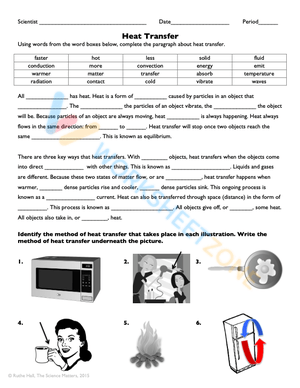
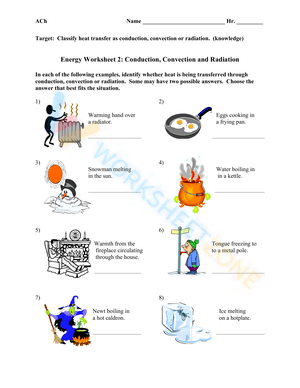
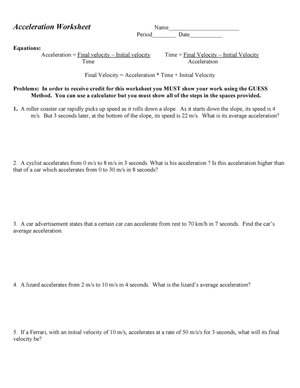
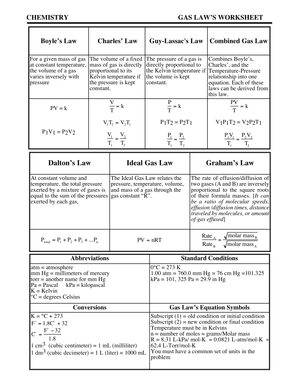
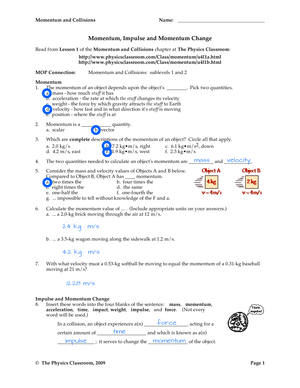
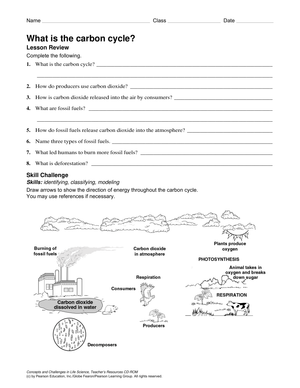
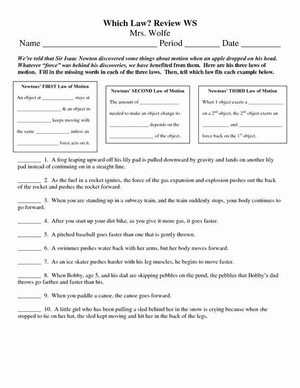
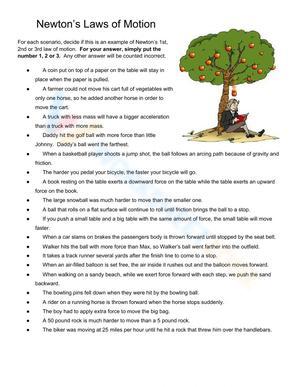
These 6th grade physics printable worksheets cover the five physical science topic areas that appear most consistently across middle school curricula — motion and forces, energy, waves, electricity and magnetism, and simple machines. Each worksheet targets a single learning objective rather than mixing concepts, which makes it straightforward to match practice to the exact lesson just taught. The set fits across multiple lesson phases: bell ringers, post-lab debrief, independent review, and sub plans.
What's Inside the Set
The worksheets span five content areas, and within each area students complete different task types depending on what the concept demands.
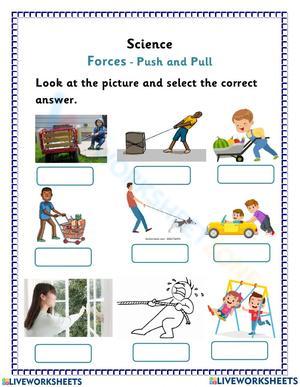
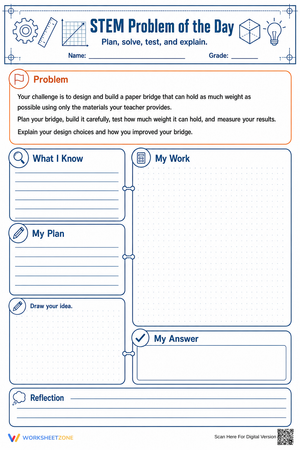
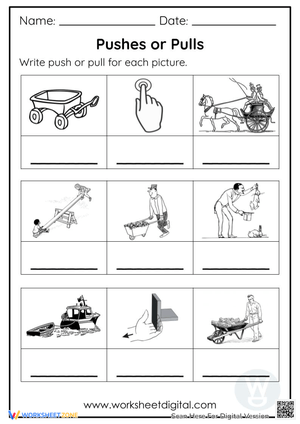
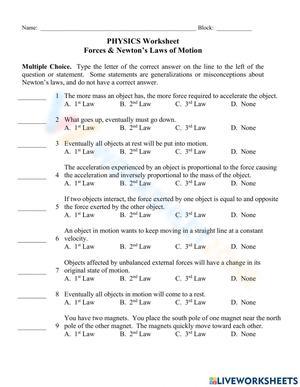
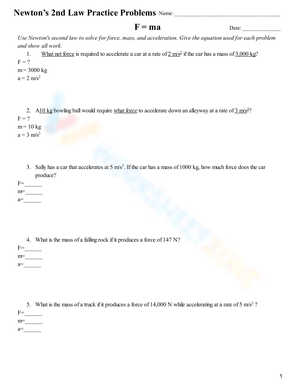
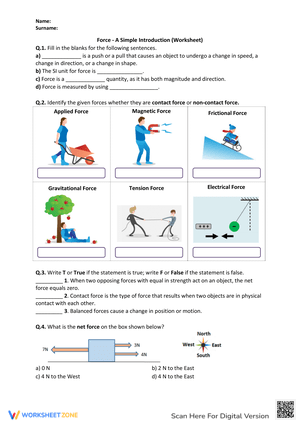
Force and motion worksheets ask students to identify pushes and pulls, interpret position-time graphs, and compare balanced and unbalanced forces using familiar examples — a bicycle coasting to a stop, two teams in a tug-of-war. Students annotate diagrams and write brief explanations rather than simply circling answers, which surfaces reasoning that selected-response items miss.
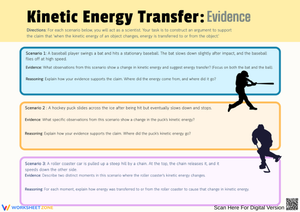
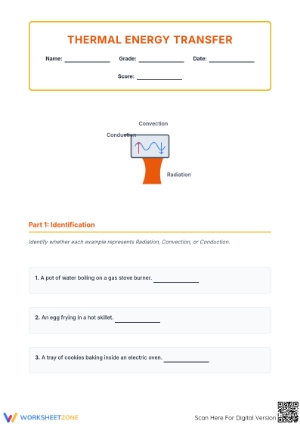
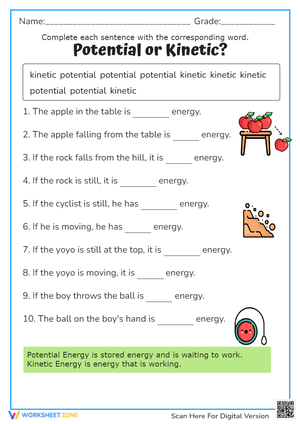
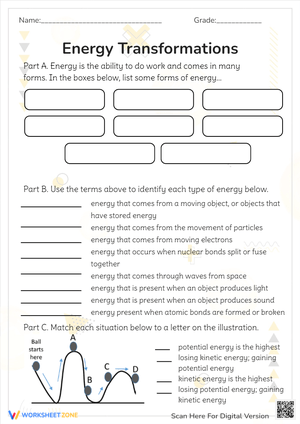
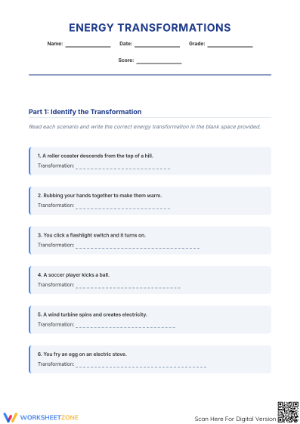
Energy worksheets focus on transfer and transformation. Students trace how energy moves through a flashlight circuit, explain why a bouncing ball loses height with each bounce, or classify energy as kinetic or potential across a series of illustrations. Sorting tasks appear often here because students can work with the concepts before they need to produce full written explanations.
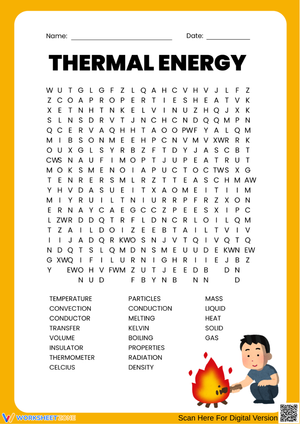
Waves, sound, and light worksheets stay observational and concrete. Students label basic wave features — amplitude, wavelength, crest, trough — compare how sound travels through different materials, and apply wave behavior to situations they have actually encountered: why a concert sounds louder near the stage, or what changes when a guitar string is plucked harder.
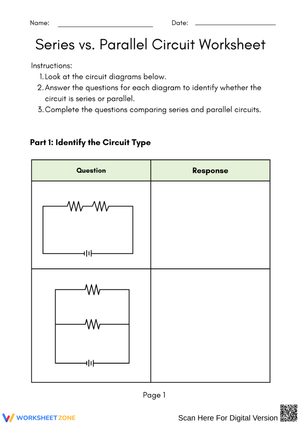
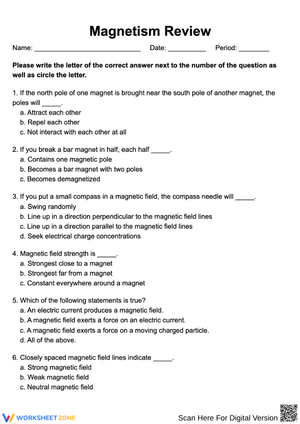
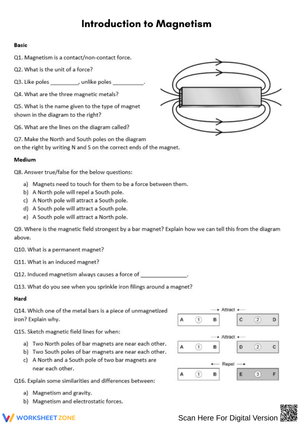
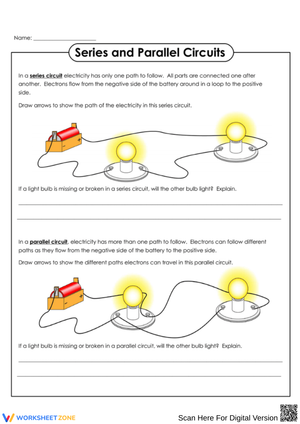
Electricity and magnetism worksheets include circuit diagrams, vocabulary matching, and short-response items about conductors, insulators, and magnetic poles. These work best directly after a hands-on investigation, when students have fresh observations to translate into written explanations.
Simple machines worksheets rely on visual tasks — identifying the machine in an illustration, labeling its parts, and explaining in one or two sentences how it reduces the effort needed to move a load. Grade 6 students handle these tasks well when the diagrams are clear and the reading load stays manageable.
Physics Misconceptions That Surface in Written Work
The most consistent error in force-and-motion work is the "heavier falls faster" assumption. Students write it confidently even after class discussion, and the same reasoning appears on simple machine worksheets — students assume a heavier lever arm automatically produces more force on the other side, without considering the distance from the fulcrum. Because these worksheets ask for written explanations rather than selected answers, the misconception shows up on paper where it can be addressed directly.
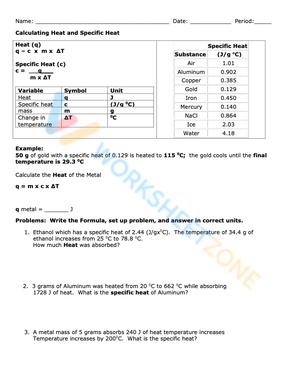
Energy work brings its own durable confusion: students frequently treat "energy" and "force" as interchangeable terms. A worksheet that asks students to distinguish between the two — and then explain which one changes when a ball rolls faster — functions as a genuine diagnostic. A student who writes "more force made it have more energy so it went faster" has revealed something specific about their thinking that a multiple-choice item alone would not catch. That sentence is where the teaching conversation actually starts.
On simple machine worksheets, a common short-response reads: "the pulley makes the box lighter." Students who write this believe machines reduce the load, not the effort required to lift it. This phrasing appears often enough in 6th grade written work that it is worth addressing before assigning the worksheet — one direct class conversation about what machines actually change makes subsequent written responses considerably more accurate.
Where These Worksheets Fit in the Lesson Sequence
The most productive placement for 6th grade physics printable worksheets is after students have already observed the phenomenon in some form. A waves worksheet carries more meaning after a sound demonstration — tuning fork, cup of water, a moment of silence while the class listens to the vibration fade — than it does as a cold vocabulary introduction. A forces worksheet comparing balanced and unbalanced scenarios lands better after students have pushed on a loaded cart and noticed what happens when the weight changes. Written practice anchors the observation; it does not replace it.
Bell ringers are a natural fit for the vocabulary and diagram items. A five-minute opening routine built around two or three questions from the previous lesson — identify the force acting in this diagram, name the energy type present in this system — gives students an immediate task the moment they sit down. It also gives the teacher real-time information about what needs more attention, without requiring a separate quiz step.
For intervention groups, the topic-specific format is what makes these worksheets practically useful. If a small group is still uncertain about the relationship between mass and kinetic energy, pulling the relevant energy worksheet and working through it with that group is faster than returning to the start of the unit. Each worksheet stays focused on one concept, so teachers can match the practice to exactly the gap that showed up the day before.
Sub plans are another reliable use. Each worksheet is self-contained — the learning target is visible at the top, the directions are readable without a science background, and the task is completable without teacher guidance. A substitute can distribute the worksheet, read the learning target aloud, and circulate while students work.
Reaching Students at Different Readiness Levels
The worksheets already include a mix of item types — visual matching, diagram labeling, short response — which creates a natural range of entry points. A few targeted adjustments extend that range further without changing the core concept being practiced.
- Add a word bank at the top for students who blank on scientific vocabulary but understand the underlying idea. A student who cannot retrieve "kinetic" from memory will often correctly complete a sentence about a moving ball once the term is visible on the same worksheet.
- For students ready to push further, convert a single-system short-response item into a comparison task: instead of explaining how energy changes in a dropped ball, ask them to compare a dropped ball to one rolled down a ramp and argue which involves more energy transfer at the point of impact.
- Students developing English proficiency, or those who rely heavily on visual cues, should work through labeling and matching items before tackling written responses. Those tasks build a reference point that reduces the intimidation of the blank short-answer box.
- Fold the lower half of the worksheet or place a blank sheet of paper over the bottom portion so students work through one section at a time. Students who shut down when facing a full task often complete the same material without difficulty when it is revealed in stages.
Differentiation by context complexity is also possible without creating two entirely different worksheets. One student explains motion using a toy car on a ramp; another compares two moving objects using a velocity-time graph. Both are working with the same conceptual territory, but the entry point and level of abstraction differ — which is exactly what a mixed-readiness classroom needs.
Standard Alignment
The 6th grade physics printable worksheets in this set align to Next Generation Science Standards performance expectations for middle school physical science. Force and motion worksheets address MS-PS2-1 and MS-PS2-2, which ask students to apply Newton's Third Law reasoning and investigate how net force determines changes in an object's motion. Energy worksheets address MS-PS3-1 and MS-PS3-2, requiring students to interpret graphical displays connecting kinetic energy to mass and speed, and to model how potential energy changes when object positions shift. Waves worksheets address MS-PS4-1 and MS-PS4-2, covering mathematical wave models and the behavior of waves at material boundaries — reflection, absorption, and transmission.
In classroom sequencing, force and motion worksheets belong after the qualitative phase of exploring pushes and pulls — once students are ready to move from observation to the formal language of net force and balanced versus unbalanced systems. Energy worksheets follow, since MS-PS3-1 requires students to interpret data that assumes some working familiarity with kinetic energy in a concrete situation. Waves worksheets typically arrive last in the physical science sequence and assume students can distinguish energy transfer from matter transfer — a distinction the earlier energy worksheets begin to establish.
Frequently Asked Questions
Do these worksheets function as formative assessments, or are they practice-only resources?
Both. The short-response items on force, energy, and wave worksheets reveal student reasoning in ways that multiple-choice items cannot. Scanning written answers after independent work gives a clear picture of who understands the concept and who is still applying a misconception. The diagnostic value comes from reading the responses — not from attaching a score — so the worksheets serve formative purposes whether or not they are graded that day.
Can these worksheets follow a simulation or video clip rather than a hands-on lab?
Yes. A PhET energy simulation or a PBS LearningMedia science clip provides the observational base the written tasks require. The key condition is that students have engaged with the phenomenon in some form before writing about it. Asking students to explain a physics concept from reading alone — without any prior experience of the idea in action — rarely produces responses that reflect real understanding.
How do these worksheets connect to the science and engineering practices in an NGSS-aligned unit?
Used alongside inquiry-based instruction, 6th grade physics printable worksheets support both the practices and the crosscutting concepts that NGSS embeds in each performance expectation. Items that ask students to interpret a position-time graph address the practice of analyzing and interpreting data. Items that ask students to explain a repeating pattern across multiple examples address cause and effect as a crosscutting concept. The disciplinary core ideas anchor each worksheet's topic, but the written response items draw consistently on the practices — which keeps the work aligned within a three-dimensional instructional framework.












 Interactive Worksheet Maker
 Quiz Maker
 Word Search Maker
 Crossword Puzzle Maker
 Word Scramble Generator
 Sentence Scramble Generator
 Handwriting Worksheet Generator
 Name Tracing Generator
 Fill In The Blank Generator