


























1 / 2
0
Views
0
Downloads

10.0
0
Save
0 Likes
Share
Day and Night Reading Comprehension Worksheet
0 Views
0 Downloads
Paste this activity's link or code into your existing LMS (Google Classroom, Canvas, Teams, Schoology, Moodle, etc.).
Students can open and work on the activity right away, with no student login required.
You'll still be able to track student progress and results from your teacher account.
Information
Description
What It Is:
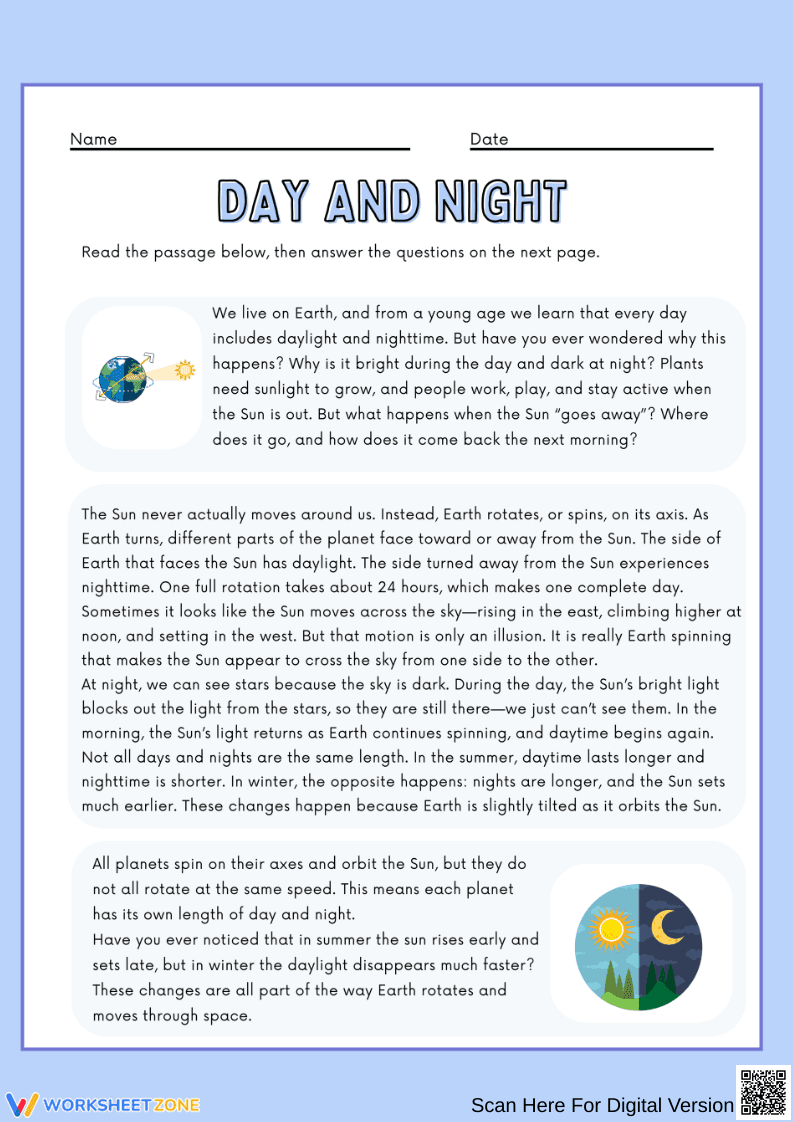
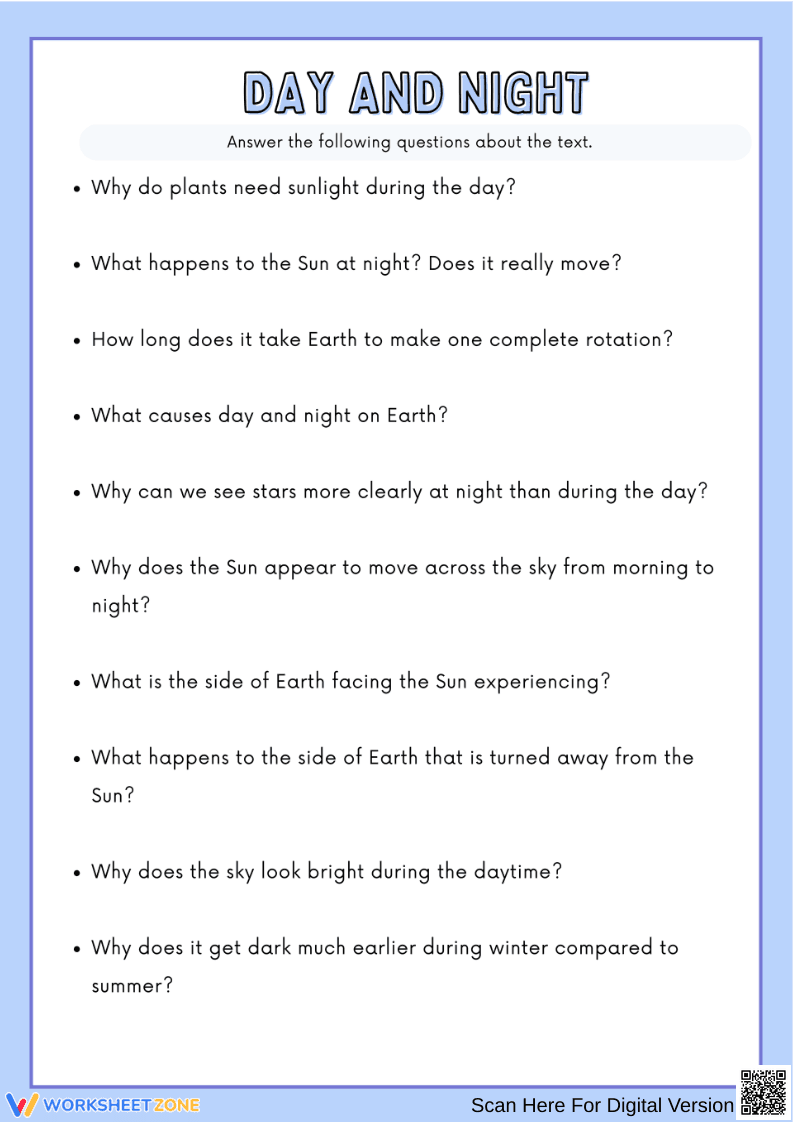
A reading comprehension worksheet that explains why Earth has day and night. The passage describes Earth’s rotation, the role of sunlight, why we see stars at night, and how seasonal daylight changes occur. Page 2 includes text-based comprehension questions to reinforce understanding of key science concepts.
Why Use It:
This worksheet blends science learning with literacy practice, helping students strengthen both reading comprehension and Earth science knowledge. It supports critical thinking, encourages text-evidence responses, and makes abstract ideas—such as rotation and daylight—accessible through clear explanations and visuals.
How to Use It:
• Begin by reading the passage aloud or independently in small groups.
• Highlight key vocabulary such as rotation, axis, daylight, and orbit.
• Have students answer the Page 2 comprehension questions using text evidence.
• Use for science lessons, literacy centers, homework, or assessment review.
Grade Suitability:
Best suited for Grades 4-6.
• Ideal for integrating reading with Earth and Space Science topics.
• Great for ELL students and developing readers who benefit from structured comprehension tasks.
Target Users:
Elementary science teachers, reading teachers, homeschool educators, tutors, and intervention specialists focusing on science comprehension skills.
A reading comprehension worksheet that explains why Earth has day and night. The passage describes Earth’s rotation, the role of sunlight, why we see stars at night, and how seasonal daylight changes occur. Page 2 includes text-based comprehension questions to reinforce understanding of key science concepts.
Why Use It:
This worksheet blends science learning with literacy practice, helping students strengthen both reading comprehension and Earth science knowledge. It supports critical thinking, encourages text-evidence responses, and makes abstract ideas—such as rotation and daylight—accessible through clear explanations and visuals.
How to Use It:
• Begin by reading the passage aloud or independently in small groups.
• Highlight key vocabulary such as rotation, axis, daylight, and orbit.
• Have students answer the Page 2 comprehension questions using text evidence.
• Use for science lessons, literacy centers, homework, or assessment review.
Grade Suitability:
Best suited for Grades 4-6.
• Ideal for integrating reading with Earth and Space Science topics.
• Great for ELL students and developing readers who benefit from structured comprehension tasks.
Target Users:
Elementary science teachers, reading teachers, homeschool educators, tutors, and intervention specialists focusing on science comprehension skills.


