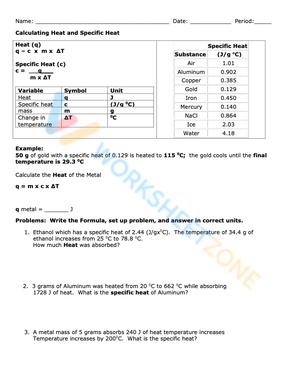
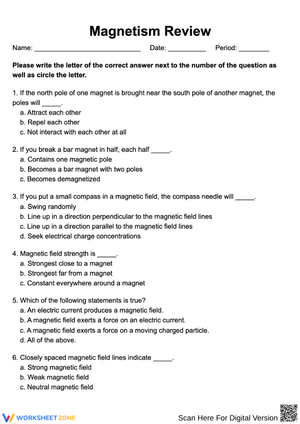
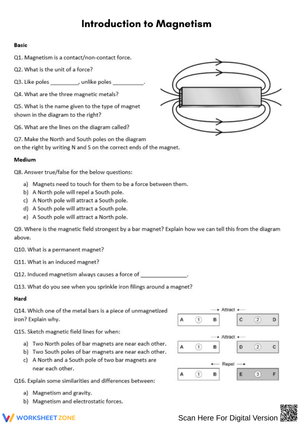
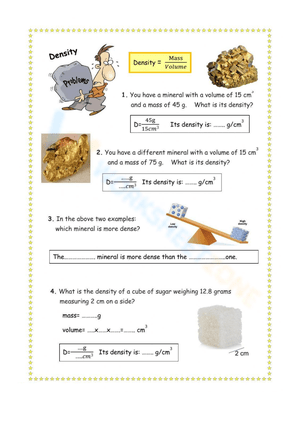
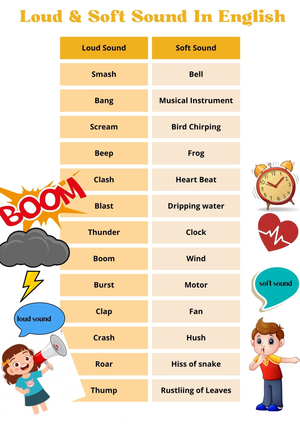
6th grade energy sound and light printable worksheets give science teachers a focused, ready-to-use set of resources for two of the most concept-dense units in middle school physical science. Each worksheet targets a specific idea — vibration and wave properties, reflection and refraction, or light-material interactions — so it fits into a lesson at the exact moment students need to consolidate what they've just seen or heard. Teachers use them for direct instruction follow-up, independent practice, homework, sub plans, and quick formative checks.
What the Worksheets Cover
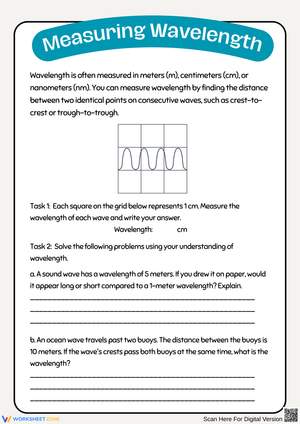
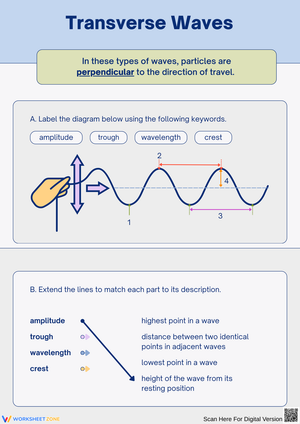
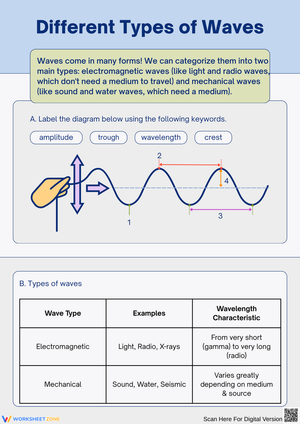
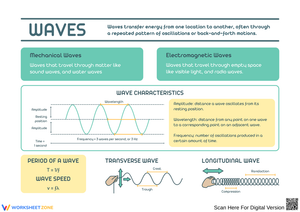
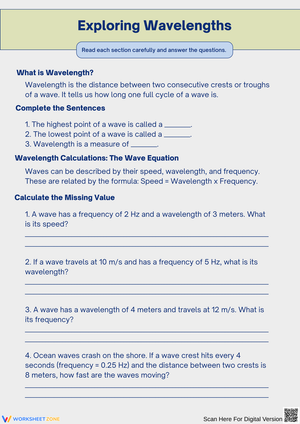
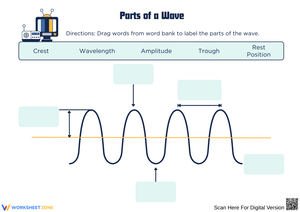
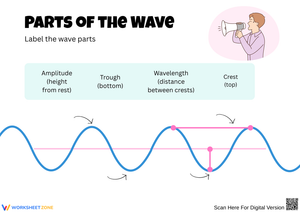
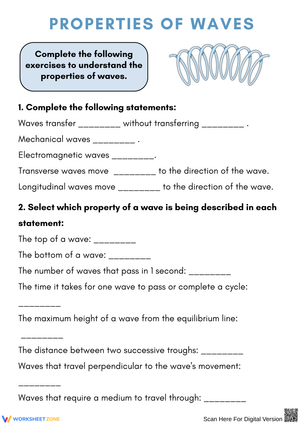
The sound worksheets center on vibration as the source of sound energy, how waves travel through solids, liquids, and gases, and what controls pitch and volume. Students label wave diagrams — identifying crest, trough, wavelength, and amplitude — and then connect those features to how sound actually behaves: higher frequency produces higher pitch, greater amplitude produces louder sound. Vocabulary terms like medium, echo, and compression appear first in matching tasks and then again in application questions that require students to use the terms in context.
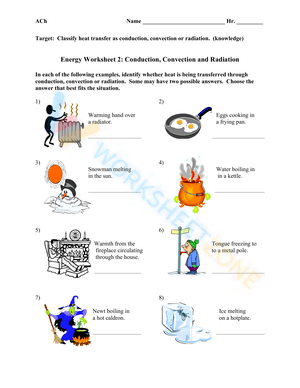
The light worksheets address the three things that happen when light strikes matter — reflection, absorption, and refraction — along with classification of materials as transparent, translucent, or opaque. Visual tasks include tracing a light ray's path through a change in medium, matching materials to their light-interaction category, and comparing how different material types affect shadow formation. Short constructed-response prompts anchor the concepts to real situations: why does a straw appear bent in a glass of water, why does a matte wall produce a different result than a mirror, what material would you choose to block all light from a stage backdrop.
Student Errors Worth Anticipating Before the Lesson
The pitch-volume confusion runs through almost every class at this level. Students correctly define both terms in isolation, but the moment they encounter a real scenario, many write that a louder sound is also higher-pitched. Striking a drum harder produces more volume — pitch stays constant unless you change the size or tension of the vibrating surface. Worksheets that separate pitch-change scenarios from volume-change scenarios and require cause-and-effect written explanations bring this error into the open before it appears on an assessment.
Refraction and reflection are the other persistent mix-up, partly because both words start the same way and partly because the visual outcome can mislead. Students who can define both terms correctly will still mislabel a diagram of a pencil in a glass of water — they call it reflection because the image looks distorted, not because they analyzed the light path. Any worksheet task that asks students to draw or trace the actual direction of the light ray, rather than just name the phenomenon, catches this error while it's still correctable.
Material classification trips students on edge cases. Frosted glass gets sorted as opaque by most students because the view through it is blurry — they apply everyday logic (you can't see clearly through it) rather than asking the scientific question (does any light pass through at all?). A sorting task that includes frosted glass, wax paper, and tinted window film alongside obvious examples gives teachers a reliable look at whether students have internalized the actual definition of translucent rather than a rough approximation of it.
How to Build These Worksheets Into Your Lesson Sequence
The placement that consistently produces the strongest student responses is immediately after a brief, concrete demonstration — not before. Show students what happens when a rubber band is plucked at different tensions, or hold a flashlight beam at different angles against a mirror compared to a piece of cardboard, then hand out the worksheet. At that point, students are answering from something they just observed rather than reconstructing it from memory. That sequence — observation, immediate structured practice, vocabulary debrief — produces cleaner written explanations than assigning the worksheet the night before as preview work.
For bell ringers, one scenario question works in the first five minutes: ask students to describe what happens when a flashlight beam strikes a smooth mirror versus a rough brick wall and to name the type of light behavior in each case. That takes three minutes to write and two to discuss, and it surfaces misunderstandings before the day's instruction starts. 6th grade energy sound and light printable worksheets also run cleanly as sub plans — the combination of a short reading passage, structured questions, and labeled diagrams requires no teacher facilitation, and students can compare answers in pairs when they finish.
One classroom move worth adopting: ask students to circle their least confident answer before turning in any completed worksheet and write one sentence explaining their uncertainty. A student who circles the refraction question and writes "I think the light bends but I'm not sure which direction" is actively reasoning through the content. That two-minute step turns completed worksheets into targeted data for the next day's small-group work far more reliably than a raw score does.
Adjusting the Worksheets for Different Levels of Student Readiness
For students who need additional support, the most effective adjustment is reducing retrieval demand without reducing conceptual demand. Adding a word bank to constructed-response questions, pairing diagram worksheets with a brief glossary, or providing a short reference card with key definitions lets those students focus on the science rather than getting stuck on terminology. The visual tasks — wave labeling, material sorting, light-path tracing — tend to be more accessible across reading levels than the written explanation items, so they make a natural starting point for students still building scientific vocabulary.
For students who complete the standard tasks quickly, the most productive extension pushes beyond identification into prediction under new conditions. Instead of asking students to classify frosted glass as translucent, ask them to predict how a material with properties between clear glass and cardboard would interact with a flashlight beam — and then justify that prediction in writing. Or ask them to explain why two rubber bands of the same length but different thicknesses produce different pitches when plucked. These prompts draw on the same core concepts but require genuine transfer rather than reproduction of what was directly taught.
Assigning 6th grade energy sound and light printable worksheets to the full class with tiered completion expectations keeps logistics manageable. Every student receives the same worksheet; the teacher sets differentiated stopping points or adds an extension prompt on the back for students who finish early. Nobody gets a different paper, and the class stays focused on the same core concept at the same time.
Frequently Asked Questions
What content should these worksheets cover to fit a standard 6th grade unit?
Core content for the sound side includes vibration as the origin of sound energy, wave properties like frequency and amplitude, how sound travels through different states of matter, and what controls pitch and volume. For light, essential content covers straight-line travel from a source, the three behaviors when light meets matter — reflection, absorption, and refraction — and classification of materials as transparent, translucent, or opaque. Real-world examples like echoes, shadows, mirrors, and frosted windows connect each concept to something students can picture or have encountered.
How do these worksheets fit into a class that also runs hands-on experiments?
They work best as before-and-after tools. A prediction or observation worksheet before an experiment narrows student focus; a follow-up explanation worksheet after gives students a structured format for recording conclusions in academic vocabulary. 6th grade energy sound and light printable worksheets also carry full instructional weight on days when lab materials aren't available or the schedule doesn't allow setup time.
Do these worksheets work for students with IEP accommodations?
The visual tasks — diagram labeling, material sorting, light-path tracing — are the most accessible items for students with reading-related accommodations because they involve less extended text processing. Reducing the number of constructed-response questions, providing a vocabulary reference, or allowing oral responses in place of written answers are straightforward adjustments that preserve the science content without removing the core thinking each worksheet requires.
Can individual worksheets be pulled from the set and used out of order?
Yes. Each worksheet stands independently. There is no assumed sequence across the set, which means teachers can pull a single refraction worksheet for a specific lesson day, use the wave-diagram labeling worksheet as unit review, and save the material-classification worksheet for a later lesson on shadows — without any worksheet depending on another for context or setup.












 Interactive Worksheet Maker
 Quiz Maker
 Word Search Maker
 Crossword Puzzle Maker
 Word Scramble Generator
 Sentence Scramble Generator
 Handwriting Worksheet Generator
 Name Tracing Generator
 Fill In The Blank Generator