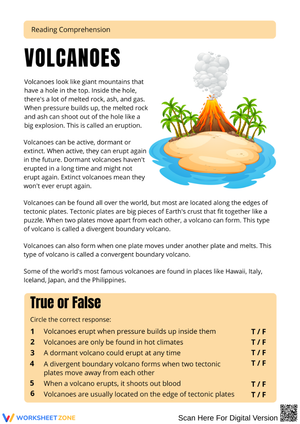
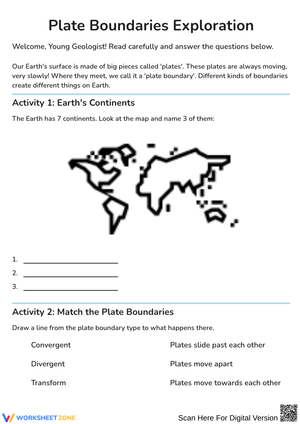
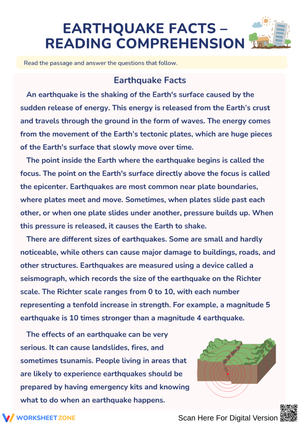
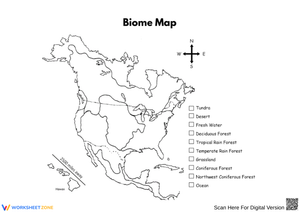
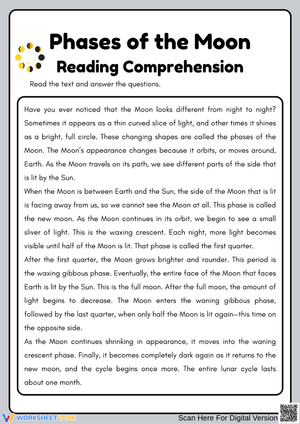
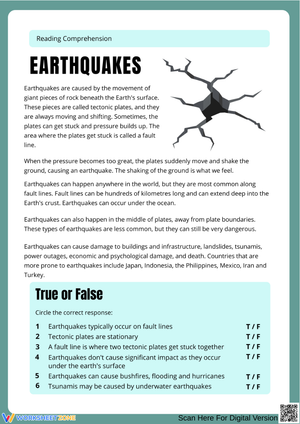
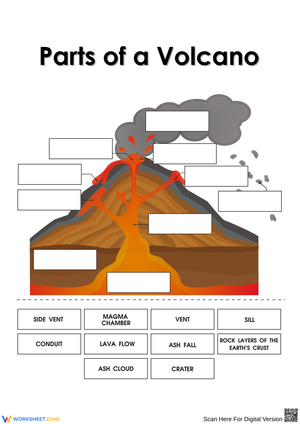
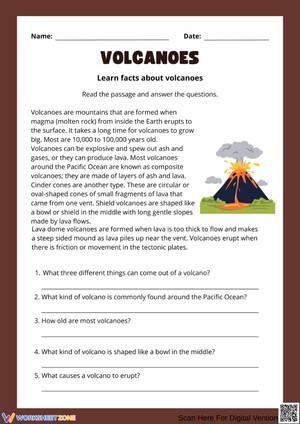
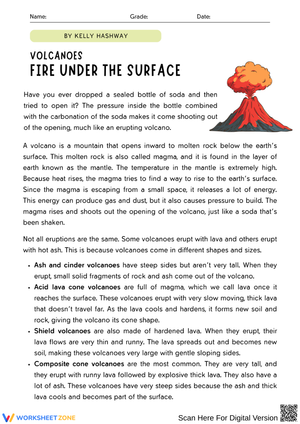
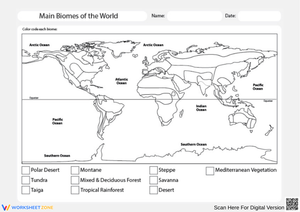
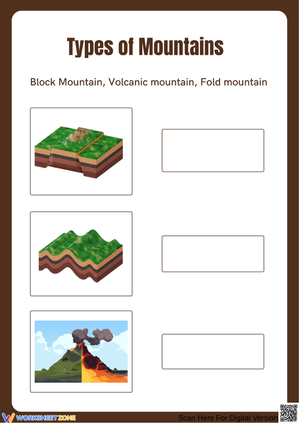
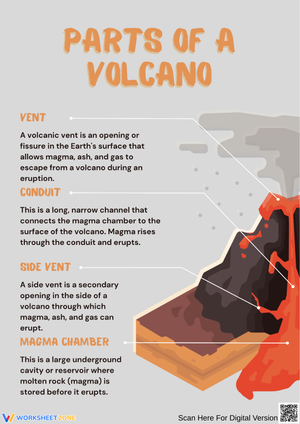
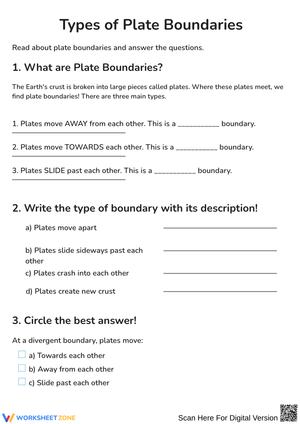
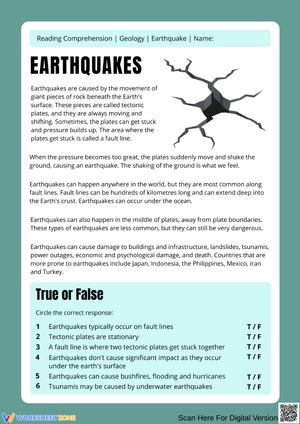
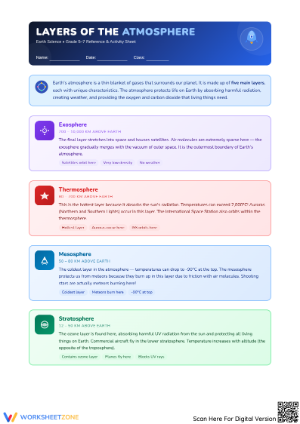
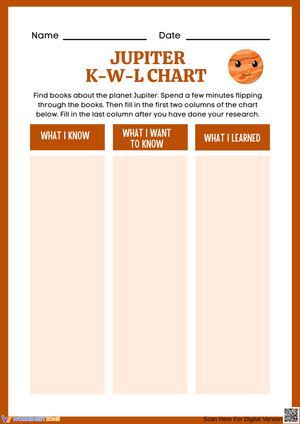
6th grade earth and spaces worksheets give teachers a reliable way to build focused practice into units that cover significant ground — Earth's systems, the water cycle, rock and land processes, weather and climate patterns, and solar system mechanics. Each worksheet in a well-designed set gives students something concrete to work with: a weather data table, a moon phase diagram, a map of surface features, or a short passage about rock formation, paired with questions that ask them to explain what the evidence shows, not just name what they see.
What These Worksheets Ask Students to Do
The strongest sets organize content by topic so teachers can slot individual worksheets into their unit sequence without reorganizing the whole collection. Across the most useful sets, students work through skills like these:
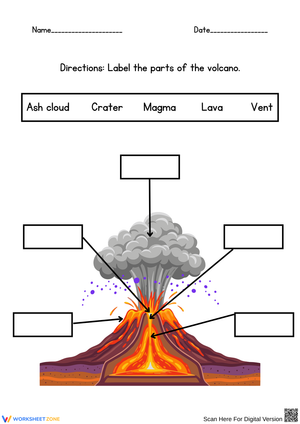
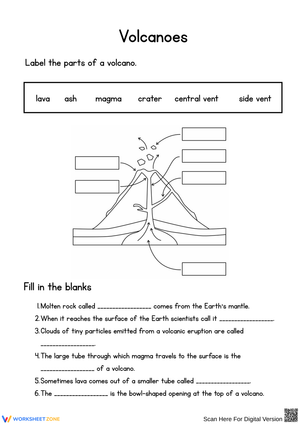
- Labeling and annotating diagrams — water cycle stages, moon phase positions, rock cycle arrows, Earth's interior layers
- Reading and interpreting data — comparing temperature and precipitation records across a month, identifying seasonal patterns in a bar graph
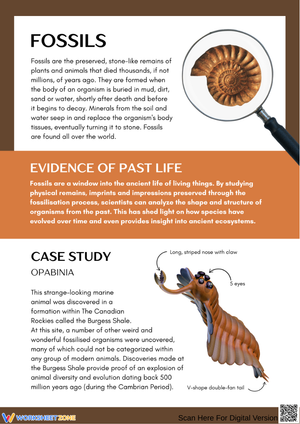
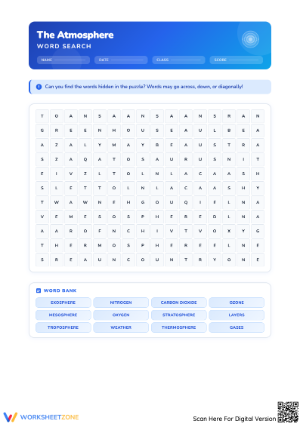
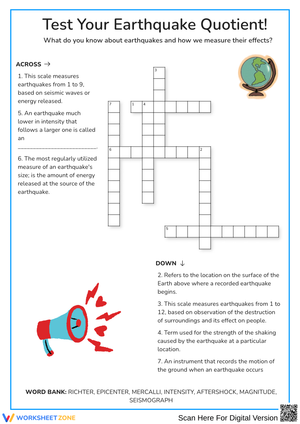
- Matching vocabulary in context — using a word bank alongside a short reading passage rather than in isolation from actual content
- Writing brief evidence-based explanations — "What does this data suggest about the climate of this region?"
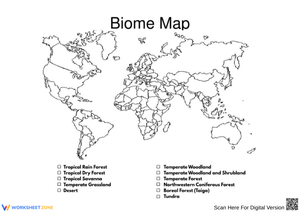
- Sorting and classifying — identifying igneous, sedimentary, and metamorphic rocks by listed properties, or placing landform features on a regional map
That range matters because 6th graders are moving out of the observation-heavy science of elementary school and into work that requires them to reason with models and data. A worksheet that only asks students to write definitions isn't building the skill of reading a weather graph or explaining what a moon phase diagram shows — and that interpretive work is exactly what most assessments at this level require.
Errors That Show Up Consistently in Student Work
A few misconceptions appear reliably enough in 6th grade Earth science that they're worth anticipating before a lesson, not after. The most persistent involves seasons. Students who can correctly state that Earth is tilted on its axis will still write that summer is hot because Earth is closer to the sun — the distance explanation feels physically intuitive, and a single lesson rarely dislodges it. Worksheets that include a diagram showing Earth's orbital path with both hemispheres labeled, then ask why Australia experiences summer in December, force students to apply the tilt explanation rather than fall back on the distance one.
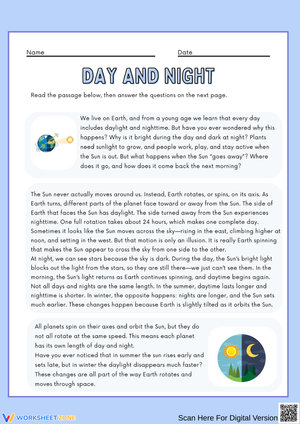
Rotation and revolution are another reliable source of confusion. Students who learn both terms on the same day often swap them even after they can define each correctly in isolation. Watch for sentences like "Earth revolves on its axis once every 24 hours" in written responses — a student who writes that has the vocabulary without the concept attached. A worksheet that asks students to match each term to a specific time period and then use both in an explanation of day/night versus seasons catches this error in a way a definition quiz doesn't.
In water cycle work, students frequently skip or reverse condensation, sometimes drawing precipitation falling directly from warm water vapor without the cooling step shown. Diagram annotation worksheets make this error visible immediately — a student who draws the arrow in the wrong direction can see that it doesn't follow the model, while the same student might guess correctly on a multiple-choice item and never surface the misunderstanding.
Fitting These Worksheets Into Your Planning
The most efficient approach before a unit starts is to sort the set into three working groups: worksheets that introduce a concept through labeled visuals and new vocabulary, worksheets that ask students to apply ideas to a new diagram or data set, and short worksheets meant for a quick independent check. Once sorted, each group has a natural home in the lesson sequence — introductory worksheets fit before or during instruction, application worksheets work after a class discussion or lab, and check worksheets become exit tickets or start-of-class warm-ups.
Some specific use cases worth building into the plan:
- Bell ringers: A diagram with two interpretive questions runs about five minutes and reactivates the previous lesson's content without eating into new instruction time.
- Stations: One worksheet per station — a weather graph at one table, a landform map at another, a rock property sort at a third — keeps the rotation moving without needing lab materials at every seat.
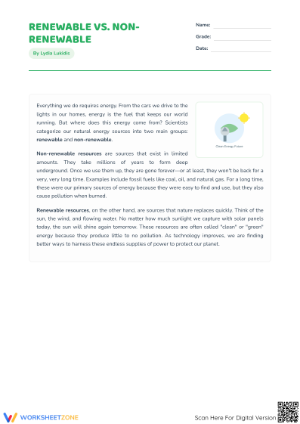
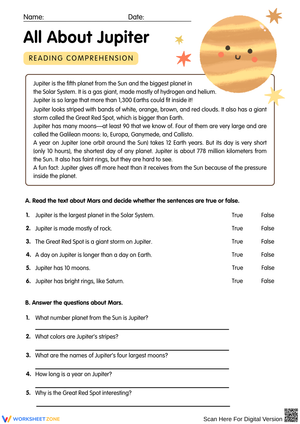
- Sub days: Any worksheet that pairs a short reading passage with response questions runs with minimal explanation from a substitute.
- Paired observation: Students track local weather for several days, then bring their own recorded data to a graph analysis worksheet. Using their own numbers instead of invented ones makes the questions considerably more meaningful.
These 6th grade earth and spaces worksheets also work well for spaced retrieval — a diagram-labeling worksheet on moon phases used during instruction can reappear two weeks later as an independent review. Students see how much they've retained without any additional prep from the teacher.
Standard Alignment
Most of the content in these worksheets maps to the NGSS middle school Earth and space standards, primarily MS-ESS1 (Earth's Place in the Universe) and MS-ESS2 (Earth's Systems). MS-ESS1 covers Earth-Sun-Moon relationships, seasons, and solar system patterns — the territory that appears most often in diagram-reading and short-passage worksheets. MS-ESS2 covers Earth's four systems and the processes that shape the surface: the water cycle, weathering and erosion, climate patterns, and rock processes.
In most 6th grade sequences, MS-ESS2 drives the bulk of the school year, with MS-ESS1 units appearing in the first or final quarter depending on the school's curriculum map. Knowing which standard a worksheet targets lets teachers pull it at the right moment in a unit rather than treating every worksheet as interchangeable review material.
Adjusting for a Range of Learners in the Same Room
The most practical adjustments don't require building entirely separate materials. For students who struggle with dense reading, cutting a passage down to the two or three sentences that carry the central concept — while keeping the diagram and questions intact — maintains the science content while lowering the language demand. For students who move through the work quickly, adding a second open-ended response question ("What would happen to the water cycle in this region if average temperatures rose significantly?") extends the thinking without requiring a different worksheet.
Word banks help students who grasp the concept but can't retrieve the term under time pressure. Sentence stems ("The data suggests… because…") support students who understand the science but stall when asked to generate a written explanation. Neither adjustment changes what the worksheet is asking students to understand. The best 6th grade earth and spaces worksheets include an optional word bank and structured response lines that give teachers this flexibility without extra prep work for every class period.
Frequently Asked Questions
Which topics appear most often in 6th grade Earth and space science practice sets?
The most common topics across 6th grade earth and spaces worksheets are Earth's four systems, the water cycle, weather and climate data interpretation, weathering and erosion, landforms and map reading, and solar system concepts — particularly moon phases, seasons, and the difference between Earth's rotation and revolution. Sets organized by topic are easier to build into a specific unit than general mixed-review resources.
Are these worksheets better suited for print or digital use?
Both formats serve different instructional purposes. Print works best for diagram annotation, drawing arrows on a water cycle model, and anything involving marking patterns directly on a map — tasks that are genuinely awkward to do on a screen. Digital works better for homework, student make-up work, and typed written responses. Most teachers use print for in-class work and digital for assignments students complete independently outside of class.
How do these worksheets fit into a standards-based grading system?
Because each worksheet targets a specific skill — labeling a diagram, interpreting a data table, writing an evidence-based explanation — teachers can use them as targeted formative evidence for a specific standard. A moon phase diagram worksheet produces evidence for MS-ESS1 progress; a water cycle annotation worksheet produces evidence for MS-ESS2. Short, focused worksheets generate cleaner data than long mixed-content review assessments when tracking individual learning targets.
Can these worksheets replace hands-on lab activities?
They work better as a follow-up to direct experience than as a replacement for it. The most effective pairing is observation first, worksheet second — students examine rock samples, then sort properties on the worksheet. They watch a water evaporation demonstration, then annotate a diagram. The worksheet organizes and consolidates what students noticed; it shouldn't be the first point of contact with a concept.












 Interactive Worksheet Maker
 Quiz Maker
 Word Search Maker
 Crossword Puzzle Maker
 Word Scramble Generator
 Sentence Scramble Generator
 Handwriting Worksheet Generator
 Name Tracing Generator
 Fill In The Blank Generator