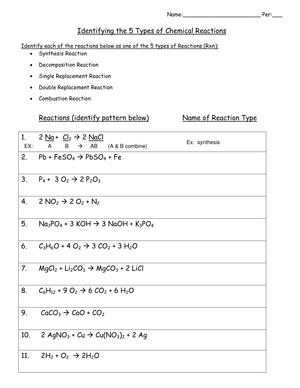
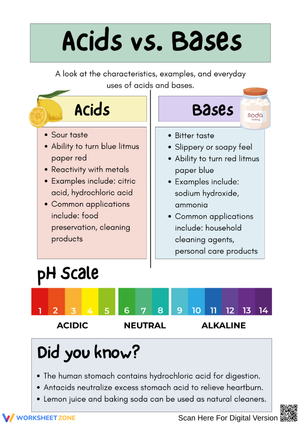
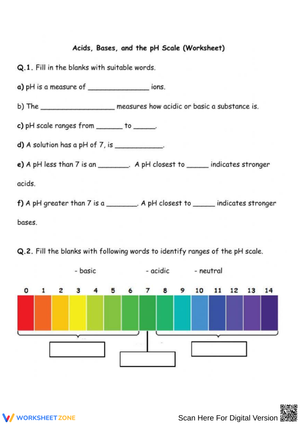
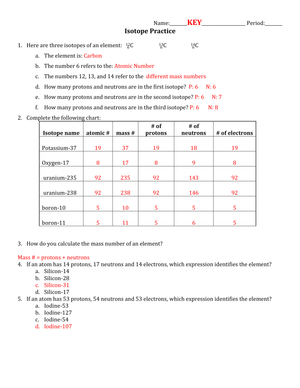
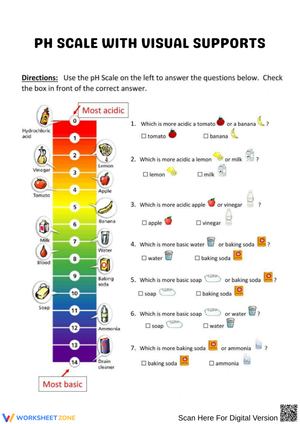
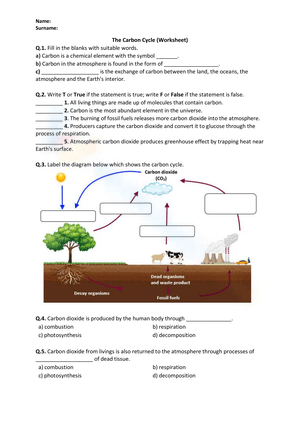
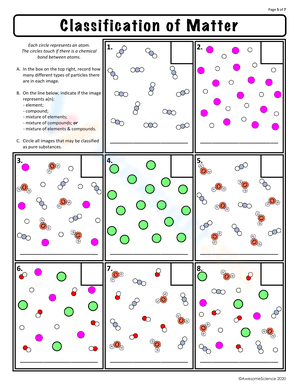
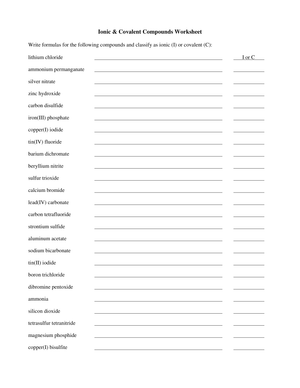
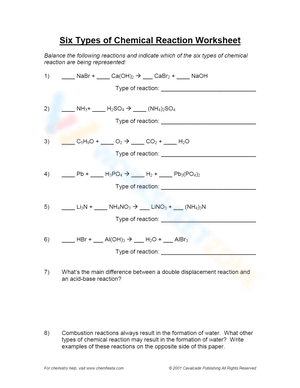
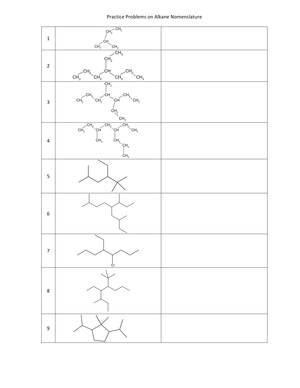
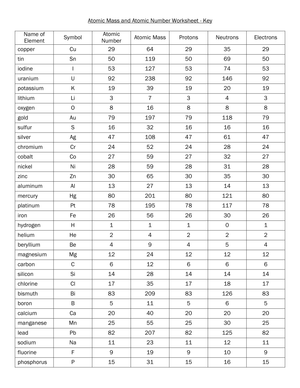
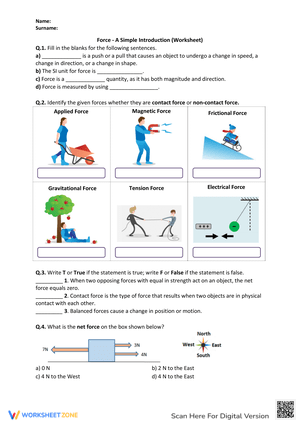
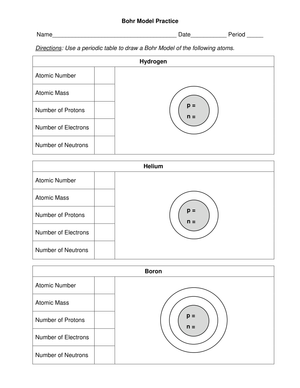
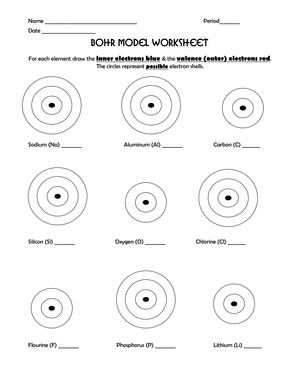
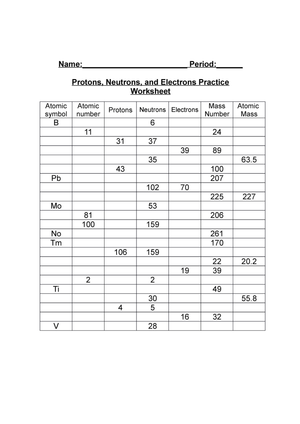
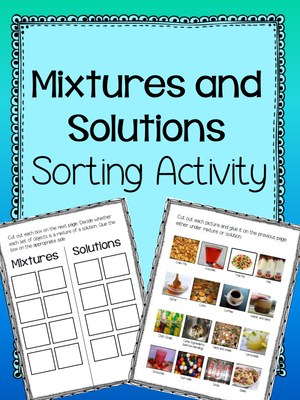
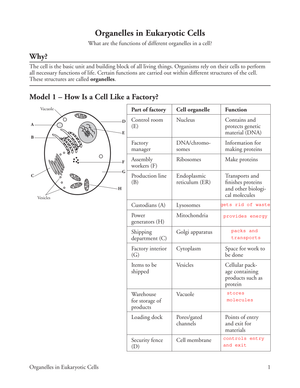
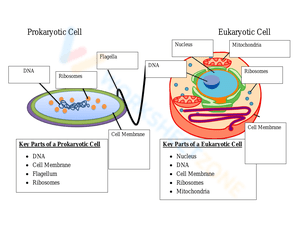
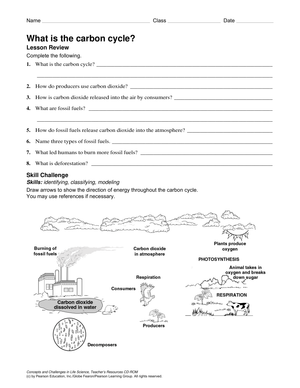
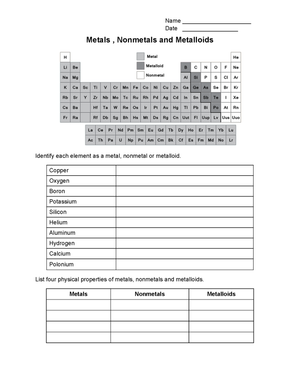
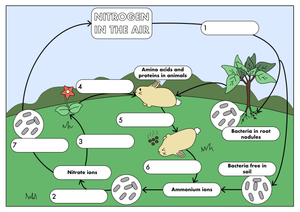
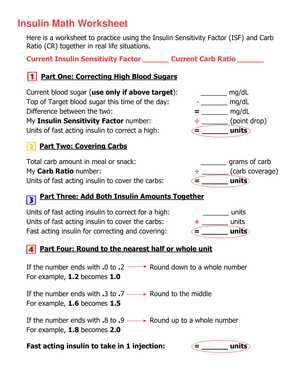
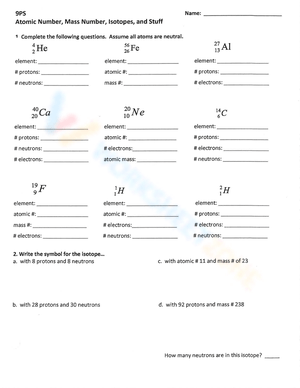
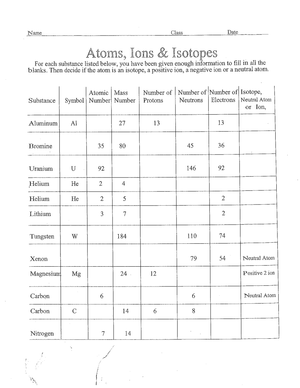
These chemistry pdf worksheets for 6th grade cover the foundational physical science concepts students encounter in their first structured chemistry unit — states of matter, introductory atomic structure, elements, compounds, mixtures, separation techniques, and the physical-versus-chemical-change distinction that reliably trips students up before they have fully internalized what it means for a new substance to form. Each worksheet stands alone as a printable resource, ready to drop into a lesson, a center, a review block, or a substitute folder without any additional setup.
The Specific Skills Each Worksheet Targets
Sixth grade chemistry stays at the descriptive and classificatory level, and the worksheets reflect that. Students are not balancing equations or calculating moles — they are building a working mental map of how matter is organized and how it changes. The skills across the set include:
- Identifying states of matter using particle-level reasoning — explaining why a gas fills its container while a solid holds its shape, not just naming the three states from memory.
- Distinguishing physical properties such as mass, volume, solubility, conductivity, and magnetic attraction, then applying those properties to classify unfamiliar substances.
- Sorting elements, compounds, and mixtures from a list of real examples — water, saltwater, iron, carbon dioxide, trail mix — and justifying each classification in writing.
- Matching separation methods to mixture types: filtration for an insoluble solid in water, evaporation for a dissolved salt, a magnet for iron filings mixed with sand.
- Classifying changes as physical or chemical and citing specific evidence — a new substance, a gas, a color shift, or a temperature change not caused by an external heat source.
- Interpreting short reading passages about observable reactions and identifying which signs indicate that a new substance formed.
Most worksheets pair classification tasks with brief written responses. Students who can sort examples correctly often cannot explain the principle behind the sort. Asking them to write one or two sentences forces that reasoning to the surface — which is where the real gaps appear in student work.
Where Sixth Graders Reliably Go Wrong in Chemistry
The physical-versus-chemical change distinction produces the most consistent errors, and those errors follow a recognizable pattern. Students who correctly identify burning as a chemical change will often classify dissolving as a chemical change too, because the solid "disappears." They use observability as their criterion instead of asking whether a new substance formed. A worksheet that groups dissolving alongside rusting and cooking — all three involve visible changes, but only two produce new substances — makes that false criterion visible when students have to justify their answers in writing. A correct circled letter can hide the misconception; a one-sentence explanation almost never does.
Mixtures and solutions produce a closely related error. Many sixth graders accept that trail mix is a mixture but reject the idea that saltwater is one, because the salt is no longer visible. They hold a visual definition of "mixed." Worksheets that include both homogeneous and heterogeneous examples and ask students to explain how they know the salt is still present — still salt, still there, just spread out — push back on that definition more directly than re-explaining vocabulary from the front of the room.
A third pattern: students consistently conflate atoms and elements. They often treat "element" as meaning a tiny particle and "atom" as meaning a type of substance — exactly backwards. Labeling tasks and sentence-completion items that require using each term in a distinct context tend to break this confusion faster than reviewing definitions again.
How to Work These Worksheets Into Your Lesson Plans
The most consistent use pattern across a chemistry unit is to deploy each worksheet at two points: once during initial practice right after the lesson, and again a few days later as a brief retrieval check. Spaced retrieval at the 6th grade level does not require elaborate logistics — use the same four classification questions from Wednesday's lesson as a Monday warm-up after morning meeting. The repetition does more instructional work than introducing a new activity would.
For bell ringers, classification and matching sections pull cleanly into a 5-to-8-minute opener. For stations, pair a mixtures worksheet with a small tray of sand, salt, and iron filings — students predict separation methods on the worksheet, then test one physically. The worksheet becomes a record of reasoning rather than a substitute for doing. For substitute days, chemistry pdf worksheets for 6th grade are especially practical: a self-contained worksheet with clear directions and an answer key runs without any verbal handoff from lesson notes.
Differentiating the Set Across Ability Levels
The most workable approach is three versions of the same topic: a support version with a word bank, labeled diagrams, and sentence frames; an on-level version with standard directions; and an extension version that replaces some classification items with open-response explanation prompts. All three worksheets address the same concept, so small-group discussion stays unified. Only the reading load and output expectations differ.
For multilingual learners and students with limited science vocabulary, sentence frames reduce the language barrier without reducing the science thinking. A student who cannot yet write "the bubbling indicates a gas was produced" can complete "I know a chemical change happened because ___" and still demonstrate whether they understand the concept. That response is genuinely useful formative data.
At the extension end, asking students to generate their own examples rather than classify given ones requires a much deeper command of the concept. A prompt such as "Write a scenario that would be hard to classify as physical or chemical, and explain why" engages strong students in boundary-case thinking that most worksheets skip entirely.
Standard Alignment
These chemistry pdf worksheets for 6th grade align most directly to NGSS MS-PS1-1, which asks students to develop a model to describe that matter is made of particles too small to be seen, and MS-PS1-2, which covers analyzing and interpreting data on the properties of substances before and after they interact. In classroom terms, the particle-model and states-of-matter worksheets belong early in the unit — before the change worksheets — because understanding why burning is irreversible depends on students already holding a working model of what "a new substance" means at the particle level. Teaching that sequence prevents the most common dead end in 6th grade chemistry: students who can label examples of each change type but cannot explain what actually differs between them.
Frequently Asked Questions
Do students need prior instruction before working through these worksheets?
For most worksheets in the set, yes. They serve as practice and reinforcement tools, not initial discovery activities. Assign them after direct instruction or a lab experience, when students have at least encountered the relevant vocabulary. The exception is the observation-based properties worksheets, which ask students to describe what they notice about materials before formal definitions are introduced — those work well as pre-lesson activators.
Can these work for students who are significantly below grade level in reading?
The support versions use simpler sentence structures and include visual cues, which helps students who struggle with reading-heavy science text. If a student is reading more than two years below grade level, pair the worksheet with verbal instruction — read the prompts aloud, discuss each item before students write, and accept oral responses when written output is too large a barrier. The science thinking is still accessible even when the text is not.
How do these resources fit into a curriculum that is already lab-heavy?
Chemistry pdf worksheets for 6th grade work best alongside lab work, not instead of it. Use a worksheet before a lab to prime vocabulary and surface prior knowledge, and use one after to help students connect what they observed to the day's concept. On days when lab materials are unavailable or the lesson focuses on introducing models and vocabulary, these worksheets keep students thinking in the same conceptual space — especially useful in the early part of a unit before hands-on activities begin.
How should I use the written-response sections for formative assessment?
The written explanations are your most reliable formative data. A student who correctly circles "chemical change" but writes "because it got hot" has a different gap than a student who writes "because the new substance has different properties than the original." The sorting and classification items tell you who is confused; the writing items tell you why. That distinction makes reteaching decisions more targeted than any worksheet score alone would.












 Interactive Worksheet Maker
 Quiz Maker
 Word Search Maker
 Crossword Puzzle Maker
 Word Scramble Generator
 Sentence Scramble Generator
 Handwriting Worksheet Generator
 Name Tracing Generator
 Fill In The Blank Generator