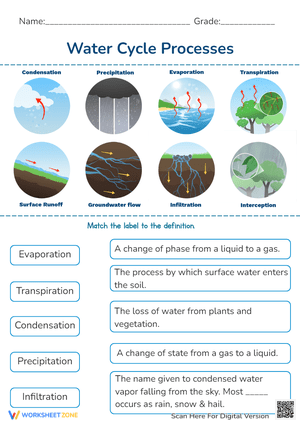
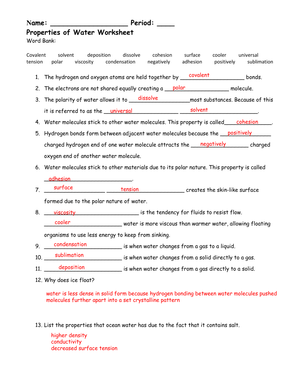
These 6th grade environment printable worksheets resources give teachers a targeted set of standalone practice tools covering ecosystems, food webs, natural resources, pollution, conservation, and human impact — the full range of environmental science content that threads through Earth and life science instruction in early middle school. Each worksheet focuses on one concept and one task type, which keeps students from splitting attention across too many demands at once while still asking them to observe, classify, explain, or interpret rather than fill in answers from memory. The set is built for the real pace of the school week: focused enough for a warm-up, substantial enough for independent work, and clear enough to run during a sub day.
What the Set Covers
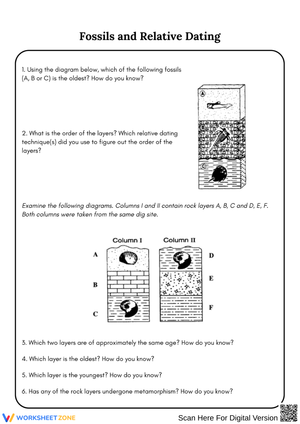
The worksheets address the content teachers regularly teach in 6th grade environmental science, spread across genuinely different formats rather than repeating the same matching activity across every topic.
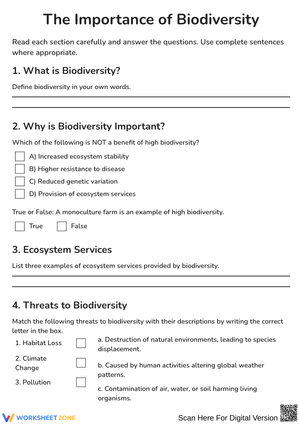
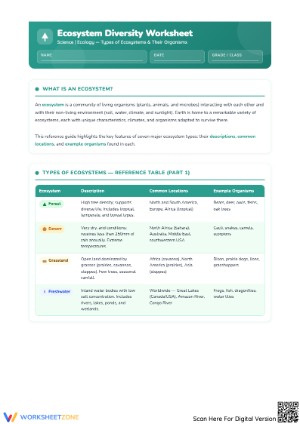
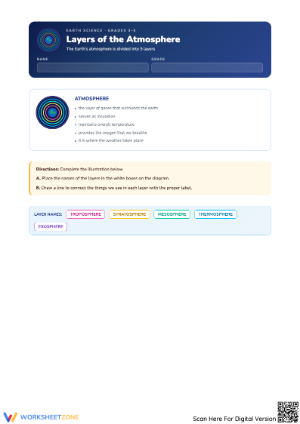
- Ecosystems and biotic/abiotic factors: students sort living and nonliving components of habitats, explain how disruptions shift system balance, and annotate diagrams showing organism interactions
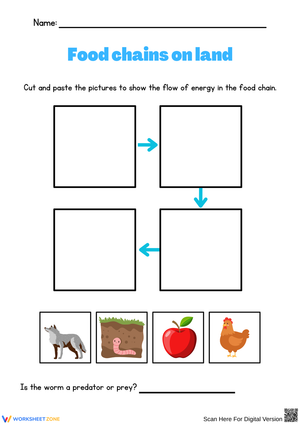
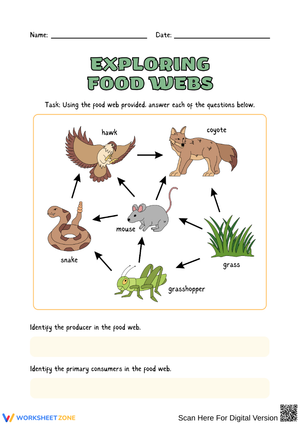
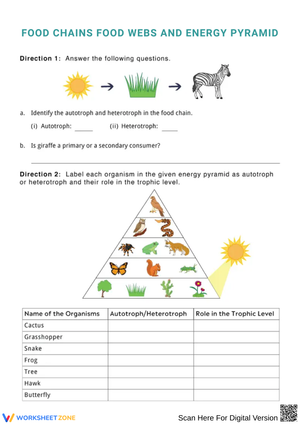
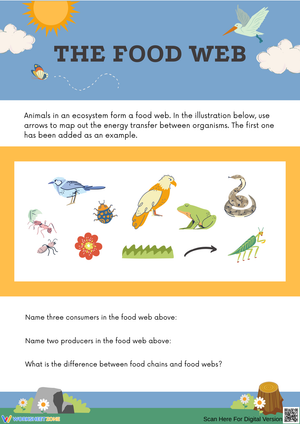
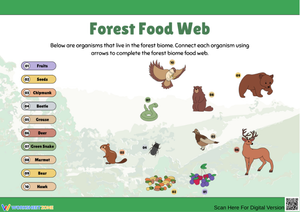
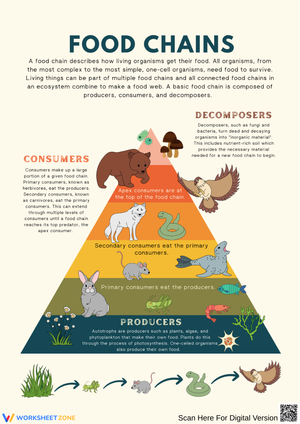
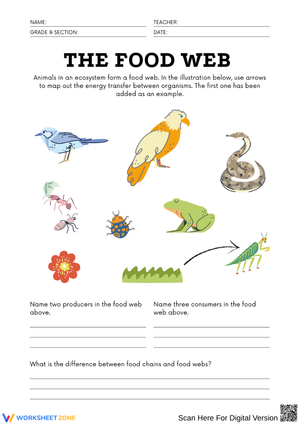
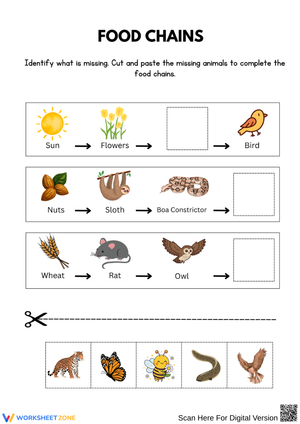
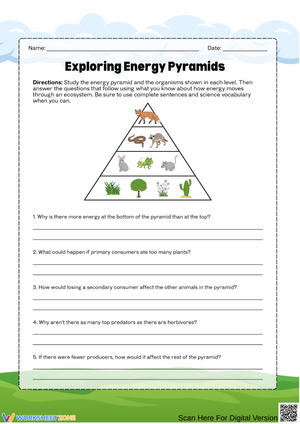
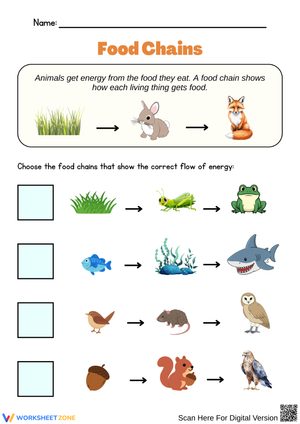
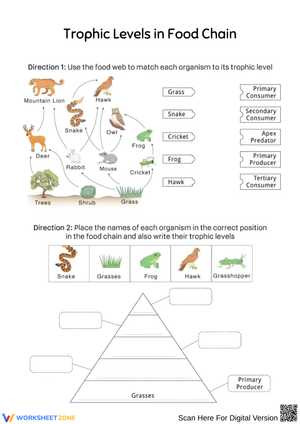
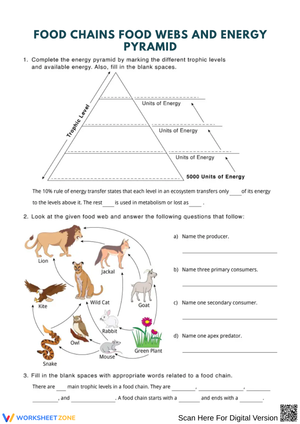
- Food chains and food webs: students trace energy flow, label producers, consumers, and decomposers, and reason through what happens to a population when one organism disappears
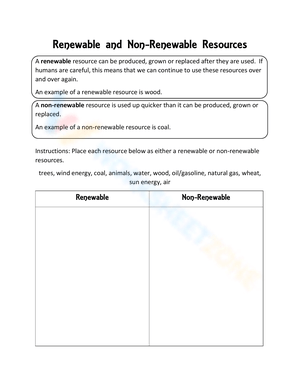
- Natural resources: students classify renewable and nonrenewable resources using timescale criteria, compare examples, and connect resource use to conservation decisions
- Pollution: students identify sources of land, water, and air pollution, distinguish short-term from long-term effects, and apply cause-and-effect reasoning to real-world scenarios
- Conservation and recycling: students evaluate waste-reduction strategies, explain trade-offs, and connect specific human choices to resource availability over time
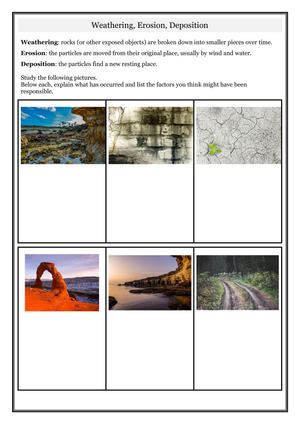
- Human impact on Earth systems: students trace the effects of development, land use, and energy consumption through multi-step cause-and-effect chains
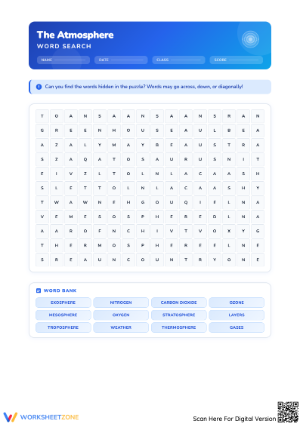
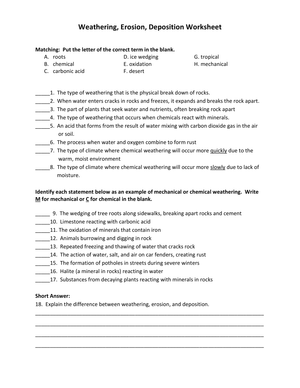
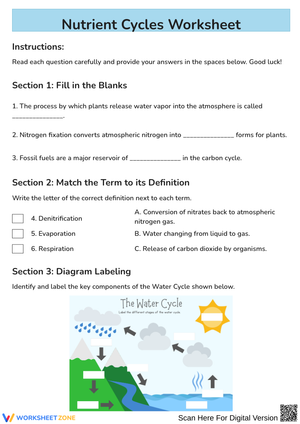
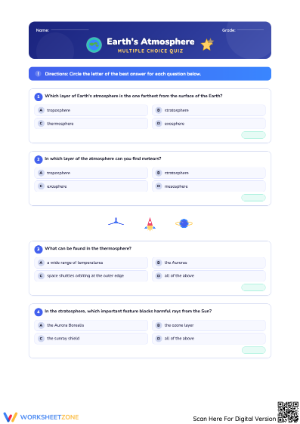
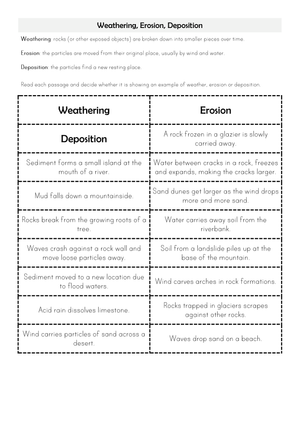
Task types range from vocabulary matching and diagram labeling to short reading comprehension and CER-style constructed responses. That variety matters because students who complete a matching worksheet correctly sometimes fall apart when asked to write a sentence explaining the same idea — and any worksheet that mixes both task types catches that gap before it compounds.
Errors Students Make That These Worksheets Help You Catch
Two misconceptions appear with striking consistency in 6th grade environmental science, and both are easier to address once a student has committed an answer to paper and you can point to it directly.
The more common one is food web arrow direction. Students draw the arrow from predator to prey — following the logic of "the hawk eats the mouse" — rather than from prey to predator to show where energy travels. This does not self-correct. Students who label a food web correctly during a class discussion will still reverse the arrows when working independently, because the language of eating overrides the science convention of energy transfer. Worksheets that ask students to annotate each arrow with the phrase energy moves to before connecting any organisms force that distinction into conscious attention, which is where it needs to land before students can automate it.
The second is timescale confusion around renewable resources. Students mark wood as nonrenewable because trees take years to grow, and they mark natural gas as possibly renewable because it can be extracted more than once. The core concept — whether a resource replenishes within a human-relevant timeframe versus a geological one — needs to be stated clearly on any worksheet covering this topic, ideally as a reference note at the top of the activity rather than folded into the question directions where students stop reading.
How to Build These Worksheets Into Your Lesson Plans
The format that saves the most classroom time is using a worksheet as a pre-lab activator. Five to eight minutes before a lab on water pollution or food web disruption, a vocabulary or diagram worksheet primes the language students need during the activity and gives you a fast read on who needs a quick clarification before the work begins — rather than mid-lab, when stopping to reteach costs everyone time.
For sub plans, the most reliable structure is a reading passage, a diagram task, and one written prompt within a single worksheet. That combination is self-directing enough that students can start without waiting for explanation, and the work runs long enough to fill a meaningful chunk of a class period without becoming busywork. When the sub collects finished worksheets, you return to a set of papers that double as a formative snapshot.
One routine worth building in: run each worksheet twice. Students complete it independently, then the following day revise their answers in a second ink color and write one sentence explaining what they changed and why. The revision record shows whether a misconception shifted or held — and it turns a one-and-done printable into a low-cost spaced retrieval opportunity with no extra prep materials required.
Standard Alignment
The 6th grade environment printable worksheets resources in this set align most directly to NGSS MS-ESS3 (Earth and Human Activity) and MS-LS2 (Ecosystems: Interactions, Energy, and Dynamics). Pollution, conservation, and human impact worksheets build toward MS-ESS3 performance expectations — specifically that students apply scientific principles to analyze how human activities affect Earth's resources and support arguments about population growth and resource consumption with evidence. Food web and ecosystem worksheets support MS-LS2 performance expectations around analyzing how resource availability affects organisms and populations and constructing arguments about how physical or biological changes ripple through an ecosystem.
In practice, these standards surface across multiple units rather than in one concentrated block. Having individual worksheets organized by topic means teachers can pull the relevant one when a standard reappears in the sequence — reviewing food web logic before a human impact unit, for instance — rather than reteaching from scratch or hunting for something that fits a narrow content window at the last minute.
Adjusting the Set for Different Readiness Levels
Most 6th grade classes include a wide range of reading and writing confidence, and the most practical approach to differentiation is varying the amount of language support rather than swapping in entirely different materials. Students at different readiness levels are generally working toward the same science understanding; what differs is how much structure they need to express it.
- Include a word bank for key terms on the first few worksheets in a unit, then remove it as students encounter the vocabulary enough times to recall it without help.
- For students who need a reduced text load, pair the original reading passage with a shorter version covering the same central claim and evidence — keeping the question prompts identical so both groups answer the same science questions.
- Add sentence starters to constructed response prompts for students who freeze at a blank line: One effect of habitat loss is... or This resource is classified as renewable because...
- Let students who finish early extend the worksheet by naming a real community facing the environmental issue described, or by proposing one specific action that could reduce the impact in the scenario.
Answer keys are included with every worksheet. When paraprofessionals are supporting small groups during independent practice, a clear key lets them give immediate, accurate feedback without checking back with the classroom teacher — which keeps that intervention time focused on the students who need it most. These 6th grade environment printable worksheets resources come with keys formatted to match the original task so the comparison is fast and the feedback loop stays tight.
Frequently Asked Questions
How long does each worksheet take to complete?
Most worksheets in the set take between 15 and 25 minutes for students working independently. Vocabulary and diagram worksheets run on the shorter end; reading comprehension and CER-style response worksheets take a bit longer. That range makes them flexible for warm-ups, independent work blocks, or homework without needing to cut problems or add filler.
Do the worksheets come with answer keys?
Yes. Every worksheet includes a complete answer key. Keys are formatted to match the original worksheet so paraprofessionals, students doing self-correction, and teachers circulating during class can all use them quickly without cross-referencing a separate document.
Can these worksheets work for students reading below grade level?
The reading passages are written at approximately a 5th to 6th grade level. For students who need more support, the differentiation strategies above — shorter passages, word banks, and sentence starters — make the content accessible without requiring a completely separate set of materials. The 6th grade environment printable worksheets collection works in mixed-readiness classrooms because the adjustments are additive: teachers remove support structures as students gain confidence rather than starting over with different tasks.
Are these worksheets suitable for homework?
Yes, particularly the vocabulary and reading comprehension worksheets. Each worksheet covers one topic and one task type, which keeps the homework load realistic. Students do not need classroom equipment, lab materials, or a partner to complete them — just the worksheet and something to write with.












 Interactive Worksheet Maker
 Quiz Maker
 Word Search Maker
 Crossword Puzzle Maker
 Word Scramble Generator
 Sentence Scramble Generator
 Handwriting Worksheet Generator
 Name Tracing Generator
 Fill In The Blank Generator