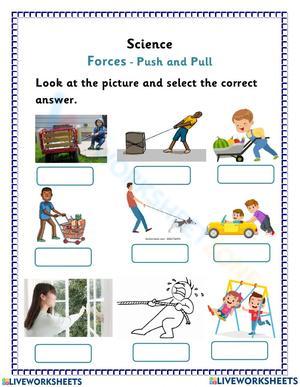
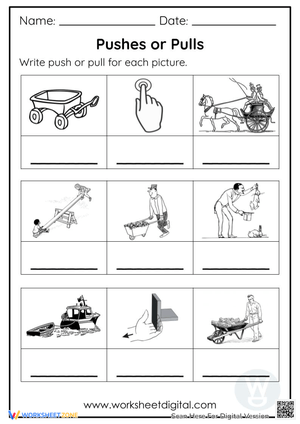
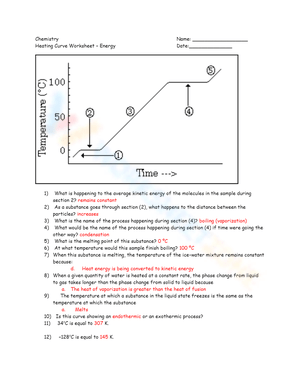
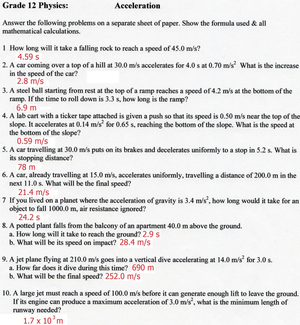
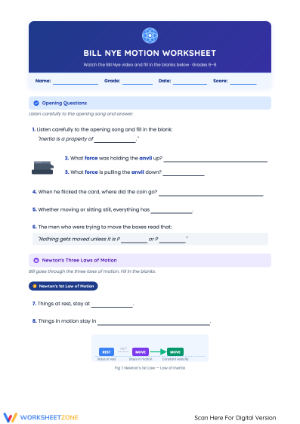
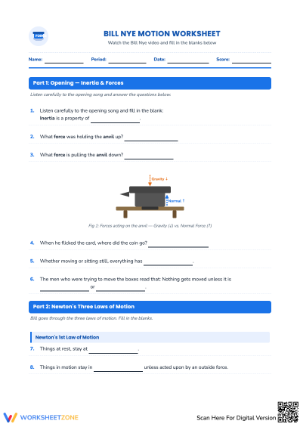
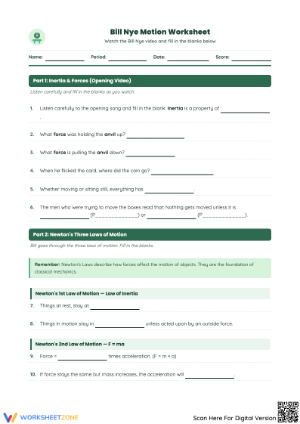
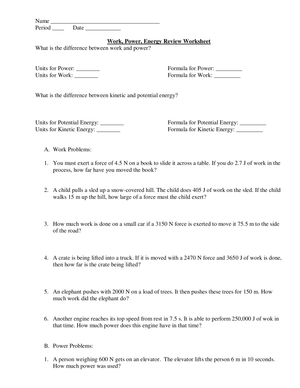
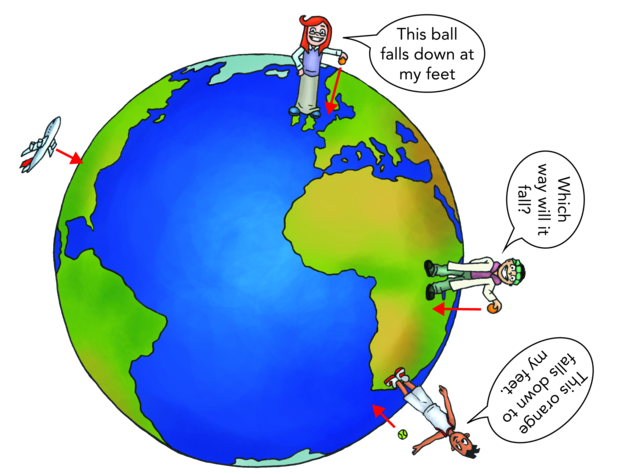
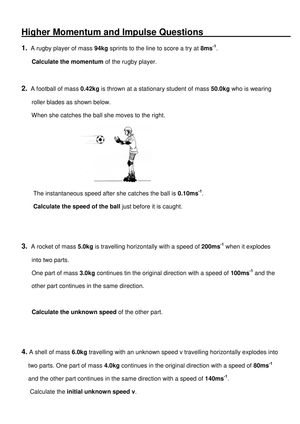
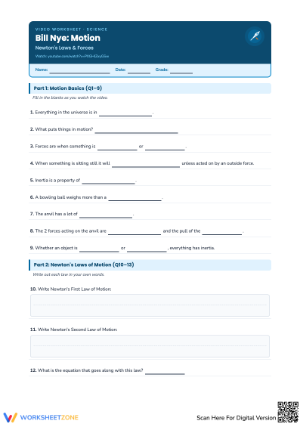
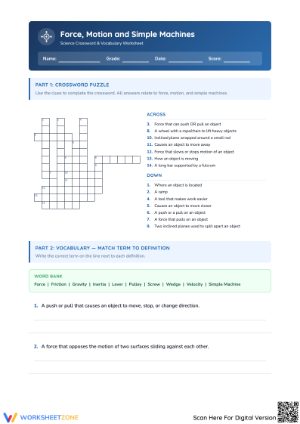
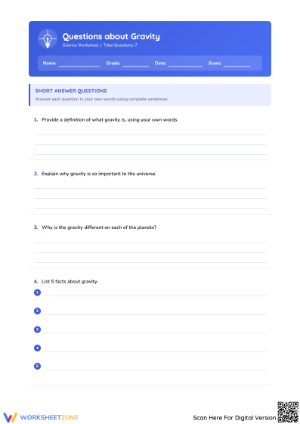
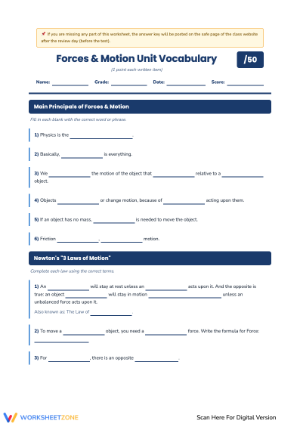
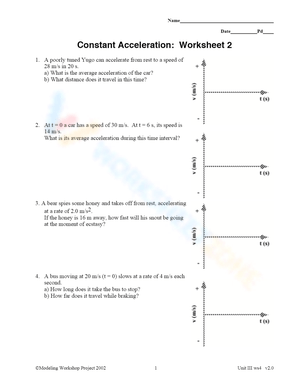
These forces motion and machines worksheets for 6th grade give physical science teachers targeted practice materials for one of the most content-dense units in middle school — covering push and pull, friction, gravity, balanced and unbalanced forces, speed calculations, and all six simple machines. The set works across multiple parts of the instructional week: bell ringers, station rotations, pre-lab vocabulary builders, and quiz review. Teachers who have taught this unit know how quickly the pacing runs, and having printable resources that carry students from Monday's introduction to Thursday's assessment prep matters considerably.
What's Inside the Set
Each worksheet targets a narrow enough slice of content that students can work through it without losing the thread. The skills across the set break down as follows:
- Force basics: identifying pushes and pulls, recognizing that forces can change an object's speed, direction, or state of rest
- Balanced and unbalanced forces: reading force diagrams and deciding whether the net force is zero or non-zero, then predicting what happens to motion
- Friction and gravity: comparing friction on different surfaces and describing how gravity acts on falling and stationary objects
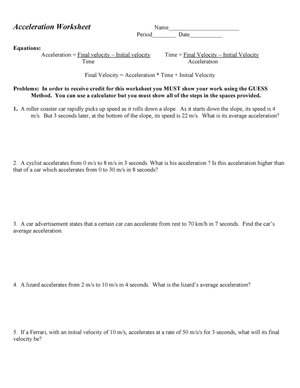
- Speed calculations: solving problems using speed equals distance divided by time, with numerically manageable whole-number values
- Simple machine identification: recognizing levers, pulleys, inclined planes, wedges, wheel-and-axle systems, and screws from labeled diagrams and everyday examples
- Machine function: explaining how each simple machine changes the direction or size of an applied force
The calculation items use whole numbers deliberately. Speed = distance ÷ time trips up sixth graders most consistently when the arithmetic competes with the concept. Keeping the numbers clean lets teachers see whether a student understands the formula — not whether they can divide decimals under time pressure.
Building These Worksheets Into Your Instructional Week
Bell ringers are the most immediate entry point. A force diagram with three or four labeled arrows takes students about six minutes to interpret and annotate — long enough to settle the class and connect yesterday's lesson without losing instructional time. Simple machine identification items work the same way: a flagpole pulley diagram or a car ramp photograph, followed by two questions about what it does and where students have seen something like it, activates prior knowledge before direct instruction begins.
Before a hands-on lab, assign the relevant worksheet to build vocabulary first. When students already understand that friction is a force that opposes motion, lab data makes more sense — they are not encountering the term for the first time while also managing equipment. After the lab, the same worksheet becomes a reflection tool: students revisit diagrams and scenarios against their measured results. Teachers who have used forces motion and machines worksheets for 6th grade in this pre-lab and post-lab sequence consistently find that students explain their collected data with more precision than they would using class notes alone.
Station rotations are a natural fit as well. Place one worksheet per station — friction at one table, gravity at another, balanced forces at a third, simple machines at a fourth. Students rotate every 10 to 12 minutes with the same printed resource, which keeps setup minimal and lets teachers circulate rather than distribute new materials mid-rotation.
Common Student Mistakes Worth Watching For and Addressing
The most persistent error in balanced-force work is the assumption that balanced forces mean the object is not moving. Students routinely mark a box sliding at constant speed across a floor as "unbalanced" because they see motion and assume a net force must be present. A worksheet item that shows a hockey puck gliding across ice with equal push and friction arrows — and asks what will happen next — exposes this directly. The correct answer is that the puck continues at constant speed; many sixth graders write that it will stop or slow down, which tells the teacher immediately who needs a follow-up conversation before the quiz.
In simple machine work, students frequently conflate wedges and inclined planes. Both involve a sloped surface, but the wedge moves through the material (a knife, an axe head), while the inclined plane holds still and supports a load moving along it (a loading ramp). A worksheet item that places these two side by side and asks students to circle the moving part and describe the direction of applied force separates them without requiring a full re-teach.
Speed calculation errors almost always live in unit awareness. Students who correctly substitute numbers into the formula still write "meters" as the unit for speed rather than "meters per second" because they are not tracking the ratio structure. A worksheet that asks students to label units at each step — distance in meters, time in seconds, speed in meters per second — reduces this error more reliably than reminding the class verbally.
Standard Alignment
These worksheets align to NGSS MS-PS2-1 and MS-PS2-2. MS-PS2-1 asks students to apply Newton's third law to predict force interactions — the balanced and unbalanced force diagram items address that prediction requirement directly. MS-PS2-2 targets the relationship between net force and changes in motion, which is exactly where the force scenario and written-response items sit. Simple machines connect to MS-PS3-1 and the broader energy and work framework, giving teachers a natural bridge when the unit extends beyond introductory force concepts. In classroom terms, these are mid-unit reinforcement resources — not end-of-unit summative tools.
Adapting the Set for Different Levels of Student Readiness
The fastest adjustment for students who struggle with reading is reducing the written-response demand to a sentence frame. Instead of "Explain why the box does not move," the prompt becomes "The box does not move because the forces are _______________." That single change removes the writing barrier without reducing the science requirement. For students in inclusion settings, completing the identification and diagram sections before any written responses gives them a genuine entry point and typically produces more accurate evidence of understanding than starting with text-heavy items. Forces motion and machines worksheets for 6th grade serve inclusion classrooms well precisely because the diagram-first format lets students demonstrate knowledge before language becomes the main obstacle.
Strong students finish identification and matching sections quickly and need extension built in. Ask them to write their own force scenario, label the arrows, and predict the outcome — then exchange with a partner to evaluate the reasoning. This requires no additional materials and produces genuinely useful formative information about conceptual depth. A more structured extension is a speed problem where students must first convert between units before calculating, which adds a layer of reasoning the standard items do not require.
Frequently Asked Questions
What topics should a 6th grade force and motion worksheet cover?
At minimum: force as push or pull, balanced and unbalanced forces, friction, gravity, and basic speed calculations. Most forces motion and machines worksheets for 6th grade also include simple machines because that content sits in the same instructional unit and reinforces how force, distance, and effort interact in practice. Covering machines separately means teachers need a second resource for content that integrates naturally here.
Can these worksheets function as a sub plan?
Yes — and that is one of their most practical uses. The diagram-based identification items and self-contained scenarios do not require a substitute to teach the content. Including the answer key in the sub folder means students can self-check at the end of class, which keeps the period structured without placing any instructional burden on the sub.
How long does each worksheet take to complete?
Identification and matching sections take most sixth graders 8 to 12 minutes. Written-response and calculation items add another 5 to 8 minutes depending on reading pace. A full mixed-review worksheet fits comfortably into a 20-minute independent work block, leaving time for class discussion or self-checking before the period ends.
Are these worksheets useful for reteach after a unit assessment?
Reteach is one of their strongest applications. After returning a quiz, teachers can pull students who missed balanced-force or speed items and assign the specific worksheet targeting that skill — rather than re-covering the full unit. Working back through a textbook chapter to address one or two weak concepts is rarely efficient; pulling a focused worksheet takes 30 seconds and puts students straight to work. That practical organization is one reason teachers return to forces motion and machines worksheets for 6th grade well after first instruction has ended.












 Interactive Worksheet Maker
 Quiz Maker
 Word Search Maker
 Crossword Puzzle Maker
 Word Scramble Generator
 Sentence Scramble Generator
 Handwriting Worksheet Generator
 Name Tracing Generator
 Fill In The Blank Generator