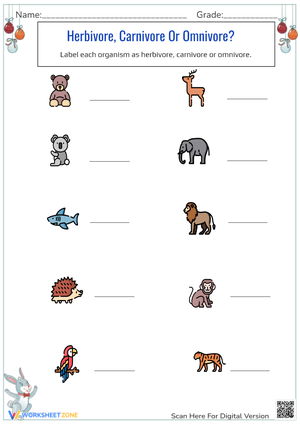
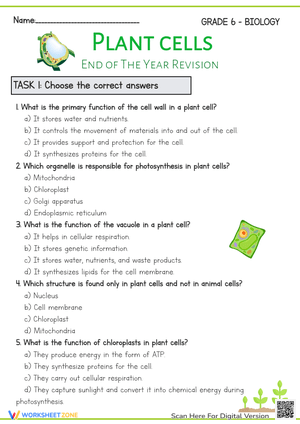
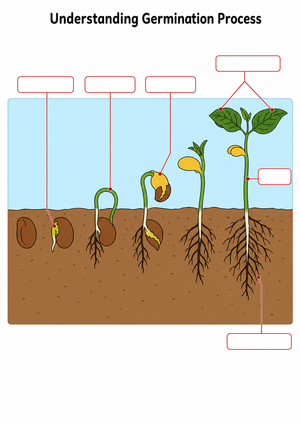
These 6th grade living and non living things pdf worksheets give science teachers printable practice that moves students past basic picture sorts and into evidence-based classification. Each worksheet asks students to justify answers using the actual characteristics of life — cells, energy use, growth, reproduction, and response to stimuli — rather than surface features like movement or appearance alone. The set covers vocabulary reinforcement, three-way sorting tasks, and the edge cases that reliably produce the most instructive classroom debate.
What Students Practice Across the Set
The core task in each worksheet is classification with evidence. Students do not just circle "living" or "nonliving" — they identify which characteristics of life an example demonstrates and explain their reasoning in writing. That shift from label to justification is where most of the real learning happens at this grade.
- Three-category sorting: Students distribute items into living, nonliving, and once-living groups — not just two columns, which forces them to think about origin versus current life status rather than collapsing both into the same category.
- Characteristic matching: Students identify which life processes an organism carries out and explain how each example meets or fails each criterion.
- Vocabulary in context: Terms like organism, stimulus, metabolism, and reproduction appear inside classification prompts so students attach meaning to real examples rather than memorize isolated definitions.
- Edge case analysis: Each worksheet includes at least one debatable item — seeds, viruses, fire, dead leaves, or robots — that requires students to use the criteria rather than rely on appearance or intuition.
- Short written responses: Students write one to three sentences defending each classification, which makes their reasoning visible to the teacher before a quiz or unit test.
Frequent Student Errors Worth Watching For
The most persistent mistake at this level is the movement-equals-life assumption. Students who correctly classify a rock as nonliving will mark fire as living because it spreads, consumes fuel, and appears to grow — three behaviors that superficially match life characteristics. That alignment is exactly why fire is such a useful teaching example. It forces the class to ask what "growth" actually means in a biological context: fire does not grow by adding cells; a plant does. Getting students to articulate that distinction in writing is the real goal, and the edge-case items in these worksheets are built to produce exactly that argument.
The second major error involves once-living materials. Students frequently place wood, paper, leather, and shells in the living column because they associate those materials with the organisms they came from. The error reveals that students are thinking about origin rather than current biological activity. A worksheet with a dedicated once-living category helps students see the difference structurally, but most teachers also need to pause and make the logic explicit: the tree was living; the board cut from it is not. Repeating that logic with two or three examples before releasing students to work independently closes the gap faster than any worksheet alone.
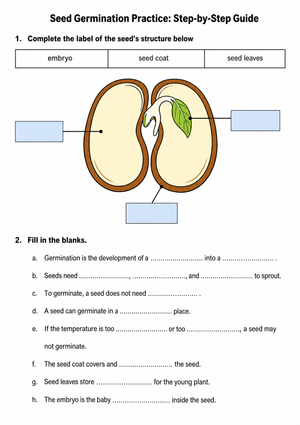
Seeds generate a different kind of confusion. Because a dormant seed looks inert, many students classify it as nonliving. It takes a direct explanation — that seeds carry out cellular metabolism and retain the full capacity for life processes under the right conditions — before students understand that appearance and life status are not the same thing. Expect this one to surface every time the topic runs, regardless of how clearly the opening lesson went.
Building These Worksheets Into Your Weekly Routine
For a direct instruction day, open with a five-minute mini lesson on the characteristics of life, distribute one sorting worksheet, and ask students to work independently before comparing with a partner. The comparison step matters: disagreements over "dead leaf" or "robot" produce exactly the kind of academic talk the topic needs, and those conversations often surface misconceptions faster than any teacher-led review.
Station rotations work well with this set. One station handles classification, a second focuses on vocabulary matching, and a third uses an edge-case worksheet where students write a one-to-three sentence defense of their answer. Each station can run eight to ten minutes, and students move through all three in one class period without any digital tools or special setup.
For sub days or homework assignments, these 6th grade living and non living things pdf worksheets require no explanation beyond the printed directions. The task types — sort, match, explain — are immediately clear, and the PDF format keeps the layout consistent across any printer or copier.
One classroom move that consistently deepens the work: require students to use a claim-evidence-reasoning structure on every written response, even brief ones. On a sorting worksheet, that means writing something like "Fire is nonliving because it is not made of cells and cannot reproduce on its own, so it fails the core requirements for life." That structure reduces guessing and makes misconceptions visible on paper rather than hidden until the assessment.
Standard Alignment
These worksheets align to NGSS MS-LS1-1, which calls for students to conduct investigations providing evidence that living things are made of cells — either one cell or many. In classroom terms, that standard typically opens the 6th grade life science sequence because it establishes the vocabulary and conceptual framework students need for every organism-level topic that follows: cells, ecosystems, heredity, and organism interactions all depend on students understanding what makes something alive in the first place. Classifying items using cellular and functional criteria is a direct instructional step toward that standard, and teachers who run this unit in the first weeks of the year build the working vocabulary — cell, organism, stimulus, reproduction — before those terms show up in more demanding cell structure and function lessons.
Adjusting the Worksheets for Mixed-Ability Classes
The set works across a range of student readiness without requiring completely different materials for each group. Students who need additional support get the most from the sorting tasks, where a word bank removes the vocabulary barrier and lets them focus on the classification logic itself. Students working at grade level add the written explanation requirement, which means they practice backing a claim with evidence — a skill the standard explicitly calls for.
For students ready for a greater challenge, the edge-case worksheets offer the strongest material. Ask them to write a full paragraph defending why a virus occupies contested scientific territory: it replicates, but only by commandeering host cell machinery, and it carries out no independent metabolism. That argument requires holding multiple criteria in mind simultaneously and weighing them against each other — harder than it looks for most 6th graders, and a genuine ceiling for advanced work without requiring a separate resource set.
These 6th grade living and non living things pdf worksheets also adapt well to small-group instruction. Pull three or four students who are conflating once-living and nonliving, work through two or three examples together at the table, then release them to complete the written responses independently. The format stays the same for every student; what changes is the amount of guided discussion before independent work begins.
Standard Alignment
Frequently Asked Questions
Do the worksheets include a once-living category, or just living and nonliving?
Each classification worksheet includes all three categories: living, nonliving, and once-living. That third column is essential at this grade because without it, students tend to place everything with a natural origin — wood, fur, coral skeleton, shells — into the living group, which produces a different conceptual error than the movement-equals-life mistake and requires a different correction.
What examples are used for the edge-case items?
The worksheets draw on fire, clouds, robots, seeds, viruses, dead leaves, coral skeletons, and dried fur. Each of these appears regularly in student work as a genuine point of confusion, and each one can be resolved by returning to the full set of life characteristics rather than any single feature. Viruses are the most genuinely ambiguous — scientists themselves disagree about whether replication without independent metabolism qualifies as life — and that ambiguity makes them a strong anchor for discussion with advanced groups who can handle contested scientific questions.
How long does each worksheet take to complete?
Most students finish a sorting-plus-explanation worksheet in fifteen to twenty minutes. The edge-case analysis worksheets, which call for written paragraphs rather than short answers, typically take twenty-five to thirty minutes. That range makes these 6th grade living and non living things pdf worksheets useful for bell ringers, full practice blocks, and homework assignments without significant pacing adjustments.
Can these worksheets serve as formative assessments?
Several worksheets in the set function well as formative tools. The short written-response format gives teachers a clear read on whether students are reasoning from evidence or guessing from appearance. Exit tickets drawn from individual worksheets work especially well on days when a full quiz would take too much class time but teacher feedback is still needed before the next lesson moves forward.












 Interactive Worksheet Maker
 Quiz Maker
 Word Search Maker
 Crossword Puzzle Maker
 Word Scramble Generator
 Sentence Scramble Generator
 Handwriting Worksheet Generator
 Name Tracing Generator
 Fill In The Blank Generator