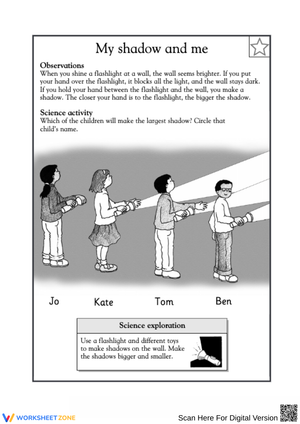
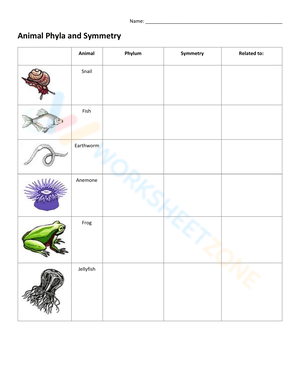
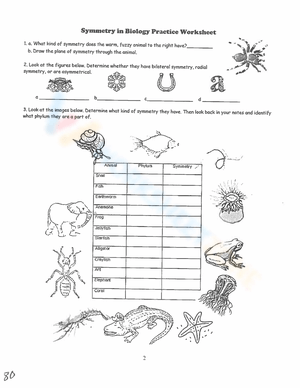
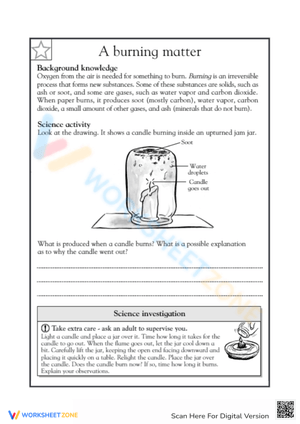
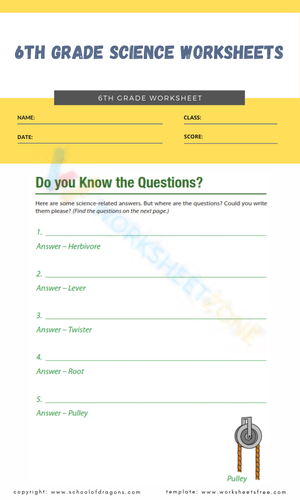
These others science printable worksheets for 6th grade give teachers a ready bank of practice resources that move across life, earth, and physical science without anchoring to a single unit. The set fits the actual rhythm of middle school instruction — review materials need to follow students through a year's worth of content, not stay confined to one chapter at a time.
Topics Across the Set
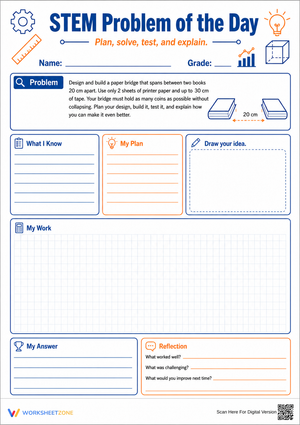
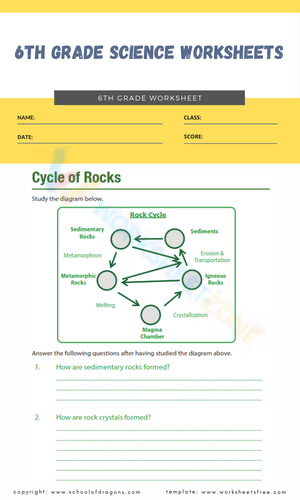
The worksheets cover the broad terrain that most 6th grade science courses move through across the year. Life science content includes cells and cell functions, ecosystems and food webs, organism adaptations, and body systems at an introductory level. Earth science worksheets address the water cycle, weather versus climate, landforms, rock and mineral identification, and Earth's major systems. Physical science content covers matter and its properties, energy transfer basics, and forces and motion with simple numerical examples. A handful of worksheets also include introductory engineering scenarios — students read a brief design problem, identify constraints, and explain whether a proposed solution meets those constraints.
The breadth in others science printable worksheets for 6th grade reflects the actual structure of most middle school science programs, where students shift between strands across a single year rather than staying in one domain. Practicing across all three areas on short, focused worksheets builds the habit of moving between concept areas — a habit that matters in class and on any benchmark test that samples content from multiple units.
Mistakes Students Make That These Worksheets Help You Catch
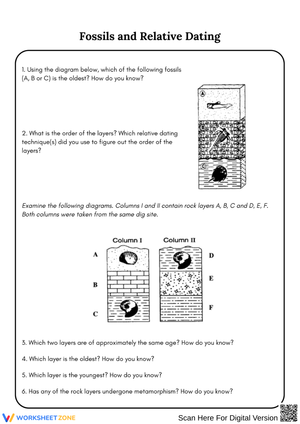
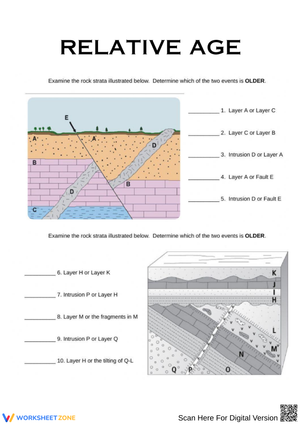
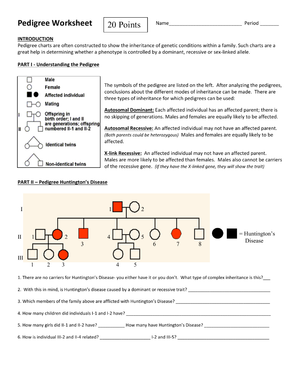
Mixed-topic practice surfaces predictable confusion that single-unit instruction can miss. The most consistent pattern we see in student work is the observation-versus-inference problem: a student looking at a food web diagram will write "the fox eats the rabbit because it is hungry" rather than "the arrow from rabbit to fox indicates the fox consumes the rabbit." The first sentence interprets motivation; the second reads evidence. Diagram-based questions make this distinction visible in writing and give teachers something specific to address in feedback.
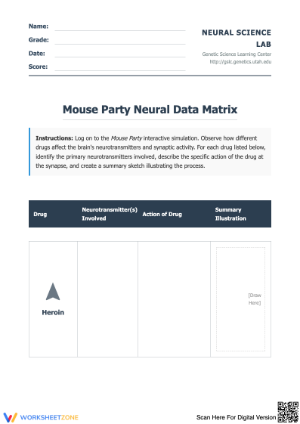
Data tables catch a different issue. Students who handle a straightforward question about matter or energy without much trouble will misread a two-column science table by reading across rows instead of down columns — especially when column headers use vocabulary they haven't fully internalized. A few targeted practice sessions with data tables, separate from the conceptual lesson, help students slow down and read the structure before attempting answers.
Vocabulary blending is a third pattern worth flagging. After moving between life science and earth science units, some students start conflating terms from both domains — writing "organisms" when they mean "minerals," or using "ecosystem" in a context that describes a geological process. Short vocabulary-matching sections within mixed-topic worksheets give teachers a quick window into this conceptual slippage before it shows up on a quiz.
How to Build These Worksheets Into Your Lesson Plans
The most reliable use is the Monday warm-up. A quick set of five questions from one worksheet — sampling across science strands — takes about eight minutes after morning announcements and tells you within the first period where students left off over the weekend. You find out which vocabulary is still shaky, which diagrams need another look, and which concepts stayed solid without reinforcement.
Others science printable worksheets for 6th grade slot naturally into several other teaching moments across the week, and the consistent format — directions, content, questions — lowers transition time because students know what to expect regardless of which topic the worksheet covers.
- After direct instruction: Assign one worksheet immediately following a lesson to move students from listening to applying vocabulary and reading diagrams independently.
- Station rotations: Place three different worksheets — one per science strand — at stations during a review day. Students rotate every 12–15 minutes.
- Homework: Short worksheets with clear directions and no required materials travel well. Students finish them at home without extra equipment.
- Sub plans: A printed set with an answer key handles most of what a substitute needs — clear instructions, focused tasks, and something teachers can review when they return.
- Pre-assessment: Before starting a new unit, assign a worksheet from a related strand to gauge what prior knowledge students bring with them.
One practical move worth trying: sort printed copies by task type rather than by topic. Keep a folder for diagram-labeling worksheets, one for data table practice, and one for vocabulary review. On a day when you know students need vocabulary work — regardless of which unit you're in — you pull the right folder without hunting through a topic-organized binder. This becomes especially useful the week before a benchmark, when you're cycling through all three science strands at once.
Adjusting the Worksheets for a Range of Learners
Differentiation stays manageable here because the format does a lot of the structural work. For students who read below grade level or are still building content vocabulary in English, reading the first two questions aloud as a class before independent work lowers the language barrier without watering down the science content. Letting those students work in pairs on diagram-labeling sections — where they narrate what they see before writing — builds vocabulary alongside the concept simultaneously.
For students who finish quickly, add a spoken or written extension prompt: "Look at the data table again. What would happen to the population in row 3 if the resource in column 2 were cut in half? Write two sentences using evidence from the table." That kind of prompt pushes beyond recall without requiring you to prepare a separate worksheet. For intervention groups, select three questions from the set, model the first one together, then ask students to complete the next two with guidance before working independently. One honest tradeoff: students who learn best through movement or hands-on work often find even a brief worksheet frustrating on low-energy days — a short partner discussion before they begin usually helps more than extending the worksheet itself.
Standard Alignment
These worksheets align to Next Generation Science Standards at the middle school level. Life science content connects to MS-LS1 (From Molecules to Organisms) and MS-LS2 (Ecosystems: Interactions, Energy, and Dynamics). Earth science material maps to MS-ESS2 (Earth's Systems), particularly the water cycle and the weather-versus-climate distinction. Physical science worksheets address MS-PS1 (Matter and Its Interactions) and MS-PS2 (Motion and Stability: Forces and Interactions). Engineering-focused worksheets connect to MS-ETS1 (Engineering Design). In most district sequences, these standards are introduced in 6th grade and revisited with greater depth in 7th and 8th, so mixed practice at this level keeps early exposure active without demanding the conceptual depth students will reach later in the sequence.
Frequently Asked Questions
Do these worksheets work for first exposure to a topic, or mainly for review?
They work best as reinforcement after a lesson has already introduced the core ideas. When students encounter a new concept through a worksheet alone — without prior discussion or direct instruction — they tend to rely on guessing or surface-level reading rather than applying understanding. Use them after instruction is underway, not before it.
How long does each worksheet take to complete?
Most students finish each worksheet in 10–15 minutes when working independently. Students who need more time with vocabulary or diagram reading may need closer to 20 minutes. For bell-ringer use, assign only the first section or a specific handful of questions rather than the full worksheet.
What's the best approach for using these across an entire school year?
Spread others science printable worksheets for 6th grade across the full year rather than clustering them all in one review block. Use life science worksheets during your life science unit, return to a few during a spiral review week before benchmarks, then pull earth and physical science worksheets as you move through those strands. By spring test prep, students have already seen most of the format and can focus on the content rather than figuring out how to navigate each worksheet.
Does each worksheet come with an answer key?
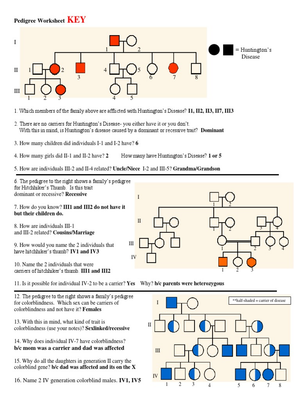
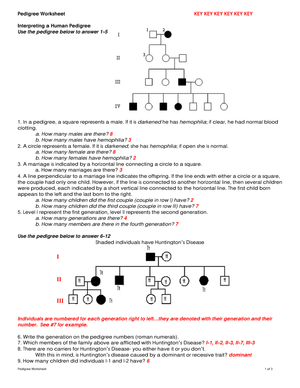
Yes. Each worksheet includes an answer key. For short-response questions, sample answers are provided so teachers can quickly assess whether student writing demonstrates genuine understanding or surface-level recall. Diagram sections include labeled versions of the original image in the key.












 Interactive Worksheet Maker
 Quiz Maker
 Word Search Maker
 Crossword Puzzle Maker
 Word Scramble Generator
 Sentence Scramble Generator
 Handwriting Worksheet Generator
 Name Tracing Generator
 Fill In The Blank Generator