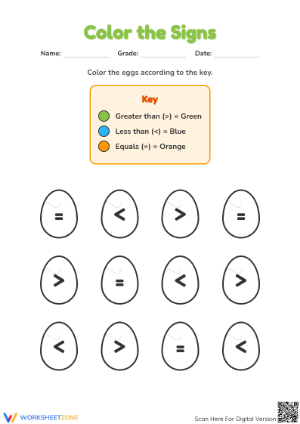
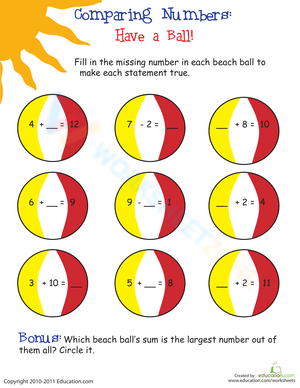
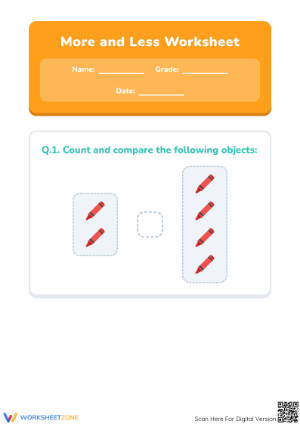
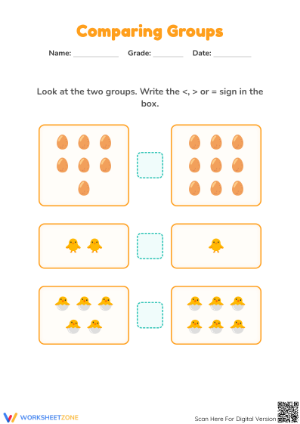
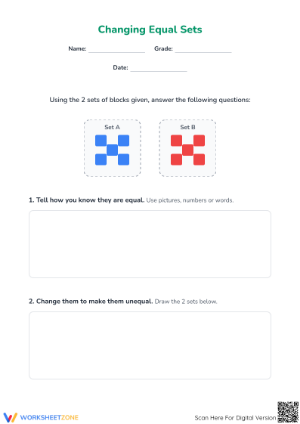
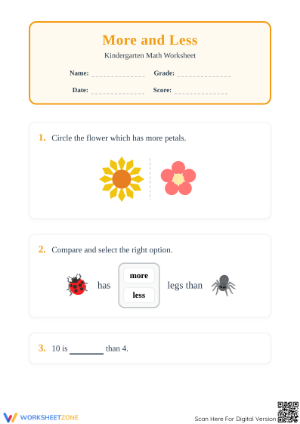
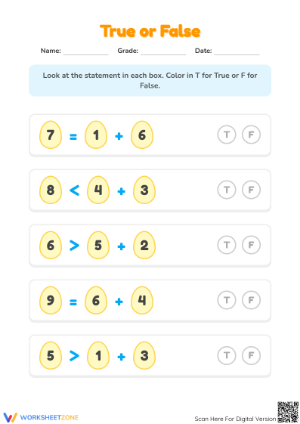
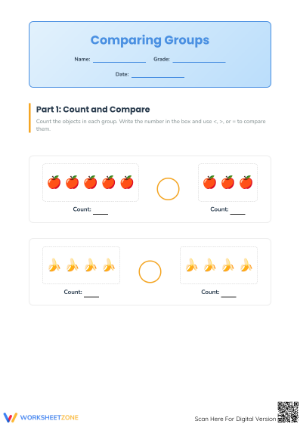
These comparison worksheets for 2nd grade build the place-value reasoning second graders need as they move from two-digit work started in first grade into three-digit territory. Each worksheet is a standalone resource targeting a distinct skill format — standard form, expanded form, word form, and base-ten block representations — so teachers can assign exactly what a group needs at any point in the unit. The set addresses 2.NBT.A.4, the Common Core standard requiring students to compare three-digit numbers using greater than, less than, and equal to symbols.
What Each Worksheet Asks Students to Do
The comparison work here isn't the same exercise dressed in different numbers. Each worksheet isolates a specific demand on the student:
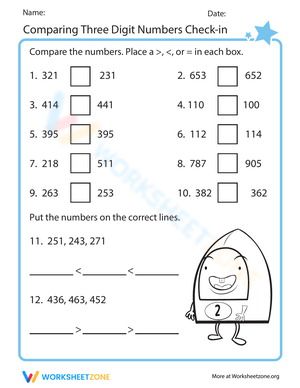
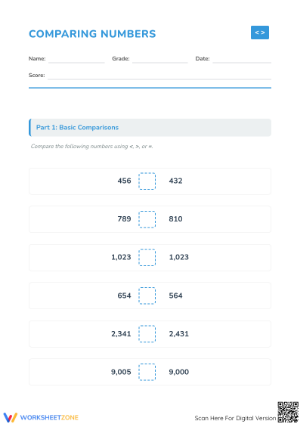
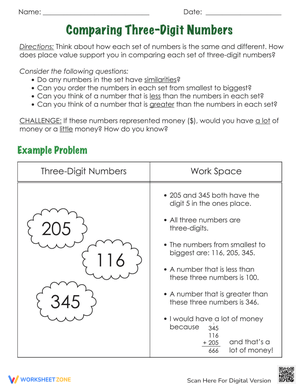
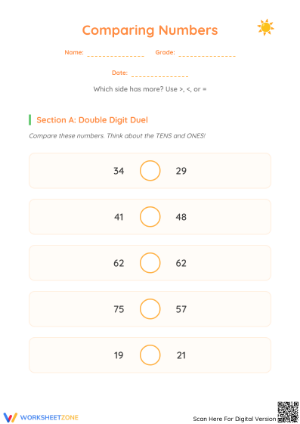
- Standard form comparisons — Two three-digit numerals appear side by side with a blank between them; students write the correct symbol. These build fluency through focused repetition.
- Expanded form to standard form — One number appears as 400 + 50 + 3 while the other is written as a numeral. Students must mentally compose the number before comparing, which adds a genuine cognitive step beyond straightforward symbol-filling.
- Word form comparisons — Students read number names like "six hundred fourteen" and determine whether they are greater than, less than, or equal to a paired numeral or word name.
- Base-ten block representations — Students count flats, rods, and units to determine each value before writing the comparison symbol. This format keeps the concrete-to-abstract bridge intact for students who still anchor their understanding in physical models.
- Symbol selection from a set — Rather than writing a symbol from scratch, students circle the correct one from three options. This variation reveals whether students understand the relationship or are guessing based on visual memory of the symbol shape.
Mistakes Students Make That These Worksheets Help You Catch
The most stubborn error in second-grade comparison work is what might be called the last-digit trap. A student who correctly identifies that 782 is greater than 728 will sometimes flip the comparison when the same digits appear reordered — because 728 ends in eight and that digit feels dominant. The student has looked at the ones place and skipped the tens entirely. This shows up most often on expanded form worksheets, where students correctly decompose both numbers but then compare only the ones values when writing the symbol.
A different problem appears when hundreds digits match. Students drilled to check hundreds first often stall when they find a tie — 450 versus 436, for example — and either guess or write the equal sign because "the big numbers are the same." The worksheets that include ties at the hundreds place and force movement to the tens column are the most diagnostic items in the set. Mark those problems on exit slips and you'll immediately know who needs additional aligned place-value work before moving on.
Symbol direction errors also appear regularly, and they rarely come from symbol confusion alone. When a student determines that 354 is greater than 345 but draws the symbol pointing the wrong way, the issue is usually that they started drawing from the point rather than the open end. Having students read the completed statement aloud — left to right, verbalizing the symbol as a word — corrects this faster than re-teaching the symbol shape from scratch.
Standard Alignment
2.NBT.A.4 — Compare two three-digit numbers based on meanings of the hundreds, tens, and ones digits, using the symbols for greater than, equal to, and less than to record the results of comparisons.
In classroom terms, this standard typically lands in the second quarter of grade 2, after students have built and read three-digit numbers and have a working understanding of what a hundred represents as a bundle of ten tens. Most state math benchmarks assess this skill explicitly, and several state assessments include expanded form paired with standard form comparisons — the exact format this set provides structured practice for.
Planning How to Use These Worksheets Across Your Unit
The base-ten block worksheets work best early in the unit, when students still need concrete grounding. Move to standard form comparisons once students are reliably reading three-digit numbers, then bring in expanded form and word form comparisons as the unit progresses — those formats require students to hold more steps in working memory, so they land better as mid-unit or end-of-unit practice than as opening lessons.
The last eight minutes before students leave for a specials period is a reliable slot for three or four comparison problems from a worksheet. Students work independently, you collect the worksheet, and you walk away with a quick read on who's solid and who needs a targeted pull-aside. That's more useful than a formal quiz and costs almost no instructional time. For morning meeting, projecting one comparison problem gives the class a low-stakes entry into the previous day's content before the math block begins.
Because these comparison worksheets for 2nd grade each target a single skill format, they also hold up well as homework. Parents can actually follow what their child is practicing — which cuts down on the "I don't know how to help" frustration at the kitchen table. Many parents expect comparison at this grade to involve larger numbers or multi-step operations; seeing the hundreds-tens-ones structure laid out plainly demystifies what second-grade math actually asks of students.
Differentiating the Set for a Range of Learners
For students who are still uncertain about three-digit place value, pair any comparison worksheet with a printed place value chart. Students copy each number into the chart columns before writing the symbol. This extra step disrupts the impulsive "just look at the last digit" behavior and redirects attention to the hundreds-first habit — it isn't busywork, it's rebuilding the process exactly where it's breaking down.
Students who move through standard form problems quickly need to be pushed toward justification. After writing each symbol, they write one sentence explaining why. "537 is greater than 527 because both numbers have 5 hundreds and 3 tens, but 537 has 7 ones and 527 has only 2" is harder to produce at second-grade level than it looks, and it prepares students for the mathematical reasoning expected in grade 3 discussions and written explanations.
For students who have steady command of all the comparison worksheets for 2nd grade formats in the set, a missing-digit extension adds meaningful challenge: given that a three-digit number ending in 47 is greater than 347, what digits could fill the hundreds blank? This open-ended format uses the same comparison logic but pushes into reasoning about multiple valid solutions rather than a single correct answer.
Frequently Asked Questions
Can these worksheets be used before students have fully mastered three-digit place value?
Use the base-ten block worksheets first in that case, since counting representations doesn't require students to read a three-digit numeral independently. Once they've had direct instruction on reading hundreds, tens, and ones in standard form, the remaining worksheets are appropriate in sequence. Starting with expanded form or word form before students can fluently build three-digit numbers tends to produce symbol-filling without the number understanding behind it — which works against what these resources are meant to develop.
How do these worksheets support formative assessment rather than just practice?
The most useful information comes from looking at error patterns across the worksheet, not just a raw count of correct answers. A student who gets every standard-form comparison right but misses every expanded-form item has a specific gap in composing numbers from parts — not a general comparison problem. Sorting incorrect responses by problem type takes about two minutes and tells you far more than a percentage score. The variety of formats in the set is what makes that diagnostic reading possible in the first place.
At what point in second grade do most students reach three-digit comparison work?
Most grade-2 pacing guides introduce comparison worksheets for 2nd grade in the second quarter, after students have spent several weeks working with place value up to one thousand. Students who came in with solid two-digit comparison experience from first grade tend to pick up the hundreds-first strategy without much difficulty. The ones who struggle most are students who learned comparison as a visual mnemonic — the alligator eating the bigger number — without building the underlying sense of quantity behind each digit's position. Those students benefit most from starting with the base-ten block format before moving to purely symbolic work.













 Interactive Worksheet Maker
 Quiz Maker
 Word Search Maker
 Crossword Puzzle Maker
 Word Scramble Generator
 Sentence Scramble Generator
 Handwriting Worksheet Generator
 Name Tracing Generator
 Fill In The Blank Generator