These geometry worksheets for 2nd grade move students from casual shape-naming into systematic analysis of geometric properties — counting sides, marking angles, connecting 2D faces to 3D solids, and dividing shapes into equal shares that directly preview fraction work later in the year. Every worksheet in the set targets a skill that genuinely belongs at this grade level, with nothing tacked on for bulk.
What Students Practice
The resources address four skill clusters that mirror the full Grade 2 geometry strand.
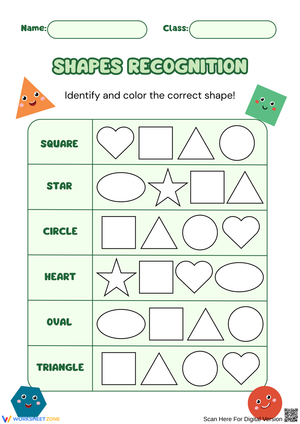
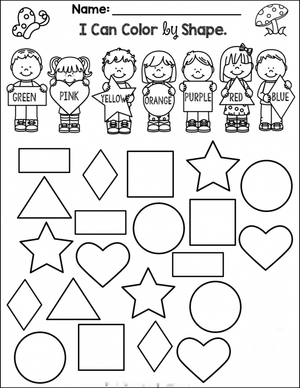
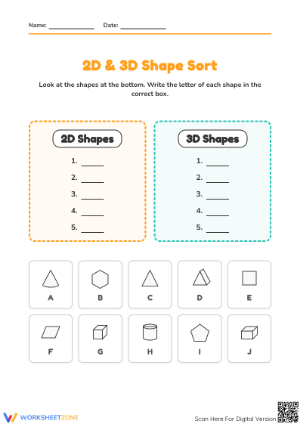
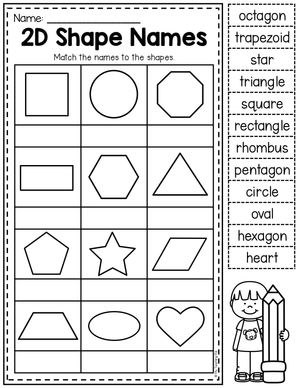
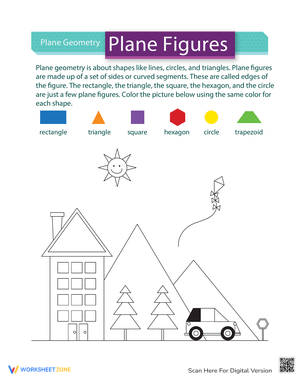
- 2D shape identification and drawing: Students work with triangles, quadrilaterals (squares, rectangles, and irregular four-sided figures), pentagons, and hexagons. They mark sides and vertices rather than simply naming shapes from pictures, which builds the habit of evidence-based geometric reasoning.
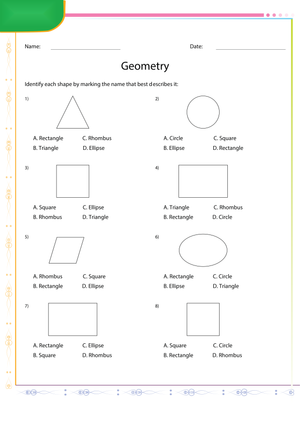
- Attribute analysis: Counting sides and angles accurately, identifying shapes that meet a specific criterion — "circle every shape with exactly 4 vertices" — and distinguishing shapes that look similar but differ in their properties.
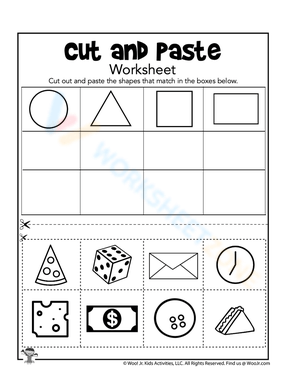
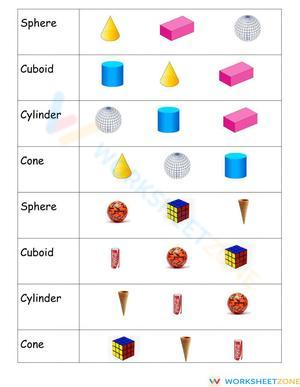
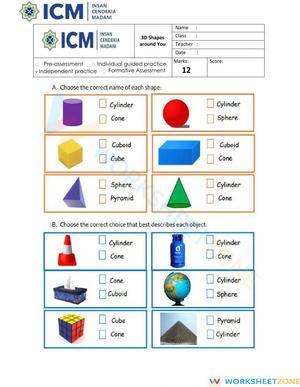
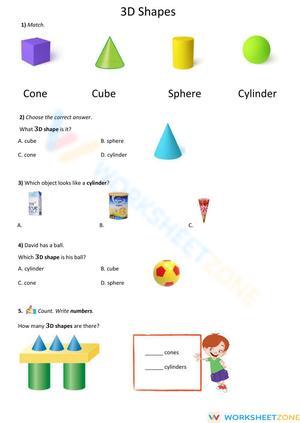
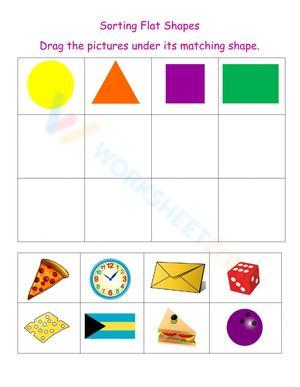
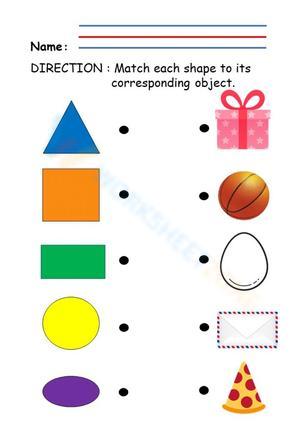
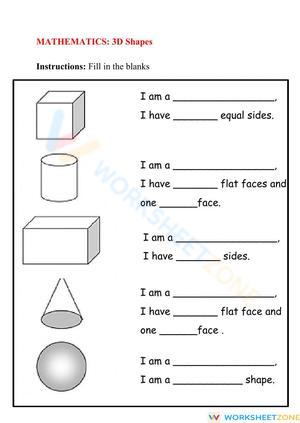
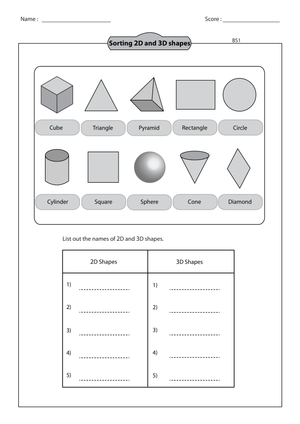
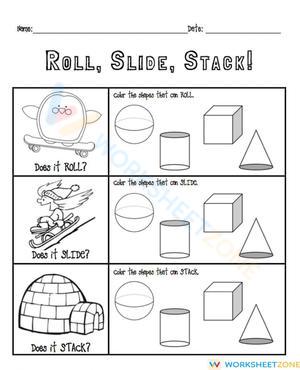
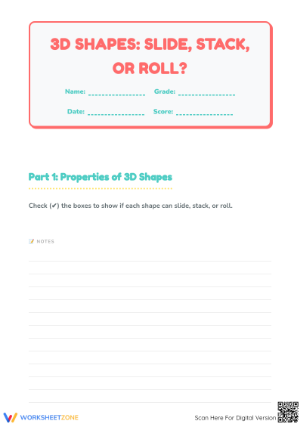
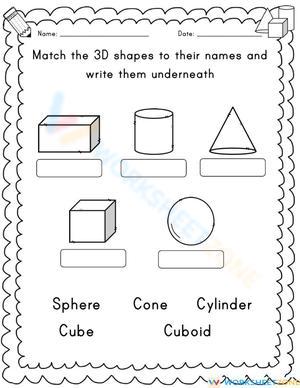
- 3D geometry: Recognizing cubes by their six square faces, counting edges and vertices on a solid figure, and matching real-world objects like dice and tissue boxes to the corresponding geometric solid.
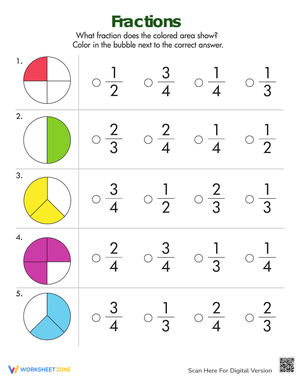
- Partitioning into equal shares: Dividing circles and rectangles into halves, thirds, and fourths; cutting rectangles into rows and columns of unit squares. This work builds directly toward area concepts and early multiplication in Grade 3.
From Shapes to Fractions — Why Partitioning Matters Here
Second graders encounter the word "fourths" for the first time in a geometry context, not a fractions unit. That ordering is intentional. Students see a rectangle divided into four equal pieces before anyone asks them to write ¼. The partitioning worksheets in this set capitalize on that sequence: students draw the dividing lines themselves, shade a requested portion, and then check whether the parts are the same size — which is the one non-negotiable condition they must internalize. A worksheet that includes a non-example (a circle split into three visibly unequal slices, with the prompt "Are these thirds? Explain.") does more conceptual work than five correctly drawn examples alone, because it forces students to articulate the equality requirement rather than simply replicate a procedure.
Mistakes Students Make That Are Worth Catching Early
The most persistent error in 2D attribute work is not about circles or triangles — it is about quadrilaterals. Students who correctly identify a square will look at a tilted square (a rhombus with right angles) and call it "a diamond, not a square." They are classifying by orientation rather than by attributes. Many second graders will also accept a square as a rectangle but reject a rectangle as a square, which reverses the actual relationship. Worksheets that present quadrilaterals in varied orientations and ask students to explain their reasoning bring this confusion to the surface before it calcifies into a durable misconception.
With partitioning, the error shows up immediately: students draw lines to make "fourths" but produce parts of noticeably different sizes. They understand that four pieces are required but have not yet grasped that equal size is the definition of the partition, not a preference. A common student response when asked to evaluate an unequal partition: "It's still four parts." That is exactly the misconception to address head-on, and the non-example format in these worksheets gives teachers a concrete anchor for that whole-class discussion.
Building These Worksheets Into Your Math Week
Attribute-identification worksheets work well as Monday warm-ups — short enough to complete in 8–10 minutes, and a low-stakes way to reactivate geometric language after the weekend. Partitioning worksheets fit better mid-lesson or immediately after direct instruction, when students need to apply a newly introduced procedure while the teacher circulates and catches the equal-shares error before it hardens. Placing a partitioning worksheet too early — before students have seen at least one non-example — tends to produce a room full of students who draw four lines and feel finished without checking the sizes.
Before students complete the geometry worksheets for 2nd grade on 2D and 3D attributes, send them on a brief walk through the hallway or school entrance with a clipboard and a blank recording sheet. They sketch or name examples of hexagons, rectangular prisms, and cubes they find in the environment — window panes, floor tiles, lockers, ceiling grids. When they return and begin the formal worksheet, they have real reference points attached to shapes they just saw and touched. Geometric vocabulary sticks faster when it is anchored to a specific physical memory rather than an abstract drawing on a page.
The smallest partitioning worksheets in the set are well-suited as exit tickets. One rectangle to divide into fourths, completed in the final five minutes of a lesson, tells a teacher immediately who has the equal-shares concept and who needs reteaching before the class moves toward fraction notation in third grade.
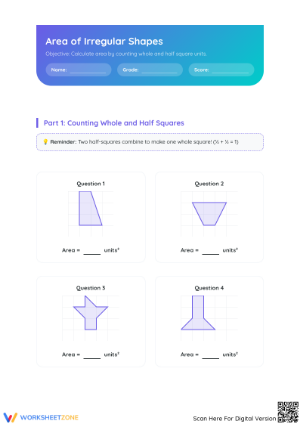
Standard Alignment
These worksheets address the CCSS.MATH.CONTENT.2.G standards directly. 2.G.A.1 covers recognizing and drawing shapes with specified attributes — sides and angles — and naming triangles, quadrilaterals, pentagons, hexagons, and cubes. The attribute-hunt and drawing exercises target this standard specifically. 2.G.A.2 asks students to partition a rectangle into rows and columns of equal-sized squares and count them, a direct preview of area. 2.G.A.3 covers partitioning circles and rectangles into equal shares with the vocabulary of halves, thirds, and fourths. In classroom terms, 2.G.A.3 functions as a readiness indicator: a student who cannot reliably create equal shares or explain why unequal divisions fail is not ready for unit fraction notation, and introducing it too quickly produces errors that persist well into fifth grade.
Adjusting the Set for a Range of Learners
Students who are still building shape recognition do better when each worksheet presents one shape family at a time — just quadrilaterals on one worksheet, just partitioning rectangles on another — rather than mixing all shape types in a single exercise. The cognitive demand of sorting and naming simultaneously is higher than it appears, and separating the tasks lets students consolidate each skill before combining them.
Students who are working toward grade level benefit from using the geometry worksheets for 2nd grade alongside physical manipulatives — tangram pieces, pattern blocks, or interlocking cubes — so the worksheet's abstract representation connects to something they can hold and rearrange before committing it to paper. For students ready to push further, extend the attribute work in both directions: can they draw a quadrilateral that is not a rectangle? Can they partition a rectangle into eighths using two different methods and confirm the shares are equal? Students who handle those extensions without difficulty are ready for explicit fraction notation ahead of the standard timeline.
Frequently Asked Questions
What geometry topics does Grade 2 cover, and does this set address all of them?
The Grade 2 geometry strand covers three areas: identifying and drawing shapes with specific attributes, partitioning rectangles into rows and columns of unit squares, and partitioning circles and rectangles into equal shares using the terms halves, thirds, and fourths. The set addresses all three, with enough worksheets across each cluster for initial practice, reteaching, and review without reprinting the same exercise twice.
How do these worksheets handle 3D geometry, given that it takes up a smaller part of the standard?
The 3D component in Grade 2 is limited to cubes in the CCSS, though many state standards and curricula introduce other solids alongside them. The worksheets covering 3D shapes ask students to identify the number and shape of faces, count edges and vertices, and connect geometric solids to real-world objects. The focus stays on the relationship between 2D faces and the 3D whole — the conceptual move that actually matters at this level — rather than on drawing perspective views, which is a skill most seven-year-olds find genuinely frustrating and that is not required by the standard.
Can I send these worksheets home without confusing parents?
The geometry worksheets for 2nd grade in this set use plain task language, and a one-line parent note explaining any unfamiliar term — "quadrilateral means any four-sided shape" — is usually enough to make homework productive rather than a source of evening confusion. Parents who see "draw a shape with exactly 4 sides and 4 angles" will support their child without difficulty; the vocabulary only needs a brief glossary when terms like "vertices" or "partition" appear without context.
In what order should I use the worksheets across the unit?
Start with 2D shape identification before moving to attribute analysis, and introduce partitioning only after students have solid shape vocabulary. Students who are still unsure whether a pentagon has five or six sides will struggle to think clearly about dividing shapes into equal parts. The attribute work and the partitioning work reinforce each other across the unit, but attribute accuracy needs to come first — otherwise the equal-shares concept floats without a firm geometric anchor.













 Interactive Worksheet Maker
 Quiz Maker
 Word Search Maker
 Crossword Puzzle Maker
 Word Scramble Generator
 Sentence Scramble Generator
 Handwriting Worksheet Generator
 Name Tracing Generator
 Fill In The Blank Generator