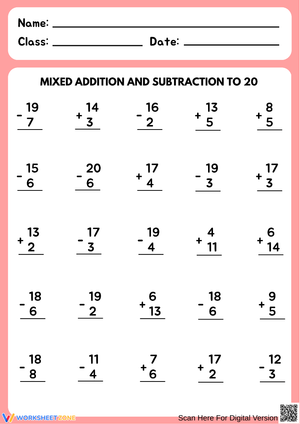
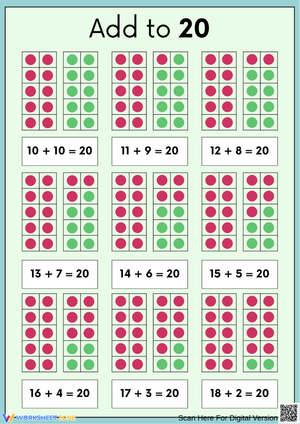
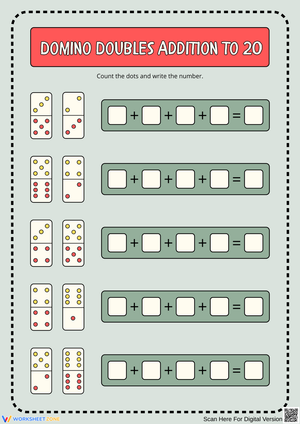
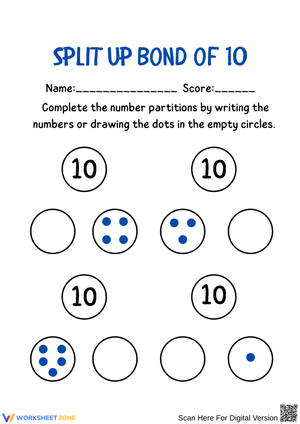
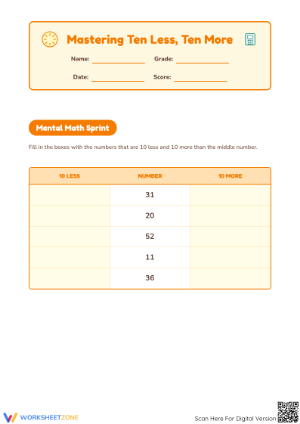
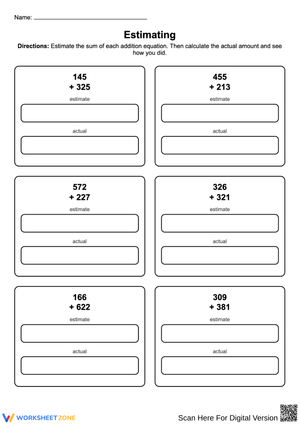
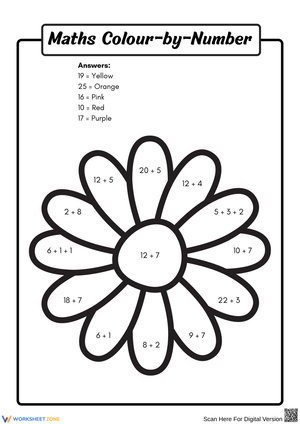
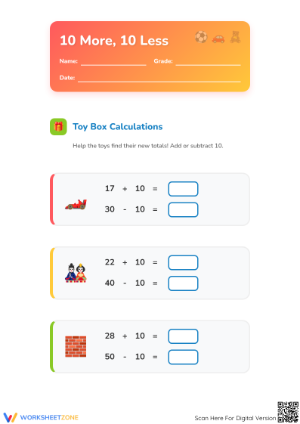
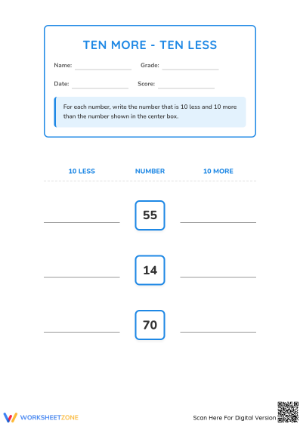
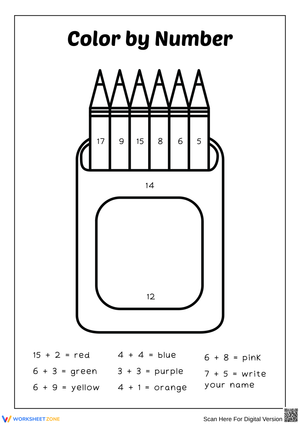
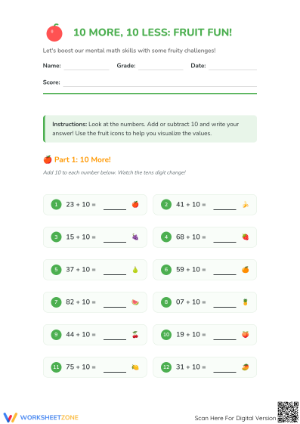
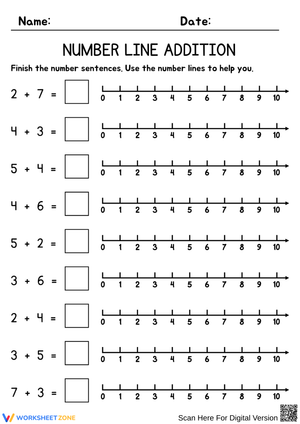
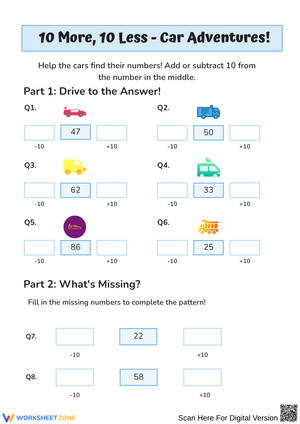
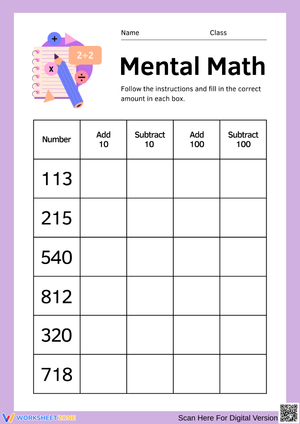
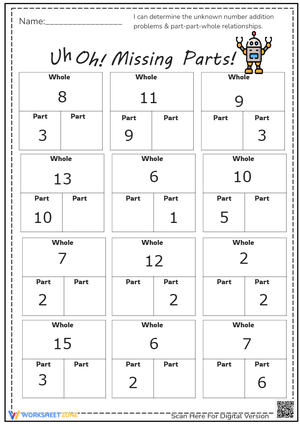
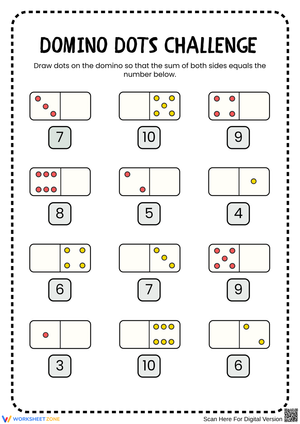
These addition worksheets for 2nd grade give teachers a ready-made progression from two-digit sums without regrouping through three-digit problems with regrouping in multiple columns — the full instructional arc the grade demands. The set addresses place value application, mental math strategy development, and word problems drawn from contexts students actually encounter. Each worksheet drops into a warm-up slot, a station rotation, or a quiet end-of-lesson check-in without requiring prep beyond printing.
Skills These Worksheets Build
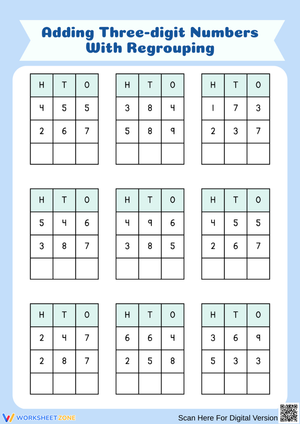
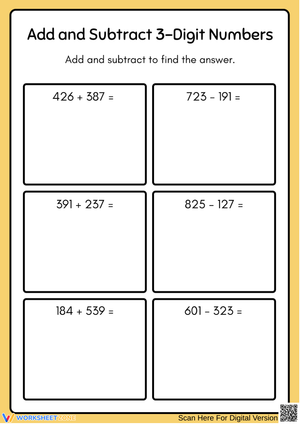
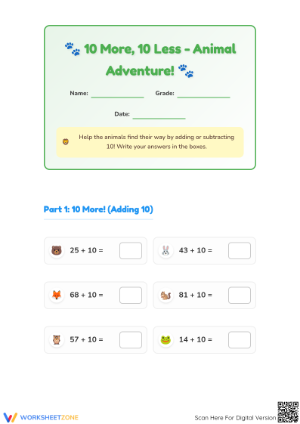
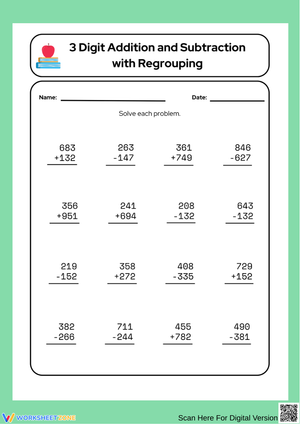
Students work across three main skill areas. The first is two-digit addition — with and without regrouping — in both horizontal and vertical formats. Horizontal equations matter here because they push students to organize place value mentally rather than rely on column position as a default. The second area is three-digit addition, with problems that require regrouping in the ones place, the tens place, or both columns simultaneously. The third is word problems, which appear throughout the set rather than collected at the end. Students who encounter context only after mastering computation tend to treat word problems as a separate skill rather than as a layer of meaning wrapped around arithmetic they already know — keeping word problems distributed corrects that tendency early.
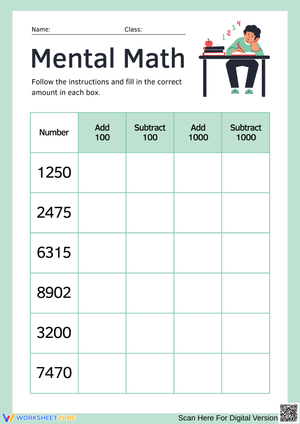
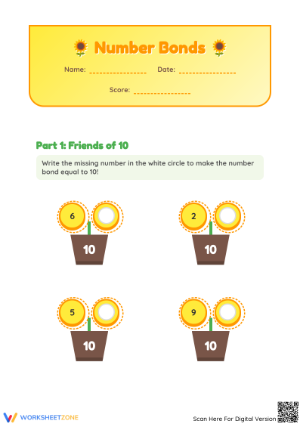
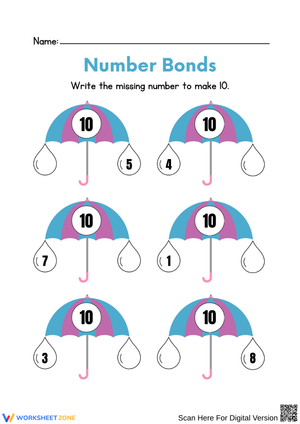
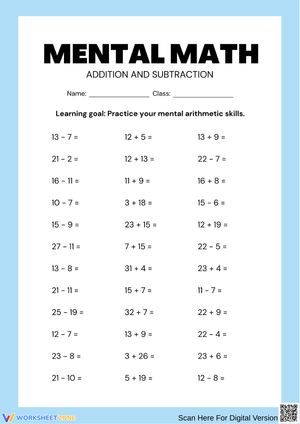
Mental math strategy work is woven in separately. Problems built around making a ten — where 28 + 7 invites students to think 28 + 2 + 5 rather than count up from 28 — sit alongside standard vertical computation. Keeping strategy problems and procedural problems in distinct problem types makes the difference visible to students, not just to the teacher.
Student Error Patterns Teachers Need to Anticipate
The most persistent regrouping error isn't forgetting to carry — it's writing the carried digit correctly and then ignoring it in the next column. A student works through 47 + 35, places a "1" above the tens column, then adds 4 + 3 = 7 instead of 4 + 3 + 1 = 8. The digit is sitting right on their paper and they skip it anyway. Building estimation into the routine before computing — "is your answer closer to 70 or 80?" — creates a self-correction mechanism that catches this more reliably than repeated reminders do.
Three-digit addition reveals a separate problem: column misalignment. Students who have only ever worked on grid-lined paper will sometimes drift when the worksheet uses open space, and hundreds land in the tens column. This warrants one explicit lesson on why alignment carries meaning — each column represents a different unit of value — rather than a standing instruction to write neatly. Students who understand the reason behind the rule maintain it under time pressure; students who treat it as a formatting preference abandon it the moment they're moving quickly.
Standard Alignment
The resources address CCSS.MATH.CONTENT.2.NBT.B.5 — fluently adding and subtracting within 100 using strategies based on place value, properties of operations, and the relationship between addition and subtraction — and CCSS.MATH.CONTENT.2.NBT.B.7, which extends that work to sums within 1,000 using concrete models, drawings, and place-value strategies. In instructional timing, 2.NBT.B.5 is the first-quarter anchor, used to establish whether students arrived with solid number sense from first grade. 2.NBT.B.7 typically enters the classroom in the second quarter and carries through to spring. That distribution means addition worksheets for 2nd grade stay relevant across most of the school year rather than clustering in a single unit.
Fitting These Worksheets Into the Actual Shape of Your Week
The eight minutes before afternoon pickup is one of the most underused instructional windows in second grade. A focused worksheet — four to six problems — fills that gap without requiring a new transition or additional materials. Monday mornings after morning meeting work equally well: a short return to computation before anything new is introduced is a low-stakes re-entry into mathematical thinking after a weekend break. Spaced practice spread across multiple short sessions, rather than concentrated in one long block, produces stronger retention of addition procedures than weekly drills do — and these worksheets are sized to make that daily or twice-weekly pattern manageable.
Station rotations are where independent worksheet practice carries the most sustained weight. A three-station math workshop — one group on independent computation, one using manipulatives at a center, one in small-group instruction with the teacher — runs cleanly only when the independent station requires no explanation mid-rotation. For word problem worksheets specifically, pairing students is worth the management: a student who narrates the problem aloud to a partner catches misreadings that silent solvers carry all the way through to a wrong answer.
Adapting the Set for Students at Different Points in the Progression
Students still consolidating two-digit addition without regrouping can access the regrouping worksheets with one added tool: a blank place-value chart alongside the worksheet. Students record each column's digits in the chart before writing the final answer. That organizational support disappears naturally — stop providing the chart when the student no longer consults it, typically within a few weeks of steady practice. No alternate worksheet needed, no separate track to manage.
Students who work through the addition worksheets for 2nd grade quickly benefit from a constraint rather than more volume. Ask them to solve each problem using two different strategies and mark which one was more efficient. For word problems, having students write a new problem that mirrors the structure but uses different numbers and a different scenario is genuinely harder to rush through — and it requires deeper understanding of the operation than simply computing the answer does.
Frequently Asked Questions
When in the year should teachers introduce three-digit addition?
Most second-grade curricula move into three-digit addition in the second quarter, after students show fluency with two-digit sums and reliable place-value understanding at the tens and ones level. The practical signal: if a student still counts up from the larger addend to solve two-digit problems, they are not ready for three-digit work yet. Adding a hundreds column before the first two are automatic compounds the cognitive load and slows progress rather than accelerating it.
How many worksheets per week supports fluency without wearing students down?
Two to three focused worksheets per week is a solid target for most second graders. The consistent finding in fluency research is that short, frequent practice outperforms long, infrequent sessions. A student who completes one worksheet on Tuesday morning and another on Thursday as an exit task retains more than one who works through five worksheets on Friday afternoon. Regularity matters more than total volume.
What can teachers do when students consistently freeze on word problems?
The addition worksheets for 2nd grade include word problems built around familiar scenarios — combining groups of objects, simple measurement, basic money situations — which reduces the language barrier compared to problems with unfamiliar vocabulary or complex story structures. For students who freeze before they start, the part-part-whole model drawn directly on the worksheet before any computing helps them separate what is known from what is unknown. Students who use this model consistently make substantially fewer setup errors than those who try to extract the equation by reading the problem straight through.
Are these worksheets appropriate for students working above grade level?
The set extends to three-digit addition with regrouping in multiple columns, which is genuinely challenging for most second graders. For students who clear those problems quickly, the adaptation described above — two-strategy solutions, student-generated problems — extends the work without new materials. If a student has fully outpaced the entire set, that is itself useful formative data: the next instructional step is early introduction to four-digit addition or multi-step problems that bridge toward third-grade expectations.













 Interactive Worksheet Maker
 Quiz Maker
 Word Search Maker
 Crossword Puzzle Maker
 Word Scramble Generator
 Sentence Scramble Generator
 Handwriting Worksheet Generator
 Name Tracing Generator
 Fill In The Blank Generator