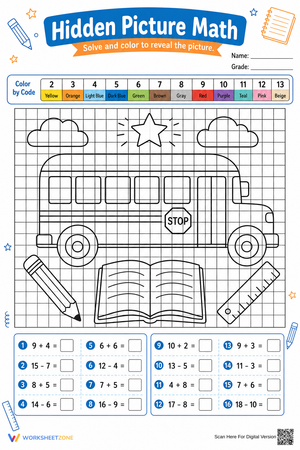
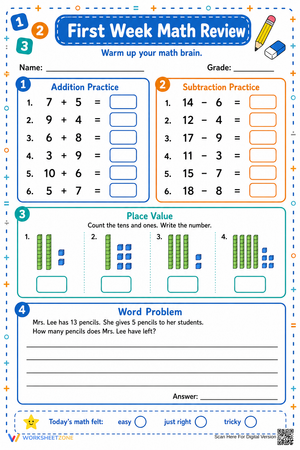
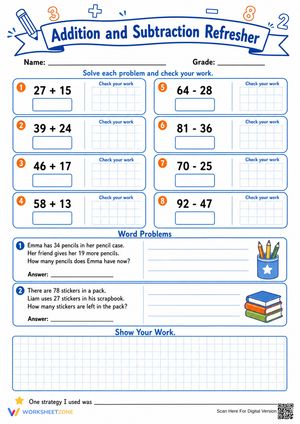
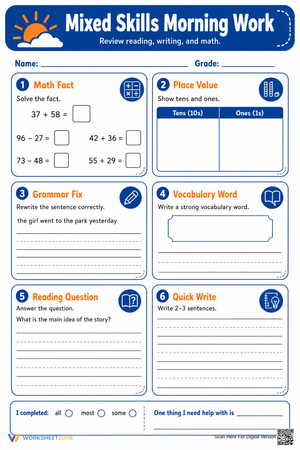
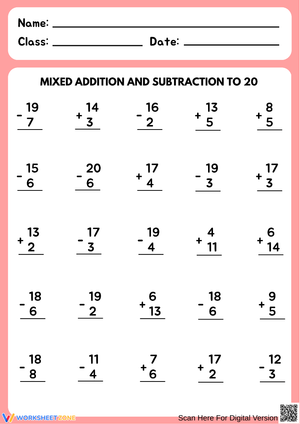
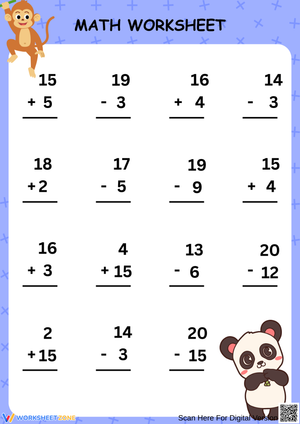
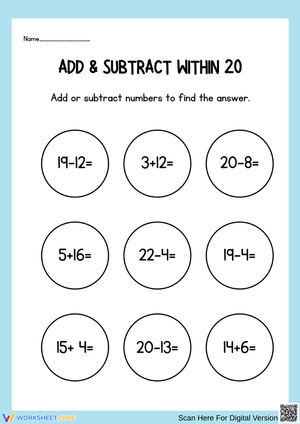
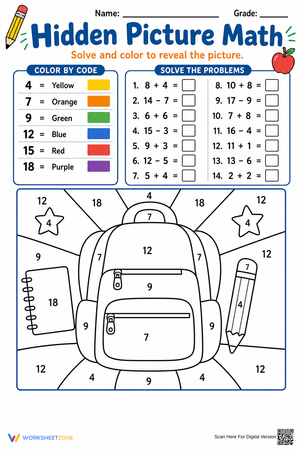
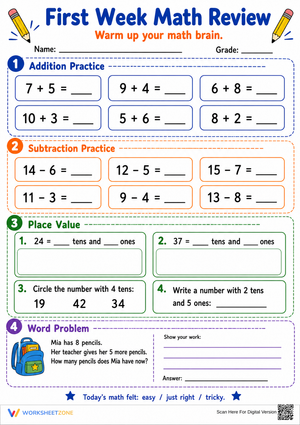
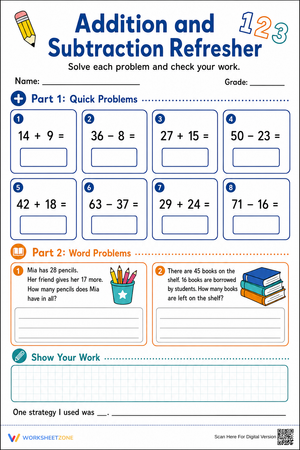
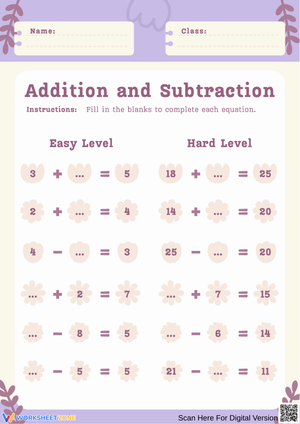
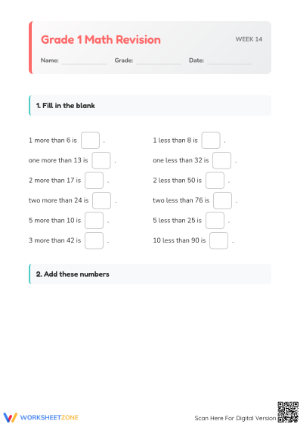
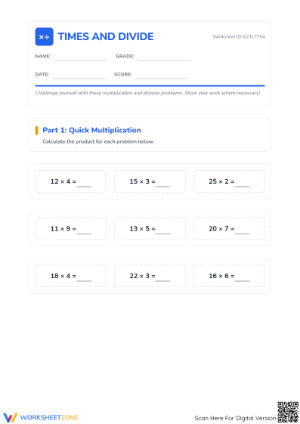
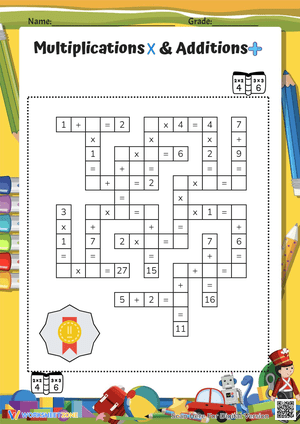
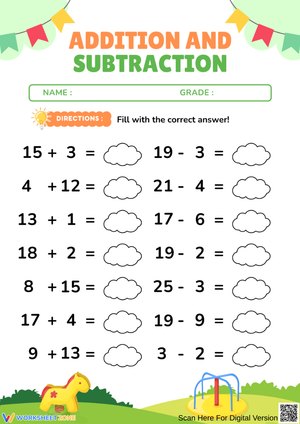
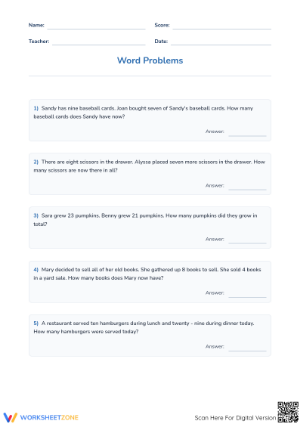
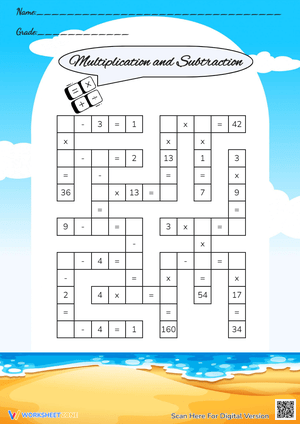
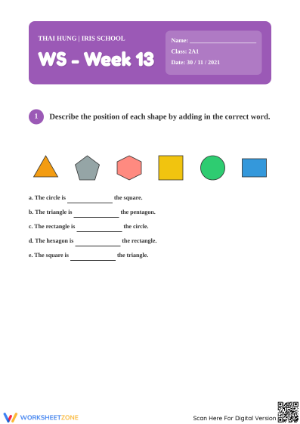
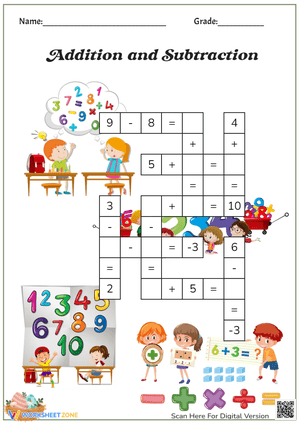
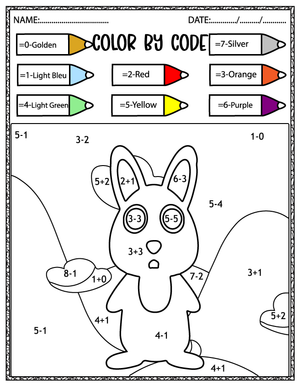
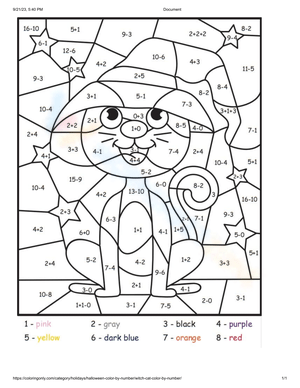
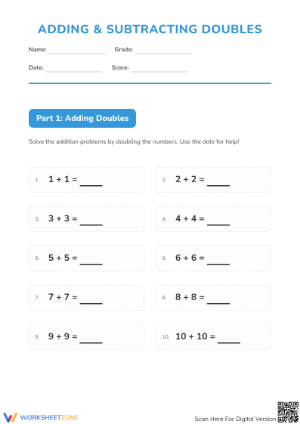
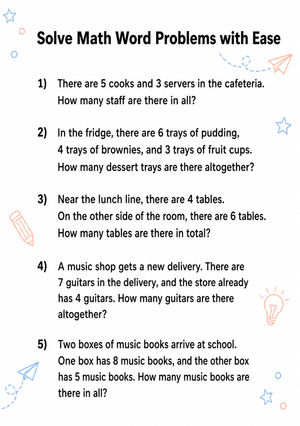
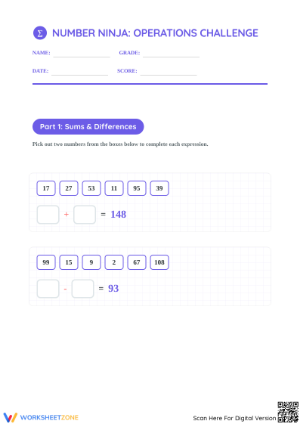
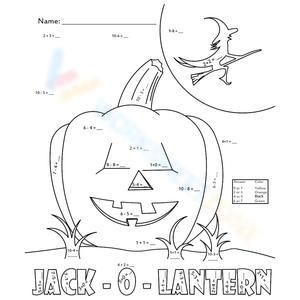
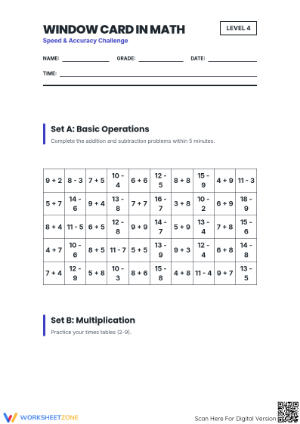
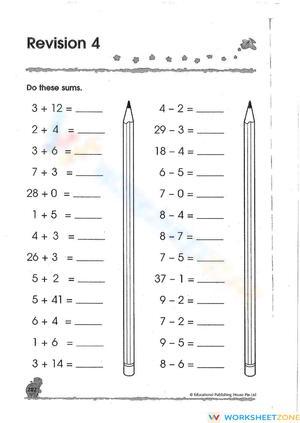
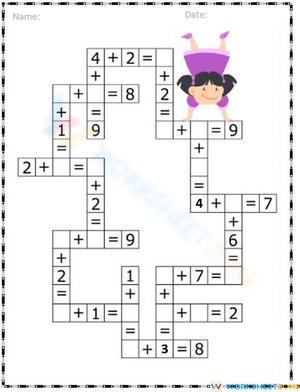
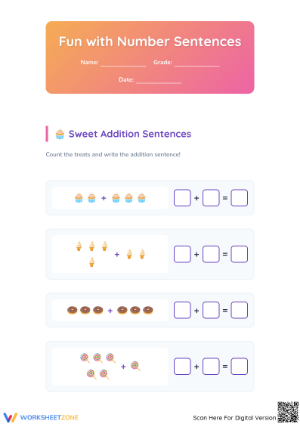
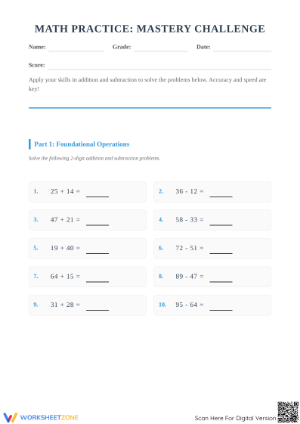
These mixed operation pdf worksheets for 2nd grade address a specific and predictable breakdown: students who can add or subtract accurately when an entire set uses one operation will still revert to the last procedure they ran the moment a mixed set appears. Each worksheet places both operations together, requiring students to read the symbol before calculating rather than carry momentum from the previous problem.
The Skills These Worksheets Build
The core target is operational attention — the habit of checking the sign before proceeding. That sounds minor, but for a second grader who has spent months building fluency on single-operation fact sheets, it genuinely requires a mental reset. Students who breeze through an all-addition set often hit the first subtraction problem and write an addition answer without noticing the switch. These worksheets interrupt that pattern consistently.
Within the set, students practice:
- Identifying operation symbols accurately before calculating
- Adding and subtracting single-digit numbers within 20
- Adding and subtracting two-digit numbers, with and without regrouping
- Maintaining accuracy across a mixed set rather than a uniform one
The number ranges span from basic fact work up through problems within 100, so the same worksheets serve at multiple points in the school year — accessible in early fall with smaller numbers, useful again mid-year when two-digit computation is underway.
Student Errors Worth Anticipating Before You Distribute These
The most revealing error is also the most common: a student completes the worksheet using the correct algorithm, shows their work neatly, and gets roughly a third of the problems wrong — not because of faulty arithmetic, but because they performed the wrong operation. They added where the sign said to subtract. The calculation is fine; the sign-reading isn't. This pattern appears constantly in second grade because fluency drills reward speed, and speed rewards not pausing to check the symbol.
A second pattern surfaces with zero problems. Students still building place value intuition sometimes write zero as the answer for any problem containing a zero — treating the zero as the result rather than reading the full equation. On a mixed worksheet, "15 - 0" gets answered as "0" more often than you'd expect, especially from students who are already making sign-recognition errors. Calling attention to two or three zero problems before students begin cuts that error noticeably.
One pre-solving routine that reduces both patterns: give each student two colors and ask them to mark every addition sign before marking every subtraction sign — all marking done before writing a single answer. Moving across the worksheet twice to categorize signs interrupts the autopilot processing that generates most of these errors.
Standard Alignment
These resources support two core second-grade Common Core standards. 2.OA.A.1 requires students to use addition and subtraction within 100 to solve one- and two-step word problems. The computational fluency built through mixed operation pdf worksheets for 2nd grade is what makes that word problem work tractable — when the calculation itself is reliable, students can direct their attention to problem structure rather than arithmetic. 2.NBT.B.5 calls for fluency in adding and subtracting within 100 using strategies based on place value. Mixed practice, rather than blocked single-operation drill, builds the kind of fluency this standard describes: accurate, flexible, and not dependent on knowing which operation comes next.
Ways to Fit These Worksheets Into Your Instructional Week
Morning work is the most natural placement. The 8 to 10 minutes while attendance is taken and morning announcements finish is long enough for a focused mixed-operation set without requiring a whole-group launch. Students arrive at different times, so the independent format matters. By mid-October, most second graders can pick up a worksheet, recall the brief header directions from the previous day's model, and begin without prompting.
Math centers offer a second strong placement. One rotation can stay dedicated to operational fluency all week, with a different worksheet each day. Pairing this station with a self-check answer key lets students catch their own sign errors before rotating out. That feedback loop — student checks own work, finds an error, looks back at the sign — is more useful than teacher-corrected homework returned the next afternoon.
For formative assessment, collect the mixed operation pdf worksheets for 2nd grade once a week rather than every day. A quick review of five to seven worksheets from one student tells you whether they are consistently misapplying one operation or whether errors are scattered. Consistent errors — always adding regardless of sign — point to a sign-recognition gap. Scattered errors, a few here and there across both operations, usually reflect carelessness that more frequent practice resolves on its own.
Adjusting the Worksheets for Different Learners in the Room
Students still building basic fact recall benefit from having a number line or fact chart at their desk while working. The goal for these students is learning to read the operation symbol — not retrieving facts from memory. Removing the retrieval demand temporarily keeps attention on the actual target skill.
Students who have mastered single-digit mixed problems and are ready for more can extend any worksheet by writing the inverse equation beneath each answer. If the problem reads 54 - 27 = 27, they write 27 + 27 = 54 below it. This turns the existing set into a fact-family exercise without changing the printed material at all.
The worksheets frustrate students who encounter an unfamiliar number range — say, two-digit regrouping problems while they're still comfortable only with numbers under 20. These students disengage rather than attempt the problems. Assign only the rows within their current working range. Completing half a worksheet accurately is more instructionally useful than completing a full one through guessing.
Frequently Asked Questions
Why do second graders need mixed-operation practice if they already know how to add and subtract?
Knowing both operations in isolation is not the same as switching between them on demand. Second grade is when most students shift from counting-on strategies — tapping fingers, counting back from a number — toward direct fact retrieval. That shift makes them faster, but it also makes them more likely to retrieve the wrong operation when they aren't attending to the symbol. Mixed practice trains that attention directly, which single-operation fluency drills don't address.
What's the best way to introduce these to students who've only done single-operation sheets before?
Before distributing any mixed operation pdf worksheets for 2nd grade to students new to the format, spend five minutes at the board doing what you'll ask them to do: read the sign aloud before calculating. Write five problems on the board — three addition, two subtraction in random order — and have the class call out the operation name before anyone writes an answer. That single oral preview, done once, cuts sign-oversight errors on the first independent attempt considerably.
How many problems is appropriate for a morning warm-up set?
For most second graders, 8 to 12 problems is the right count for a morning warm-up. Longer sets during that window tend to produce more errors toward the end as attention drops — errors that reflect fatigue rather than actual skill gaps. If a student finishes in under four minutes with most answers correct, that's a signal they're ready for a higher number range, not necessarily more problems on the same worksheet.
Do these work well as homework?
They function better in the classroom than at home, especially for students still building the sign-checking habit. At home, there's no one to catch the error pattern in real time, and a parent going through an assignment full of wrong-operation answers can inadvertently reinforce the wrong message — "you got these all wrong" — rather than the useful one: "you ignored the minus sign." If homework is required, send a worksheet that stays within a number range the student handles confidently, so the only variable being practiced is attention to the symbol itself.













 Interactive Worksheet Maker
 Quiz Maker
 Word Search Maker
 Crossword Puzzle Maker
 Word Scramble Generator
 Sentence Scramble Generator
 Handwriting Worksheet Generator
 Name Tracing Generator
 Fill In The Blank Generator