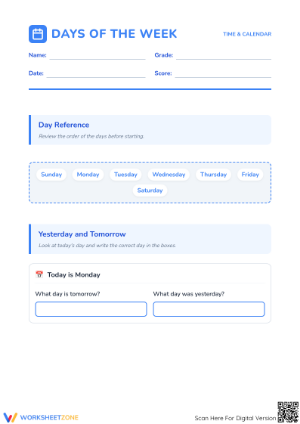
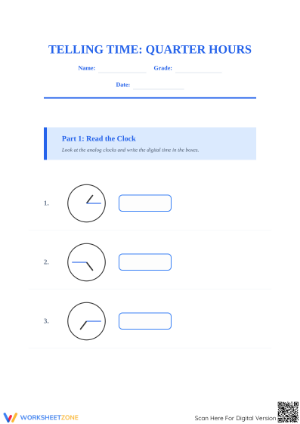
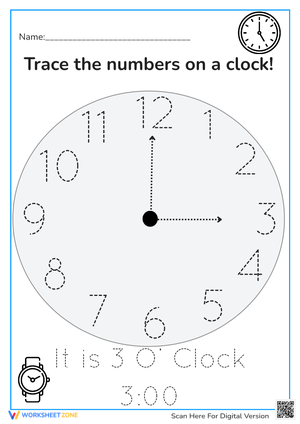
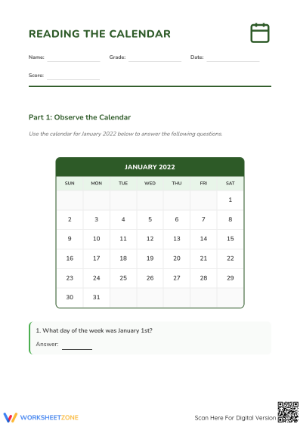
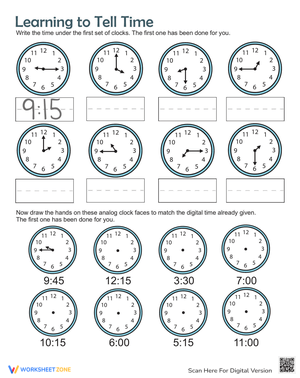
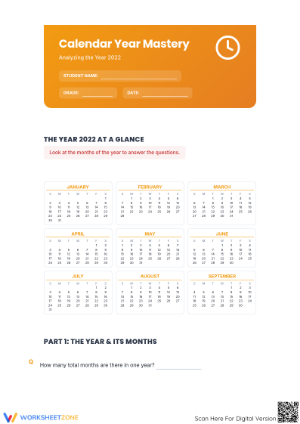
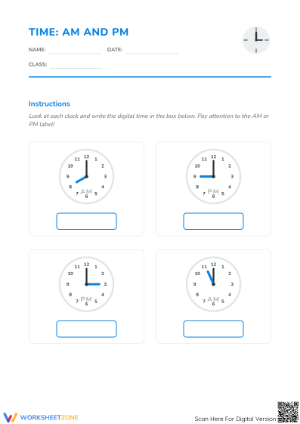
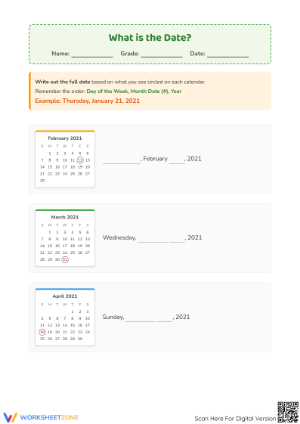
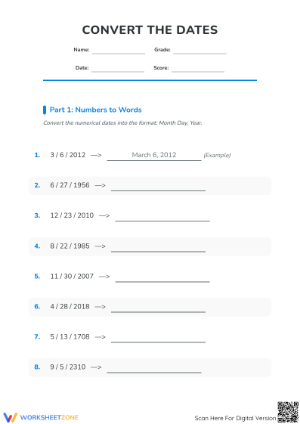
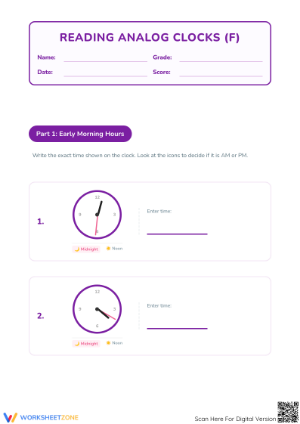
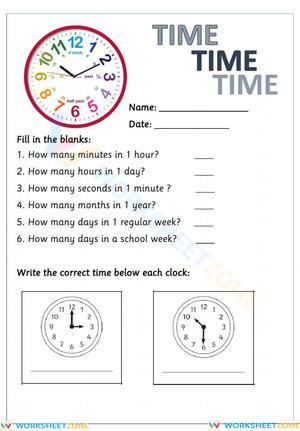
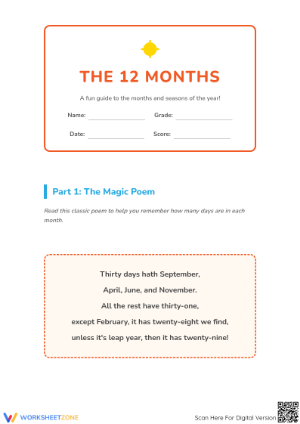
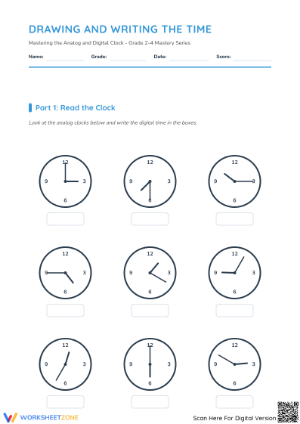
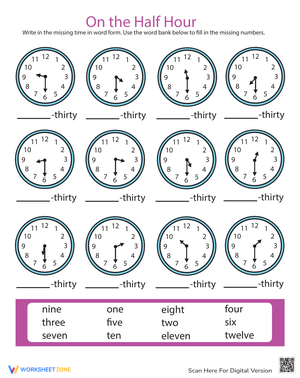
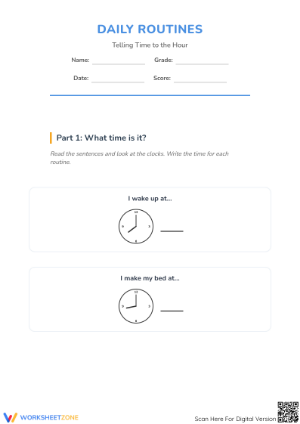
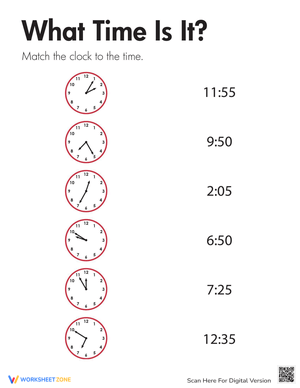
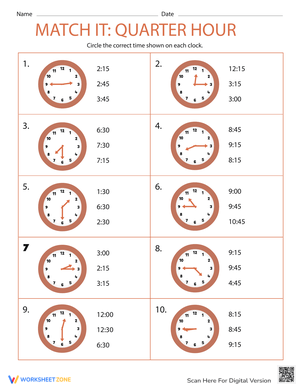
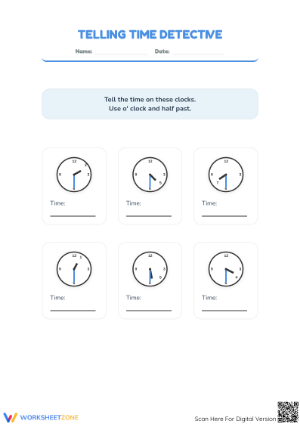
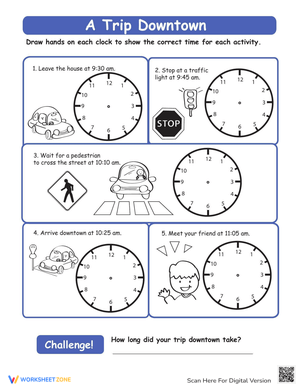
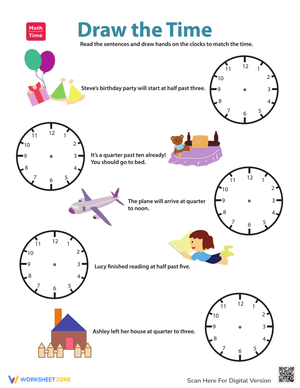
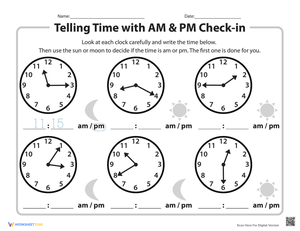
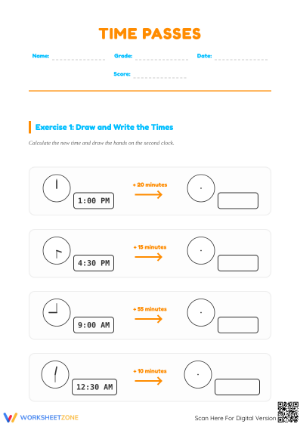
These 2nd grade date and time pdf worksheets give teachers a set of ready-to-print resources covering the full range of time and calendar skills students are expected to master in second grade — reading analog and digital clocks to the nearest five minutes, distinguishing a.m. from p.m., and working with a calendar accurately. Because the resources are PDFs, clock faces stay round and calendar grids stay aligned regardless of which printer or device opens the file.
The Specific Skills Targeted
Time is abstract in a way that most second-grade math topics are not. You cannot hand a student a handful of minutes the way you can hand them base-ten rods. That abstraction is exactly why repeated, targeted practice matters at this grade level — students need many encounters with the concept before it settles into fluency.
Each worksheet in the set focuses on one or more of the following:
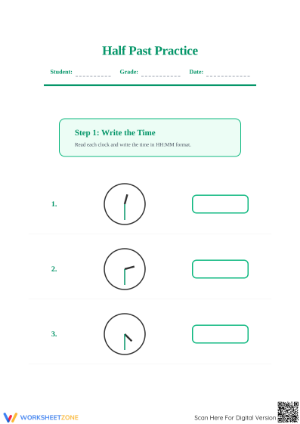
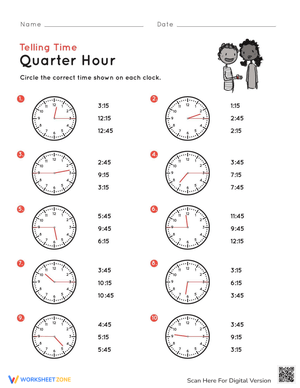
- Reading analog clocks and recording the time in digital format
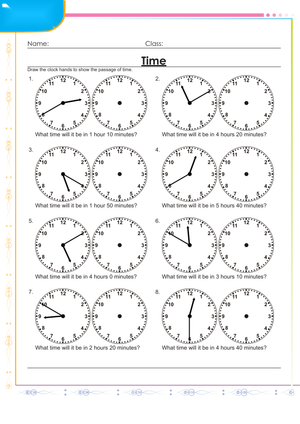
- Drawing hands on blank clock faces to match a written or digital time
- Skip counting by fives around the clock face to determine minute values
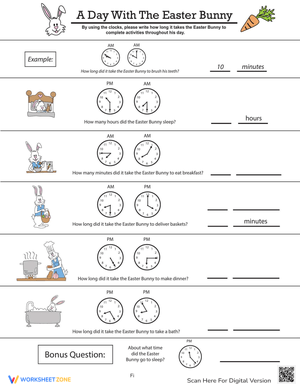
- Classifying activities as a.m. or p.m. based on a described daily routine
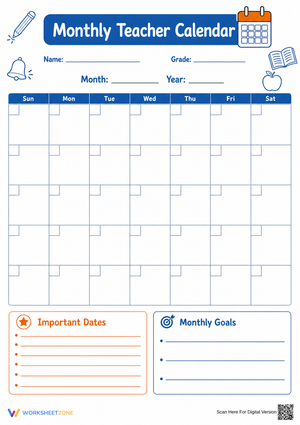
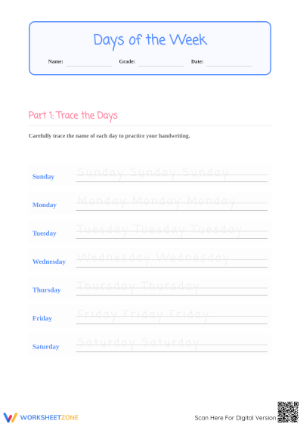
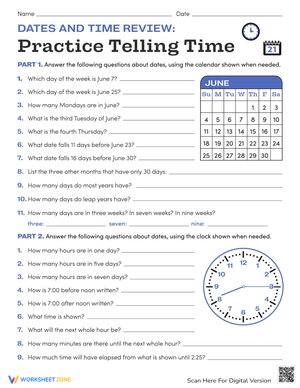
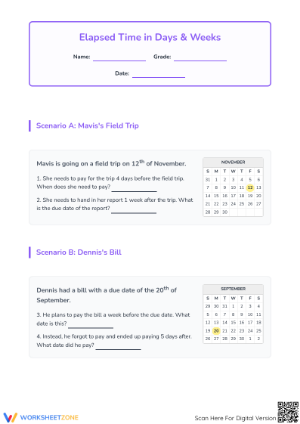
- Reading a calendar to locate specific dates and identify days of the week
- Answering elapsed-time word problems using familiar school-day scenarios
The calendar work asks students to do more than name months in order. Some worksheets have students determine which day of the week a specific date falls on, or count how many Thursdays appear in a given month — tasks that require actually using the grid as a reference tool rather than reciting memorized sequences.
Errors That Show Up in Student Work — and What to Do About Them
The most persistent clock-reading error in second grade is misreading the hour hand when the minutes are large. At 4:45, the hour hand sits much closer to the 5 than the 4, and most students write 5:45 without pausing. They read what looks like the nearest number rather than understanding that the hour hand moves proportionally throughout the hour. Worksheets that deliberately include times in the 4:40–4:59 range — where the hour hand sits visually near the next number — force students to reckon with this movement rather than avoid it.
One classroom move that cuts this error significantly: before students read any clock on a worksheet, have them trace the hour hand in red crayon and the minute hand in blue. Tracing slows the process and requires them to identify each hand before they attempt to read the time. Students who skip this step and jump straight to writing an answer tend to produce more swapped-hand errors on independent work.
On the a.m./p.m. side, students often know that morning is a.m. but lose track of where p.m. begins. Noon trips up a surprising number of second graders — some write it as 12:00 a.m. because, in their reasoning, you haven't gotten to afternoon yet. Worksheets that include noon and midnight as explicit cases address this before it becomes a fixed misunderstanding.
Standard Alignment
The 2nd grade date and time pdf worksheets in this set align with 2.MD.C.7, the Common Core standard requiring students to tell and write time from analog and digital clocks to the nearest five minutes, using a.m. and p.m. This standard marks a real shift from first grade, where the expectation is reading to the hour and half-hour only. The jump to five-minute intervals requires students to understand the full rotation of the minute hand and connect it to skip counting by fives — a number pattern they are building at the same time in their base-ten work. Treating clock reading as a reinforcement of skip counting, rather than an isolated unit, tends to accelerate fluency for both skills simultaneously.
Fitting These Worksheets Into Your Math Block
Most teachers introduce time and calendar as a discrete unit, but the concepts hold better when practiced in small doses across the year. A single clock-reading worksheet used as a Monday warm-up after morning meeting, or dropped into the eight minutes before afternoon pickup, keeps the skill active in students' memory long after the formal unit ends. Students who work through two or three clock problems a day from October through April arrive at the spring assessment with genuine fluency rather than the surface familiarity that fades a few weeks after a focused unit wraps up.
Because 2nd grade date and time pdf worksheets print with consistent formatting, they laminate cleanly — clock faces stay crisp and calendar grids stay legible after the plastic layer is added. A laminated set stocked in a math center alongside dry-erase markers stretches through multiple rotations and across several cohorts of students. Students draw hands, fill in calendar grids, and write times with markers, then wipe and pass the worksheet to the next group.
The a.m./p.m. worksheets pair well with a brief opening discussion — asking students to name one thing they do at 7:00 a.m. versus 7:00 p.m. makes the abstract distinction concrete before independent practice begins, which reduces the number of students who stall mid-worksheet trying to reason through it alone.
Reaching Students at Different Points in Their Understanding
2nd grade date and time pdf worksheets work best when matched to where a student actually is, not where the pacing guide says they should be. For students who are still uncertain at the hour and half-hour, restrict clock work to those two benchmarks before introducing five-minute intervals. Adding a printed skip-counting strip — 5, 10, 15... 60 — alongside the worksheet gives those students a concrete reference without requiring them to hold the count in working memory while also tracking the minute hand. That is two distinct cognitive tasks at once; removing one frees up enough attention to make real progress on the other.
Students who have five-minute reading solid are ready for elapsed-time problems: if music class starts at 9:15 a.m. and ends at 10:00 a.m., how long is music class? That question requires holding a start time in memory, counting forward in five-minute jumps, and recording a duration — three separate steps. It reaches well beyond the core standard without leaving the topic entirely, and it gives students who need more challenge something genuinely demanding to work through.
Frequently Asked Questions
What clock skills should students have in place before starting five-minute interval practice?
Students should be comfortable reading clocks to the hour and half-hour — a skill typically covered in first grade — and should be able to skip count by fives up to 60. Without that skip-counting fluency, five-minute interval reading is mostly guesswork. If the count is shaky, a few days of number-line work before introducing clock worksheets will show up immediately in student accuracy.
Do these worksheets cover both analog and digital clock formats?
Yes. Each worksheet addresses both representations — students read an analog clock and write the digital time, or read a digital display and draw the corresponding hands on a blank face. That side-by-side format builds the understanding that both clocks describe the same moment, a connection many second graders need to see made explicit before they make it on their own.
How do I explain a.m. and p.m. when students keep reversing them?
Anchor both terms to fixed personal events rather than defining them in the abstract. Most second graders know they eat lunch around noon and go to sleep around 8:00 or 9:00. From those anchors, they can reason outward: if dinner is at 6:00 p.m., then 7:00 a.m. must be well before school. The daily-routine word problems in these worksheets reinforce exactly that reasoning, which holds up more durably than a definition memorized once during a vocabulary lesson.
Can these be sent home for additional practice?
These print clearly on standard letter-size paper, and the PDF format means clock faces and calendar grids will not shift or distort on home printers with different margin settings. Parents who are not math teachers can still support practice at home because the task is visible on the page — draw the hands, write the time, fill in the calendar — without requiring any explanation beyond what the worksheet itself shows.













 Interactive Worksheet Maker
 Quiz Maker
 Word Search Maker
 Crossword Puzzle Maker
 Word Scramble Generator
 Sentence Scramble Generator
 Handwriting Worksheet Generator
 Name Tracing Generator
 Fill In The Blank Generator