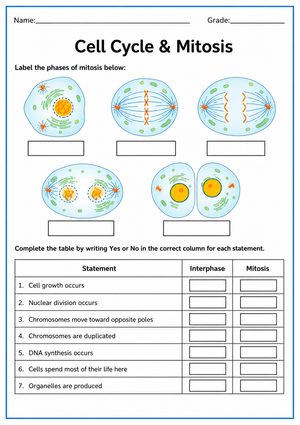
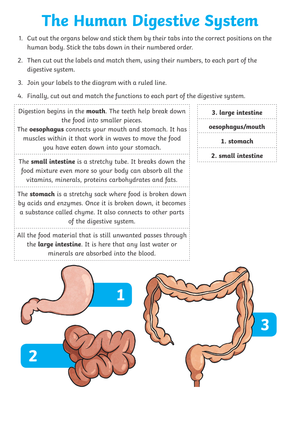
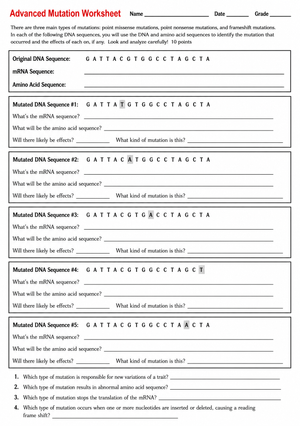
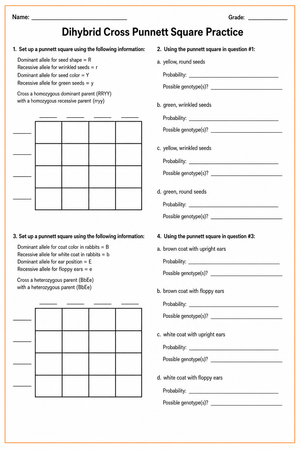
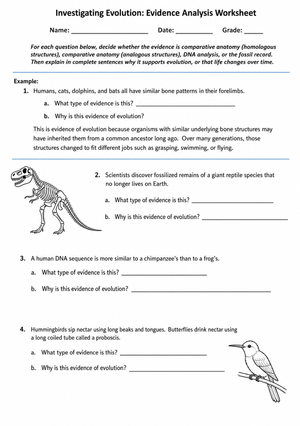
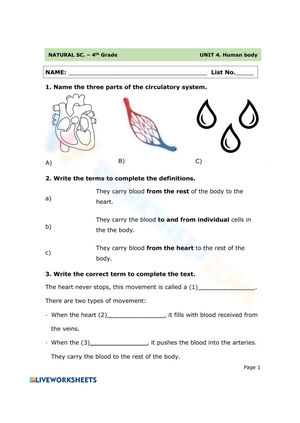
These 11th grade human body systems pdf worksheets give biology teachers structured practice that matches what the curriculum actually demands at this level — not the organ-naming exercises from middle school, but tasks where students trace multi-system responses to physiological stress, explain negative feedback at the cellular level, and connect anatomical structure directly to function. The set covers all eleven major organ systems with enough format variety to carry a full unit or supplement whatever sequence a teacher already has running.
What the Set Covers Across All Eleven Systems
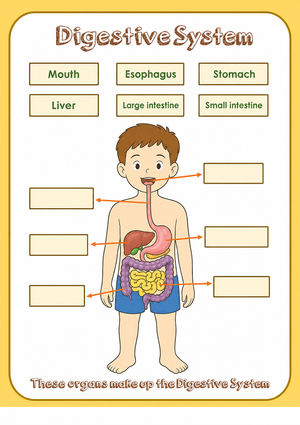
Every major organ system in Grade 11 biology gets dedicated worksheet coverage: circulatory, respiratory, digestive, nervous, endocrine, immune, muscular, skeletal, excretory and urinary, reproductive, and integumentary. The circulatory worksheets go beyond basic heart diagrams — students identify specific valve names, trace blood through each circuit, and answer short-answer questions connecting atherosclerosis to flow dynamics. Respiratory worksheets move from lung anatomy into alveolar gas exchange, asking students to explain why partial pressure gradients drive O₂ movement into the bloodstream rather than simple diffusion rate.
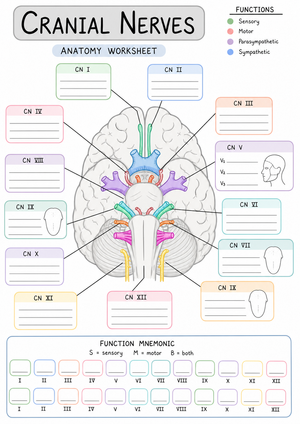
The nervous system worksheets are among the most format-rich in the set. Students label neuron structure, mark the stages of an action potential on a voltage-versus-time graph, and trace the full synaptic sequence from vesicle release to receptor binding. Endocrine worksheets pair gland identification with feedback loop diagrams — students annotate the negative feedback loop for blood glucose regulation and contrast it with the positive feedback mechanism that drives uterine contractions during labor. The immune worksheets distinguish innate from adaptive responses and ask students to explain memory B cell function in a secondary immune response, which is exactly the level of specificity AP Biology prompts require.
Format types across the 11th grade human body systems pdf worksheets include:
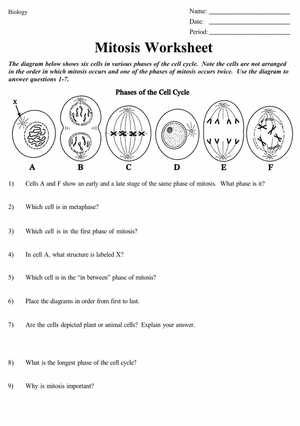
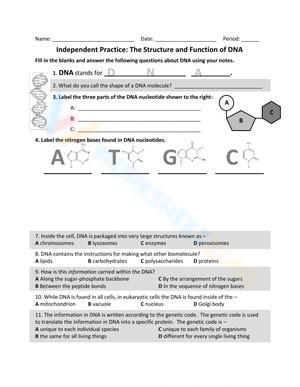
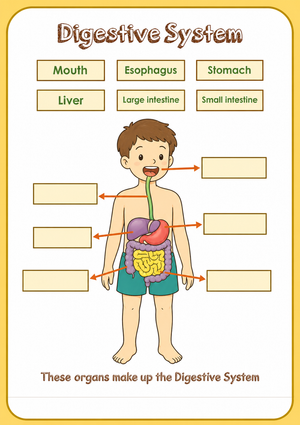
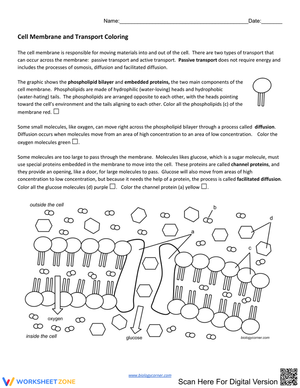
- Detailed anatomical diagrams with blank label lines for structures like the nephron, neuron, and heart valves
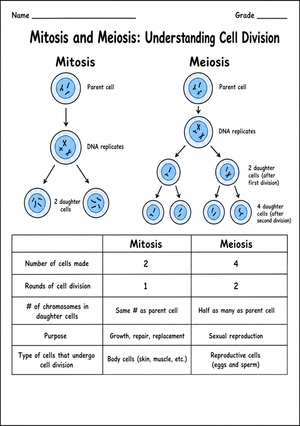
- Compare-and-contrast tables for paired systems — somatic versus autonomic, endocrine versus nervous
- Feedback loop diagram annotation, covering both negative and positive mechanisms
- Vocabulary exercises built around Latin and Greek roots, giving students a decoding strategy that transfers across the unit
- Short-answer analysis questions that require mechanistic explanations, not recalled facts
- Case study worksheets presenting a physiological scenario and asking students to identify which systems are responding and why
Common Errors Worth Watching For Before They Reach the Unit Test
At the 11th grade level, the predictable errors are conceptual rather than just label placement. The most persistent one involves confusing negative and positive feedback: students write "the body uses feedback to maintain balance" correctly in the abstract, then draw a positive feedback loop for blood glucose regulation, inverting the mechanism entirely. A second common error appears in nervous system work — students learn that neurotransmitters cross the synapse, but when asked what happens at the postsynaptic membrane, they write that the neurotransmitter "enters the cell," conflating chemical signaling with electrical conduction.
Nephron diagrams expose a third persistent problem. Students can label the glomerulus, Bowman's capsule, and the collecting duct with reasonable accuracy, but when asked why glucose appears in the filtrate and then disappears before fluid reaches the collecting duct, many describe reabsorption as the kidney "deciding" to keep glucose rather than explaining carrier-mediated transport. The case study worksheets force students to write process explanations rather than recall vocabulary, which surfaces these gaps before a unit exam does.
Fitting These Resources Into Your Lesson Sequence Without Losing Instructional Time
The diagram worksheets work well as warm-up activators — five to eight minutes at the start of class where students label a structure from the previous day's content. That low-stakes retrieval matters in body systems units because the vocabulary load is heavy and students who don't review regularly start mixing up terminology across systems by mid-unit. Running a quick nephron diagram on the day class moves from excretory to reproductive content takes almost no setup and catches the students who mentally filed the nephron away the moment that lesson ended.
The case study worksheets serve a different instructional purpose and belong in the middle or end of a system's coverage, not at the start. A class that has just completed cardiovascular anatomy is ready to work through a hypertension scenario involving arterial compliance; that same worksheet on day one creates too much cognitive load before students have a working vocabulary. Pairing a structural diagram with a functional case study in the same 55-minute block — label the nephron, then trace what happens to a dehydrated athlete's filtration rate — is one of the more efficient uses of class time in a physiology unit.
The 11th grade human body systems pdf worksheets in this set also work well as station-rotation materials during review weeks. Seven or eight stations, each covering one organ system with a different format — one diagram, one compare-and-contrast table, one short-answer question — keeps review from feeling repetitive and gives teachers a clearer read on which systems individual students still struggle with before the cumulative assessment.
Adjusting the Set for a Range of Student Readiness Levels
Students entering Grade 11 with strong prior science preparation can move directly into the case study and short-answer worksheets. For students still building anatomical vocabulary — common where middle school life science coverage was inconsistent — starting with the root-based vocabulary exercises gives them a decoding strategy before they encounter terms like "glomerular filtration" or "depolarization" in a diagram context. A student who knows that nephro means kidney will parse "nephrologist" and "nephritis" without being told, and that kind of transfer pays off across every system they cover.
For students in AP Biology or dual-enrollment coursework, the feedback loop and case study worksheets absorb teacher-added extension questions naturally — identify the specific hormone responsible, name the target tissue, or predict what a blood osmolarity graph would look like during the described scenario. No additional prep required. The compare-and-contrast tables also work well for students who process relationships more visually, since the table structure organizes information spatially rather than requiring paragraph-form explanations from scratch.
Standard Alignment
These worksheets align to NGSS HS-LS1-2 and HS-LS1-3, both within the "From Molecules to Organisms: Structures and Processes" domain. HS-LS1-2 asks students to develop and use models to illustrate the hierarchical organization of interacting systems — the work done in diagram labeling and case study worksheets. HS-LS1-3 targets feedback mechanisms that maintain a living system's internal conditions, which is the explicit focus of the endocrine, nervous, and excretory worksheet materials. Teachers following the AP Biology curriculum framework will find alignment to Big Idea 2 and Big Idea 3 as well, particularly in the nervous and endocrine system resources.
Frequently Asked Questions
Are these worksheets appropriate for AP Biology students or only standard-track biology?
Most worksheets are written at a level appropriate for standard-track Grade 11 biology. AP students benefit most from the case study and short-answer worksheets, which require mechanism-level explanations rather than identification. Teachers can extend those worksheets with prompts asking students to predict experimental outcomes or connect molecular events to systemic responses — the reasoning style AP free-response questions assess.
Does each worksheet stay within one organ system, or do some address system interactions?
Each worksheet focuses primarily on one system, which keeps the cognitive demand manageable while students build foundational knowledge. Several case study worksheets do require students to identify how two or three systems respond simultaneously to a single physiological event, and those work best after single-system coverage is solid.
How do these worksheets fit into a homeostasis unit?
The feedback loop diagrams and scenario-based case studies are the most effective formats for homeostasis instruction. Introduce the concept as a standalone lesson first, then use the 11th grade human body systems pdf worksheets for individual systems to show how each one participates in maintaining internal balance. By the endocrine unit, students are annotating feedback loops rather than encountering them for the first time.
Can these worksheets be assigned digitally?
The resources are PDF files that print cleanly and distribute easily through any learning management system. Teachers who assign these digitally report that students can complete diagram sections in annotation apps, though printing remains the more reliable option for diagram-heavy worksheets where spatial accuracy and hand-drawn label placement matter.












 Interactive Worksheet Maker
 Quiz Maker
 Word Search Maker
 Crossword Puzzle Maker
 Word Scramble Generator
 Sentence Scramble Generator
 Handwriting Worksheet Generator
 Name Tracing Generator
 Fill In The Blank Generator