


























Views
Downloads

Essential Protein Synthesis Worksheet | Grade 9-12 Biology
Paste this activity's link or code into your existing LMS (Google Classroom, Canvas, Teams, Schoology, Moodle, etc.).
Students can open and work on the activity right away, with no student login required.
You'll still be able to track student progress and results from your teacher account.
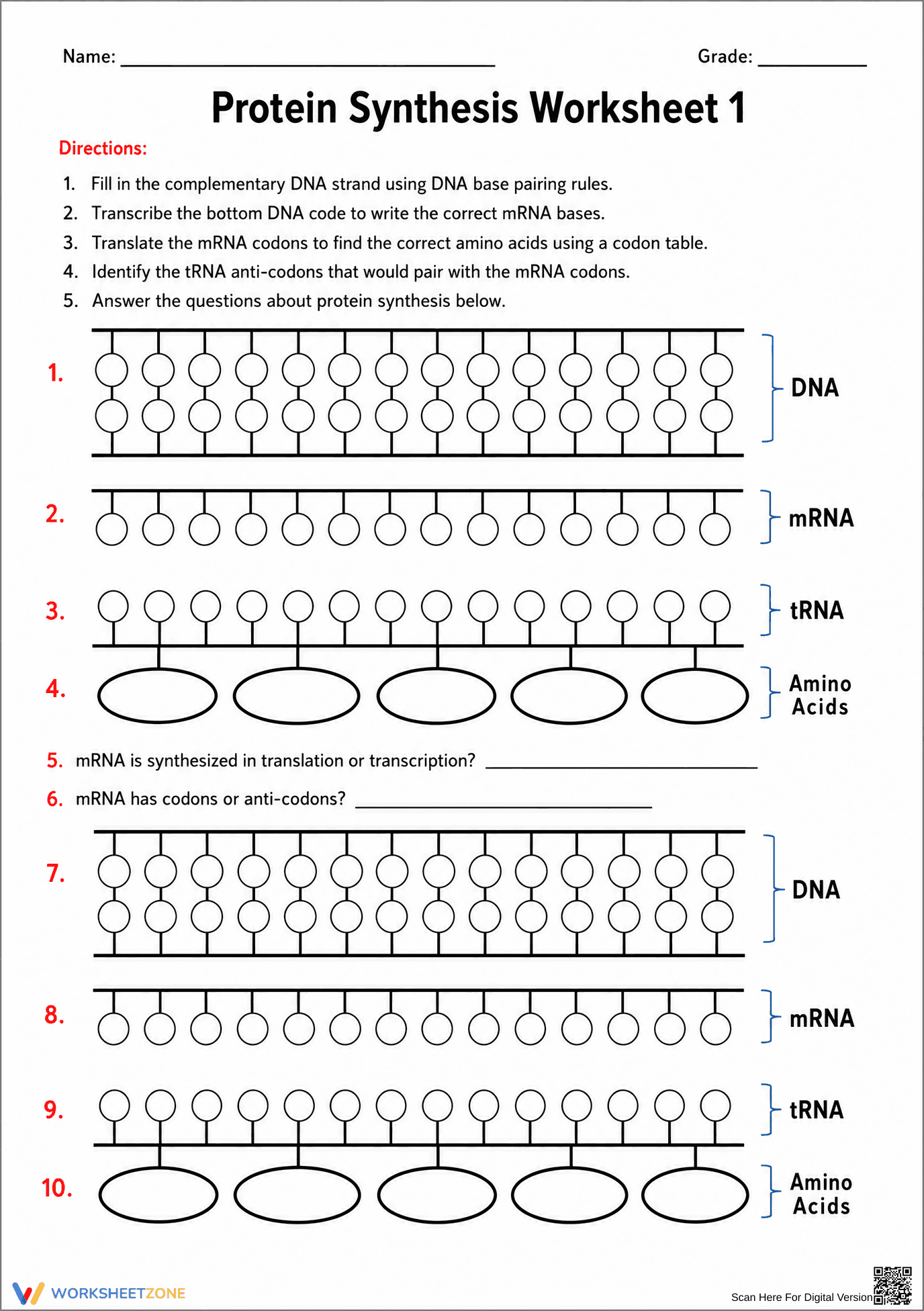
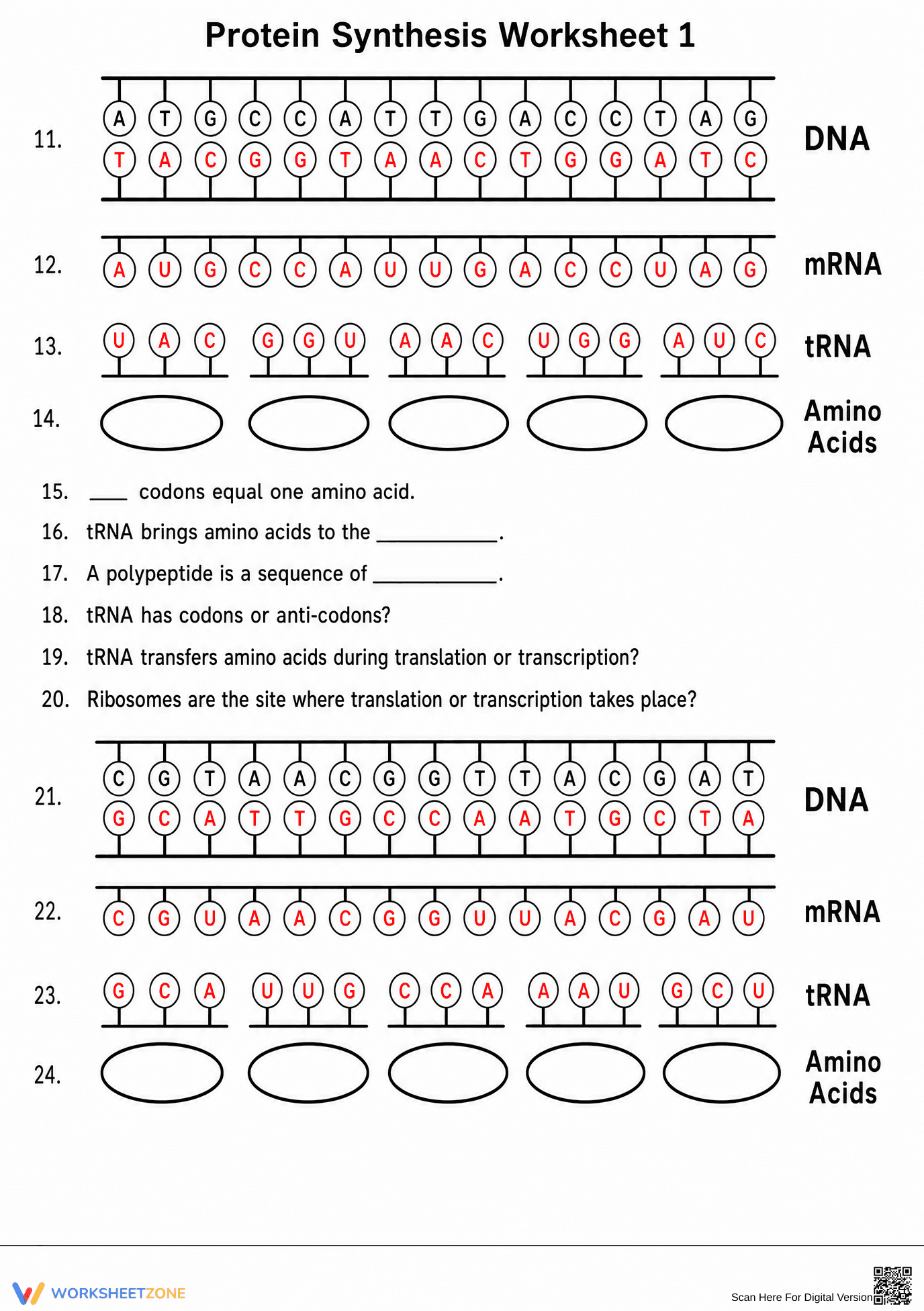
This comprehensive protein synthesis worksheet provides students with structured practice in the central dogma of molecular biology. By transcribing DNA to mRNA and translating codons into amino acids, learners gain a concrete understanding of how genetic information flows. This resource ensures students master the mechanics of protein production through repetitive, high-quality sequencing tasks.
At a Glance
- Grade: 9-12 · Subject: Biology
- Standard:
HS-LS1-1— Explain how DNA structure determines protein structure and essential cellular functions- Skill Focus: Transcription and Translation
- Format: 2 pages · 24 problems · Answer key included · PDF
- Best For: Independent practice or sub plans
- Time: 30–45 minutes
This 2-page PDF features 24 distinct tasks designed to reinforce molecular genetics. Students engage with visual diagrams of DNA double helices, mRNA single strands, and tRNA anti-codons. The layout includes fill-in-the-blank sequences for base pairing and multiple-choice questions that clarify the differences between transcription and translation. A full answer key is provided for rapid grading and student self-correction.
The zero-prep workflow for this resource is designed for maximum efficiency. First, print the 2-page document (30 seconds). Next, distribute the sheets to students along with a standard codon chart (1 minute). Finally, review the completed sequences using the included answer key to provide immediate feedback (5 minutes). This streamlined process makes it an ideal choice for emergency sub plans or last-minute review sessions where teacher prep time must be kept under 2 minutes.
This resource is aligned to `HS-LS1-1`, which requires students to construct an explanation based on evidence for how the structure of DNA determines the structure of proteins. It specifically targets the sub-skills of base-pairing and sequence translation. Both standard codes can be copied directly into lesson plans, IEP goals, or district curriculum mapping tools.
Use this worksheet as a formative assessment immediately following a lecture on the central dogma. It serves as an excellent bridge between direct instruction and more complex lab activities. Teachers should observe students during tasks 5 and 6 to ensure they can distinguish between the synthesis of mRNA and the assembly of polypeptides. Completion typically takes 30 to 45 minutes depending on student familiarity with codon charts.
This worksheet is tailored for high school biology students, including those in Honors or AP tracks who need to solidify their foundational sequencing skills. It is also appropriate for advanced 8th-grade life science classes. Pair this resource with a visual anchor chart of the genetic code or a protein synthesis simulation for a complete instructional unit.
According to the RAND AIRS 2024 analysis of secondary science curriculum, repetitive practice in molecular sequencing is vital for long-term retention of the central dogma. This worksheet directly addresses the requirements of HS-LS1-1 by requiring students to perform the mechanical steps of transcription and translation, moving from DNA templates to amino acid chains. Research by Fisher & Frey (2014) emphasizes that scaffolded practice with visual models—such as the DNA and mRNA diagrams provided here—helps students internalize abstract biological processes. By completing 24 targeted tasks, learners build the procedural fluency necessary for higher-order analysis of mutations and gene expression. This resource provides a reliable, evidence-based method for ensuring students can accurately explain how the structure of DNA determines the structure of proteins which carry out essential life functions. It is a high-utility tool for any standards-aligned biology classroom.


