


























Views
Downloads

DNA Proteins and Mutations Investigation | Essential Biology
Paste this activity's link or code into your existing LMS (Google Classroom, Canvas, Teams, Schoology, Moodle, etc.).
Students can open and work on the activity right away, with no student login required.
You'll still be able to track student progress and results from your teacher account.
This high school biology worksheet guides students through the complex process of protein synthesis and the impact of genetic mutations. By transcribing DNA sequences and translating them into amino acids, learners visualize how specific changes in the genetic code alter protein structure and function.
At a Glance
- Grade: 9-12 · Subject: Biology
- Standard:
HS-LS1-1— Construct an explanation based on evidence for how DNA determines protein structure- Skill Focus: Transcription, Translation, and Mutation Analysis
- Format: 4 pages · 13 problems · Answer key included · PDF
- Best For: High school genetics and molecular biology units
- Time: 45–60 minutes
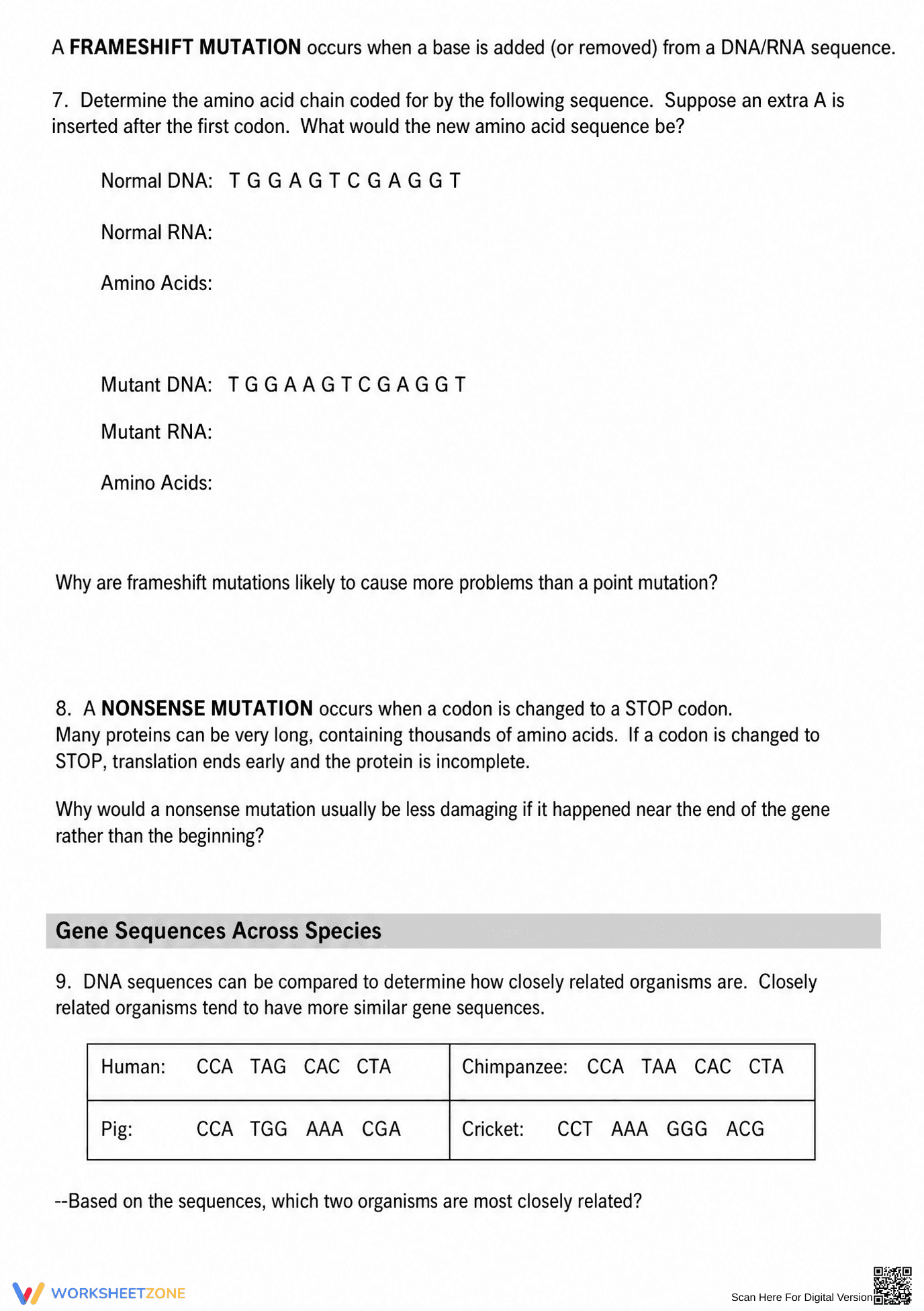
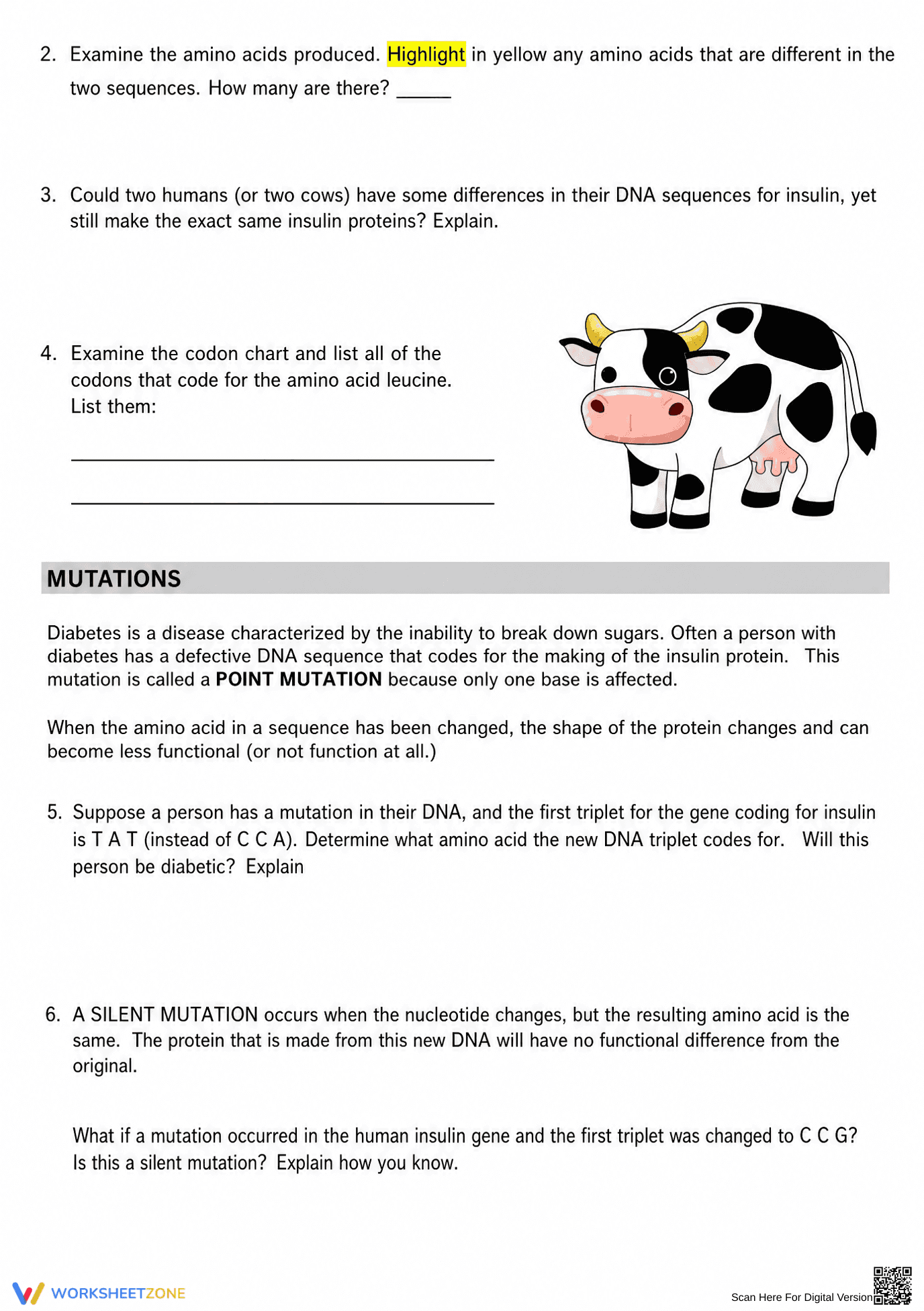
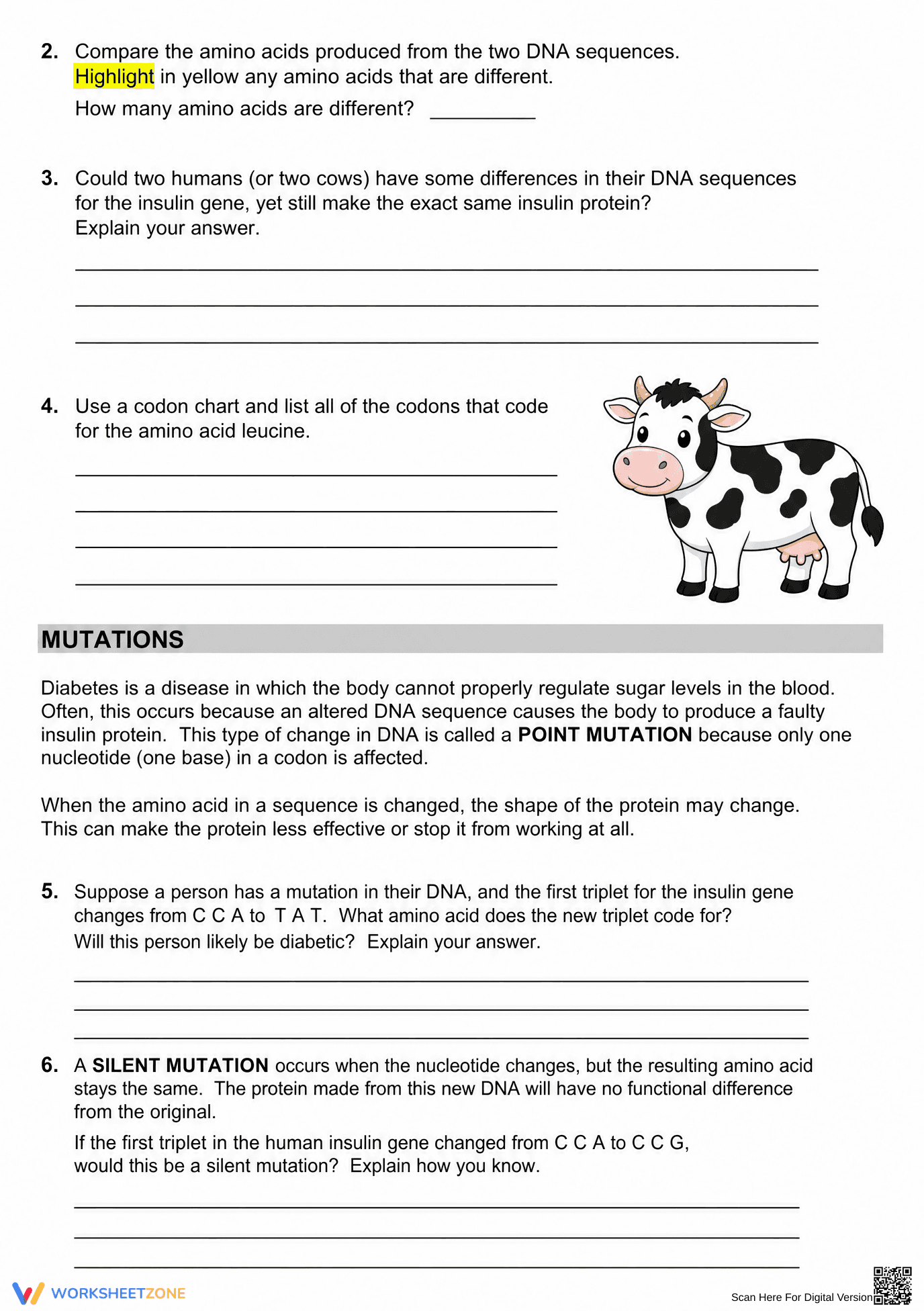
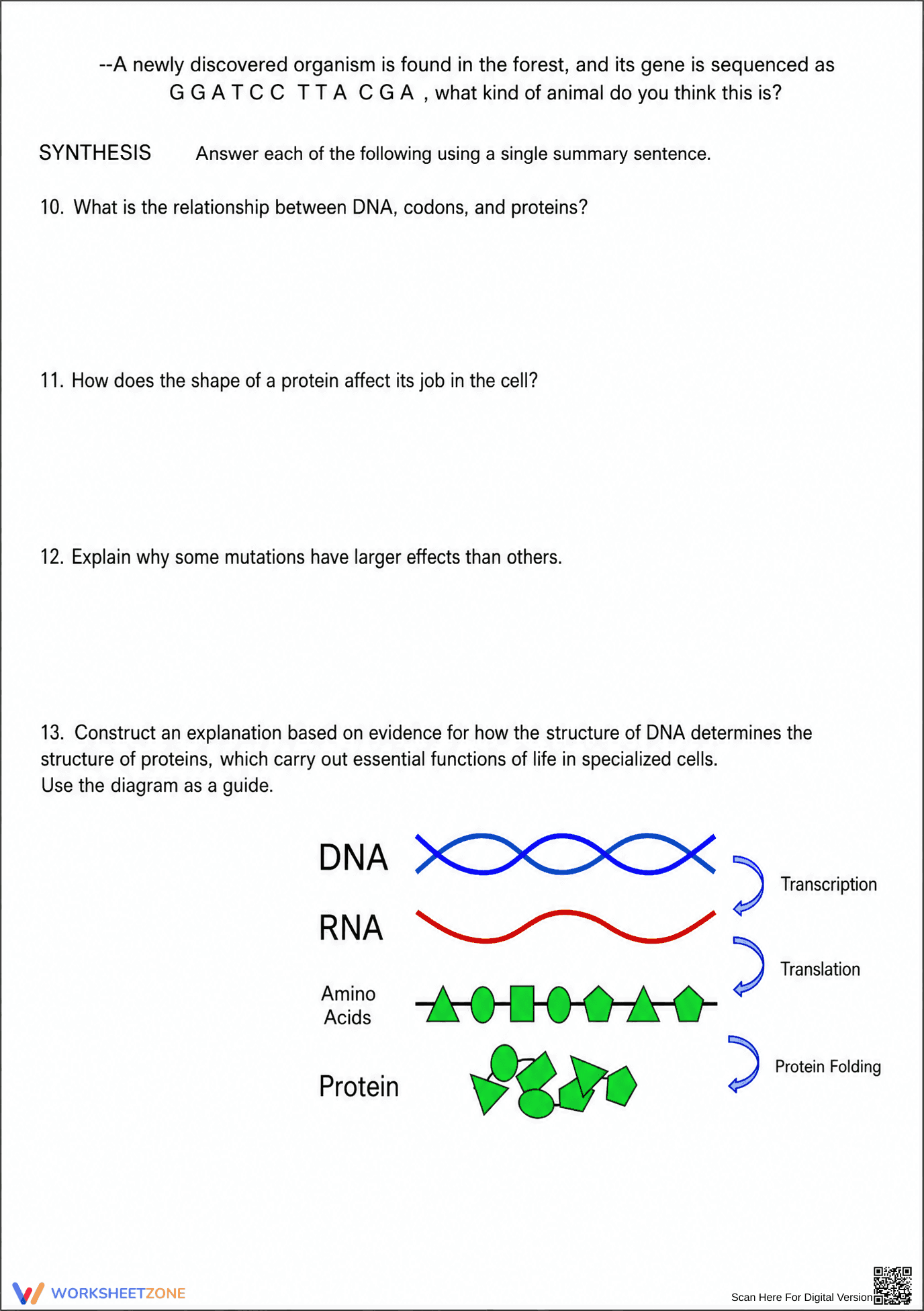
This 4-page investigation features structured tables for sequence comparison, a codon chart application task, and diagrams illustrating the central dogma. Students work with real-world examples like insulin sequences to identify point, silent, frameshift, and nonsense mutations. The layout provides ample space for students to write out RNA sequences and amino acid chains while comparing data across different species.
The packet follows a rigorous progression: Guided practice begins with basic transcription and translation of normal DNA. Supported practice introduces specific mutation types with comparative analysis of how single base changes affect the final protein. Independent practice concludes with synthesis questions requiring students to explain the relationship between DNA structure and cellular function across 13 comprehensive tasks. This gradual-release model ensures students master the mechanics before tackling higher-order analysis.
This resource aligns with HS-LS1-1, requiring students to construct explanations for how the structure of DNA determines the structure of proteins. It also supports HS-LS3-1 by exploring how variations in DNA sequences result in different traits. Both standard codes can be copied directly into lesson plans, IEP goals, or district curriculum mapping tools.
Assign this as a mid-unit formative assessment after students have been introduced to the codon wheel. Use the "Gene Sequences Across Species" section as a collaborative group activity to spark discussion on evolutionary relationships and genetic conservation. Completion typically takes 50 minutes, making it a perfect fit for a standard high school lab period.
Designed for high school biology students, this resource is ideal for general, honors, or AP-level introductory units. It pairs naturally with a protein synthesis anchor chart or a direct instruction lesson on the central dogma of molecular biology. The clear definitions of mutation types make it accessible for students requiring additional literacy support in science.
According to the RAND AIRS 2024 framework for science literacy, structured investigations that require students to manipulate genetic data significantly improve retention of molecular biology concepts. This worksheet addresses the HS-LS1-1 standard by forcing students to bridge the gap between microscopic genetic codes and macroscopic protein functions. By analyzing 13 distinct tasks, students move beyond rote memorization of base pairing into the functional reality of how mutations drive biological diversity. Research from Fisher & Frey (2014) suggests that such scaffolded instructional approaches in science help students internalize the complex logic of the central dogma. This printable PDF provides the necessary evidence-based practice to ensure students can accurately predict the outcome of a frameshift or nonsense mutation in a real-world context like insulin production. The inclusion of cross-species comparison further reinforces the universality of the genetic code.


