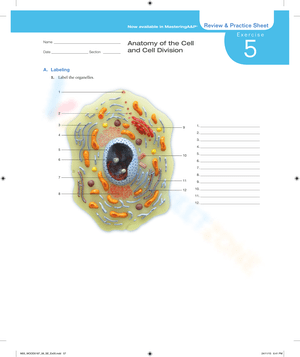
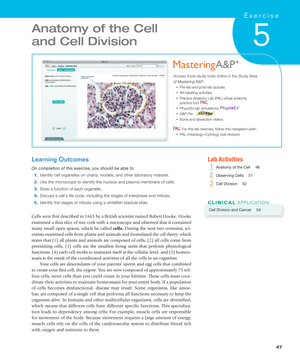
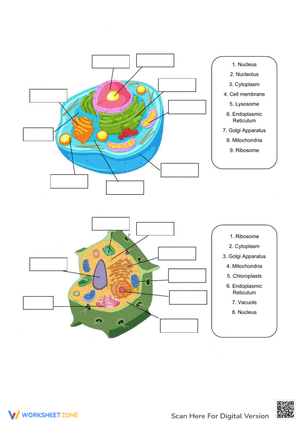
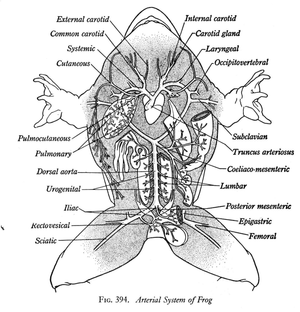
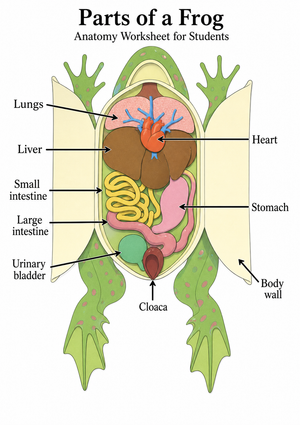
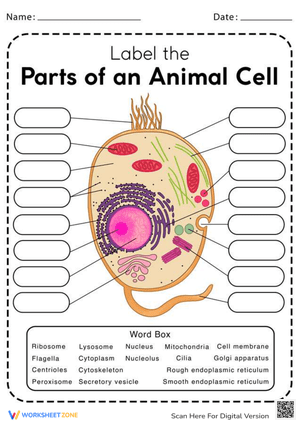
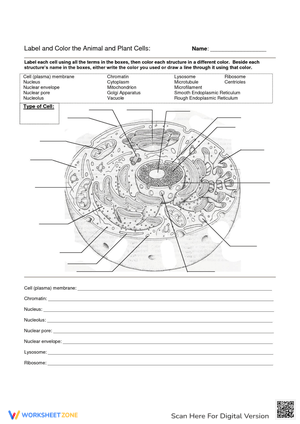
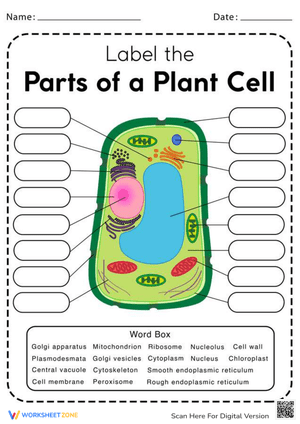
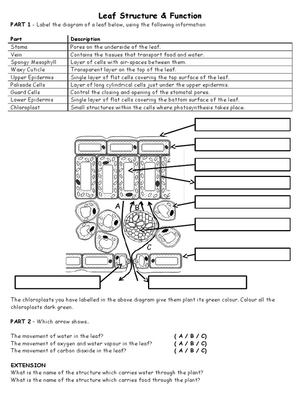
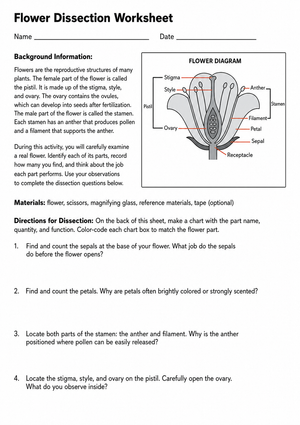
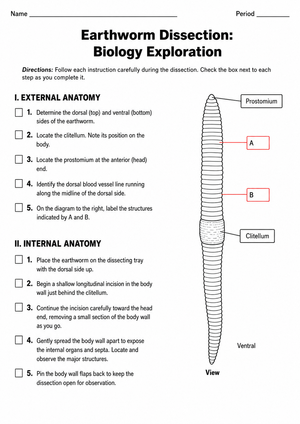
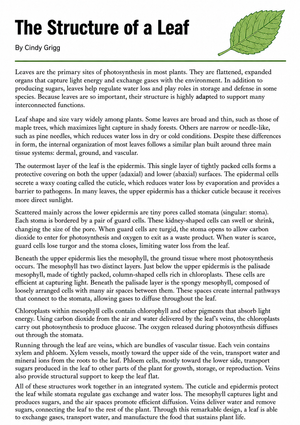
These 10th grade anatomy worksheets give biology teachers a ready set of diagram-based and analytical exercises covering the major organ systems in the standard sophomore biology curriculum. At this level, students have enough prior science exposure to move beyond simple identification — they can start reasoning about why a structure is shaped a certain way and what happens downstream when it fails. Each worksheet pairs detailed anatomical illustrations with tasks that push into that territory, asking students to trace physiological pathways, explain organ interactions, and connect structural features to specific functions.
The Organ Systems in the Set
The worksheets span the systems typically sequenced across a 10th-grade course:
- Circulatory system — heart anatomy, vessel classification, and the dual-loop circulation pathway
- Respiratory system — airway structure from trachea to alveoli and the mechanics of gas exchange
- Nervous system — neuron anatomy, central and peripheral organization, and basic signal transmission
- Digestive system — the alimentary canal sequence, enzyme sites, and nutrient absorption surfaces including the villi
- Endocrine system — gland locations, major hormones, and the logic of negative feedback regulation
- Immune system — innate and adaptive defense layers, white blood cell types, and antibody function
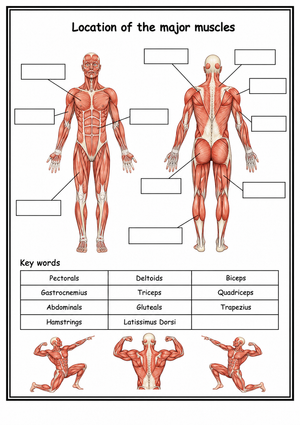
The progression within each worksheet matters. Earlier tasks ask students to label a blank heart diagram from memory. Later tasks ask them to explain why damage to the sinoatrial node would disrupt cardiac output and, by extension, oxygen delivery to peripheral tissues. That shift from recall to functional reasoning is where the real learning happens at this grade level.
Frequent Student Errors Worth Anticipating Before You Teach
The most persistent error in 10th-grade anatomy isn't a mislabeled diagram — it's a conceptual shortcut students pick up early and carry too far. Students learn "arteries carry oxygenated blood" as a clean rule, then encounter the pulmonary artery and stop cold. That vessel carries deoxygenated blood away from the right ventricle toward the lungs, directly contradicting the version they memorized. Several worksheets address this by asking students to label both the vessel type and the oxygen content of the blood inside it simultaneously — forcing them to apply the actual definition (arteries move blood away from the heart) rather than the shortcut they relied on for every previous question.
Endocrine system worksheets surface a related problem. Students can locate the pancreas on a diagram without much difficulty, but they routinely write that insulin "makes sugar" or "produces glucose" rather than describing its role in stimulating cellular glucose uptake. The cause-and-effect logic of hormone feedback is harder to retain than gland location, which is why those worksheets frame questions around what triggers hormone release and what happens when the feedback loop is disrupted — not just where the gland sits. Neuron worksheets bring up a third version of this: students mark the cell body as "where signals are created" rather than as the metabolic support structure, a distinction that becomes significant when the class later moves into action potential propagation or neurodegenerative conditions.
Standard Alignment
These 10th grade anatomy worksheets align with NGSS HS-LS1-2, which asks students to develop and use a model to illustrate the hierarchical organization of interacting systems that provide specific functions within multicellular organisms. In classroom terms, that standard pushes students from naming structures to explaining why those structures take their particular form and how they depend on adjacent systems. The structural labeling tasks in this set address the identification baseline; the cross-system analysis questions — such as explaining how reduced alveolar surface area affects both gas exchange and blood oxygen levels simultaneously — address the HS-LS1-2 expectation directly. Those integrative questions work best as formative assessments at the midpoint or close of a unit, once students have enough working vocabulary to reason about interactions rather than just retrieve isolated facts.
Where These Worksheets Fit in a Unit Plan
Labeling exercises work best as bell-ringers — a focused 8–10 minutes at the start of class that reactivates prior knowledge before new instruction begins. That's a different job than the longer analysis tasks, which belong on consolidation days when students are pulling pieces together rather than encountering new vocabulary. A sequencing pattern that holds up: use the diagram worksheet on day two of a system unit after the initial lecture, then return to the cross-system questions at the unit's end as a review anchor before a summative assessment.
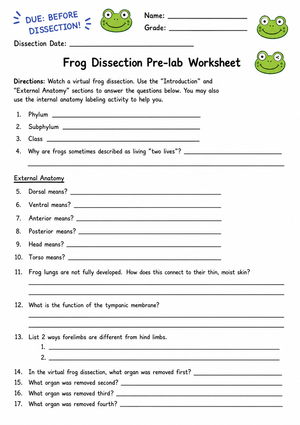
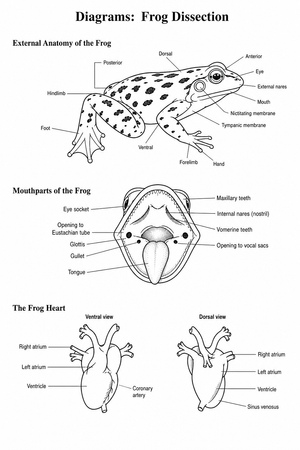
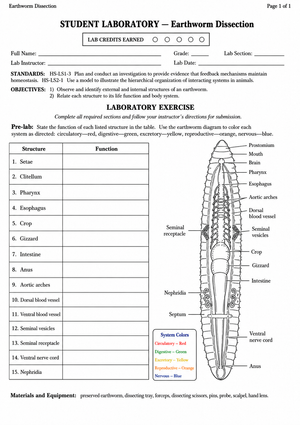
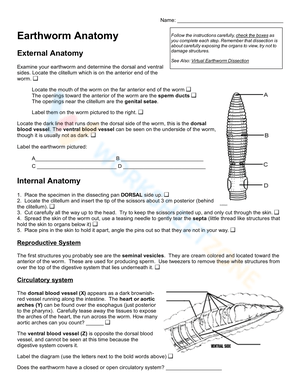
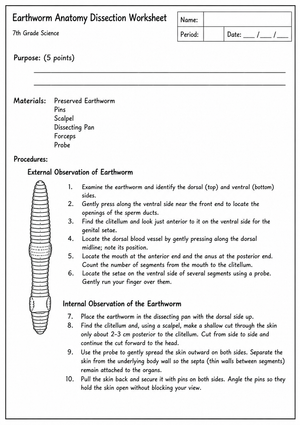
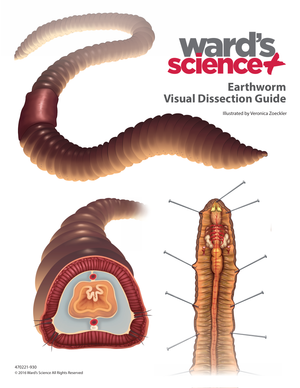
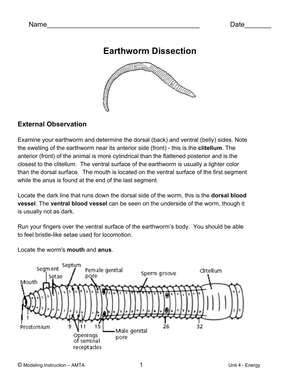
These 10th grade anatomy worksheets also slot cleanly into dissection lab sequences. Assign the structural worksheet the day before the lab — students arrive already familiar with the names and locations of what they'll be identifying in the specimen. During dissection, the printed worksheet works as a bench reference. Adding one question at the bottom asking students to note one way the actual specimen differed from the idealized diagram consistently produces more substantive reflection than an open-ended lab report does, and it takes almost no additional class time.
Adjusting the Work for Students at Different Levels
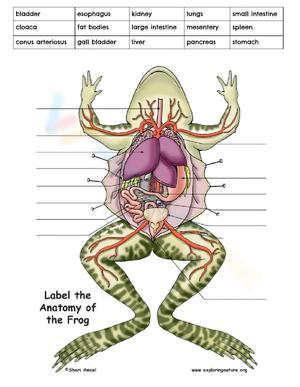
For students who stall on blank diagrams, placing a partially labeled reference image alongside the blank version reduces the retrieval bottleneck without removing the thinking work. The task becomes: use the reference to orient yourself, then complete the blank from memory and move into the function questions. That's a meaningful cognitive load adjustment for students who understand the content but freeze when they can't retrieve a term quickly enough to keep their momentum.
Students who move through the labeling quickly benefit from an added constraint: cover the word bank, complete the diagram entirely from memory, and then write a short explanation of how a failure in one labeled structure would affect a different organ system downstream. A student who labels the alveoli correctly and can then articulate how reduced gas exchange would affect cellular respiration in peripheral muscle tissue has demonstrated the cross-system reasoning HS-LS1-2 targets. These 10th grade anatomy worksheets leave enough open space in the margins and below each diagram that teachers can pencil in those additional prompts without reprinting anything.
Frequently Asked Questions
Do the worksheets include answer keys?
Yes. Each worksheet comes with a fully labeled answer diagram and written responses for any short-answer or analysis questions. The answer keys are formatted to work posted at a self-check station, used by the teacher for grading, or displayed during whole-class review at the end of a lesson.
Are these appropriate for an anatomy and physiology elective, or mainly for general biology?
Both. In a standard 10th-grade biology course, they serve as the primary anatomy resource for each system unit. In a dedicated A&P elective, they're more useful as a structural vocabulary review — particularly the circulatory and nervous system worksheets, which cover the anatomical language students need before advancing into more detailed physiology content like membrane transport or cardiac conduction pathways.
Can students complete these digitally?
The PDF format works with annotation tools in Google Drive, Adobe Acrobat, and most learning management systems that support markup. Students can type into text fields and use drawing tools for labels. Printed versions remain easier to manage during dissections or bench work, though, where the worksheet is being used alongside a physical specimen rather than a screen.












 Interactive Worksheet Maker
 Quiz Maker
 Word Search Maker
 Crossword Puzzle Maker
 Word Scramble Generator
 Sentence Scramble Generator
 Handwriting Worksheet Generator
 Name Tracing Generator
 Fill In The Blank Generator