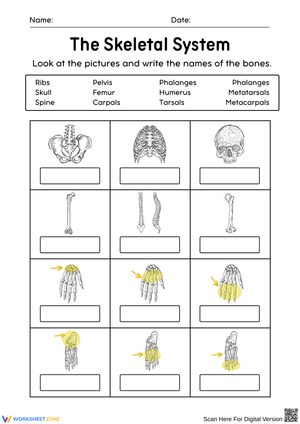
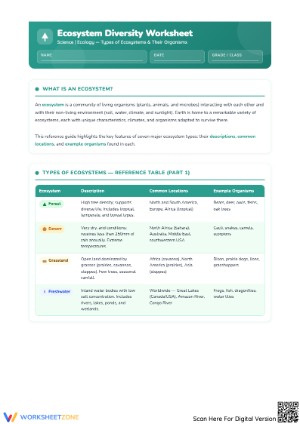
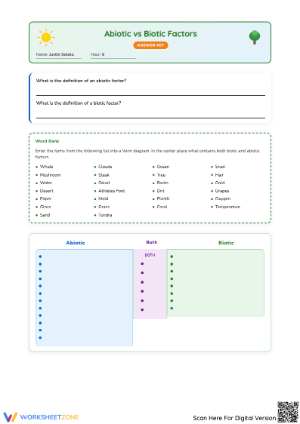
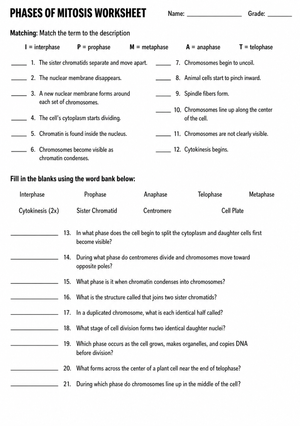
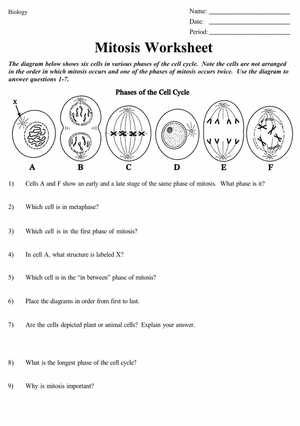
These 10th grade biology printable worksheets give teachers a ready-to-assign set organized around the five content strands that recur all year in a standard sophomore biology course: cells, genetics, evolution, ecology, and human body systems. Each worksheet combines multiple task types — labeling, short constructed response, diagram analysis, and data interpretation — so teachers can assess whether students can identify structures, explain processes, and connect ideas across units, not just reproduce definitions.
What Students Practice Across the Set
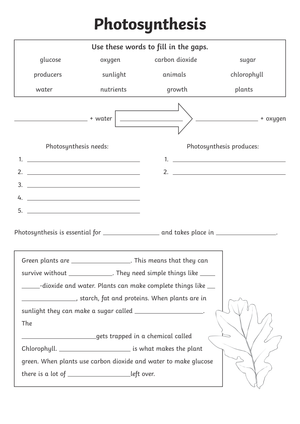
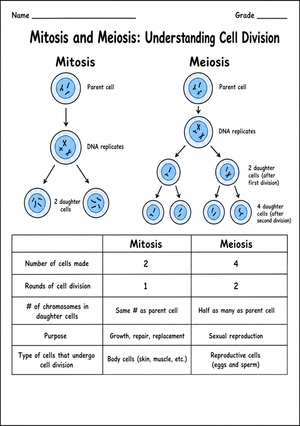
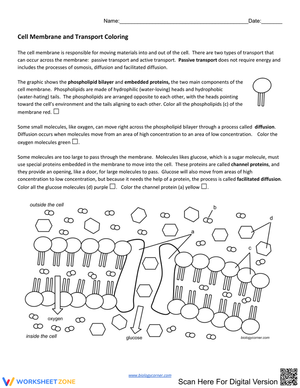
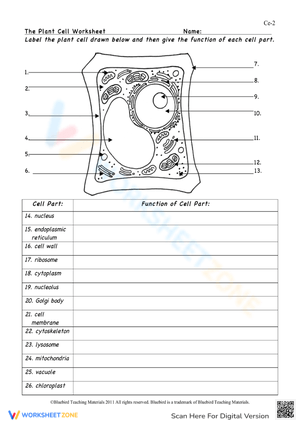
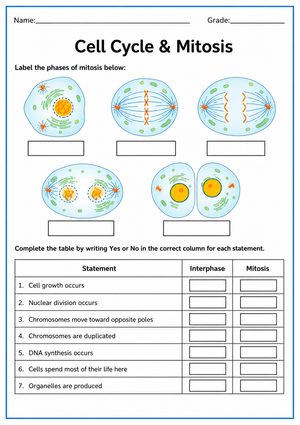
Cell biology worksheets ask students to label organelle diagrams, compare prokaryotic and eukaryotic structures, and explain membrane transport including diffusion, osmosis, and active transport. Several worksheets extend into energy processes — students annotate a partially completed photosynthesis or cellular respiration equation rather than recopying it from memory, which checks understanding more directly than a standard fill-in-the-blank does.
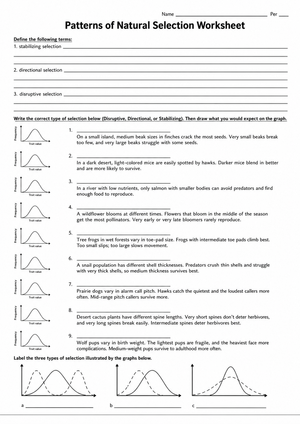
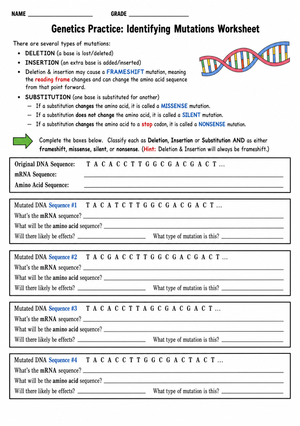
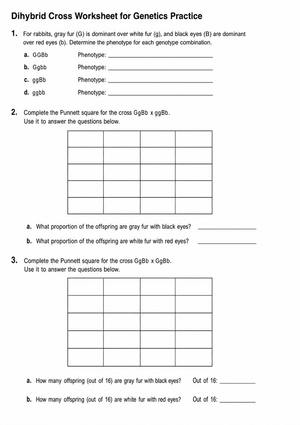
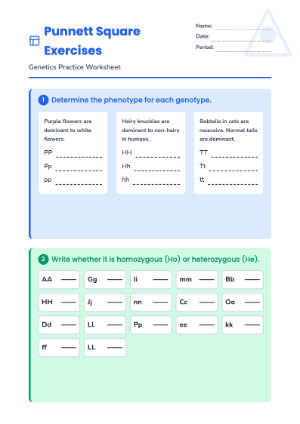
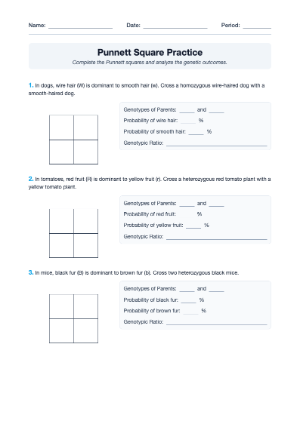
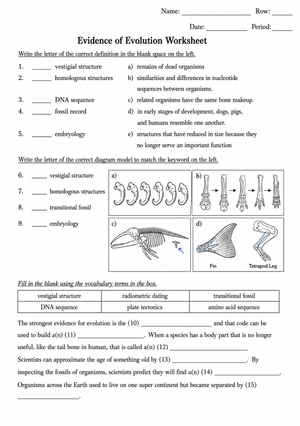
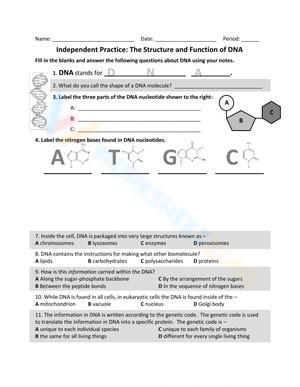
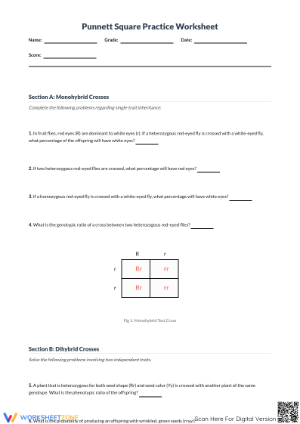
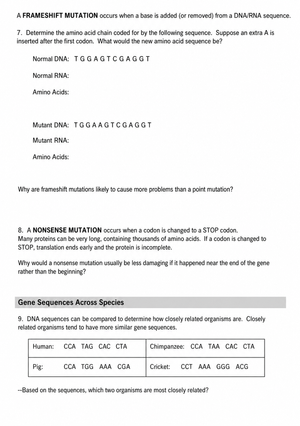
Genetics worksheets move through DNA structure, mRNA transcription, codon translation, Punnett square construction, and inheritance pattern analysis. The important distinction in these worksheets is that students do not stop at completing the square — they explain what the resulting ratio means across a large population, which is where conceptual understanding separates from procedural recall. Evolution worksheets focus on evidence types (fossil record, comparative anatomy, molecular homology), natural selection mechanics, and population-level variation. Students write evidence-based explanations and analyze brief selection scenarios rather than just matching terms to definitions.
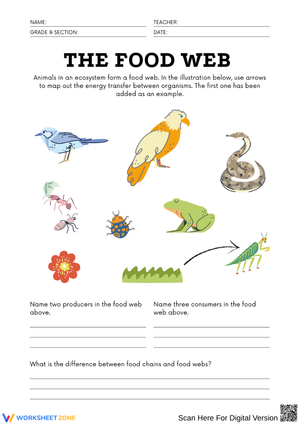
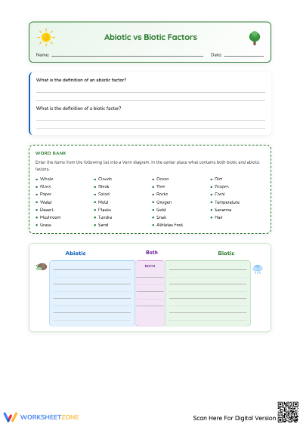
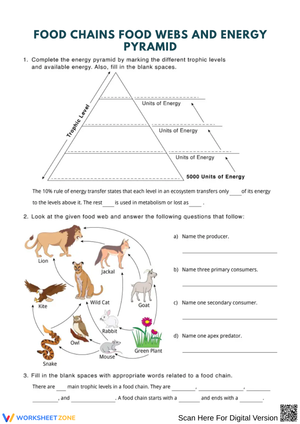
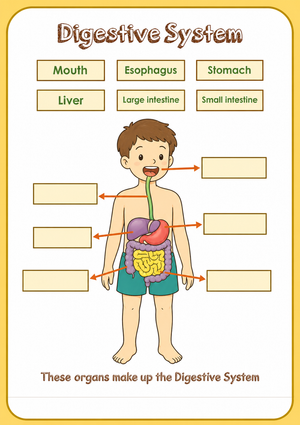
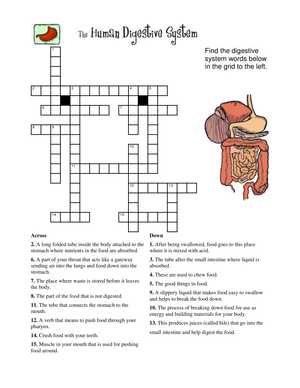
Ecology worksheets work through food webs, energy pyramids, matter cycling, and population dynamics using diagram annotation and short analysis questions. Human body systems worksheets ask students to sequence physiological events — an immune response or a nerve signal — and explain why each stage depends on the one before it. That sequencing task builds systems thinking in a way that simple organ labeling does not.
Where 10th Grade Biology Students Consistently Go Wrong
The most persistent error in evolution units shows up in student writing, not on multiple-choice tests. Students can select a correct definition of natural selection from a list and still write sentences like "the bacteria evolved resistance because they needed to survive the antibiotic." That phrasing attributes intention to individual organisms rather than describing selection acting on existing variation within a population. Worksheets that ask students to rewrite a flawed explanation using scientifically accurate language surface this misconception before the unit test, when correction is still possible.
In genetics, Punnett squares produce a specific procedural error: students treat the four cells of the square as literal offspring rather than a probability model. They write "2 out of 4 offspring will be heterozygous" meaning exactly two, not a 50% likelihood. Questions that ask students to predict outcomes across 200 offspring using the same cross force the probability reasoning that completing the square itself never requires.
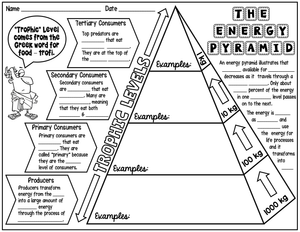
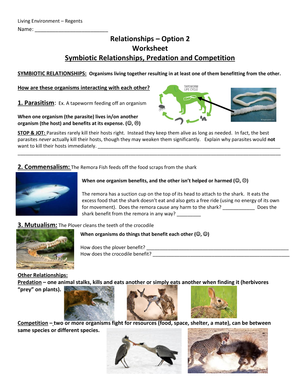
Energy pyramids generate another predictable error. Students draw energy moving upward through trophic levels as if it accumulates rather than diminishes. A worksheet that shows a completed pyramid and asks students to explain why the top predator population must be far smaller than the producer population — without listing the 10% transfer rate as a word bank option — requires students to reason from structure rather than retrieve a rule.
Where These Worksheets Fit in Your Biology Unit
The strongest entry point for 10th grade biology printable worksheets is the opening 8–10 minutes of class. A bell ringer using the first section of a genetics worksheet — complete a Punnett square from the previous lesson, then write one sentence explaining what the ratio predicts — activates prior knowledge and gives the teacher a fast read on who needs re-teaching before new content starts. That information is more useful at the start of a lesson than at the end.
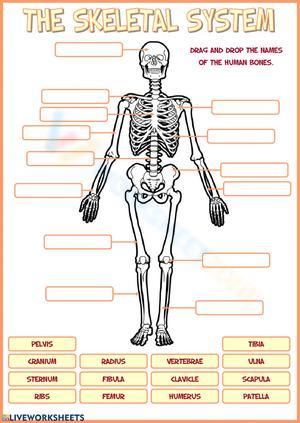
For substitute days, cell structure worksheets and ecology diagram worksheets are consistently reliable. A labeled diagram with written directions and three follow-up questions needs no teacher setup, and students who have had one or two lessons on the topic can complete the work independently using class notes. These worksheets are genuinely self-contained in a way that lab activities and discussion-based lessons are not.
Unit review is another natural fit. A mixed-format worksheet with a labeling section, a vocabulary application section, and one short constructed response can serve as written review two days before an assessment. Spaced retrieval — returning to material through active recall rather than passive re-reading — consistently outperforms reviewing notes alone. A review worksheet that forces students to retrieve and explain, rather than highlight, does that work efficiently without requiring additional preparation time.
Calibrating the Work for Different Student Readiness Levels
The most practical approach when using these 10th grade biology printable worksheets is printing two versions of high-stakes worksheets: one with a word bank, labeled diagram prompts, and sentence starters, and one with a blank diagram and an evidence-based extension question at the end. Both groups work on the same biology concept during the same class period. The difference is the degree of built-in support, not the topic itself.
For students who freeze when given a completely blank diagram, partially completed visuals — a cell membrane with two of five labeled structures already filled in — let the content carry the lesson rather than letting the format become the obstacle. That is not lowering the bar; it removes a false barrier so students can demonstrate what they actually know about biology.
For students moving through the material quickly, any worksheet in the set can become more demanding by adding a cross-unit connection question at the bottom. A student finishing a cellular respiration worksheet can be asked to explain how ATP production connects to muscle contraction covered in the body systems unit. That question requires synthesis rather than additional recall, and it keeps faster learners genuinely working rather than waiting.
Standard Alignment
These worksheets align to Next Generation Science Standards performance expectations for high school life science. Cell structure and energy worksheets address HS-LS1-1 (explaining how DNA structure determines protein structure and cellular function) and HS-LS1-5 (modeling how photosynthesis transforms light into stored chemical energy). Genetics worksheets are built around HS-LS3-1 and HS-LS3-3, which ask students to clarify the role of DNA and chromosomes in heredity and apply probability to the distribution of expressed traits across a population. Evolution worksheets target HS-LS4-2 and HS-LS4-4, which require evidence-based explanations of natural selection mechanics and population-level adaptation over time. Ecology worksheets connect to HS-LS2-4, which asks for mathematical representations of energy flow and matter cycling between trophic levels. In classroom terms, these worksheets sit at the practice and formative assessment stages of each performance expectation — after initial direct instruction, before summative evaluation.
Frequently Asked Questions
Are these worksheets appropriate for both standard and honors biology sections?
The base versions fit standard college-prep biology well. For honors sections, the extension questions — evidence-based responses, cross-unit connections, data interpretation — raise the demand without requiring a separate resource. The underlying biology content stays the same; the depth of response scales through question type rather than a different set of concepts.
Which worksheets work best as homework versus in-class assignments?
Labeling and vocabulary worksheets travel well as homework because students can complete them using class notes or a textbook. Short constructed-response worksheets are better used in class — a student who reinforces a misconception at home is harder to redirect than one a teacher can catch in the moment. Data interpretation worksheets, particularly the energy pyramid and population dynamic sets, benefit most from class time where students can talk through their reasoning before committing to a written answer.
How are the worksheets organized in the download?
Each worksheet is labeled by unit and topic, so teachers can locate the right resource for the current lesson without sorting through every file. Answer keys are included for every worksheet in the set, with acceptable alternate phrasings noted for constructed-response questions — useful when teachers want to show students the difference between a strong explanation and a partial one.
Will these work for 9th grade biology or AP Biology?
The 10th grade biology printable worksheets in this set are calibrated for standard sophomore biology vocabulary and conceptual demand. Genetics and evolution worksheets may be challenging for 9th graders who have not yet built foundational vocabulary; cells and ecology worksheets transfer more easily across that year span. For AP Biology, these resources will underserve students without significant extension — the depth of analysis AP requires goes well beyond what this set provides.












 Interactive Worksheet Maker
 Quiz Maker
 Word Search Maker
 Crossword Puzzle Maker
 Word Scramble Generator
 Sentence Scramble Generator
 Handwriting Worksheet Generator
 Name Tracing Generator
 Fill In The Blank Generator