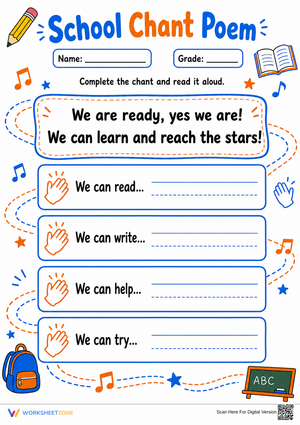
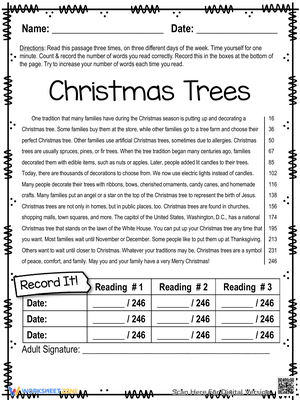
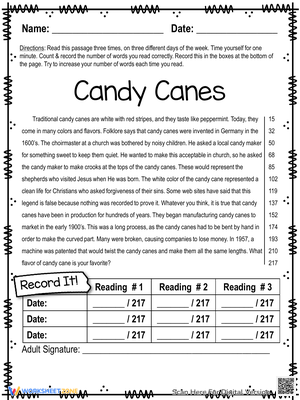
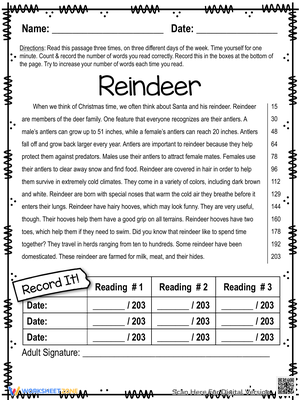
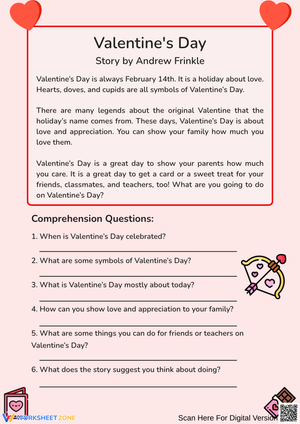
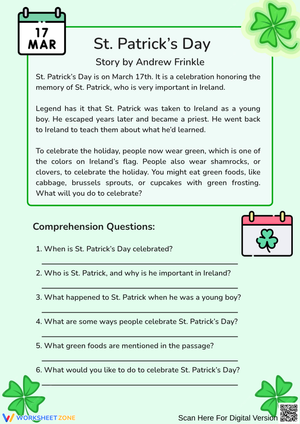
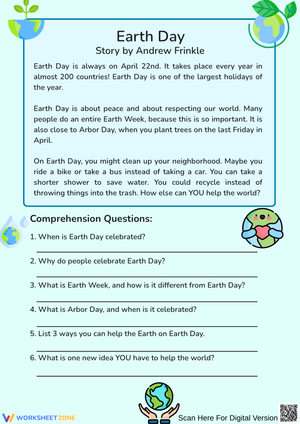
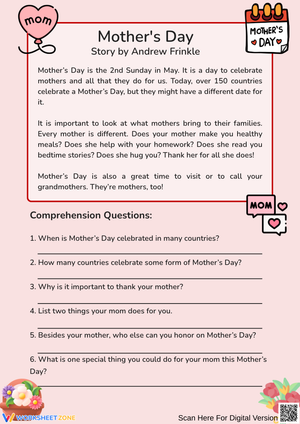
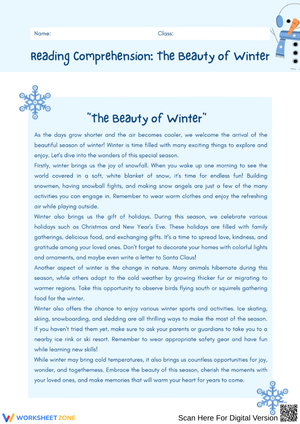
These reading fluency printable worksheets resources give teachers a structured, ready-to-deploy approach to accuracy, rate, and prosody practice across the elementary grades. The set covers multiple passage formats — timed reads, phrase-marked texts, and cued-expression passages — so there's a natural fit for different lesson slots without disrupting existing routines. Because each worksheet stands alone, teachers can pull one for a targeted small-group session or roll the full set into literacy center rotations.
Skills and Text Formats Across the Set
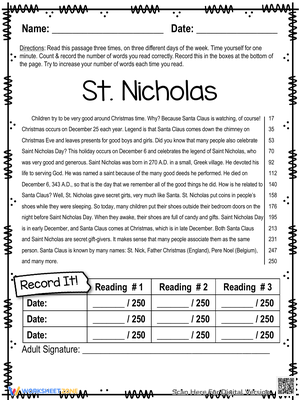
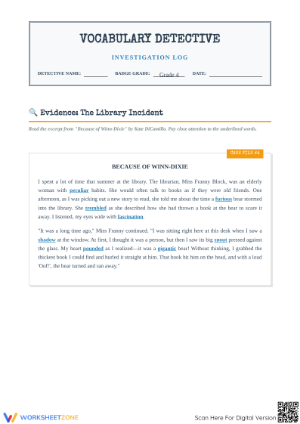
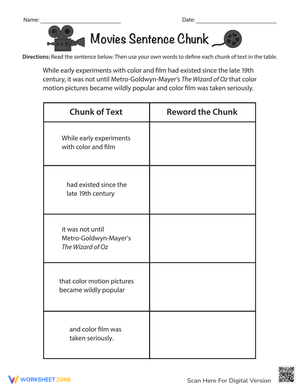
The worksheets target all three components of fluency as distinct instructional focuses rather than bundling them into a single timed read. Accuracy work appears through controlled-level passages where students underline words they trip on before attempting a timed read, then return to those same words after, practicing them in isolation. Rate practice uses built-in WCPM tracking grids so students record their own words-correct-per-minute counts across repeated attempts on the same text. Prosody work takes two forms: phrase-marked passages where slash marks indicate natural meaning boundaries, and punctuation-cued reading where students annotate a passage for voice drops, pauses, and stress before reading it aloud.
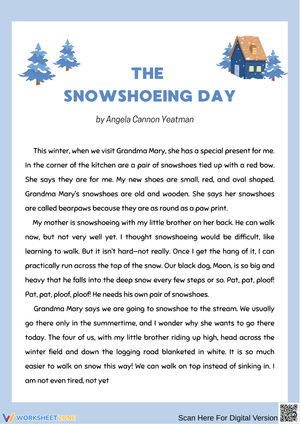
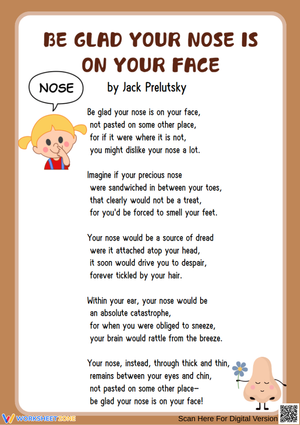
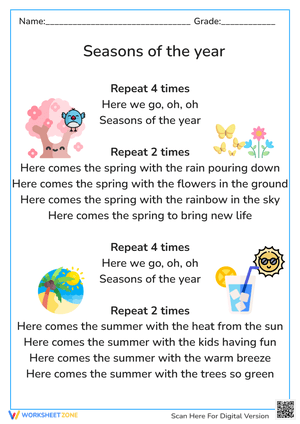
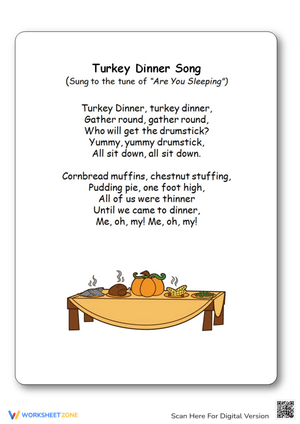
Text types across the set include short narrative passages, informational paragraphs, and poetry. This matters because prosody operates differently across genres — the pitch patterns in an informational passage about animal migration don't look anything like the rhythmic stress in a narrative poem. Students who develop fluency in only one text type tend to sound expressive in that genre and flatten out when the format changes. Having all three text types in the set surfaces that gap early, before it becomes invisible inside a single routine.
How Automaticity in Word Recognition Opens Up Comprehension
When students are still decoding word-by-word, working memory fills up fast. The cognitive bandwidth that should go toward building inferences, tracking story structure, or synthesizing information gets consumed by letter-sound processing instead. Fluency instruction — especially repeated reading of the same passage — gradually automates word recognition and frees up mental resources for meaning-making. This is exactly why reading fluency printable worksheets passages work best when students return to the same text across multiple sessions: moving specific words and phrase patterns from effortful retrieval into automatic recognition takes structured repetition, not just more exposure to new material.
Third grade is typically when this matters most acutely. The texts students encounter in grades 3 and above assume a level of word recognition automaticity that many struggling readers haven't built yet, which is why the achievement gap between strong and weak readers tends to widen noticeably around that point. Working consistently with accessible, appropriately leveled passages — rather than asking students to labor through grade-level text they can't process automatically — is how intervention actually closes that gap over time.
How to Work These Worksheets Into Your Teaching Week
The most reliable slot for fluency practice is the transition window — those 8 to 10 minutes after morning meeting and before the first formal lesson block, or the gap while students wait to leave for specials. A fluency folder for each student, with that week's passage inside, makes the routine largely self-running. Students know to take out the folder, set a timer, and read. The first read is always cold; the second and third build on it. By Friday, most students can actually feel the difference in their own reading — which matters for motivation more than any external reward system.
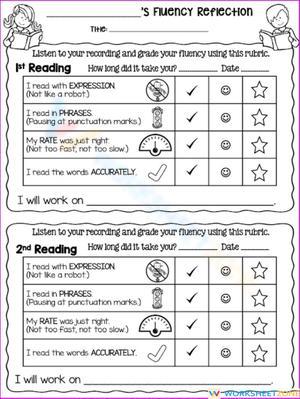
In literacy center rotations, one station can run as a fluency recording check-in where students listen back to themselves after reading. Students are often more honest critics of their own prosody than teachers expect — they hear their own monotone the moment they're not in the middle of reading. A second station can pair students for peer timing and WCPM recording, which creates light accountability and frees the teacher to pull a small group simultaneously.
For homework, reading fluency printable worksheets passages work well with a parent-facing tracking sheet attached. Keep the rubric simple: three columns for accuracy, rate, and expression, with check marks rather than scores. Most parents can manage that without feeling lost, and it generates real data on how often students are actually practicing at home versus how often they say they are.
Student Error Patterns Worth Watching For and Addressing
The most common problem during timed reads is the rate-accuracy tradeoff. Students who know they are being timed will sometimes push through words they don't recognize cleanly — skipping them, substituting a close-sounding word, or misreading a suffix — because stopping feels like failure. The result is a WCPM score that looks acceptable but masks significant accuracy errors. Catching this requires actually listening to timed reads, not just recording the final number. A student who reads 105 words in a minute but miscues on 8 of them is not reading at grade level.
Prosody errors show up in two predictable patterns. The first is the reader who attends to commas — pausing briefly in the right spot — but doesn't drop pitch at periods or shift intonation at question marks. They're using punctuation as a visual stopping signal without understanding its function in spoken meaning. The second is the reader who chunks at arbitrary word intervals rather than actual phrase boundaries. A sentence like The enormous red fox / slipped through the gate gets read as The enormous / red fox slipped / through the gate — syntactically fractured groupings that undermine meaning even when every individual word is read correctly.
Adjusting These Worksheets for Different Levels of Readers
Students reading significantly below benchmark often freeze when they're handed an unfamiliar passage and a timer at the same time. For those students, separate the processes: let them listen to the passage read aloud once before they attempt it, and complete two untimed reads before timing is introduced at all. The first goal is accuracy; rate follows naturally once word recognition becomes more stable. Hasbrouck and Tindal's WCPM norms by grade and season give useful targets when setting individualized goals, so teachers aren't holding every student to the same benchmark regardless of starting point.
On-level students move through the standard implementation — cold read, two or three repeated reads, WCPM tracking, prosody self-rating. Above-level students who've already hit rate targets are often underchallenged by timed reads alone. For them, redirect the focus toward expressive performance: recording a passage and critiquing their own phrasing choices, or preparing a short text for a peer audience. The goal shifts from speed to interpretation, which is more demanding than it sounds and directly prepares students for the kind of close reading they'll encounter in upper elementary.
Standard Alignment
These worksheets align directly to CCSS.ELA-LITERACY.RF.3.4, which asks students to read grade-level prose and poetry orally with accuracy, appropriate rate, and expression. The standard also covers using context to confirm or self-correct word recognition and understanding — which the accuracy-annotation tasks in this set address explicitly. The RF strand runs from kindergarten through grade 5, so teachers at different grade levels can pull from the set and measure student progress against the specific accuracy and rate expectations for their grade band.
Frequently Asked Questions
How many times should a student read the same passage before moving to a new one?
Three to four reads is the typical range before automaticity with that specific text plateaus. The target is 95% accuracy or better on the final read, at a rate that meets grade-level WCPM norms. If a student can't reach that threshold after four reads, the passage is likely above their instructional level and a simpler text should be substituted.
My students are meeting their WCPM targets but comprehension is still low. What's going on?
Rate without prosody is one common culprit. A student reading 120 words per minute in a flat monotone isn't processing phrase-level meaning — they're moving words through quickly without grouping them into syntactic units. Check whether those students are chunking at meaningful phrase boundaries and using intonation appropriately. If prosody is the gap, prioritize phrase-marked passages and model the difference between fluent expressive reading and fast flat reading explicitly. Comprehension questions tied to the same passage can also reveal whether a student is optimizing for speed alone.
Can these worksheets support students who are receiving formal reading intervention?
Reading fluency printable worksheets passages work well as supplemental home or center practice between intervention sessions. Repeated reading of controlled text reinforces the same word patterns intervention teachers are targeting in pull-out time. Coordinate with the intervention teacher on passage level so students are working with text that's challenging enough to drive growth but accessible enough that some automaticity can develop.
What's a realistic timeline for seeing measurable fluency gains?
With consistent practice three to four times per week, most students show measurable WCPM growth within four to six weeks. Students receiving intensive intervention may take longer, but even modest gains — five to eight additional words per minute over a month — are meaningful and worth communicating to families and documenting in progress notes.