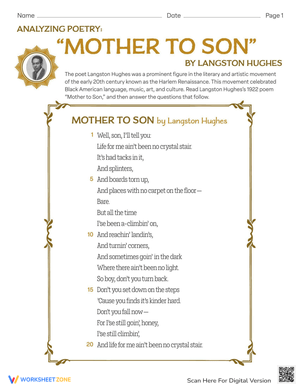
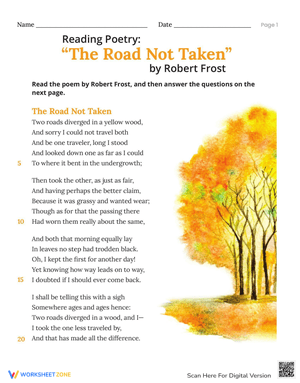
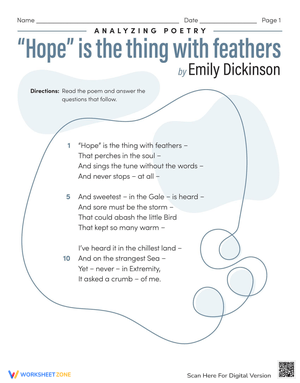
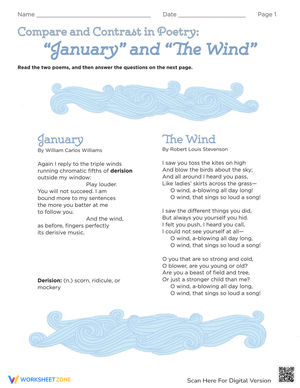
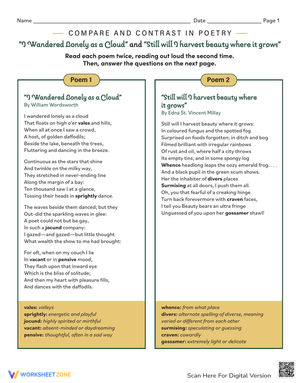
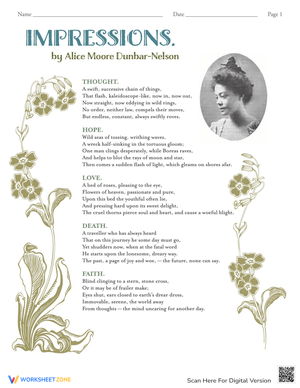
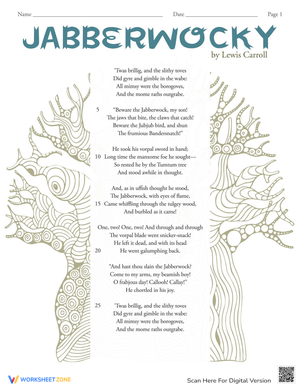
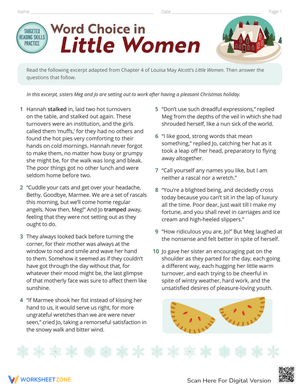
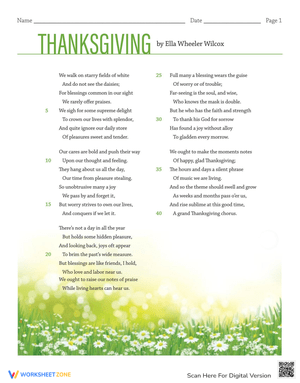
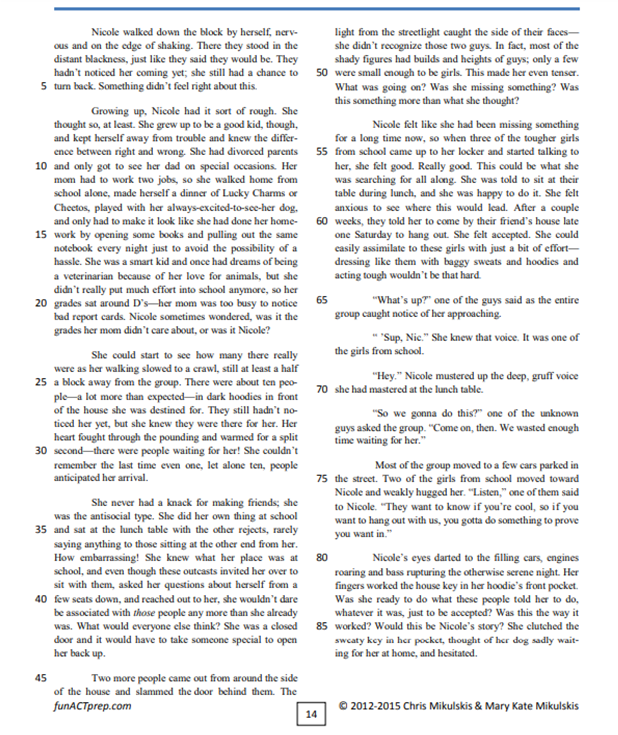
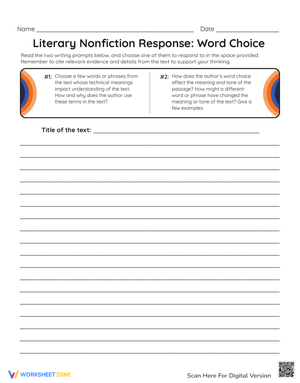
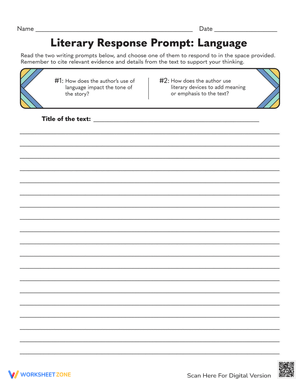
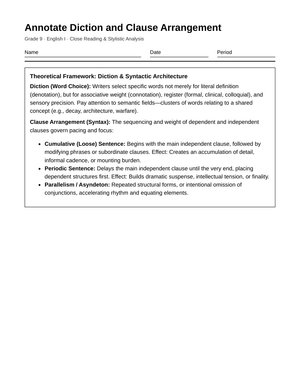
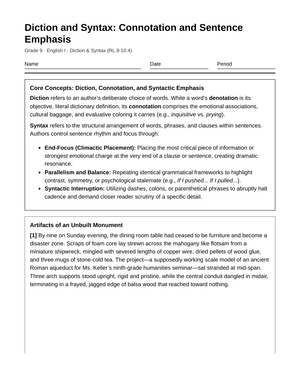
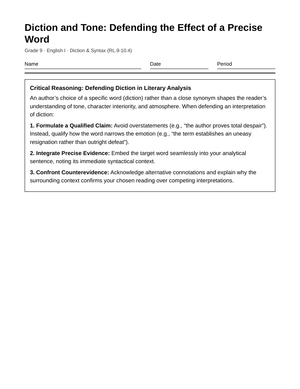
These analyzing word choice worksheets give upper-elementary and middle school ELA teachers a structured, text-based resource for moving students past plot summary into genuine language analysis. Each worksheet presents a short passage — literary or informational — paired with directed tasks: students mark specific words, explain their effect, and connect diction to larger elements like tone, characterization, or author's purpose. The set builds analytical awareness deliberately through repeated close contact with real text, rather than through vocabulary lists or isolated drills.
The Specific Skills These Worksheets Build
Word choice analysis touches several overlapping competencies, and each worksheet targets a manageable portion of that territory. Students work with high-impact verbs and purposeful adjectives in literary passages, identifying moments where a single word shifts the emotional register of a scene. They also practice sorting words by connotation — distinguishing the weight of "confident" versus "arrogant," or "slender" versus "scrawny" — and recognizing that an author's selection between those two reveals something about the narrator's attitude. In informational texts, the focus shifts to precision and objectivity: does the science article say "some researchers suggest" or "evidence confirms"? That gap matters, and these worksheets make it visible.
The connotation-versus-denotation distinction is the conceptual foundation for most of what follows in the set. Students who can hold both definitions simultaneously — what a word means in a dictionary and what it implies emotionally or culturally — are far better equipped to track how tone accumulates across a passage. Without that distinction in place, tone instruction tends to stay loose: students pick a feeling word and move on without identifying the specific language that produced it.
Error Patterns That Show Up Consistently in Diction Work
The most persistent error is conflating tone with mood. Students write that the tone of a passage is "scary" — a reader response — when the task is to name the author's attitude toward the subject. A paragraph describing a battlefield can feel terrifying to read (mood) while the author's tone remains detached and clinical. Catching that distinction requires examining specific word choices rather than an overall emotional impression. Watch for the student who circles "dark" and "shadowy" and writes "the mood is scary" — they have identified the words but reversed the analytical direction entirely.
A second pattern surfaces in connotation work: students who grasp the concept in isolation still tend to ignore it when it complicates their existing interpretation of a character. A student who has already decided a character is kind will gloss over the verb "demanded" later in the same paragraph, defaulting to the first impression. These worksheets address that drift by requiring students to anchor every claim to a specific word and explain why that word — not the general feeling of the scene — supports their reading. The format does not reward impressionistic responses.
A third issue appears with informational text. Many students assume word choice analysis belongs only to fiction, so when asked to examine language in an editorial or a science summary, they reach for plot-based reasoning that simply does not apply. The mixed-genre structure of the set corrects that assumption over time.
Getting the Most From These Worksheets in Your Lesson Sequence
The strongest placement for these resources is right after a whole-class close reading — not before it, and not instead of it. Read the passage together, model your own internal monologue as a reader noticing that the author chose "crept" instead of "walked," and then send students to one worksheet to apply the same process independently. That sequence — teacher names the analytical move explicitly, students practice it on their own — produces results that stick in a way that unguided independent reading rarely does.
For daily warm-up use, pull a single sentence from an upcoming passage and project it before class begins. Ask students to underline the two most purposeful words and write one sentence explaining the author's choice. Eight minutes of that, done three times a week, accumulates quickly. By midyear, students start noticing diction automatically during independent reading — which is the actual goal. Each analyzing word choice worksheets exercise in the set runs short enough for this kind of focused warm-up; most tasks take three to five minutes once students know the routine. For small-group instruction, give different groups different passages from the same set and compare findings at the end — genre differences become obvious when groups report back.
Standard Alignment
These worksheets align with CCSS ELA-Literacy standards RL.4.4, RL.5.4, and RL.6.4, as well as their RI counterparts for informational text. All three standards require students to determine the meaning of words and phrases as they appear in a text, including figurative and connotative meanings. The 4th-grade standard emphasizes identifying words that signal mood; by 6th grade, the expectation shifts to analyzing how word choice affects tone — a distinction the set explicitly practices across multiple passages. Teachers working within CCSS.ELA-Literacy.RI.6.6, which asks students to analyze how an author's point of view is conveyed through word choice, will find the informational text worksheets a direct instructional match. When selecting an analyzing word choice worksheets for standards-based instruction, verify that the tasks require written explanation rather than simple word identification — standards at grades 4 and above expect students to explain the "why," not just name the "what."
Tailoring the Set for Different Reading Levels
For students who are still building literal comprehension, reduce the output demand first. Rather than asking for a written explanation of a word's effect, ask them to mark three words that feel significant and label each with a single-word impression: tense, hopeful, cold. That step establishes the sorting habit without requiring analytical writing they haven't reached yet. Once sorting becomes automatic, add the written explanation requirement as the next layer.
Advanced students benefit most from comparative tasks. Give them two passages on the same subject — a news report and an editorial, or two authors describing the same historical event — and ask them to map where diction diverges and what that divergence signals about each writer's stance. The analyzing word choice worksheets in the set work well as a base layer for that kind of extension: complete the standard task first, then annotate the passage further for irony, understatement, or deliberate repetition. For students writing analytical essays, these worksheets double as direct preparation — isolating a word and explaining its effect is the exact move required inside a well-constructed textual evidence paragraph.
Frequently Asked Questions
Can these worksheets be used with informational texts, or are they built around fiction?
The set includes both literary and informational passages. Nonfiction word choice — the difference between "claimed" and "confirmed," or between "affordable" and "cheap" in a policy article — is particularly productive territory for bias and purpose analysis. Students in grades 5 and above often find the informational text tasks more demanding because they expect nonfiction to be neutral; the worksheets complicate that assumption in useful ways.
How do I handle disagreements when students interpret connotation differently?
Productive disagreement is a feature here, not a problem. The requirement is that every interpretation must be anchored to specific text evidence. A student who reads "swift" as positive and a student who reads it as threatening may both have defensible readings depending on what surrounds that word in the passage. The follow-up question — "what else in the text supports that reading?" — is where the real learning happens. Answer keys in the set provide suggested responses, but asking students to read their explanations aloud and locate the exact moment their reasoning diverges is the more instructive move.
At what point in a unit do these worksheets fit best?
Most effectively after students have encountered the passage at least once. Cold word choice analysis — where students are reading the text for the first time while simultaneously trying to analyze its language — tends to produce surface-level responses because basic comprehension is still competing with interpretation. Use an initial read-aloud or paired reading first, then bring in one worksheet as the focused follow-up. That bridge position, between first encounter and formal written analysis, is where these resources do their clearest work.
Do the worksheets include vocabulary support for below-grade-level readers?
Some worksheets in the set include a brief context note for particularly dense vocabulary within a passage. That support is intentionally limited — if students receive definitions for every unfamiliar word before they begin, the skill of inferring meaning from context disappears, which undercuts the core purpose of the task. For below-grade-level readers who need more preparation, a short pre-reading conversation about the passage topic tends to work better than pre-teaching vocabulary. It builds enough background knowledge without replacing the word-level work the worksheet requires.