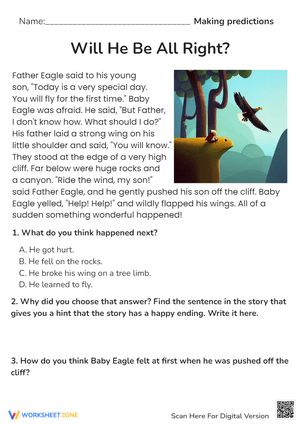
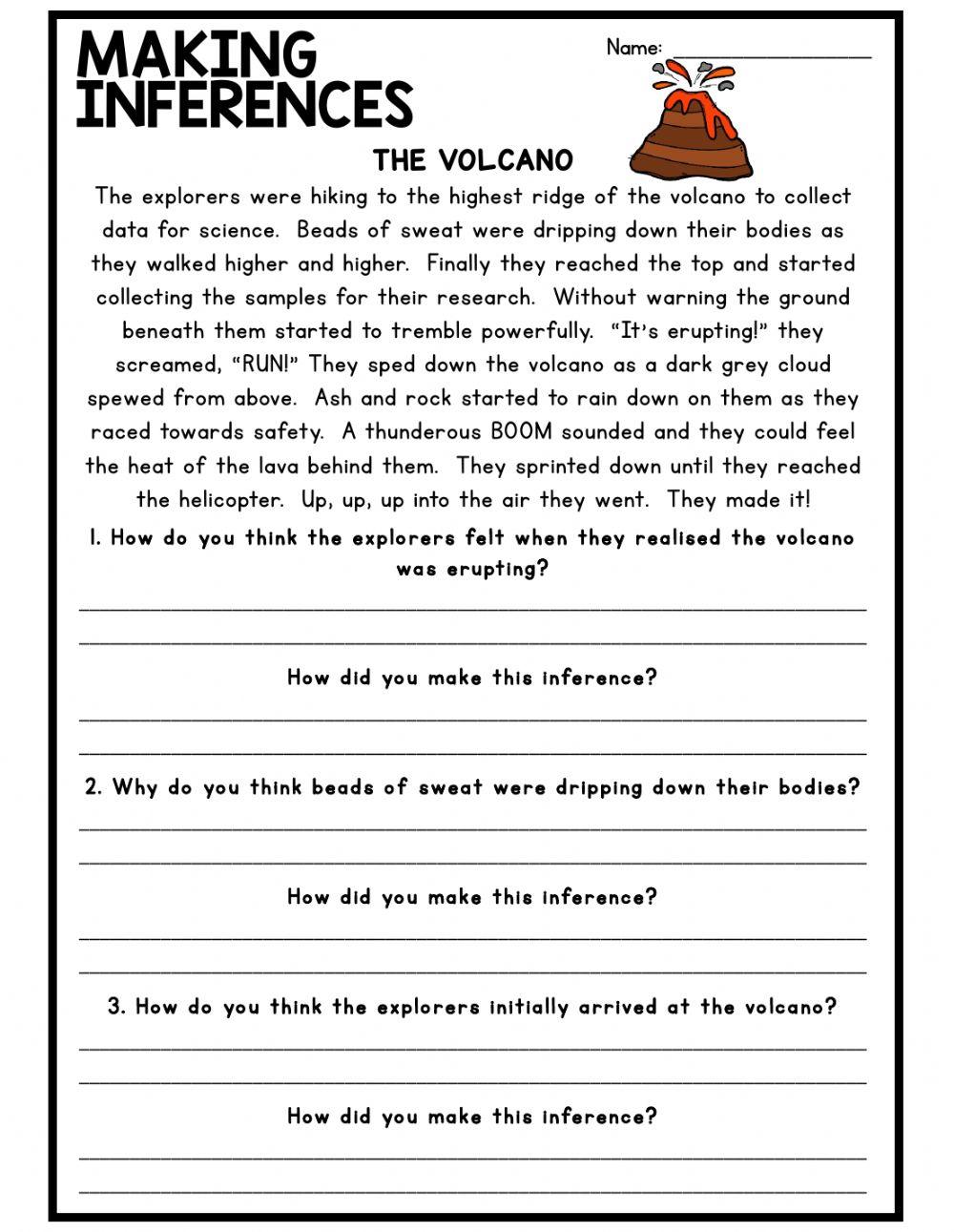
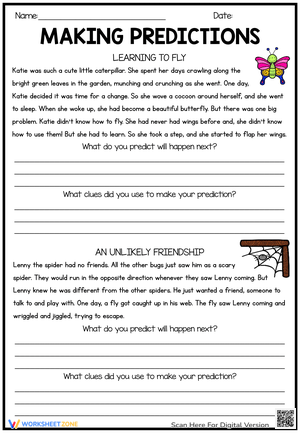
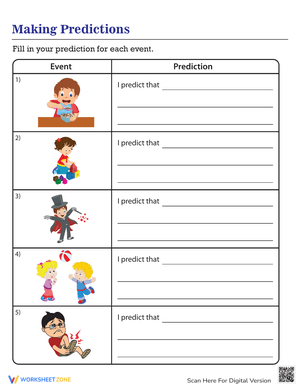
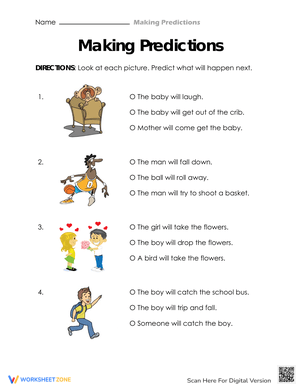
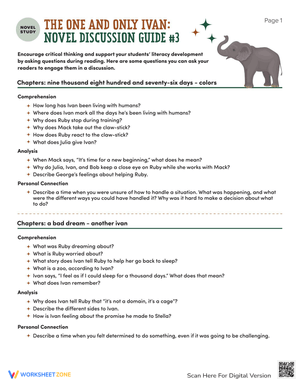
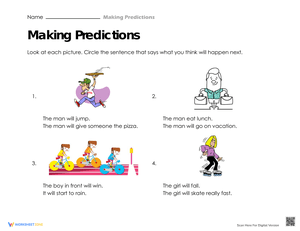
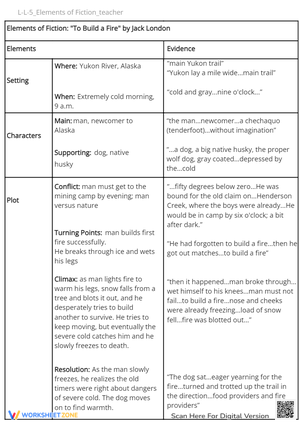
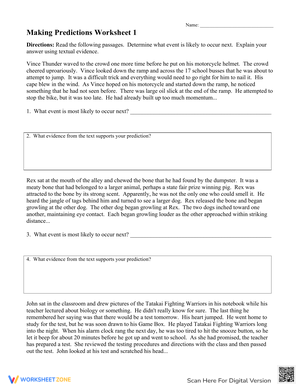
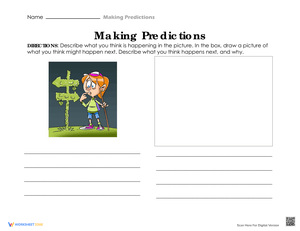
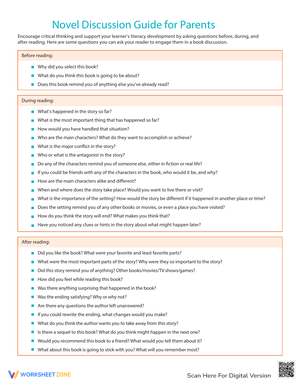
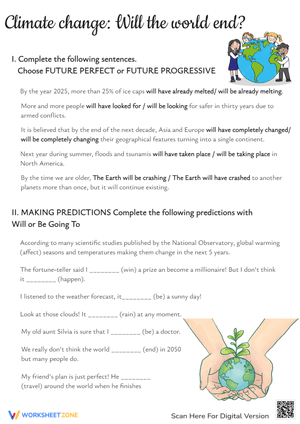
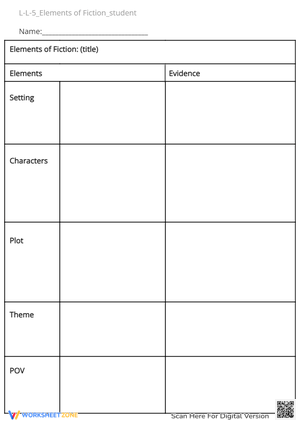
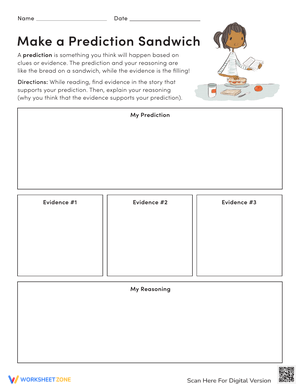
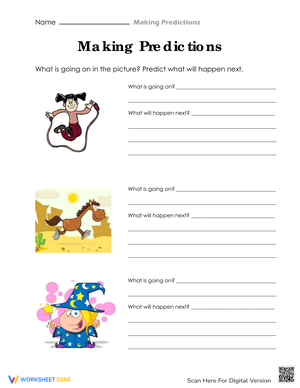
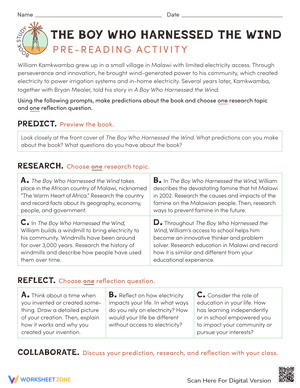
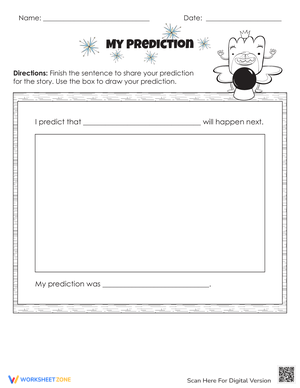
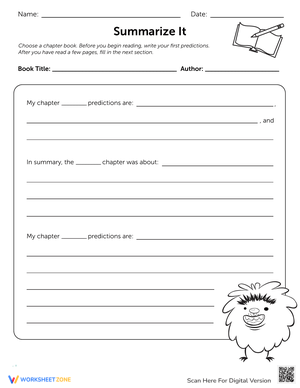
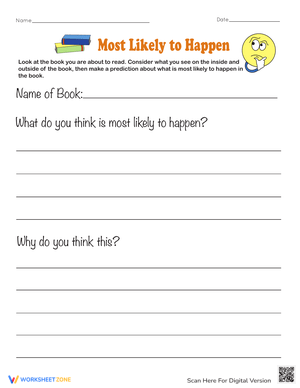
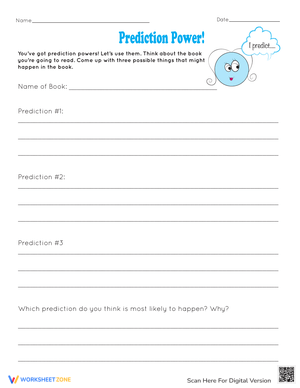
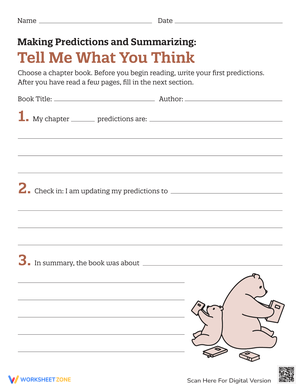
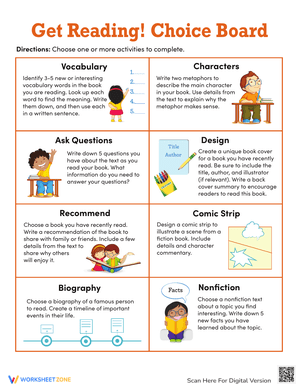
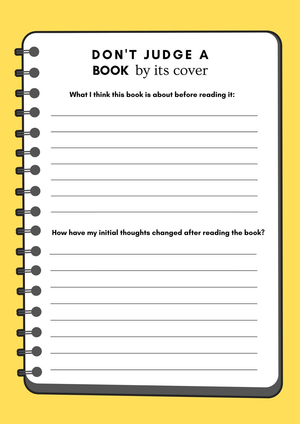
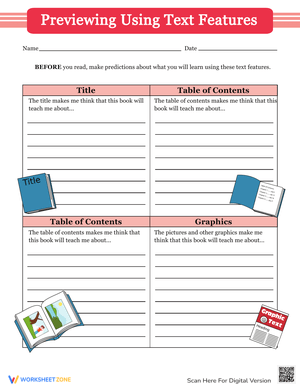
These making predictions worksheets give teachers a documented, repeatable structure for one of reading comprehension's trickiest instructional moments — the point where a student has to commit a thought to paper before the text confirms or contradicts it. The set spans grades 2 through 5, pairing formats that lean on visual clues with others that require students to pull evidence exclusively from text. Each worksheet asks students to record a prediction, name the specific clue that drove it, and then return after reading to check their reasoning against what actually happened.
The Specific Skills These Worksheets Target
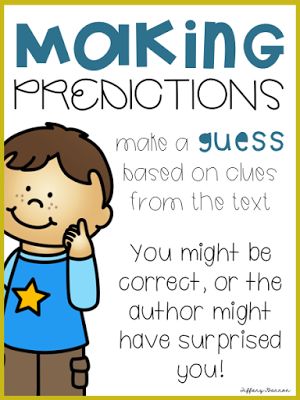
The core move every worksheet reinforces is the same: distinguish a logical prediction from a wild guess. Students can't just write what they think — they have to point to something. That structural demand, built into each worksheet's evidence column, is what separates these resources from open-ended journal prompts.
Beyond that core, the set addresses a range of more specific predictive skills:
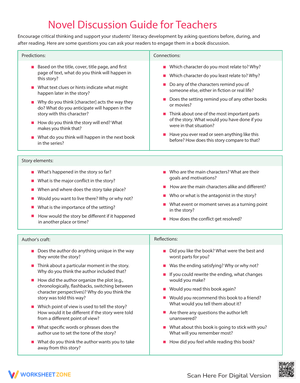
- Using a title, cover image, or chapter heading to anticipate narrative direction before reading begins
- Citing character dialogue or action as predictive text evidence during reading
- Reading informational subheadings, captions, and bolded vocabulary to anticipate what a section will explain
- Revising an initial prediction mid-text when new information contradicts the original clue
- Comparing a guess and an evidence-based prediction side by side, then evaluating which one held up after reading
That last skill — the side-by-side comparison — tends to produce the clearest classroom conversations. Students who see both written down rarely argue that the guess was just as good.
Student Prediction Errors Worth Catching Early
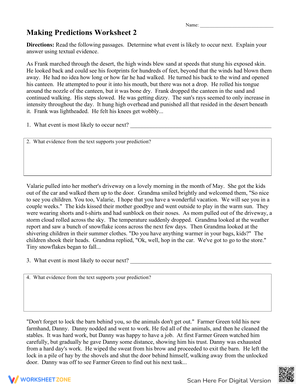
The most common error is also the easiest to miss on a fast read-through: students summarize what already happened instead of predicting what will happen next. On a worksheet where the prompt says "What do you think will happen next?", a student who writes "The boy was upset and left the house" has recapped a scene, not predicted one. The event is already on the page. The two-column format — Before Reading and After Reading — makes this visible, because a summary of prior events can't plausibly fill a Before Reading column if the teacher collects the worksheet at the right moment.
A subtler problem shows up in the evidence column. Students learn quickly that the worksheet wants them to cite a clue, so they do — but vaguely. "The story seemed like something bad would happen" is not text evidence. What word gave that impression? What did the character say? Pushing students to underline the specific phrase in the passage and copy it into the evidence column, rather than paraphrasing loosely, changes the quality of responses noticeably. The worksheets that include a line reading "Write the exact words or describe the exact image you used" produce sharper evidence than those with a generic "clue" field.
How to Build These Worksheets Into Your Reading Block
The most natural placement is inside a guided reading rotation. Before the group opens the text, students spend two or three minutes completing the Before Reading section — prediction and evidence only. After the lesson, they finish the outcome column and note whether their reasoning held up. That's the whole activity. It doesn't require a separate block of time, and it doesn't interrupt lesson flow. Teachers who have tried positioning prediction practice as a standalone thirty-minute unit report that students find it abstract. When the worksheet runs alongside actual reading, the purpose is immediate.
A sequence worth trying: use one worksheet with a short mentor text early in the week, with teacher modeling and discussion. On Friday, give students the same format with an independent passage and no support. The gap between the two uses — several days of regular reading — creates a natural spaced retrieval opportunity, and the pair of completed worksheets gives you a clean side-by-side look at how a student's evidence-citing has developed.
Making predictions worksheets also fit neatly into the five minutes before a read-aloud. Students complete the prediction and evidence columns before you start; at the close of the session, they return to record the outcome. No extra materials, no lost instructional time.
Adjusting the Set for Different Reading Levels
For students still building fluency, use worksheets that pair with heavily illustrated texts or texts with strong visual features. The visual clue column gives them a legitimate entry point that doesn't require decoding stamina. Sentence stems printed on the worksheet — "Based on the picture, I predict... because..." — reduce the expressive language demand and keep the cognitive work focused on prediction rather than sentence construction. That's a genuine support structure, not a workaround.
For stronger readers, remove the sentence stems and add a counter-evidence row: after reading, students identify one clue they ignored that would have led to a better prediction. That addition slows down students who race through the worksheet and pushes them toward real analytical engagement. Some teachers also ask these students to generate two competing predictions before reading, then argue in writing for which one is better-supported — a task that requires evaluating evidence quality, not just producing it.
English language learners benefit from worksheets with short passage lengths and clear visual anchors. The three-part structure — prediction, clue, outcome — mirrors the organized academic language patterns these students are practicing across content areas, which makes the format feel familiar rather than foreign.
Standard Alignment
CCSS.ELA-LITERACY.RL.3.1 requires third graders to ask and answer questions about a text and refer explicitly to that text as the basis for the answer. Prediction sits directly in this standard's path: a well-formed prediction is a prospective question with textual grounding, and the act of checking that prediction after reading is the "answer and cite" behavior the standard targets. These worksheets, collected over several weeks, give teachers concrete evidence of whether students are developing that referential habit or still completing activities without genuinely connecting to the text.
CCSS.ELA-LITERACY.RI.4.3 extends the same demand into informational reading. Fourth graders are expected to explain events, procedures, and concepts using information from the text. Predicting from subheadings and diagrams before reading primes that explanatory lens — students who practice anticipating what a section will cover tend to read with more active attention to whether their expectation was met, which is exactly the purposeful reading behavior the standard rewards.
Frequently Asked Questions
What makes a prediction different from a guess, and how does the worksheet format enforce that distinction?
A guess asks nothing of the text. A prediction is accountable — students can point to the word, image, or line of dialogue that led them there. Each worksheet includes a dedicated evidence column, and if that column is blank or vague, the teacher knows immediately that the student guessed. That structural feature makes the feedback conversation specific: "Show me the part of the text that made you think that" is far more useful than a general reminder to predict more carefully.
Do these worksheets work with informational texts, or are they built around narrative passages?
Several worksheets in the set are built specifically around non-fiction text features: subheadings, captions, diagrams, and tables of contents. Students scan a feature, write a prediction about what the surrounding text will explain, then check it after reading. This version of the strategy transfers directly into science and social studies reading, where text structure is consistent and predictions are clearly verifiable — students rarely argue with the outcome when a subheading says exactly what they predicted it would.
How do I use these worksheets as formative data rather than just completion tasks?
Look at the evidence column across three or four consecutive uses. Early on, students typically cite general impressions — "the story felt like something bad would happen." With practice, they cite specific details — "the author wrote that the door was locked and the character had no key." That shift from vague impression to specific textual detail is the developmental marker worth tracking. A making predictions worksheets set collected over a few weeks functions as a small portfolio of thinking growth, showing patterns that a single assessment cannot.
Do these work better in whole-class settings or small groups?
Both, depending on the text and the instructional goal. Whole-class use works well with a read-aloud or a projected passage — students complete the worksheet independently while predictions are shared aloud and discussed. Small groups allow for more targeted feedback, especially around the evidence column. Making predictions worksheets used in small group guided reading also give the teacher real-time data on which students are pulling clues and which are still guessing — that information shapes the next lesson in ways that whole-class observation rarely captures.
When is prediction typically introduced, and how does the expectation shift across grades?
Picture walks and oral prediction begin in kindergarten and first grade. By second grade, students start writing their predictions, which is when structured worksheets become useful. In grades 3 and 4, the expectation shifts from "predict what happens" to "predict and cite evidence." By grade 5, students are expected to revise predictions mid-text as new information accumulates — a skill that mirrors what careful adult readers do automatically. The worksheets in this set reflect those developmental jumps; the grade 2 formats look meaningfully different from the grade 5 formats, and teachers should assign accordingly rather than defaulting to grade-level labels alone.












 Interactive Worksheet Maker
 Quiz Maker
 Word Search Maker
 Crossword Puzzle Maker
 Word Scramble Generator
 Sentence Scramble Generator
 Handwriting Worksheet Generator
 Name Tracing Generator
 Fill In The Blank Generator