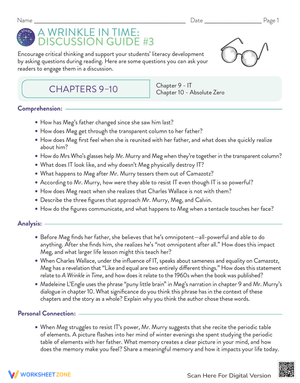
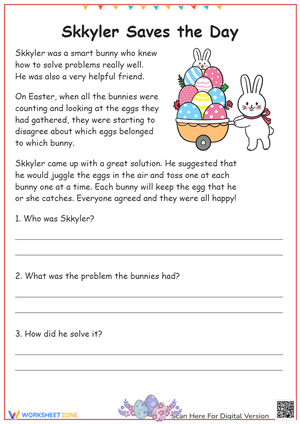
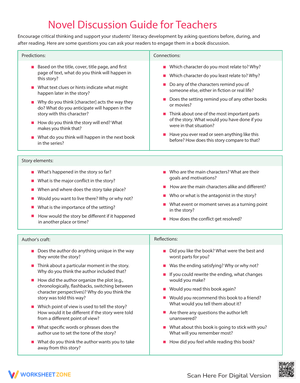
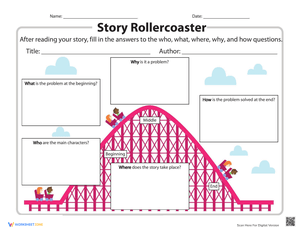
These problem and solution worksheets resources give teachers a structured way to target one of the most commonly tested reading comprehension skills in grades 2 through 5. Students read short passages, identify the central conflict, locate the resolution, and record their thinking on graphic organizers that make the logical relationship visible on paper. The set works across fiction and nonfiction — which matters because students frequently assume this text structure belongs only to stories.
What Students Practice Across the Set
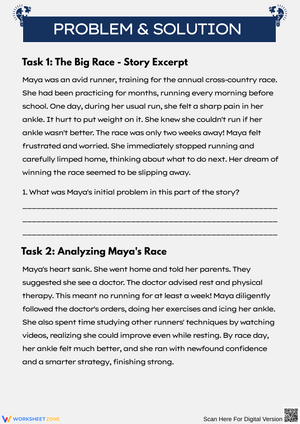
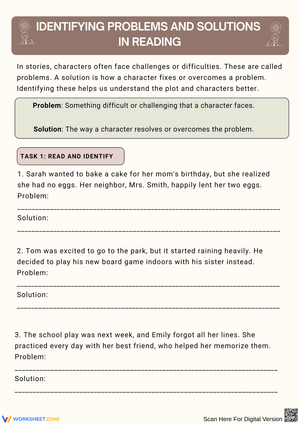
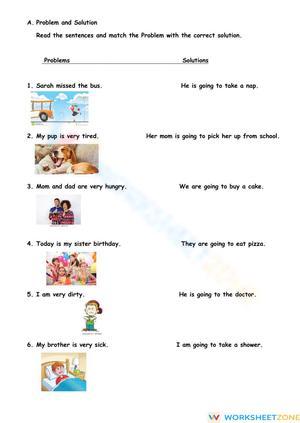
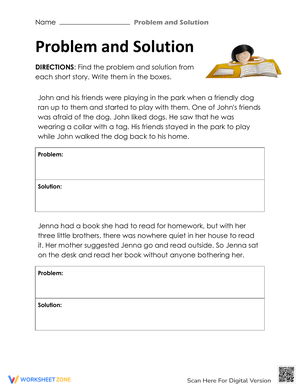
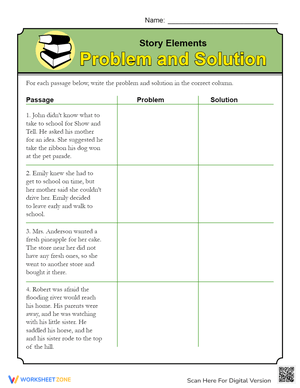
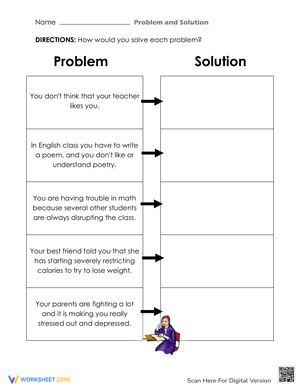
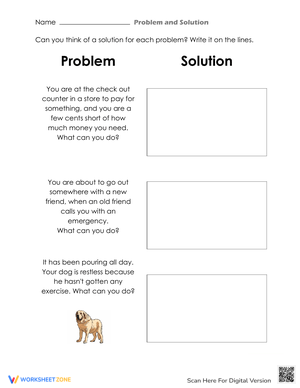
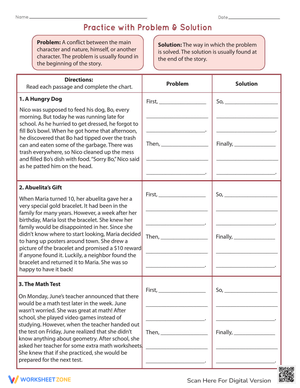
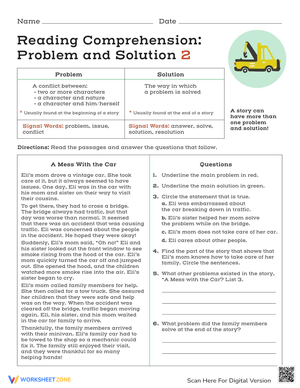
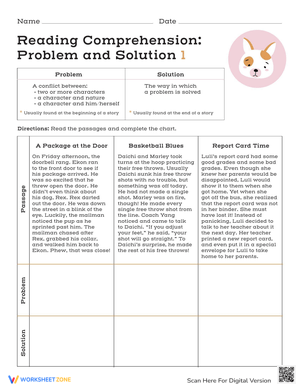
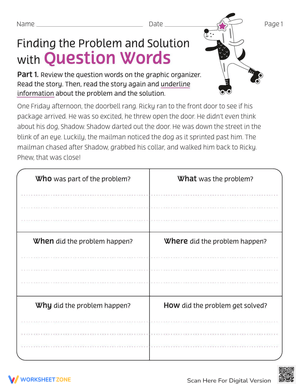
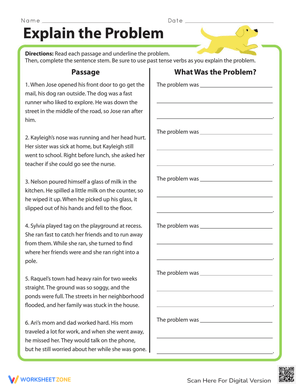
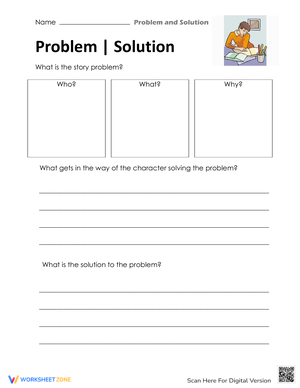
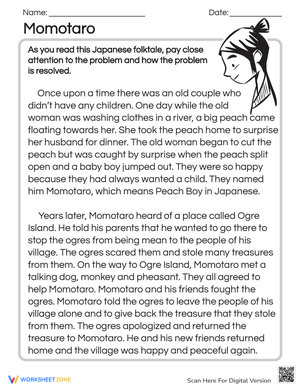
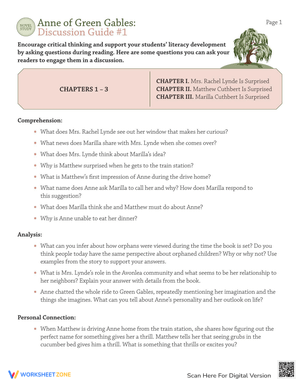
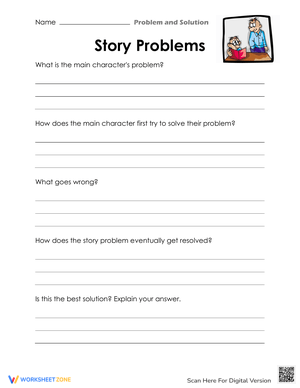
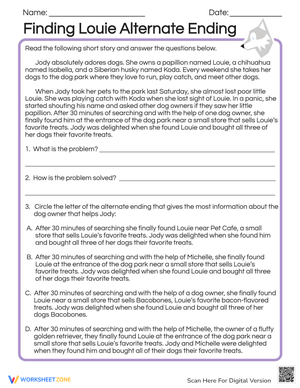
Each worksheet targets a specific layer of the skill rather than treating problem-solution as a single, undifferentiated task. Some worksheets ask students to underline the moment where the problem first appears, then circle the sentence where the solution emerges. Others use a two-column organizer — problem on the left, solution on the right — so students see at a glance whether those elements are clearly distinct in their thinking. A handful present the solution first and ask students to work backward to name the original problem, which reveals whether students genuinely understand the structural relationship or have simply memorized a fill-in routine.
Signal word recognition runs directly alongside the passage-level tasks rather than being treated as a standalone vocabulary drill. Students mark terms like challenge, difficulty, and issue as problem indicators, and resolve, as a result, and consequently as solution indicators. Students who internalize these markers become noticeably faster at locating text structure in unfamiliar passages — and that speed matters on timed reading assessments where re-reading extensively is not an option.
Building These Worksheets Into Your Weekly Lesson Sequence
The most consistent use pattern in classrooms is a Monday-Wednesday-Friday spread: direct instruction on Monday, shared practice with one or two worksheets on Wednesday, and independent work on Friday as a check for understanding before the week closes. This spacing lets students process the skill between sessions rather than cramming everything into a single block.
When pulling a problem and solution worksheets for small-group use, the most productive sessions begin with a teacher read-aloud of the passage before students mark it up individually. Students then compare their annotations before committing to written responses — that brief three-to-four-minute comparison surfaces disagreements that reveal genuine conceptual gaps far more efficiently than any whole-class debrief.
Frequent Mistakes Students Make With This Text Structure
The most common error is confusing a plot event with the actual problem. A student might write "the dog ran away" as the problem when the passage is really about a child's fear of losing something she loves — the runaway dog is the triggering event, but the emotional conflict is what the author builds the text around. Students who make this error are reading at the surface level, and re-reading the passage alone will not fix it. They need direct instruction in distinguishing between what happened and what it means for the character.
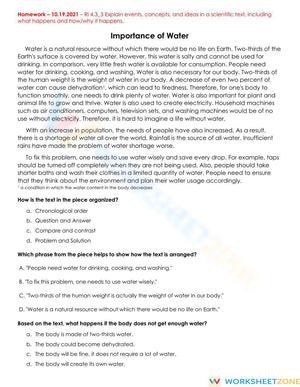
A second persistent error appears in nonfiction: students impose the problem-solution structure where it does not exist. A passage about desert ecosystems describes low rainfall — but if the author does not frame that as a challenge requiring a fix, there is no problem-solution structure, only description. Students fill in the organizer anyway because they are looking for something to write. Naming this error explicitly before students work independently eliminates a significant amount of misdirected effort.
Standard Alignment
These worksheets address CCSS.ELA-LITERACY.RI.3.8, which requires students to describe the logical connections between sentences and paragraphs in informational texts — problem and solution being one of the named structures. Third grade is the first point in the CCSS progression where students move from recounting information to analyzing how that information is organized, making this standard a genuine turning point in the reading curriculum. Teachers in grades 2 and 4 will find the tasks transfer cleanly to RI.2.6 and RI.4.5 with modest adjustments to the discussion prompts that follow each worksheet.
Adjusting the Set for a Range of Readers
For students who stall at the start, pre-filling the problem box before the lesson reduces the blank-page freeze that stops below-grade readers before they begin. Their job becomes confirming or refining what's already there and finding the solution independently — the cognitive work remains, but the entry point is accessible. This is different from simplifying the task; students still have to read carefully to determine whether the pre-filled problem is accurately stated in the text.
Advanced readers need a different kind of pressure. Assign a problem and solution worksheets that contains passages where characters face both a short-term obstacle and a longer-term challenge, then ask students to identify which problem the author treats as central and why. This shifts the task from identification into analysis — closer to what those students encounter on state assessments in grades 4 and 5. Students in the middle of the ability range can use the standard format but add one sentence explaining how they located the solution, which makes their reasoning visible without extending the task into a full paragraph response.
Frequently Asked Questions
How early can students begin working with problem-solution text structure?
Most students are ready for oral introduction in first grade using picture books with clear, simple plots — no writing required at that stage. By second grade, short written responses paired with a graphic organizer are appropriate. These worksheets are built for grades 2 through 5, where reading demands increase and the skill extends into informational texts.
Do the worksheets work equally well with nonfiction and fiction?
The set includes both. This matters because the structure functions differently across genres. In fiction, the problem is usually a character's internal or external conflict. In nonfiction, it might be a scientific or historical challenge framed explicitly in the text. Students who practice only with stories frequently freeze when they encounter the structure in an informational passage during an assessment.
How is problem-solution different from cause-and-effect?
Cause-and-effect explains why something happened. Problem-solution involves a conflict that requires resolution — a specific kind of causal logic with a directional arc toward a fix. Students regularly conflate the two, and that confusion shows up directly in their written responses. Using a problem and solution worksheets that isolates this structure, without mixing in cause-effect tasks, helps students build clear mental categories for both.
What graphic organizer formats are included in the set?
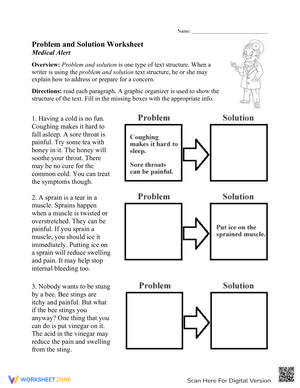
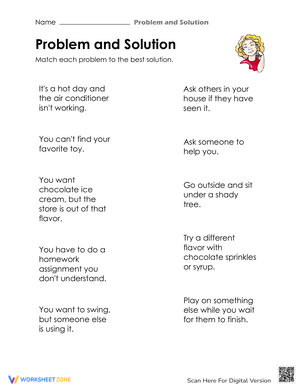
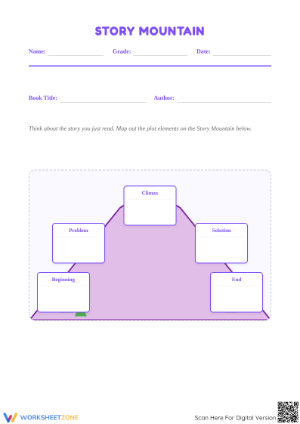
The resources use two-column charts, multi-step flow maps for passages where a first solution attempt fails before a successful one emerges, and open-ended response boxes for students ready to write a brief summary paragraph. The format varies across the set intentionally — using the same organizer every time allows students to fill it in without truly reading, which defeats the purpose.












 Interactive Worksheet Maker
 Quiz Maker
 Word Search Maker
 Crossword Puzzle Maker
 Word Scramble Generator
 Sentence Scramble Generator
 Handwriting Worksheet Generator
 Name Tracing Generator
 Fill In The Blank Generator